
Triage: when aluminum wiring symptoms are urgent
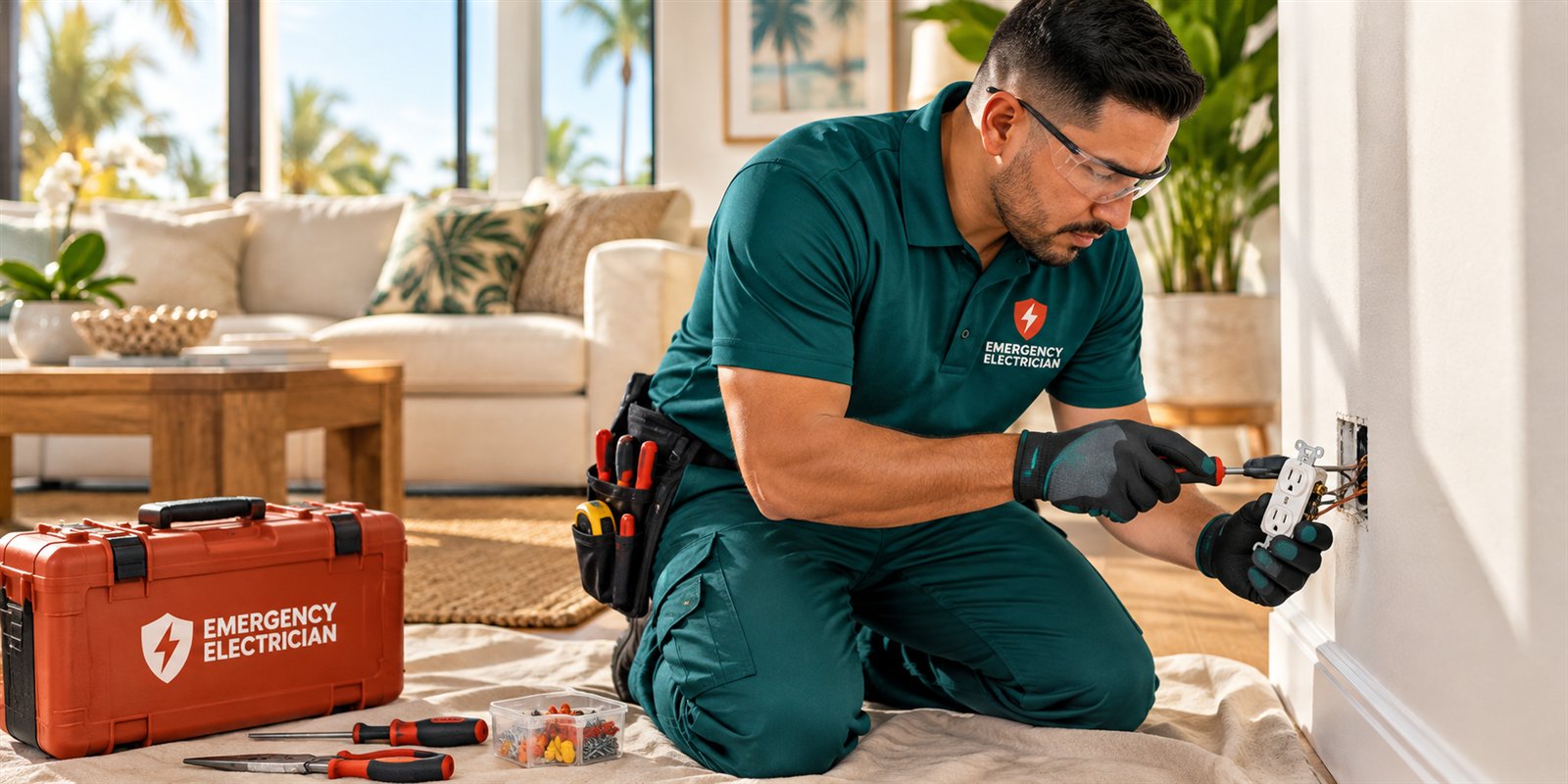
Treat any sign of heat at an outlet, switch or fixture as urgent, and treat flames, smoke, sparks or a strong burning smell as a 911 call. If you smell something like hot plastic or fish near a device, if a cover plate is warm or discolored, or if an outlet buzzes, crackles or sparks when something is plugged in, stop using that outlet. Leave the breaker off if you can identify it, and keep people away from the area until a technician has looked.
Signs that are less dramatic still matter. A device that works only when jiggled, lights that flicker when you touch a switch, outlets that stopped working with no tripped breaker, and a faint smell that comes and goes can all indicate a failing connection. Failing connections get hot, and heat hides in walls. If your home was built in the period when aluminum wiring was common and you see any of these, do not wait for a worse sign.
Do not remove cover plates to look closer unless you are certain the circuit is off and you can verify that with a proper tester. Do not retighten screws on devices yourself; with aluminum, an incorrect approach can make the connection worse. Do not use a power strip to feed a heat-producing appliance from a warm outlet. Our page on a warm or discolored outlet describes the first steps in more detail.
What aluminum branch wiring is and why it was used
Aluminum conductors were used in some residential branch circuits when copper prices rose sharply in the late 1960s and early 1970s. The wire was a solid aluminum conductor, often sold in common gauges, and it was installed in many homes built or remodeled during that period, including some in South Florida. Many of those homes still have it, in some or all circuits. Later aluminum alloy formulations were developed, and most newer aluminum wiring in homes is limited to larger conductors such as service entrance cables and feeders, which are installed and terminated with suitable lugs.
The older solid aluminum branch wire is the one associated with trouble, and the trouble is mostly at the ends. Aluminum behaves differently from copper in several ways that matter at connections. It expands and contracts more with temperature changes. It creeps, meaning it slowly deforms under pressure, which can loosen a terminal over time. And it forms an oxide layer on its surface when exposed to air, a layer that is a poor conductor.
Devices made for copper wiring, such as standard outlets and switches with steel screw terminals, were often used with aluminum wire in those years. The mismatch led to loosening connections, higher resistance and heat. Devices made for aluminum, marked accordingly, were introduced to address this. A technician can tell by looking at the wire jacket markings and at the device whether the connections are suitable. If you are not sure what type of wiring your home has, a visual check at the panel or in an accessible box is a first step.
How connections fail
The failure of an aluminum connection is a gradual process. Thermal cycling, meaning the heating and cooling of the connection as current flows and stops, makes the aluminum expand and contract. Because aluminum creeps, the connection can loosen. A looser connection has higher resistance, which produces more heat when current flows. More heat accelerates the loosening and the oxidation.
Oxide builds up between the wire and the terminal. Aluminum oxide is an insulator, so it raises resistance further. The connection can reach temperatures high enough to discolor the device, melt plastic and char nearby materials. Because this occurs inside a box in a wall, the first sign is often a smell or a warm cover plate. In severe cases, the connection arcs, which is a spark across a gap, and arcing can ignite materials.
Dissimilar metals can add corrosion. When aluminum and copper touch in the presence of moisture, a galvanic reaction can corrode the aluminum. This is a concern where aluminum wire has been connected to copper wire with the wrong connector, a repair made by someone who did not know the history of the wiring. In humid South Florida, moisture in a box can accelerate this.
These mechanisms explain why the repair must address the connection method, not merely replace a burned outlet. A fresh outlet attached to the same aluminum wire with the same terminal type may fail again.
Warning signs to watch for, short of an emergency
Because the failure develops over time, there are early signs. Outlets or switches that feel warm to the touch with light loads are one. Cover plates that are discolored, or with a brown tint around the screws, are another. A faint odor that seems to come from a wall, particularly when a heavy load is running, is a third. Intermittent function, such as an outlet that cuts out and returns, is a fourth.
Flickering lights on a circuit, particularly lights that flicker when you move a switch or when a nearby appliance cycles, can indicate a loose connection on the circuit. A tripped breaker is not a consistent sign, because a failing connection often does not draw enough current to trip. That is one reason heat-related fires from loose connections can occur without any breaker action.
You may also notice that a device that was replaced recently has failed, or that a previous electrician replaced a burned outlet more than once. A pattern of repeated failure on the same circuit is a sign that the connection method is the issue. Tell the technician about any earlier repairs.
If you see any of these, call and describe them. You do not need to be sure of the cause. The technician can identify the wiring type, inspect the connections and test for heat. Our guide on older home electrical red flags lists related signs to watch for in homes of this age.
What a technician checks on arrival
The technician starts by confirming the wiring type. Wire jacket markings, often printed along the cable, indicate the conductor material. At the panel, the branch wire gauge and color of the metal can show aluminum, and at accessible boxes the technician checks the connections. They look at which devices are installed, whether they are rated for aluminum, and whether any copper pigtails are present and how they are connected.
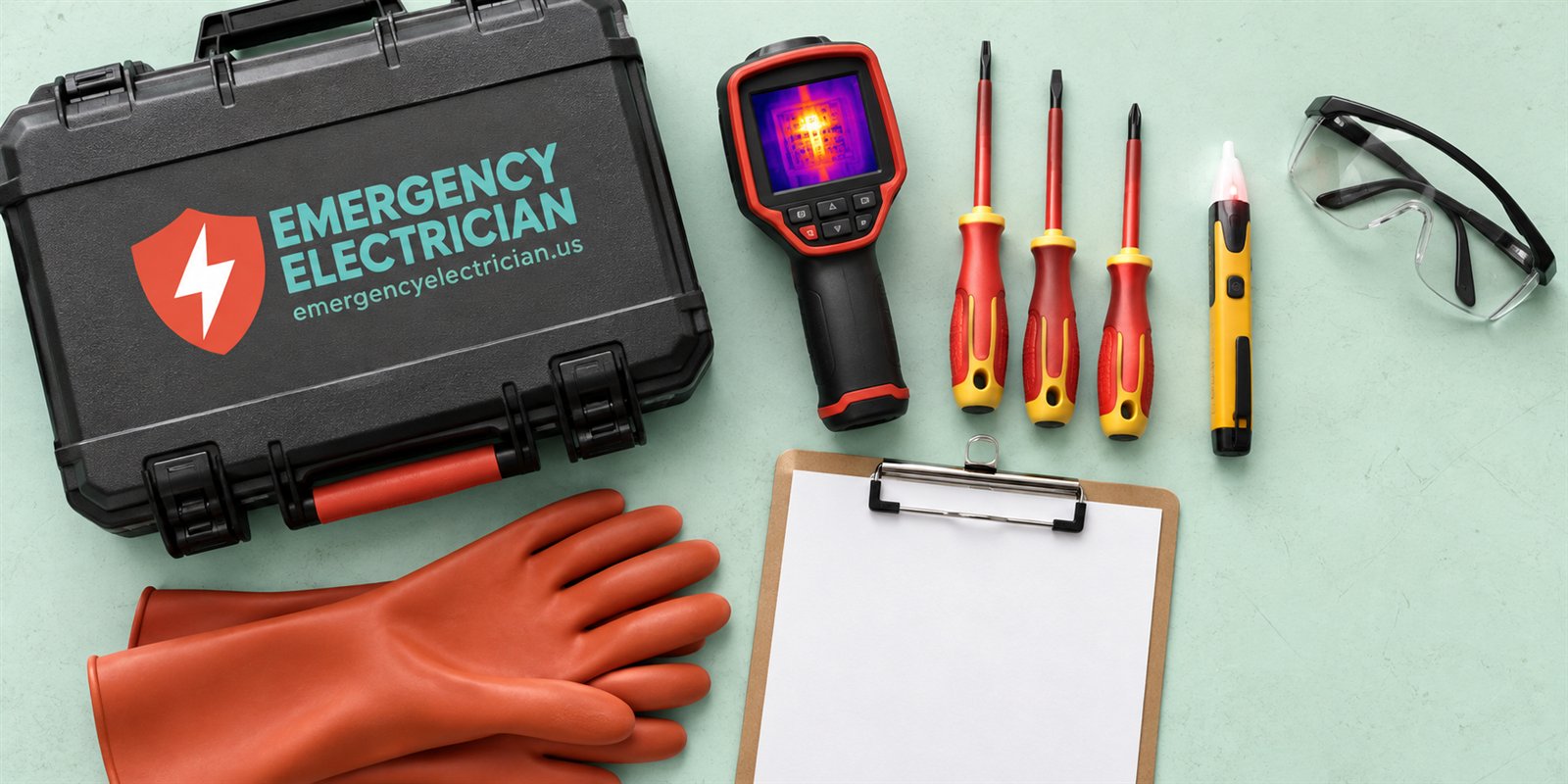
They then inspect for signs of overheating: discolored devices, melted plastic, darkened wire insulation, and oxidized or pitted conductor ends. A thermal camera, used with the circuit carrying a normal load, can reveal hot connections without opening every box. They check the tightness of terminals where it is safe to do so, and test voltage drop under load, since a connection with high resistance shows a drop.
At the panel, the technician checks the breakers and terminals for aluminum compatibility and for heat. Aluminum branch wires connected to breakers not rated for aluminum are another source of trouble. They also check whether the circuit's breaker rating is correct for the wire size, since aluminum wire carries less current than copper wire of the same gauge, and a mismatch is a hazard.
The result is a list of connections that are acceptable, those that are suspect and those that have failed. The failed ones are repaired as part of the urgent work. The suspect ones are discussed, and a plan for the rest is offered as a choice.
Stabilization options a technician may discuss
There is more than one way to address aluminum branch wiring, and which one fits depends on the extent and the condition of the wiring. Full replacement of aluminum branch wiring with copper is the most thorough option. It removes the issue entirely, but it is the most work, since new cable must be run to every outlet, switch and fixture. In a finished home, that is a significant project and is usually planned, not done in an emergency.
Another accepted method is to attach short copper pigtails to the aluminum wires using connectors that are specifically listed for joining copper and aluminum, installed with the proper tools and procedure. The copper pigtail is then connected to the device. This keeps the aluminum out of contact with device terminals. The quality of the connector and the installation matter greatly, and the work must be done to the manufacturer's instructions.
A third approach is to use devices that are rated for aluminum wire and are marked for it, with terminals designed to handle the metal's behavior. These can be appropriate where the wire is in good condition, and the technician will check for the correct markings and ratings. Mixed solutions occur too: replacing the worst circuits first, such as those that serve high-load areas like kitchens and laundry areas, and pigtailing others.
In an urgent call, the technician's job is to make the failed connection safe and to stabilize the circuit. Longer-term decisions can follow when you have had time to consider them. Quotes are given only by phone, and complicated jobs need an on-site visit; there is a service call charge that is explained before dispatch.
Why DIY fixes and common shortcuts go wrong
Aluminum wiring is an area where well-meaning home repairs often make things worse. Connecting aluminum wire to a standard copper-rated device or to a push-in terminal is a common mistake, and push-in back-stab terminals should never be used with aluminum. Using ordinary twist-on connectors to join aluminum to copper is another; those connectors are not made for that combination and can corrode and loosen.
Wrapping the wire in more tape or adding more screw pressure does not solve the issue. Over-tightening can damage the soft metal, and under-tightening leaves a loose joint. Anti-oxidant compound is sometimes used in proper procedures with the right connectors, but it is not a substitute for the right connector and the right technique.
Replacing outlets with new ones of the standard type may seem logical, but it can put new devices on an old problem. Likewise, installing a higher-rated breaker to stop nuisance trips increases heat in a wire that cannot carry the added load. Our page on what never to do in an electrical emergency includes this kind of shortcut.
If a previous owner or handyman made a change to wiring in your home, the connections may not be what they appear. A technician will check, and they should explain what they find without judgment. The goal is a safe circuit.
Where aluminum connections fail first in a typical house
Not every connection on an aluminum circuit carries the same risk. The places that tend to fail first are the ones with the highest current or the most movement. Receptacles that feed heavy loads, such as those in a kitchen, a laundry room or a garage, run warmer than a bedroom lamp outlet. Switches that control large lighting loads, and fixtures that run for long hours, add heat too. Connections that are disturbed often, such as an outlet where plugs are pulled in and out daily, loosen faster than a connection that is never touched.
Devices that connect more than one wire in a box are another weak point. At a receptacle where a circuit continues on to the next outlet, two wires share one terminal or two terminals on the same device, and the current of every outlet further down the line passes through the connection. If that connection is poor, it heats under the load of everything downstream. A technician looks first at those feed-through points.
Connections at the panel deserve attention as well. Aluminum branch conductors landing on breakers need breakers rated for them, and the terminal screws need to be tightened to the manufacturer's specification. Because panels are typically in garages and utility spaces with temperature swings and humidity, those terminals are exposed to the same movement and oxidation as the ones in the walls.
Finally, connections made during earlier repairs are suspect. Anywhere that someone spliced copper to aluminum, replaced a fixture or added a new outlet to an aluminum circuit, there is a chance the new joint was made with an unsuitable connector. When you tell the technician which rooms had work done in the past, they know where to look first.
Insurance, inspections, and what to tell the next owner
Aluminum branch wiring can come up with insurers, home inspectors and buyers. Some insurers ask whether a home has it, and may require an electrician's evaluation or remediation. If you are renewing a policy, or selling the property, having a written evaluation from a qualified electrician can help. Ask the technician to document what was found, which connections were repaired and by what method, and what remains.
If you rent, tell your landlord about any warm devices or burning smells right away, in writing. The landlord is responsible for the wiring. If you own a condominium unit in a building from that era, check whether the association has had building-wide evaluations; common risers and unit wiring may be treated differently. Our page on renters and electrical emergencies explains typical responsibilities.
Keep records of repairs and inspections. If you are making a claim after a heat event, photograph the damage and keep removed parts when the technician agrees. Our guide on electrical damage and insurance documents lists what to keep.
If you suspect that your home has aluminum wiring, or you have seen any of the signs above, call and describe them. A dispatcher can arrange an evaluation, explain the call charge in advance, and tell you what to avoid in the meantime. Do not wait for a failure to learn what you have.
Questions people ask
Is aluminum wiring itself dangerous?
The concern with older solid aluminum branch wiring is mainly at connections, where expansion, creep and oxidation can loosen joints and produce heat. Wire that is properly terminated with suitable connectors and devices can perform acceptably. A technician checks the wire, the devices and the connections, and recommends repairs or a long-term plan based on what is found.
How can I tell if my home has aluminum wiring?
Look at the cable jacket where visible, such as in the panel or an accessible box. Markings often say AL or aluminum. The conductors look silver rather than copper colored. Homes built in the late 1960s and early 1970s are more likely to have it. Do not open boxes with the power on. A technician can confirm quickly.
Can I just replace the burned outlet?
Replacing the outlet alone may leave the real problem in place. If the connection method is the cause, a new standard outlet on the same aluminum wire can fail again. A technician cuts back damaged wire, uses connectors and devices suited to aluminum or copper pigtails installed correctly, and checks neighboring connections on the circuit.
Do I have to rewire the whole house?
Not necessarily. Full copper replacement is the most thorough choice but also the most extensive. Other accepted approaches include copper pigtails with connectors listed for the purpose, and devices rated for aluminum. The right choice depends on the condition of the wiring and your plans. A technician can explain options after an on-site evaluation.
Will a breaker trip if an aluminum connection overheats?
Often it will not. A loose, high-resistance connection can generate heat without drawing enough current to trip a breaker. That is why warm devices, discolored plates, odors and flickering matter, even when the breaker is fine. Treat these signs as urgent, and keep the circuit off until it is checked.
What should I tell the dispatcher?
Say when the house was built, whether you know or suspect aluminum wiring, which outlets or switches are warm, discolored or flickering, and whether you smelled burning. Say if a breaker tripped and whether any device was recently replaced. Call 911 first if there is fire, smoke or sparks. Mention anyone with medical equipment that depends on power.
About "Aluminum Wiring Connection Failures": call and give us the details, and we will explain what is safe to do while you wait and what the visit would cover. Jobs that cannot be quoted blind need a look on site.
Related pages
- Wire Repair and Splicing: How damaged wiring from rodents, nails or heat is repaired in approved accessible junctions, why hidden splices are not acceptable, and what to do meanwhile.
- Burned Wiring Replacement: How a technician decides how far heat damage runs along a wire, which sections must be replaced, and what to do after an overheating event or small fire.
- Warm Outlet: A warm, browned or melted outlet is a heat warning. Learn how to read the damage, what to unplug, when it is a same-day call, and what a technician checks.
- Old Home Red Flags: Cloth wiring, two-prong outlets, fuse panels and other red flags in older homes: what each one means, how urgent it is, and what to do about it.
- After-Hours Access: A smooth after-hours electrical visit depends on access. Learn what to arrange with keys, alarms, building managers and gates before the technician arrives.
- Business Backup: Planning backup power for a small business: what to keep running first, how generators and batteries differ, and how to stay safe during an outage.