
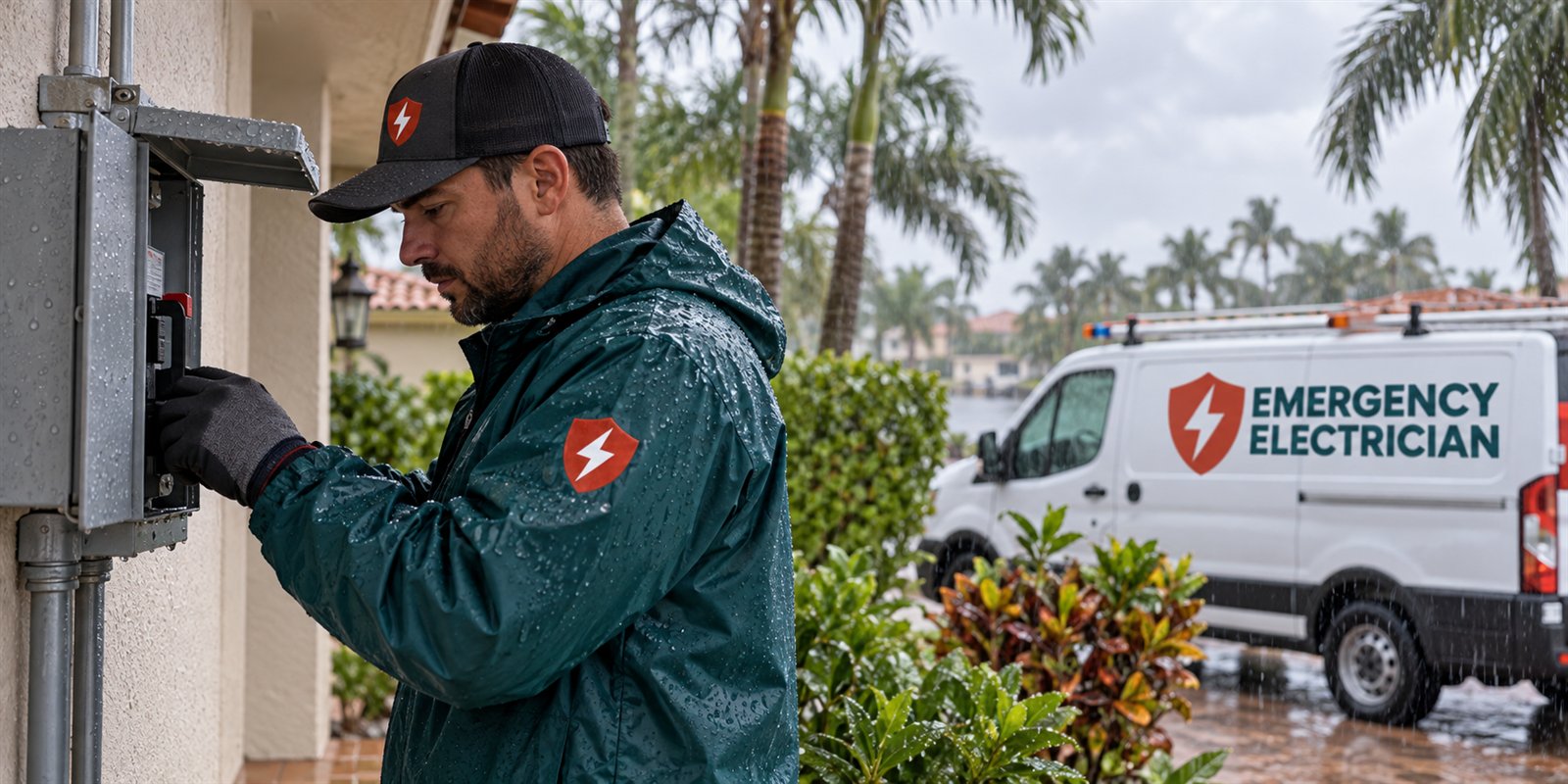
Triage first: what this page is and is not
This is a preparation page, not an emergency page. If anyone is in danger right now, call 911 first. That means flames, heavy smoke, a person who has been shocked and is hurt or unresponsive, or a downed wire. If a utility line is down or sparking, stay well back, keep others away and call 911 and the utility. Nothing on this page is a reason to approach damaged equipment.
The purpose of a pre-storm checklist is to reduce surprises. Most storm electrical emergencies involve something that was already weak: a loose connection, an old panel, a damaged mast, a wet outdoor outlet, a generator hookup nobody had tested. If you find weak spots in advance, you can have them dealt with while there is still time.
The rule behind every item is simple. You do the things that do not involve opening panels, touching live conductors, climbing near power lines or working on a wet surface. You hand the rest to a qualified electrical contractor, ideally well before the storm is close. In the last day or two before landfall, availability is limited and conditions are poor, so do not plan on being able to get a repair at the last minute.
- Anything involving flames, smoke or injury: 911 first.
- Downed or sparking line: stay back, call 911 and the utility.
- Weak equipment you notice: call an electrician early, not on the eve of landfall.
- Everything else on this page: safe preparation from the outside of equipment.
Start with a walk-around from a safe distance
Walk around the outside of the property in daylight and look at what you can see without touching anything. Check the service mast and the weatherhead, which is the curved fitting at the top where the wires enter. Look for a mast that is leaning, a cable that sags, a fitting that is pulling away from the wall or a mast that is rusted through. If anything looks wrong, call the electrician before the storm, not after.
Look at the meter base and any outdoor disconnects. Cracks, rust, loose covers, missing screws or wasp nests inside enclosures are all worth noting. Do not open them. Look at outdoor outlets and light fixtures for broken covers or gaps that let water in. Check the condition of any cable running down the wall to equipment such as an air conditioner or pool pump, looking for cracked jackets or damaged conduit.
Look up as well. Branches that touch or lean over service lines are a serious risk in high wind, and trimming near a power line is work for professionals, not homeowners. If limbs are close to the line, call the utility or a qualified tree service that works near energized lines. Never climb or prune near a wire. See what happens when a tree falls on a service line to understand why.
Inside: panel, labels and flashlight access
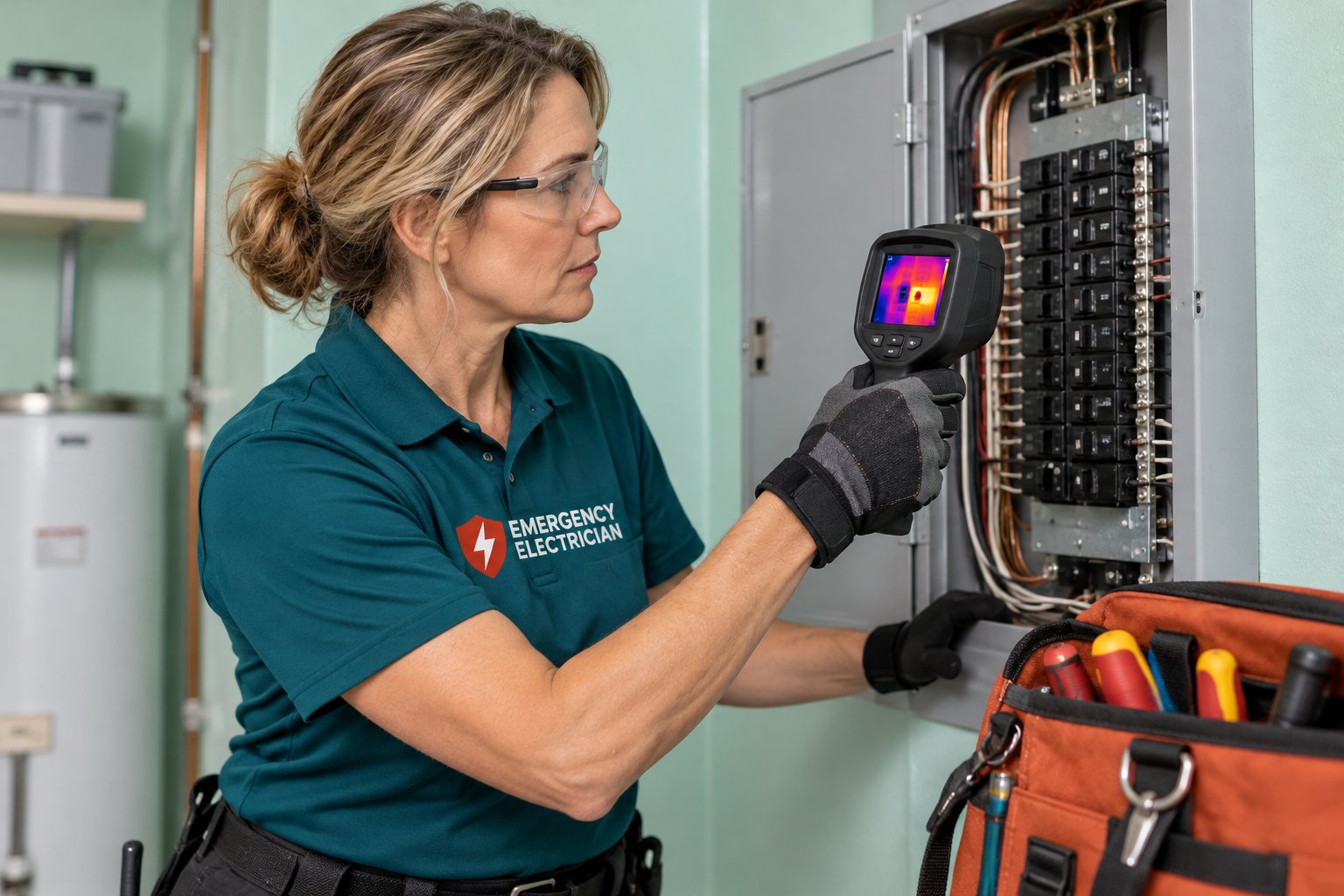
Go to the main panel and look at it without opening anything beyond the normal breaker door. Check that the area around it is clear, that nothing is stacked in front of it and that you can reach it with a flashlight in your hand. If the panel is in a garage, move cars and storage so that someone can get to it in the dark.
Make sure every breaker is clearly labeled. If labels are missing, faded or wrong, fix them with a pen and a piece of tape, and confirm the main breaker is plainly identified. In a stressful moment, nobody wants to guess which breaker feeds the kitchen. Knowing where the main is and how it operates lets you shut off the whole house if you need to. The guide on how to find your main breaker and the guide on panel labeling before an emergency can help.
Notice warning signs while you are there. Warm breakers, a buzzing sound, discoloration, a faint hot smell or a breaker that is loose are reasons to call. Do not wait for the storm to see whether the problem gets worse. Heat in a panel before a storm is more likely to become failure when the system is stressed by power returning, a generator or a surge.
Decide about the main breaker and the whole-house plan
Before the storm, decide how you will handle the main breaker. Many households choose to shut off the main when flooding or a damaging surge is expected, and some choose to leave it on until the last moment. The right answer depends on your location, your flood risk and whether anyone in the home depends on power. Read when to shut off the main before a storm for the decision logic.
Do not turn off the main with wet hands, while standing in water or on a wet floor. If your panel is in a flood-prone area, decide in advance who will do it and when, and do it while the area is still dry. If you cannot reach the panel safely, do not try.
Also decide how you will handle restoration. After the storm, power may return in a surge or flicker, and appliances left on can be damaged. A common plan is to switch off large appliances and unplug electronics before the storm, leave one lamp on as a signal that power has returned and turn things back on gradually. The page on restoring power safely after a storm covers the details.
Protect electronics and appliances
Unplug what you can. Televisions, computers, game consoles, routers and similar equipment are vulnerable to spikes both when power fails and when it returns. Surge protectors help against small spikes, but they cannot stop a direct strike or a major utility event. The only complete protection is physical disconnection.
Move valuable electronics to higher ground. If there is any chance of water intrusion, put them on upper floors or on high shelves, in sealed bags if possible. Raise appliances and stored equipment in a garage off the floor if flooding is a concern. Remember that stored lithium batteries, e-bike batteries and power tools should be kept dry and away from heat.
For large appliances, such as air conditioners, pool pumps and water heaters, a qualified electrician can tell you whether a whole-house surge device or a shutoff routine makes sense. Read when to add a surge device or generator. Do not attempt to open appliance panels or disconnect hard-wired equipment yourself.
Generators: plan the safe way before you need it
If you own a generator, test it well before the storm, outdoors and in dry weather. Make sure you have fuel stored safely, that the generator starts and that you know how it connects. Many generator problems appear only when the machine is needed: a bad spark plug, old fuel, a dead battery or a failed transfer switch.
The most important rule is that a portable generator must never be connected to a house through a cord into an outlet. Doing so can send power back to the street, endangering line workers and neighbors, and it can overload house wiring. A transfer switch or interlock installed by a qualified electrical contractor is the proper way to connect. If you have an inlet and a transfer switch, check them in advance and have anything unusual looked at before the storm.
Place the generator outdoors, well away from windows, doors and vents, never in a garage or on a covered porch, and keep it dry under a safe canopy rather than in the rain. Carbon monoxide kills quickly and silently. Read generator backfeed risk and generator inlet and transfer switch basics for more.
Medical, food and communication power
Think about the equipment that people depend on. Oxygen concentrators, CPAP machines, powered beds, insulin refrigeration and other medical devices need a plan for an extended outage. Talk to the provider or the utility about medical priority programs and backup options, and consider whether a household member should relocate before the storm. Do not rely on improvised power setups for medical equipment.
Charge phones, power banks and flashlights in advance. Keep a battery-powered radio. Put a few days of ice and cold packs in the freezer if you have space, keep refrigerator doors closed once power fails and know the basics of food safety when power is out. The page on extended outages, food and medical power expands on this.
Gather paper copies of important phone numbers: the utility, your electrician, your insurer and your building management if you live in one. Phones may be dead, and lines may be busy. Write them on a card and keep it with your flashlight.
Photograph the system and the property now
Before the storm, take clear photographs of the electrical equipment: the meter, the main panel with the door open, the labels, any outdoor disconnects, the service mast, the generator and any outdoor equipment. Take wide shots and close-ups. Photograph the exterior of the house, the roof, the trees and the yard as well. Date-stamped photos made before a storm are far more useful than descriptions made afterward.
Store the images somewhere that will survive the storm, such as in a cloud account or on a device that you will carry with you. Make a short written list of major appliances and electronics with model numbers if you can. If you have to file a claim, this list saves hours later.
The guide on photographing damage before repairs describes what to capture after a storm, and the guide on electrical damage and insurance documents lists the records worth keeping. Taking the before pictures now lets you compare condition later.
What to hand to a professional before landfall
Some problems should not wait. If you found a leaning mast, damaged meter base, a panel that is warm or buzzing, a breaker that will not hold, scorched outlets, a generator connection you are unsure about or an outdoor circuit with a missing cover, call for help while there is still time. Qualified electrical contractors become very busy as a storm approaches, and many stop working when conditions are unsafe.
When you call, say clearly that it is a pre-storm concern, describe what you saw and ask what is realistic. Quotes are given only by phone, and complicated jobs need an on-site visit. There is a service call charge, explained on the phone before dispatch. Be ready to hear that some work cannot be completed in time, in which case ask what temporary precautions are sensible.
Do not attempt electrical repairs yourself in the last days before a storm. Mistakes made in a hurry, on wet ground, with limited tools, are a common source of injuries. If a repair is not possible, the safest choice may be to leave the equipment off, and to plan for restoration after the storm. Read hurricane season electrical readiness in Florida for the longer view.
The short checklist, then the call
Pulling it together, a calm pre-storm electrical routine looks like this. Do the outside walk-around from a safe distance. Check that the panel area is clear and the breakers are labeled. Decide on the main breaker plan. Unplug and elevate electronics. Test the generator outdoors and confirm how it connects. Charge devices and plan for medical needs. Photograph everything. Write down the phone numbers you need.
Then stop. After that, leave the system alone. Do not open panels, do not move wires, do not climb ladders near power lines and do not stand in water to work on anything electrical. The goal is not to fix everything, it is to avoid creating a new problem in the last hours before a storm.
If you found something that worries you, or you are not sure whether something is safe, call and describe what you saw. The dispatcher can tell you what is urgent and what can wait. Calling early is always better than waiting until the rain starts.
- Walk the outside from a distance and note mast, meter and outdoor fittings.
- Clear and label the panel area and decide the main breaker plan.
- Unplug and elevate electronics, and test the generator outdoors.
- Charge devices, plan medical and food needs and write down phone numbers.
- Photograph the system and the property, then call about anything unsafe.
Questions people ask
Should I turn off the main breaker before a hurricane?
It depends on your flood risk and who in the household depends on power. Many people shut it off when flooding or a damaging surge is expected. Never do it with wet hands or while standing in water. Read the page on shutting off the main before a storm for decision logic, and call if you are unsure.
Can I use a surge protector instead of unplugging my electronics?
A surge protector helps against small spikes, but it cannot stop a direct strike or a major utility event, and it offers no protection if water reaches the equipment. For a significant storm, unplugging and elevating valuable electronics is safer. A qualified electrician can advise on a whole-house surge device.
Is it safe to plug my generator into a wall outlet with a double-ended cord?
No. That practice, called backfeeding, can send power back into the utility lines and endanger line workers and neighbors, and it can overload house wiring and start a fire. A transfer switch or interlock installed by a qualified electrical contractor is the proper method. Always run generators outdoors, away from windows.
I found a leaning service mast. Can I straighten it?
No. The mast carries the service conductors, and straightening or touching it is dangerous. Stay back, call the electrician, and if the line is pulling away or sparking, call 911 and the utility. The sooner it is looked at before the storm, the better. Photograph it from a safe distance for your records.
How does pricing work for a pre-storm visit?
Quotes are given only by phone. Complicated jobs need an on-site visit before a quote can be given. There is a service call charge, and it is explained on the phone before dispatch so you know the terms up front. Describe what you found and be prepared to hear that some work may not fit before the storm.
What if I notice a warm panel the day before the storm?
Treat it seriously. Keep people away, do not open the panel and do not add load. If you smell burning or see smoke, call 911 first. Otherwise call an electrician right away and say that a storm is approaching. Heat in a panel can worsen when power is stressed by outages, surges or a generator.
Reading about "The Electrical Checklist Before a Hurricane"? Tell us what stopped working and when. We will say what an electrician would check first, and quotes are given by phone when the job can be described.
Related pages
- Main Off Before Storm: Decision logic for turning off the main breaker before a storm: flood risk, surge risk, medical needs, safe technique and how to re-energize later.
- After-Storm Power: What to check before the utility re-energizes your service after a storm, what to leave off, and how to bring a house back online without damage or hazards.
- Find Main Breaker: Know where your main breaker is before an emergency. Where to look in homes, condos and businesses, how to recognize it, and what never to touch or open.
- Season Readiness: A calendar-style plan for South Florida hurricane season electrical readiness: panel, generator, surge, documents and who to call, without promising outcomes.
- Medical Power Plan: Plan for powered medical equipment in a long outage: 911 and your provider first, utility notice, safe backup power, and how an electrician can help.
- Flood First Steps: What to do about electricity in a flooded home: stay out of water near power, how the utility disconnect works and why inspection comes before power returns.