
Triage: what to do when you suspect an attic fault
The attic is a hazardous place to look for an electrical problem, so triage starts below it. If you see smoke or flame coming from a ceiling, a light fixture, an attic hatch or a vent, call 911 first and leave the building. Do not open the attic hatch, since fresh air can feed a fire in the space. If there is a smell of burning plastic or hot insulation with no visible flame, move everyone out and call 911 as well, since a smoldering fire can run inside a ceiling.
If the signs are less severe, such as a ceiling stain with a tripped breaker, lights that flicker in one area, a faint burned odor that comes and goes, or sounds of scratching and then a breaker trip, treat it as urgent. Turn off the circuit that serves the area if you can identify it, keep people out of the rooms below the suspected fault, and do not go into the attic to investigate.
Attics have specific dangers. Temperatures in summer can be high enough to cause heat illness quickly. Walking off the joists can send a foot through the ceiling. Loose insulation hides wires, junction boxes and nails. Exposed conductors may be live. For these reasons, do not enter the attic to look for the fault, and do not send a child or pet. Our page on a burning smell with no visible fire explains the first steps in more detail.
Why attics are hard on wiring
In South Florida, an attic can reach temperatures far above the outdoor air on a summer afternoon, because the roof absorbs sun and traps heat. Electrical cable is rated for a maximum operating temperature, and a hot attic eats into the margin before any current is carried. When a cable is also carrying a load, its temperature rises above the surrounding air. Over years of heat cycling, insulation on cable becomes stiff, loses its flexibility and cracks, particularly at bends and where it is attached to framing.
Cable in an attic also faces mechanical stress. Cable runs across joists, along rafters and through holes in framing. Movement from people walking, from stored items being shifted, and from roofers and technicians working up there can pull on cable and boxes. Wires that were left with little slack can be tugged out of terminals over time.
Moisture is another factor. A roof leak, condensation from air handler ducts, or humid air can wet insulation and cable. Water on cable jackets and in junction boxes causes corrosion, leakage and shorts. Where water runs along a cable and drips into a ceiling fixture below, the fixture can fail. Our page on a smoking ceiling fixture describes that symptom.
Because the space is rarely visited, damage goes unnoticed. The first sign is often a breaker trip, a flicker or a stain far from the actual fault. That distance is why testing and careful inspection matter.
Rodents and pests in the attic
Rats, mice and squirrels are common in South Florida attics, entering through gaps at the roofline, vents and soffits. They chew on many materials, including electrical insulation, and they build nests from insulation and debris. A chewed cable can show bare copper, and a nest near a junction box or a recessed light fixture can be a fire hazard in itself, since the nesting material is flammable and sits against hot surfaces.
Damage by rodents is often multiple. If one cable has been chewed, others nearby have probably been tried. The technician looks along the whole path of cables in the area, including those under insulation, and checks for gnaw marks, droppings and nesting material. They also look for signs of other pests, such as insects that nest in junction boxes or lizards and snakes that enter equipment.
The electrical repair is only part of the job. Unless the entry points are sealed and the animals removed, the damage will return. A pest professional should handle removal, and a roofer or handyman may need to close gaps. After pest work, the technician can check that wiring that was damaged is repaired and protected. Our page on repairing damaged wiring properly explains the acceptable repair methods.
Protective options include running new cable in metal conduit or using metal-clad cable in vulnerable areas, closing junction boxes with covers, and keeping insulation tidy so that damage is visible. These choices depend on the site, and the technician should discuss them with you.
Insulation contact, recessed lights and heat
Insulation matters because it traps heat. Blown-in or batt insulation placed over cables can raise their temperature when they carry current, because the heat cannot escape. The ampacity, the current rating of a cable, is reduced when cables are bundled or covered with insulation, and the standards account for it. A circuit that was installed properly in an open attic may become overloaded in effect when insulation is added later.
Recessed ceiling lights are a particular concern. A recessed fixture that is not rated for contact with insulation can overheat when insulation covers it, and the heat can damage the fixture's wiring and nearby cable. Fixtures rated for insulation contact are labeled accordingly. Older fixtures that are not rated need clearance around them, and the insulation must be kept back. Heat damage often shows as brittle, discolored insulation on the fixture's wire leads and on the cable entering the box. A fixture that repeatedly turns itself off is a sign of an internal thermal protector working, which is a warning.
Junction boxes buried under insulation are another problem. Boxes need to remain accessible, and covering them with insulation not only hides a potential problem but can also trap heat. The technician checks that boxes are covered and uncovered appropriately, and marks or raises them when needed.
If you have had insulation added recently and then noticed warm spots or flicker, tell the technician. The sequence of events can point directly to the cause. Our page on how electrical fires start explains how heat and poor connections combine.
What a technician does in the attic
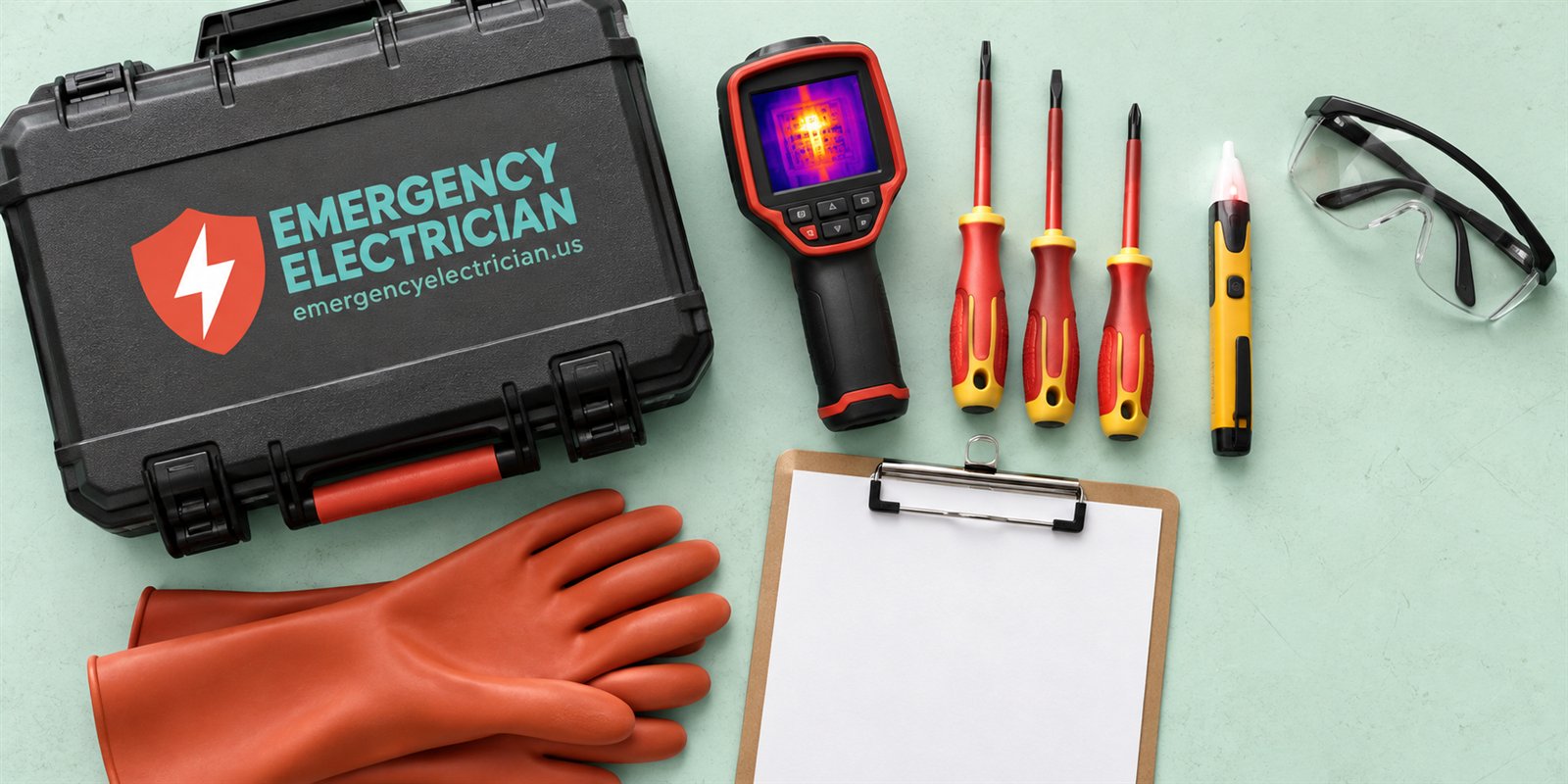
A technician preparing for attic work starts with safety. They plan for the heat, which may mean working in the early morning or evening, taking breaks and hydrating. They check the attic access and decide how to move around safely, using planks or walkways across joists. They bring lighting, a voltage tester, a thermal camera and protective gear. They shut off the circuit that serves the attic's affected area and verify with a tester that it is dead.
Once in the attic, they trace the circuit from the panel or the last known good point toward the fault. They look at cable condition, boxes, splices, connections to fixtures and fans, and any signs of heat or chewing. They move insulation carefully to see what is under it. Insulation resistance tests on isolated sections identify cable that leaks even if it looks fine.
A thermal camera used while the circuit carries a normal load shows hot spots at connections, boxes and fixtures, which helps find loose terminals. They also check attic-mounted equipment, such as air handlers, exhaust fans and the disconnects and supply wiring that serve them, because those are common sources of faults. Our page on air handler and outdoor disconnect failures covers that equipment.
When the fault is located, the technician explains it and shows you photographs of what they found, since you may not want to go into the attic yourself. A trustworthy technician will show you before and after photographs, and note where junction boxes are, so you know what was done.
How the repair is made: boxes, cable, protection and tidiness
Attic repairs follow the same rules as repairs anywhere: splices go in accessible junction boxes with listed connectors, and damaged cable is replaced instead of taped. In an attic, accessibility means the box can be reached without moving a permanent obstruction, and the box cover is visible and not buried in insulation. Where a box would be covered, the technician may mount it on a raised platform or mark it with a visible indicator, in line with the standards.
Where cable runs across the tops of joists in areas where people may walk or store items, protection is required in some situations, such as running the cable alongside a guard strip or through bored holes. Cable that passes through framing is supported at intervals and protected where it enters boxes. The technician checks that cable is not stretched tight and has slack.
If the damaged cable is long, replacement from box to box is usually better than patching. If heat damage extends along the cable, as discussed in replacing wiring damaged by heat, replacement may be extended to include the heat-affected length. Fixtures that have overheated are replaced with types rated for the conditions, and recessed fixtures are replaced with insulation-contact-rated units where needed.
After repair, insulation is restored in a way that does not cover boxes or fixtures that must stay clear. The technician should leave the attic as they found it or tidier, and tell you if any other trade, such as an insulation contractor, needs to restore insulation. Quotes are given only by phone, and complicated jobs need an on-site visit.
Related attic equipment: fans, air handlers and lights
The attic often holds more than wiring. Air handlers, exhaust fans, attic ventilation fans, ceiling-mounted bath fans, junction boxes for the ceiling fixtures below, and sometimes storage of electronics. Each has its own wiring, and each can fail. A bath exhaust fan with a seized motor can overheat and smell of burning. An attic ventilation fan can draw current when a bearing fails. An air handler's disconnect and its wiring in a hot attic can degrade.
Many attic faults appear as problems in other rooms. A tripping breaker for a bedroom may be caused by a fault in an attic junction box above. A dead circuit in a hallway may be caused by a cable damaged in the attic. For this reason, a technician maps the circuit before deciding where the fault is, and does not assume it is in the room where the symptom appears.
Cooling and ventilation equipment also depends on safe wiring. If the air conditioner's air handler is in the attic, a failed disconnect or supply wire can stop cooling in the middle of the summer. That is both an electrical and a comfort emergency, and the technician will keep the electrical safety first. Our page on ceiling fan and fixture faults covers the equipment below the attic that shares those circuits.
If you are not sure which circuits go through the attic, a technician can map them and label the panel directory as part of the visit.
Storm and roof damage in the attic
Hurricane season brings attic problems. A roof that has lost shingles or tiles can let rain into the attic, wetting insulation, cables, boxes and equipment. Wet insulation is heavy and can pull on wires and boxes. Water running down cable into ceiling fixtures can short them. After a storm, any attic that has taken in water should be treated as electrically suspect, and the circuits that pass through it should be kept off until a technician has checked them.
Do not turn on lights or fans under a stained or sagging ceiling. Water that has collected above can come through a fixture, and a fixture with water in it can arc. If a ceiling is dripping near a light, leave it off and, if safe, stay out of the room. Our page on wet attics and ceiling lights after a storm explains the sequence.
A tree limb or debris on a roof can also pull the service mast or cables that enter the attic or the roofline. If you see wires pulled or a mast leaning, treat it as a utility and service emergency, as described in our pages on storm-damaged meters and masts.
After the storm, the technician checks for moisture in the attic, tests insulation resistance on circuits through the space, and replaces wet or corroded boxes, devices and fixtures. Drying alone is not enough where cable has been saturated for a long time; testing decides.
Calling for help and preventing attic faults
When you call, tell the dispatcher what you noticed and where: the room, the ceiling, the smell, the stain, the sound. Say which breaker tripped, if you know. Say whether there has been a recent roof leak, a storm, an insulation job, or pest activity. Say whether anyone has entered the attic recently. Keep the affected circuit off and the rooms below it clear.
Quotes are given only by phone, and complicated jobs need an on-site visit. There is a service call charge, and it is explained before dispatch. Ask whether the technician will provide photographs of the attic findings, and whether they will tell you about any wildlife or roof issues that need other trades. Our guide on what to tell the electrician dispatcher lists what to prepare.
To reduce future attic faults, keep the attic access clear and tell contractors about wiring before they work up there. Do not store items against junction boxes, and do not pile insulation over boxes or recessed lights that are not rated for it. Seal entry points for pests, and fix roof leaks promptly. Have an electrician check the attic wiring when you buy an older home, replace the roof or add insulation.
If you have noticed any of the signs described here, call and describe them. A dispatcher can tell you what to do right now and how to prepare for a technician to inspect the attic, so that the fault is found and repaired safely.
Questions people ask
Should I go into the attic to look for the problem?
No. Attics are hot, easy to fall through and may hide energized or damaged wiring under insulation. Turn off the circuit if you can identify it, keep people out of the rooms below the suspected fault, and call. A technician has the tools, protective gear and method to inspect the attic safely.
Why does my breaker trip when I am not near the attic?
Because the fault may be in the attic above the room where you notice the symptom. Circuits often pass through attics before reaching the lights and outlets below, so damage to cable, boxes or fixtures there can trip a breaker for a bedroom or hallway. Testing traces the circuit to the actual location.
Can insulation cause an electrical fire?
Insulation does not ignite from electricity by itself, but covering cable, boxes and recessed lights that are not rated for it can trap heat and raise temperatures. Combined with a loose connection or an overloaded circuit, that heat can damage wiring and ignite nearby material. Keep boxes accessible and use fixtures rated for insulation contact.
What if rodents chewed the wires?
Keep the circuit off and have a technician inspect and repair the cable in accessible junction boxes or by replacing the run. Rodent damage is often multiple, so the whole area is checked. A pest professional should remove the animals and seal entry points, or the damage will return, even after a good electrical repair.
Is it safe to run the air conditioner if the attic wiring looks damaged?
Not if you have signs of a fault such as burning smells, flickering, tripped breakers or stains. Air conditioning equipment draws heavy current and can worsen a fault. Turn off the equipment at its disconnect or breaker if you can do so safely, and call. Plan for heat protection for anyone vulnerable while repairs are made.
Do attic repairs need a permit?
It depends on the scope and the city. Replacing a section of cable in an accessible junction may not need one in some places, while replacing circuits or fixtures often does. Ask the dispatcher or the building department. Do not skip a required permit, since it protects you with insurance and resale.
If "Urgent Attic Wiring Repair" matches what is happening, call and describe it plainly: the room, the breaker, any burning smell or tripped circuit. We explain what the repair would involve before a visit is set.
Related pages
- Wire Repair and Splicing: How damaged wiring from rodents, nails or heat is repaired in approved accessible junctions, why hidden splices are not acceptable, and what to do meanwhile.
- Burned Wiring Replacement: How a technician decides how far heat damage runs along a wire, which sections must be replaced, and what to do after an overheating event or small fire.
- Knob-and-Tube Hazard: What to do when old knob-and-tube wiring is found damaged, buried in insulation or overheated, how technicians assess it, and how replacement is decided.
- Wet Attic Lights: A roof leak can send water along wiring into ceiling lights. Learn what is safe to do, what to leave alone, and how an electrician triages a wet ceiling.
- Business Backup: Planning backup power for a small business: what to keep running first, how generators and batteries differ, and how to stay safe during an outage.
- Business Power Loss: Your business just lost power. Follow a safe first-hour sequence for owners and managers: safety, isolating the cause, informing staff, and documenting.