
How to think about readiness, and what it cannot do
Electrical readiness is about reducing risk and shortening confusion. It is not a shield. A well-prepared home can still lose power, take a surge, flood, or suffer a tree strike, and no one can promise that a particular outcome will be avoided. What readiness can do is help you make calmer decisions when conditions are bad, keep you out of the most dangerous mistakes, and let you give a dispatcher and a technician useful information.
The season is long, and the risks change across it. Early in the season, the job is preparation: finding out what you have, fixing what is known to be weak, and gathering documents. As a storm approaches, the job is protection and shutdown decisions. During a storm, the job is staying safe and staying away from electrical equipment. Afterward, the job is careful restoration and documentation. Splitting the work across these phases makes each one manageable.
Emergency triage thinking applies to all of it. If there is fire, smoke, a downed wire, or someone has been shocked, the call is 911 first, and the utility second. Everything else on this page is for the time when nothing is burning and nobody is hurt, and you have a chance to think. For the quick decision framework, see the emergency decision chart and our page on which problems belong to the utility and which to an electrician.
Before the season: learn your own electrical system
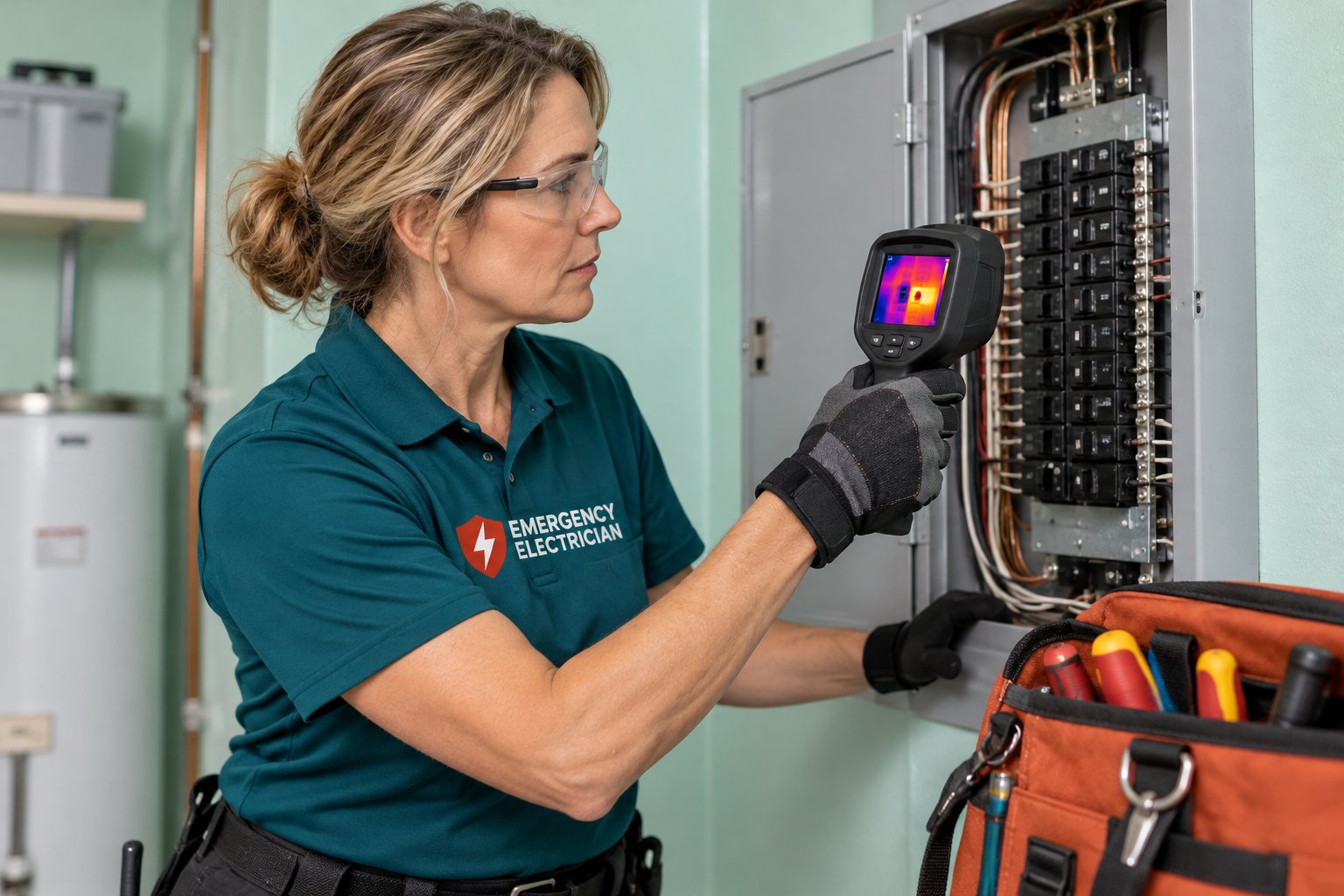
Begin by locating the main breaker and the panel, and make sure the path to them is clear. Find the meter, the service mast, and any sub-panels, such as one in a garage or a detached building. Know whether the panel is indoors, in a garage, or outdoors, because that affects flood and wind exposure. Our page on how to find your main breaker walks through the steps.
Check that the panel directory is legible. A panel where the labels are missing or wrong turns a dark, stressful moment into a guessing game. Labeling is something you can do on a dry, calm day, and it is explained in panel labeling before an emergency. Note which breaker serves the medical equipment, the refrigerator, the AC, the pool equipment, and the garage.
Look for the warning signs that come before an outage. Breakers that trip often, outlets that are warm, lights that flicker, buzzing at the panel, or discolored plates are all signals that something is stressed. A storm will find those weak points. The guide on warning signs that come before an outage describes what to notice, and if you see any of them, have a technician look at it well before the season peaks.
Before the season: have the equipment checked and decide on protection
A pre-season visit by a qualified electrician can look at the service equipment, the panel, the grounding, and the exterior connections. The point is to find loose connections, corrosion, damaged weatherheads, tired meter sockets, and any equipment that is at the end of its life. Pre-season is much easier than post-storm, because you have time, parts are available, and nobody is competing for attention.
Think about surge protection. A whole-house surge protective device installed at the panel, plus point-of-use protection for sensitive electronics, can reduce the odds and the severity of damage from surges. It is not a promise of immunity, and a direct strike can overwhelm any device. See when to add a surge device or generator and surge, spike, and outage terms for plain explanations.
Think about backup power. Portable generators and standby systems each have their place, and each has hazards. The central rule is that a generator must never be connected to household wiring without a proper transfer arrangement, because backfeeding can energize utility lines and endanger line workers and neighbors. Our pages on generator inlet and transfer switch basics and generator backfeed risk explain why. Decide on this before a storm, not during one.
Before the season: documents, photographs, and a household plan
Gather the paperwork you would want in a hurry. That includes the location of the main shutoff, the names and contact numbers of your utility and your insurance agent, and the information you may need for a claim. Take photographs of your panel, your meter, your outdoor equipment, and your major appliances while everything is in good condition. Pre-storm photographs make post-storm comparisons much easier.
Make a household plan for power loss. Who in the home depends on electrically powered medical equipment? Who is elderly, very young, or has health needs that are affected by heat? Where will the family go if the house is unsafe? Which neighbors might need help? Our guide on the household emergency plan for power loss provides a framework, and extended outage food and medical power addresses the longer outage.
Assemble a basic emergency kit, with flashlights, spare batteries, a battery-powered or hand-crank radio, phone chargers, and a basic first aid supply. Keep a list of emergency numbers on paper. Details are in the electrical emergency kit for the home. Do not rely on candles as a main light source, because open flames are an added hazard in a house that may also have other risks.
As a storm approaches: the checklist window
When a storm is being tracked and local officials are issuing guidance, the preparation shifts. Charge phones and portable battery packs. Move valuables and electronics away from windows and from floors that might flood. Bring in or secure outdoor items that could become projectiles and strike the meter, the mast, or the AC condenser. Outdoor furniture, potted plants, and loose items can all do damage in high wind.
Follow local instructions about evacuation. If you are told to evacuate, do so. Before leaving, consider whether to switch off the main breaker, which is a decision with trade-offs. Turning it off can reduce the chance of damage from a surge and can limit the risk of fire in a flooded building, but it also affects refrigeration and sump equipment. The page when to shut off the main before a storm explains the considerations, and the before-hurricane electrical checklist gives a practical sequence.
Unplug sensitive electronics, such as computers, televisions, and audio equipment, if you have time and can do so with dry hands in a dry place. A power strip is not a substitute for unplugging, since a strong surge can pass through it. Fill the fuel for a generator only according to the manufacturer's directions and keep fuel stored safely and away from living areas. Do not run a generator inside a garage, even with the door open.
During the storm: stay away from electrical equipment
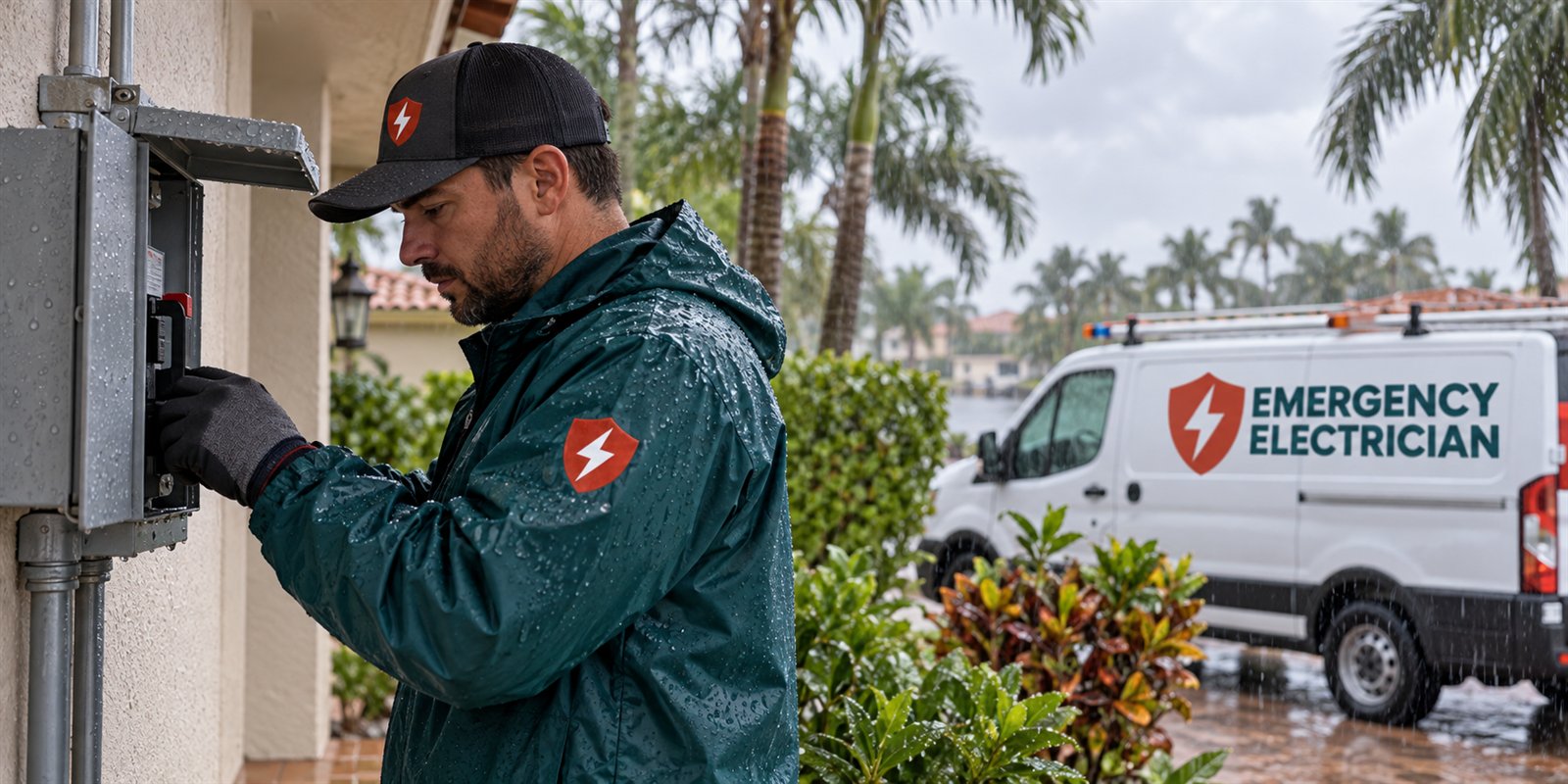
During the storm, the best thing you can do for electrical safety is to avoid the equipment. Do not go to the panel to reset breakers while wind and rain are battering the building. Do not go outside to check the meter or the AC. Do not touch anything that is wet and connected to power. Stay away from windows, and stay in an interior room if you are sheltering in place.
If water begins to enter the house, do not wade through water near outlets, appliances, or the panel. If you smell burning or see smoke, call 911 and follow the dispatcher's direction. Emergency response may be limited during the storm itself, and you may be told to wait. Follow their guidance. Resist the urge to go on a mission to fix an electrical problem when the conditions outside are dangerous.
If the power goes out, treat it as a normal consequence of the storm. Turn off or unplug appliances that were running, so that a sudden return of power does not surge through them. Leave one light switched on so that you know when power returns. This is a small habit with a real purpose, and it connects to the guidance on when power returns and breakers trip.
After the storm: slow, deliberate steps
Assume that anything outside is energized until proven otherwise. Downed wires, wires touching trees, and metal fences near them can all carry current. Stay well back and call 911 and the utility. Our page on downed wire in the yard and the guide on after-storm power restoration safety describe the cautions.
Inspect before restoring. If the home flooded, do not turn on the power until a qualified technician has inspected the system. If a tree struck the house, the meter, or the mast, the same applies. See tree fell on house wiring and storm-damaged meter and mast. If the meter or the weatherhead was damaged, the utility and an electrician both have roles in the repair sequence, as described in the page on the power company disconnect and reconnect process.
Document everything before any repairs. Photograph damage, note times, and keep receipts for emergency expenses. The guides on photographing damage before repairs and electrical damage and insurance documents help with that. Report damage to your insurer promptly, and ask what documentation they require.
A season calendar you can adapt
Early in the season, the tasks are inspection and preparation: have the electrical system checked, label the panel, install protection you have decided on, gather documents, take baseline photographs, and set up the kit. Do these tasks in calm weather, when contractors are available and the heat is not a factor. If a repair is recommended, schedule it then, rather than waiting for the peak.
In the middle of the season, the tasks are maintenance and review. Recheck the kit and the batteries, test smoke alarms and carbon monoxide alarms, confirm that the generator starts if you own one, and review your plan with the household. Walk the property to see whether trees or limbs are close to the service wires, and contact the utility if they are, since tree work near energized lines is not a do-it-yourself task. Check that outdoor outlets and exterior fixtures are in good condition.
When a named storm is being tracked, move to the storm checklist. When a storm has passed, move to the aftermath checklist. After the season ends, review what you learned: what worked, what did not, what repairs remain, and what you would do differently. That review is the start of the next year's plan. A season does not end with a single event, and good habits compound.
Who to call, and how the call works
Keep three types of contacts handy. First, 911 for fire, smoke, shock, and downed wires near people. Second, the utility, for outages, downed lines, and service-side problems. In much of South Florida that is FPL, and some cities have municipal systems. Third, an emergency electrician, for problems on your side of the meter, such as a damaged panel, a failed breaker, or storm damage to the wiring. The page on what to tell the electrician dispatcher and questions to ask before dispatch describe the call.
After a major storm, demand is high, and a technician cannot promise a specific arrival time. The dispatcher will ask safety questions and explain how the visit works. Quotes are given only by phone, a complicated job needs an on-site visit, and there is a service call charge that is explained on the phone before dispatch. Being clear and calm on the call helps everyone. Our guide on how to choose an electrical contractor in a crisis may also help.
Readiness is not a single day's work, and it does not have to be perfect. Pick one task this week, such as locating the main breaker, labeling the panel, or scheduling an inspection. If something in your electrical system looks or sounds wrong, do not wait for the season to test it. Call, describe what you see, and let a technician decide the safest next step.
Questions people ask
When should I start preparing the electrical system for hurricane season?
Start before the season, when contractors are available and the weather is calm. Locate the main breaker, label the panel, look for warning signs such as warm outlets or frequent trips, and consider an inspection and surge protection. Waiting until a storm is tracked leaves little time and makes parts and appointments harder to get.
Should I turn off the main breaker before a hurricane?
It depends on the situation, and there are trade-offs. Shutting off the main can limit surge damage and fire risk if water enters, but it also stops refrigeration and sump equipment. If you evacuate or expect flooding, many people choose to shut it off. Follow local guidance, and do it only with a dry panel and dry hands.
Is a whole-house surge protector enough to protect my electronics?
It helps, but it is not a promise of immunity. A direct strike can overwhelm any device, and protection works best alongside proper grounding and point-of-use protection for sensitive items. Unplugging valuable electronics before a storm is still the most reliable step when you have the time and can do it safely.
Can I connect a portable generator to my house outlets?
No. Backfeeding a house through an outlet can energize utility lines and endanger line workers and neighbors, and it can overload your wiring. A generator should power items through its own outlets with proper cords, or connect through a correctly installed inlet and transfer arrangement. Keep it outdoors and away from windows and doors.
What should I do if power comes back on after the storm and then trips?
Treat it as a message from the wiring. Do not keep resetting breakers. Unplug items on the circuit and call if it keeps tripping, if you smell burning, or if the home was flooded or struck by debris. A technician tests the circuit and finds the cause before it is used again.
How are quotes and the service call charge handled?
Quotes are given only by phone. Complicated jobs need an on-site visit, and there is a service call charge that is explained on the phone before dispatch. After a major storm, no arrival time can be promised, so call early, describe the situation clearly, and have your address and access details ready.
If "Hurricane Season Electrical Readiness" matches what is happening, call and describe it plainly: the room, the breaker, any burning smell or tripped circuit. We explain what the repair would involve before a visit is set.
Related pages
- Pre-Storm Checklist: A calm, practical electrical checklist for the days before a hurricane: what to check, what to charge, what to leave alone and when to call a professional.
- Main Off Before Storm: Decision logic for turning off the main breaker before a storm: flood risk, surge risk, medical needs, safe technique and how to re-energize later.
- Generator Safety: Portable generator safety after a hurricane: placement, carbon monoxide, refueling, cords and backfeed, with when to call 911 and when to call an electrician.
- Emergency Kit for Power: What to keep near your panel and in a grab-and-go kit for electrical emergencies: light, labels, a contact list and info cards, with no live equipment.
- After-Storm Power: What to check before the utility re-energizes your service after a storm, what to leave off, and how to bring a house back online without damage or hazards.
- Medical Power Plan: Plan for powered medical equipment in a long outage: 911 and your provider first, utility notice, safe backup power, and how an electrician can help.