
Triage first: 911, then the utility, then an electrician
If anyone is in danger, call 911 first. That means a person who has been shocked and is hurt, confused or unresponsive, someone trapped by rising water, visible flames, heavy smoke or a person with chest pain or trouble breathing after contact with electricity. Do not enter water to rescue someone if the water might be energized. Reach with a dry, non-conducting object from a safe place if you can, and wait for trained responders.
If there is standing water in the home and you do not know whether the power is off, assume it is on. Do not wade into the water, do not touch appliances or switches and do not try to reach the panel. Call the utility to disconnect power at the meter or the pole, and tell 911 if anyone is at risk. A downed or damaged line outside is also a reason to call both.
Once the water is gone and the utility has disconnected power, the next call is to a qualified electrician for an inspection. Do not turn power back on yourself. The order matters: safety first, disconnection second, inspection third, restoration last.
- Anyone shocked, trapped, or flames or heavy smoke: 911 first.
- Standing water in the home with power possibly on: stay out, call the utility.
- Line down, sagging or sparking: stay back, call 911 and the utility.
- Water gone and power disconnected: call an electrician for inspection before any restoration.
Why water and power are so dangerous together
Water is not a perfect conductor, but the water in a flooded house is rarely clean. It carries dissolved minerals, salt, sewage, soil and chemicals, all of which increase its ability to conduct current. If an energized wire, an outlet, an appliance or a panel is touching the water, current can spread across the floor, through the water and into anything metal that touches it, including you.
The danger is not limited to the water itself. A wet floor can energize a refrigerator or a washing machine whose wiring has been damaged. A metal railing or a pipe can carry current to a wet hand. Even after water recedes, a damp panel, a damp outlet or a wet wall cavity can hold current paths that did not exist before. Electricity does not need to arc visibly to hurt someone.
Because of this, the safe assumption after any flood is that the electrical system has been compromised until a qualified person says otherwise. That is not drama. It is the reason that official guidance across the country is consistent: stay out of standing water near electrical equipment, and do not use flood-exposed electrical systems until they have been inspected.
Do not enter standing water near power
If you return to a flooded home and there is standing water inside, stay out of it until the power is confirmed off at the source. Boots do not make water safe. Rubber gloves do not make a panel safe. Standing on a plastic chair does not make it safe either. The only reliable safety step is for the utility to disconnect service at the meter or pole, and to confirm that the home is isolated.
Do not try to turn off the main breaker if the panel is wet, if the floor around it is wet or if you would have to wade to reach it. A wet panel can be energized in ways that put your hand at risk, and the main breaker handle itself may be compromised. Contact the utility instead.
Do not use a vacuum, a pump or any electrical tool in the water unless it is powered by a source that has been confirmed safe. Do not plug in extension cords. A gas-powered pump used outdoors, well away from the house, is the usual approach to removing water, and even that should wait until the power is confirmed off. The guide on what never to do in an electrical emergency lists other common mistakes.
Getting the power disconnected
The utility can disconnect service at the meter, the weatherhead or the pole, depending on the situation. Call and explain that the home has flooded, that there is standing water and that you need power disconnected for safety. In a widespread event, utilities may be overwhelmed and slow to respond, so tell them if anyone is in danger or has medical needs.
In some areas, the utility will pull the meter. In others, they disconnect at the transformer or pole. Whichever method they use, do not attempt to pull the meter yourself. The meter socket holds live conductors, and removing the meter without training exposes you to a serious arc hazard. Do not cut wires, and do not try to reach the weatherhead.
If the flood is part of a larger regional event, the utility may cut power to a whole area, which is a form of disconnection but does not replace an inspection. When power is eventually restored to the neighborhood, your home still needs its own inspection and, in many cases, an authorization before it can be reconnected. Read the power company disconnect and reconnect process for how that typically works.
What a professional inspection checks
After the water is gone and the utility has disconnected service, a qualified electrician inspects the system before anything is re-energized. The inspection usually begins at the meter and service equipment, then covers the main panel, the breakers, the wiring, the outlets and switches, the lighting, the appliances with hard-wired connections and any outdoor or garage equipment.
The technician looks for signs of water intrusion: corrosion, mud, silt, a waterline on the equipment, residue, swollen insulation and discolored terminals. Components that were submerged are generally not trusted, because water and contaminants get inside devices where they cannot be dried out reliably. Breakers, outlets, switches and some wiring are often replaced as a precaution.
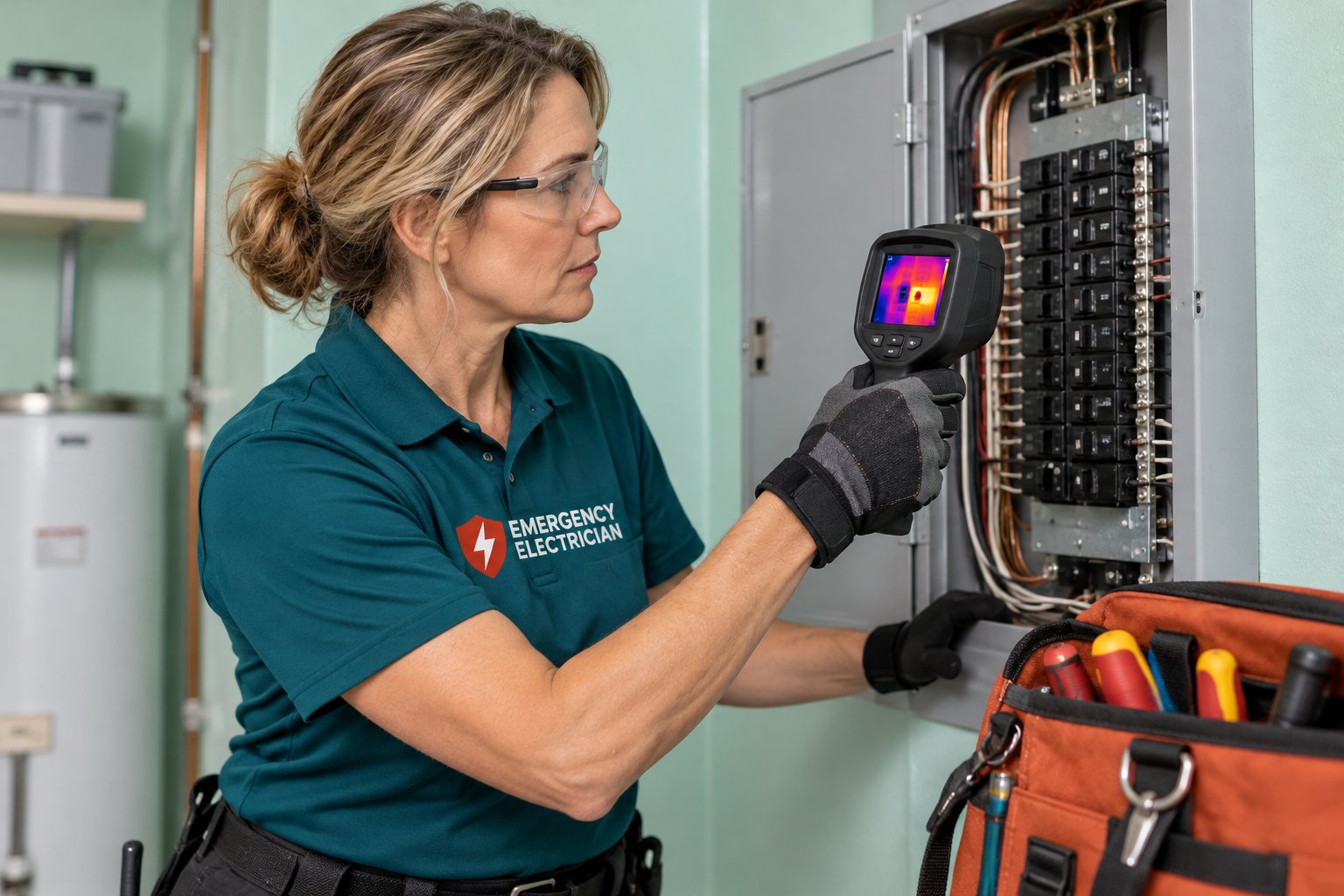
The technician may also use a meter to test for insulation resistance, continuity and unexpected voltage. The result is a decision about what can be restored, what must be replaced and what needs permits and an inspection by the local authority. Ask for a written summary of what was found and what was done. The page on what floodwater does to wiring explains the reasoning.
Appliances, outlets and equipment exposed to water
Anything that was submerged or soaked should be treated as unsafe to plug in until it has been inspected or replaced. That includes refrigerators, washers, dryers, water heaters, air handlers, pool equipment, garage door openers, power tools and any device with a motor or a circuit board. Even if they appear to dry out and seem to work, hidden corrosion can cause a failure or a fire later.
Outlets, switches and light fixtures that were underwater or wetted by rising water are also suspect. Water can get into wall cavities and stay there, so an outlet that was above the waterline may still have wet wiring behind it. Do not test them by plugging something in. Mark them, leave them off and tell the technician.
Do not try to dry out a panel or a breaker with a hair dryer, a heater or a fan. Do not spray anything on electrical equipment. Do not spray water or cleaning products into outlets. The page on flooded outlets after water intrusion and the page on water in an electrical panel describe what the symptoms look like and why they need professional attention.
Document before anything is moved
Before the cleanup begins, take photographs and video of the damage. Capture the waterline on the walls, the equipment that was wet, the meter, the panel with its door open if it is safe to do so, the outlets, the appliances and the exterior. Take wide and close-up shots. If you must discard something right away for health reasons, photograph it first.
Keep a written record of the dates and times: when the water arrived, when it receded, when you called the utility, when power was disconnected and when you spoke with an electrician or an insurer. Keep receipts for any temporary arrangements, such as lodging or a rental generator. Ask the electrician for a written findings report, which supports claims and later work.
Insurance claims for flood damage have their own rules, and the type of policy you hold matters. Do not assume what is covered. The guides on photographing the damage before repairs and electrical damage and insurance documents list what to gather.
Restoration: slow, inspected and permitted
Restoring power to a flooded home is a staged process. Equipment that is damaged is replaced, equipment that can be dried and tested is tested, wiring in wet walls may need to be opened and checked and in many places the work needs a permit and an inspection before the utility reconnects service. That process takes time, and rushing it is how people get hurt.
A common sequence is a safe disconnection, an inspection, a list of required repairs, permitted work, a final inspection and then reconnection. Ask the electrician what the local requirements are and what the sequence will be for your home. If the utility needs a release or an inspection tag before reconnecting, ask how to obtain it. The page on rebuilding after a storm and electrical permits goes through this.
In the meantime, plan for temporary power if you need it, and keep it safe. Never connect a generator to the house with a cord into an outlet. A properly installed transfer switch or a temporary power arrangement from a qualified contractor is the right approach. Read urgent temporary power restoration for what is usually possible.
What to have ready when you call
When you call an electrician, be ready to say whether anyone is in danger, whether the water has receded, whether the utility has disconnected power, which equipment was wet and how high the water reached. Say whether the meter or the service mast looks damaged and whether you smell burning or hear buzzing. The dispatcher uses that information to decide how urgent the visit is and what to bring.
Quotes are given only by phone, and complicated jobs need an on-site visit. There is a service call charge, and it is explained on the phone before anyone is dispatched. In a major flood, demand is high and the technician may need to prioritize, so be honest about the situation, including whether anyone in the home depends on powered medical equipment.
Keep the area around the panel clear and dry if possible, and keep children and pets out of affected rooms. When you are ready to talk through your situation, call and the dispatcher will walk you through the next safe step. Until the power is disconnected and the house is inspected, treat every wet outlet, appliance and wire as live.
- Get everyone to safety and call 911 if anyone is in danger.
- Stay out of standing water near power and call the utility to disconnect.
- Photograph the damage before moving or discarding anything.
- Call an electrician for a professional inspection.
- Wait for repairs, permits and reconnection before using any wet equipment.
Questions people ask
Can I turn off the main breaker in a flooded house?
Not if the panel is wet, the floor is wet or you would have to wade through water to reach it. Contact the utility to disconnect power at the meter or pole, and call 911 if anyone is at risk. Only operate the main on a dry floor with dry hands and a dry panel.
The water is gone. Can I turn the power back on?
Not yet. Flood-exposed wiring, outlets, breakers and panels can be damaged or contaminated in ways you cannot see. A qualified electrician should inspect the system first, and in many places a permit and an inspection are needed before reconnection. Turning power on too early can cause shock, fire and equipment damage.
Can I dry out my wet panel or outlets with a fan or hair dryer?
No. Drying does not remove contamination or corrosion inside devices, and using electrical equipment near wet panels is dangerous. Leave wet equipment alone, keep the area off limits to children and pets and let a qualified electrician decide what can be saved. Often wet breakers, outlets and switches are replaced.
Should I pull the electric meter myself?
No. The meter socket holds live conductors, and removing a meter without training exposes you to a serious arc hazard. The utility disconnects service at the meter, pole or transformer. Call the utility, explain the flooding and tell them if someone in the home depends on powered medical equipment.
How does pricing work for a flood inspection?
Quotes are given only by phone. Complicated jobs need an on-site visit before a quote can be given. There is a service call charge, and it is explained on the phone before dispatch so you know the terms up front. Have details ready, such as how high the water reached and which equipment was wet.
What should I photograph before cleanup?
Photograph the waterline on the walls, wet outlets, the meter, the open panel if safe to do so, appliances, outdoor equipment and the exterior from several angles. Take wide and close-up shots and write down dates and times. Photograph items before discarding them, and ask the electrician for a written findings report.
Reading about "First Electrical Steps in a Flooded Home"? Tell us what stopped working and when. We will say what an electrician would check first, and quotes are given by phone when the job can be described.
Related pages
- Flood and Wiring: How floodwater damages wiring, breakers, outlets and panels: corrosion, contamination, trapped moisture, and why wet devices are replaced instead of dried.
- Water in Panel: Water reaching an electrical panel is serious. Learn when to shut the main, when to stay out, what causes intrusion, and what an electrician checks first.
- Disconnect Process: The usual order of events when a service is pulled for repairs in South Florida: who does what, what gets inspected and why power returns when it does.
- Rebuild Permits: How storm-damage electrical repairs move through municipal permitting and inspection in general terms, and what to ask before work starts on your home.
- After-Storm Power: What to check before the utility re-energizes your service after a storm, what to leave off, and how to bring a house back online without damage or hazards.
- Pre-Storm Checklist: A calm, practical electrical checklist for the days before a hurricane: what to check, what to charge, what to leave alone and when to call a professional.
Working through the first day without touching the electrical system
The first day after a flood is mostly about restraint. Many of the most helpful actions involve things you do not do: you do not step into wet rooms with live outlets, you do not turn the main on to see if it works and you do not run a wet-vac or fans from circuits that may be compromised. Instead, you protect people, keep children and pets away, take photographs from the doorway and make the calls that matter. That discipline can feel unproductive when you want to start cleaning, but it avoids the injuries that follow the most common mistakes.
Use the time to plan. Write a list of rooms, equipment and belongings affected, noting which appliances were plugged in and where the panel and meter are. Find your insurance carrier's claim contact and any documents you can reach safely. Arrange somewhere safe to stay if the home is unfit. If you must retrieve medicine or documents, do so only when it is clearly safe, and never in standing water near outlets, cords or appliances. Ask the utility or a professional to confirm the power is off, rather than assuming it is.
Decide who does what. One person handles calls and notes, another keeps family members safe, a third coordinates with neighbors or relatives. Resist the urge to hire the first available crew for demolition before the electrical assessment is complete, since removing materials too soon can complicate both safety and documentation. Call us to explain the situation, and we will describe what an assessment involves and confirm availability. The scope and any quote are explained before work begins, so you can plan the recovery in an orderly way.
Dry-out, fans and dehumidifiers: using power only when it is truly safe
Drying a flooded house is important, because lingering moisture damages materials and encourages mold. But drying equipment needs electricity, and that is exactly the part of the house that is uncertain. Running fans or dehumidifiers on a flood-affected circuit risks shock and fire. Until the system has been inspected, avoid it. When power must be used, it should come from a verified safe source, such as an outlet in an undamaged area on a circuit that a professional has checked, with a proper cord rated for the load and kept clear of water.
Think about sequence. First comes the safe disconnection and the assessment, then repairs to damaged equipment, then restored power in stages. Drying contractors often work with electricians on this, because walls cannot be closed until the wiring inside has been reviewed. Cable that was submerged may need replacement before insulation and drywall go back, and it is much easier to find that problem before the wall is rebuilt. Take note of whether the issue is constant or comes and goes, since that distinction narrows the possibilities considerably. Ask the drying crew how they plan to power their equipment, and do not accept makeshift connections.
Be wary of shortcuts that look helpful. A generator run near the house, a cord strung through a window or a connection into a dead outlet can create fire, shock or carbon monoxide hazards. Keep fuel-burning equipment outdoors and away from openings. If you are unsure whether a source is safe, do not use it. Call us and describe what you need to run and where, and we will explain the safe options and confirm availability. Any scope and quote are laid out before work begins.