
Safety first, paperwork second
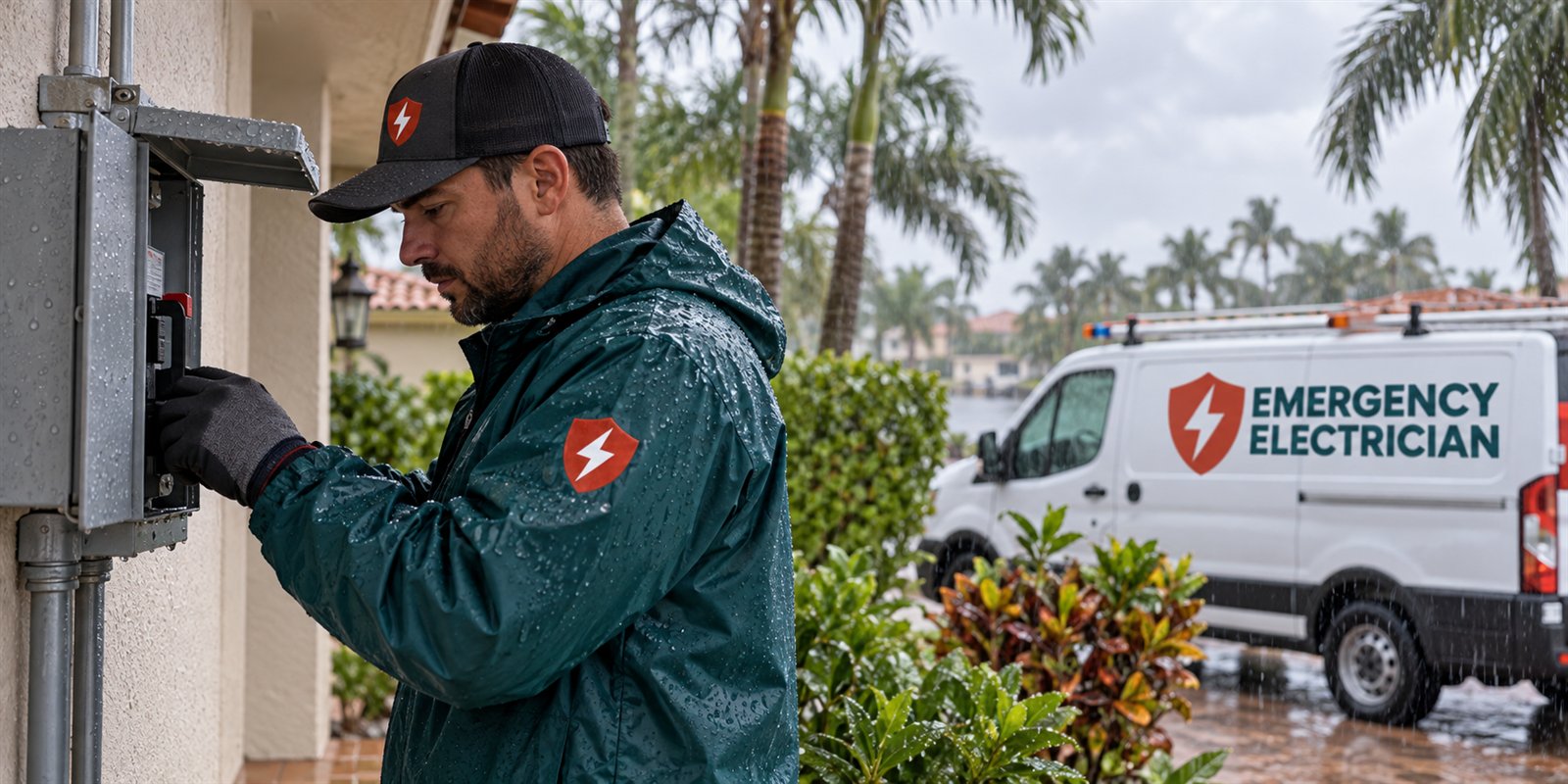
Permitting is not the first priority after a storm. Safety is. If there is fire, smoke, a downed wire, or a person who has been shocked, call 911. If power has been lost or equipment is damaged, the first goal is to make the situation safe, which may include shutting off power, isolating damaged circuits, or arranging for the utility to disconnect service. Nobody expects you to file paperwork while the situation is dangerous.
Emergency repairs to make a property safe are often done quickly, and permitting may follow depending on the local rules. The details differ by city and county, and they can change after a major event, when local governments sometimes adjust procedures to handle the volume of repairs. A technician who works in your area can usually tell you how your municipality handles it. Treat what you read online, including this page, as a general guide and confirm local practice with the permit office.
The point of the process is the same everywhere: a second set of qualified eyes confirms that the work meets the adopted electrical standards before the system goes back into service. After a storm, when wiring may have been wet, burned, stretched, or struck, that second look matters more, not less. For the general question of when a permit is needed, see do I need a permit for emergency electrical work.
Why permits and inspections exist
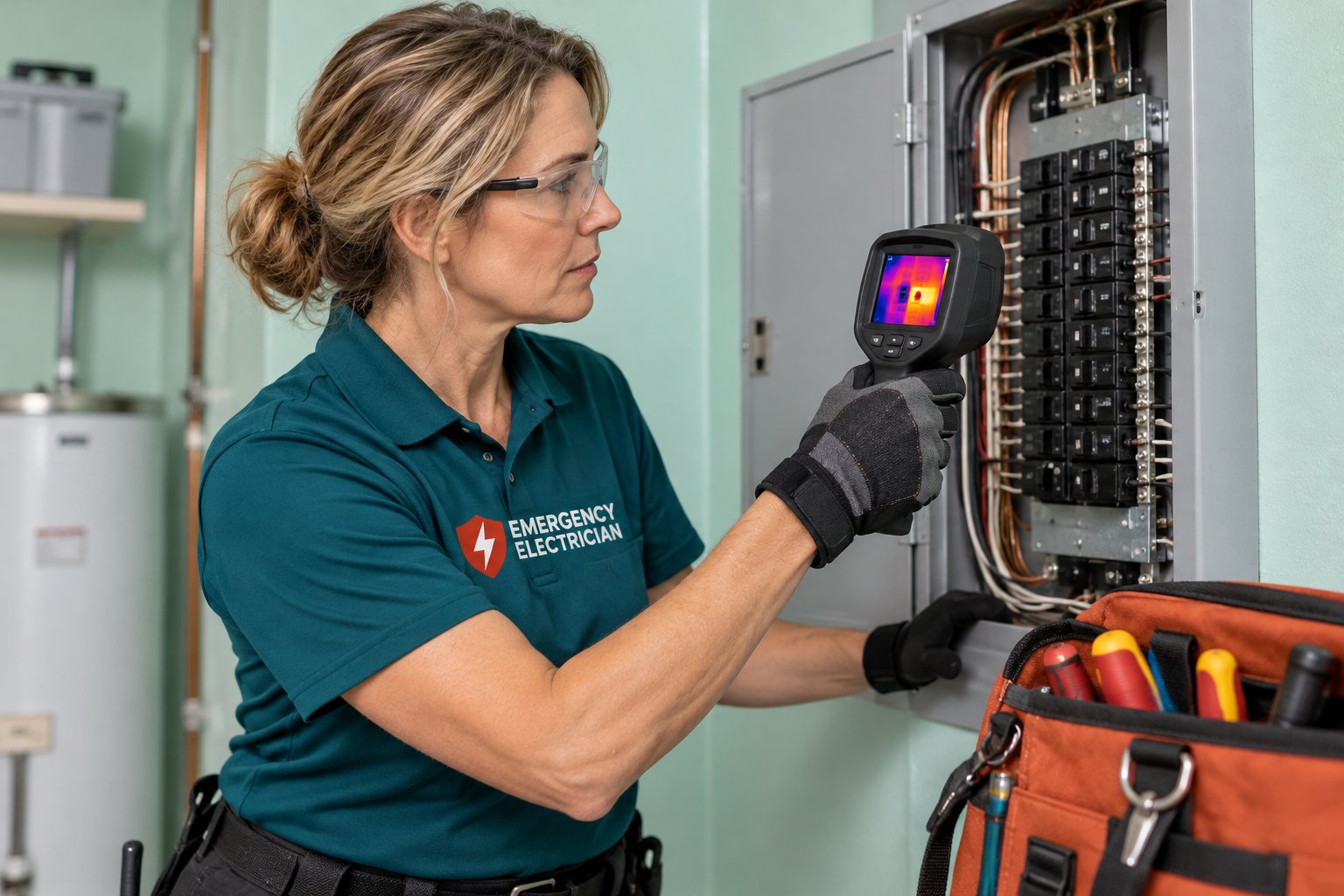
A permit is a record that a project was proposed, reviewed, and approved to proceed. An inspection is a verification that the work was done correctly. Together they create a paper trail and a safety check. They protect the homeowner, the neighbors, the utility workers, and later owners of the property. Wiring that is hidden behind a wall can fail years after it was done, and an inspection is one of the few moments when someone other than the installer looks at it.
Insurance companies, lenders, and future buyers often care about whether work was permitted. A claim may ask for documentation of repairs, and a sale may involve questions about past work. Unpermitted work can complicate all of these. That does not mean every small repair needs a permit, but it does mean that when a permit is required, skipping it can create trouble later. Our page on electrical damage and insurance documents covers the insurance side.
Permits also help ensure that the person doing the work is allowed to do it. Many jurisdictions require that electrical work be done by or under a qualified, permitted electrical contractor, and that the contractor pulls the permit. Homeowners may be able to pull permits for some work on their own residence in some places, subject to local rules, but electrical work carries real hazards, and not every homeowner should attempt it. Ask the permit office what applies and ask any contractor to explain who is pulling the permit.
What kinds of storm repairs often involve a permit
The general pattern is that the larger and more fundamental the work, the more likely a permit is needed. Replacing a service entrance, a meter base, a service mast, or a main panel often requires a permit and an inspection, and usually involves coordination with the utility. Adding or relocating circuits, replacing a sub-panel, installing a generator inlet or transfer switch, and installing an EV charger circuit are also commonly permitted.
Repairs that rebuild damaged portions of a house, such as drywall, insulation, and framing after a roof failure or flood, often involve electrical work as part of the rebuild. When walls are opened and wiring is replaced, the electrical portion may be inspected before the walls are closed. This is called a rough-in inspection in many places, and it comes before a final inspection once everything is complete.
Like-for-like swaps of small devices, such as replacing a receptacle or a switch, are often handled differently, and in many places they do not require a permit. But storm damage changes the picture. If water has been inside a circuit, or if the wiring shows heat damage, a technician may recommend replacing more than the device, and the scope can grow into something that is permitted. Your technician can explain how the local office would treat your job. See also emergency panel replacement and urgent meter base replacement for services that commonly involve permitting.
The general flow, step by step
The sequence usually begins with an assessment. A technician evaluates the damage, explains what must be repaired or replaced, and says whether the work is likely to require a permit. If it does, the contractor typically prepares and submits the application to the local building department or the permit office of the city or county. Applications often ask for the property address, the scope of work, and details about the equipment, such as the panel size or the type of service.
The office reviews the application and issues the permit, sometimes quickly for simple jobs and more slowly for complex ones. After a major storm, offices may be busy, and timing can be longer. A contractor cannot promise a specific timeline, because it depends on the office. Once the permit is issued, work can proceed, and the inspection is scheduled at the right stage.
Inspections can happen at more than one point. Rough-in inspections occur before walls are closed. Service and panel inspections confirm the equipment and the grounding. A final inspection occurs when the work is complete. If the inspector finds a problem, the contractor corrects it and requests a re-inspection. When the work passes, the permit is closed out. In many cases the utility will not reconnect or restore service on a damaged service until the inspection has been passed, so the paperwork and the power restoration are linked. See the power company disconnect and reconnect process.
Service damage: where the utility and the inspector meet
When the meter, the mast, or the weatherhead has been damaged, the repair involves two parties. The utility owns and controls the equipment on its side, including the service lines up to the connection point, while the property owner is responsible for the equipment on the customer side. A common sequence is that the utility disconnects service for safety, an electrician repairs the customer-side equipment under a permit, an inspector approves the work, and the utility reconnects.
Because of this sequence, there is a waiting period that frustrates many owners. The home may sit without power while the permit and inspection are completed. This can be hard in the heat. It helps to start the process early, to ask the technician about the expected steps, and to stay in contact with the permit office and the utility as appropriate. A technician cannot promise outcomes or timelines, but a clear understanding of the sequence reduces surprises.
The pages on storm-damaged meter and mast, tree on the service line, and service mast leaning or bent describe the typical damage and how the repair flows. If a temporary arrangement is possible while waiting, the technician can explain what is allowed. See urgent temporary power restoration for what that can involve.
Rebuilds, large-scale repairs, and contractors
After a severe storm, a home may need substantial rebuilding. A roof replacement, a flood remediation, or a fire repair can involve many trades. The electrician usually appears at specific points: before walls are closed, to repair or replace wiring, and after finishes are done, to install fixtures, devices, and equipment. Coordination matters, because an inspection that is missed before drywall goes up can force the walls to be reopened.
If you are working with a general contractor, ask who is responsible for the electrical permit and how the electrical inspection fits the schedule. If you are hiring separately, make sure each contractor understands the sequence. Get the scope in writing and keep copies of permits, inspection results, and invoices. Our guides on how to choose an electrical contractor in a crisis and questions to ask before dispatch list useful questions.
Be wary of anyone who pressures you to skip a permit, or who is unwilling to explain who will pull it. After storms, people move through neighborhoods offering repairs. Verify credentials with the appropriate state and local sources rather than relying on a business card or a verbal claim. If a contractor is reluctant to provide information you can check, treat that as a warning sign.
Common rebuilding scenarios
A flooded single-story home may need the panel replaced, circuits replaced below the water line, and outlets and switches replaced throughout the affected rooms. Because walls are being opened for drywall removal, the electrician may be able to inspect and replace wiring in the cavity. The permit scope may cover the panel and the rewired portions, and the inspections happen in stages. See flooded home electrical first steps for the early safety steps.
A home with a tree strike may need a new service mast, a new meter base, and repairs to the wiring where the limb crushed or pulled conductors. The utility, the electrician, and the inspector each have a part. A home with lightning damage may need a panel replaced and several circuits traced and repaired, and the inspection confirms that grounding and bonding are in good order. See lightning strike house damage.
A condominium or townhouse may involve building-wide issues. If the damage affects shared electrical rooms, risers, or common equipment, the association and its contractors lead the repairs, and the individual owner's role is to coordinate access and handle the unit's side. Read condo association electrical emergencies for how responsibility is typically divided.
Documents to keep and questions to ask
Keep a folder, physical or digital, with every document related to the repair. That includes the permit number, the permit and inspection records, the contractor's information, the invoices, and the photographs of the work before, during, and after. This folder is your proof of what was done and that it passed inspection. Insurance adjusters, lenders, and future buyers may all ask for it.
Useful questions to ask the contractor include: Does this job need a permit, and who is pulling it? What inspections will be required, and when? What happens if the inspection fails? Will the utility need to be involved, and in what order? What parts of the work are urgent safety measures, and what parts can wait? Can I have a written description of what was found and what was done? See getting a written findings report.
Ask also about what you should not do. In particular, do not energize repaired equipment before the inspection is passed when the permit requires it, and do not allow anyone to cover up work that should be inspected first. These are the points where homeowners are sometimes tempted to hurry. A short delay is better than a failed inspection or an unsafe system.
Keeping the process in perspective, and when to call
Permits can feel like an obstacle at the worst time, but they are part of getting the system back to a safe, documented state. A qualified contractor who works in your area is familiar with the process and can often handle most of the paperwork. Your role is to ask questions, keep records, and be patient with the steps that are outside anyone's control.
If you are not sure whether your repair needs a permit, ask. The permit office can tell you, and so can a technician who works locally. If you are not sure whether your electrical system is safe to use, the answer is to leave it off and have it checked. For the broader question of what to do first, see the emergency decision chart.
When you are ready, call and describe what happened, what you see, and what has already been done. Quotes are given only by phone, complicated jobs need an on-site visit, and a service call charge is explained before dispatch. The technician will not promise a permit timeline, but they can explain the steps for your situation and help you get from an unsafe system to a documented, inspected repair.
Questions people ask
Do I need a permit for every storm-related electrical repair?
No, but many larger repairs do. Replacing a panel, a meter base, a service mast, or running new circuits commonly requires a permit and inspection, while a simple device swap often does not. Storm damage can widen the scope, so ask your technician and the local permit office what applies to your job.
Can I restore power myself after the inspection is passed?
Follow the instructions of the inspector, the contractor, and the utility. On a damaged service, the utility typically reconnects after the work has been inspected and approved. Do not bypass that sequence or energize repaired service equipment on your own, because the inspection and reconnection are part of making it safe.
Why is there a wait for the inspection?
Inspection offices schedule visits based on demand, and after a major storm the volume rises. Timing depends on the office, and a contractor cannot promise a specific day. Ask the contractor how inspections are being scheduled in your city and whether temporary arrangements are possible while you wait.
What if a contractor suggests skipping the permit?
Treat that as a warning sign. Unpermitted work can create problems with insurance, resale, and safety, and it means no one has independently checked the work. Ask who is pulling the permit and why, verify the contractor's credentials with the appropriate state and local sources, and consider getting a second opinion.
Who pulls the permit, the homeowner or the contractor?
Usually the contractor, who prepares and submits the application as part of the job. Some places allow homeowners to pull permits for certain work on their own residence, but electrical work is hazardous, and not every homeowner should do it. Ask the permit office about local rules and ask your contractor to explain who is responsible.
How are quotes and the service call charge handled?
Quotes are given only by phone. Storm-related electrical repairs that may involve permits typically need an on-site visit, and there is a service call charge that is explained on the phone before dispatch. Call, describe the damage and what has been done, and the dispatcher will explain how the visit works.
Reading about "Electrical Permits and Inspections After a Storm"? Tell us what stopped working and when. We will say what an electrician would check first, and quotes are given by phone when the job can be described.
Related pages
- Mast and Meter: Why damaged meter sockets, masts and weatherheads must be repaired by an electrician before the utility reconnects, and how the process usually works.
- Flood First Steps: What to do about electricity in a flooded home: stay out of water near power, how the utility disconnect works and why inspection comes before power returns.
- Emergency Permits: How urgent electrical repairs still move through permits and inspections in South Florida, what usually needs one, and what to ask before work starts.
- Panel Replace: Fire, flood or failure can force a panel swap. See when replacement is needed, how permits, utility disconnect and inspection work, and how to prepare.
- Outdoor Equipment: Debris, surge and water can wreck an outdoor AC condenser, disconnect or pool equipment. See what is safe to check, what to leave alone and what a tech tests.
- Tree on House: A tree on the house can hide damage to attic wiring, fixtures and the service. Learn the hazards, the safe first steps, and what an electrician inspects.