
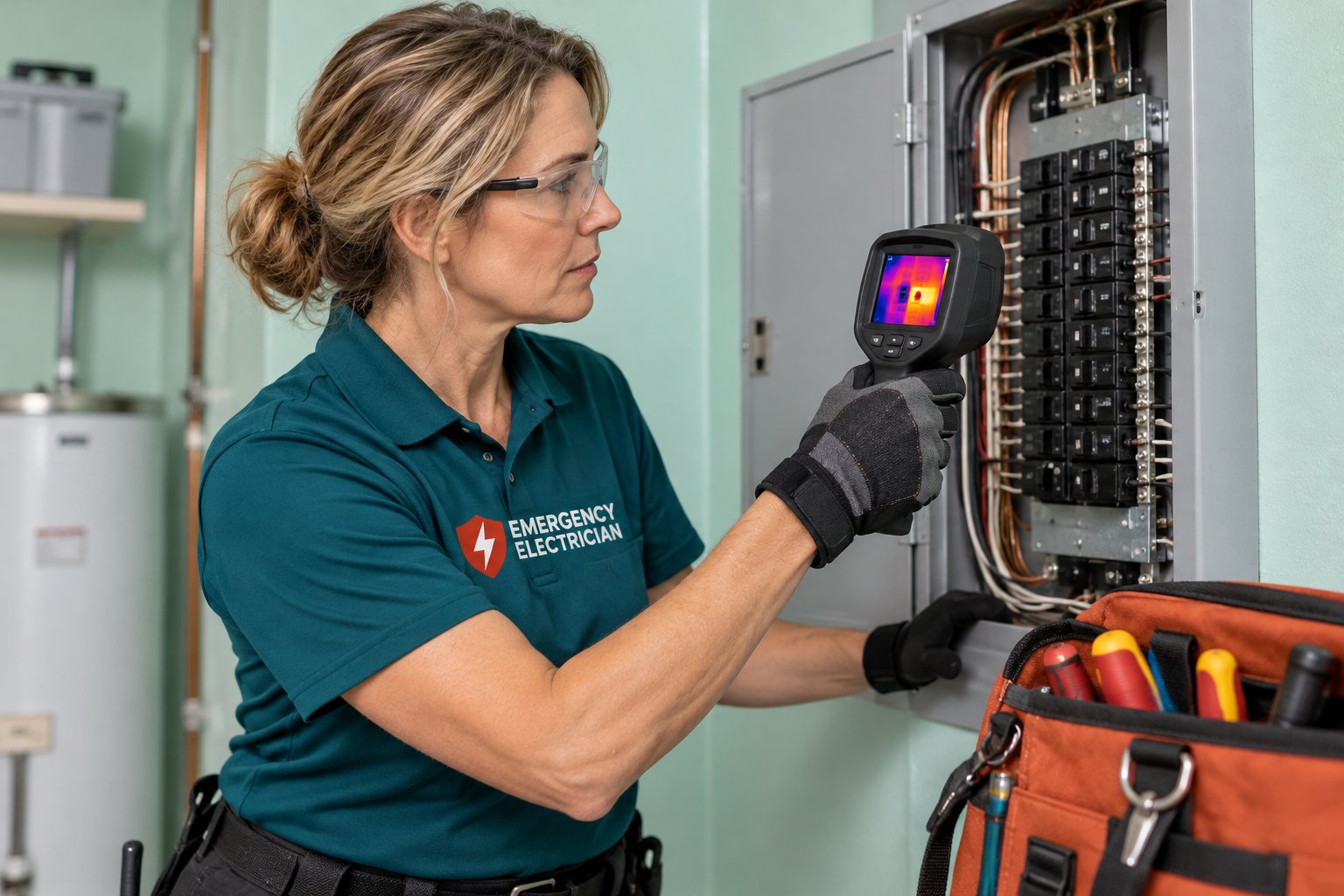
Triage first: fire, smoke, water and shock
Panel damage can be dangerous, so safety comes first. If the panel is smoking, burning, arcing, or the door is too hot to touch, call 911 and get everyone out. Tell the dispatcher what you see. Do not try to switch off the main breaker if the panel is burning, because operating a damaged breaker can arc. The fire department can ask the utility to disconnect power at the meter or the pole, which is the safe way to remove power from a burning panel.
If the panel has been flooded, wet or is sitting in standing water, do not enter the water and do not touch the panel. Water and live electricity can be lethal. Leave the area, keep others away, and have the utility or the fire department make the situation safe if power is still on. After the area is dry and power is disconnected, a qualified electrician can assess damage. Our page on flooded home electrical first steps gives the broader flow.
If someone has received a shock, call 911 and see our page on a person shocked at home. If the problem is simply a panel that has failed, with no fire, smoke, water or shock, you are in the calmer territory of urgent repair, and the rest of this page applies. Even then, resist the urge to open the panel or probe it. The interior of a panel includes live parts that remain energized when you switch off the main breaker.
What forces an urgent panel replacement
A panel is replaced urgently when it can no longer be made safe by a smaller repair. Fire damage is one cause: heat, smoke and soot can destroy the insulation, busbars and breakers inside, and even a panel that looks intact may be compromised. Flood damage is another: water in a panel corrodes busbars and terminals and may leave hidden damage that causes failure weeks later. Saltwater is especially harmful.
Mechanical and age-related failures also force replacement. A busbar that has burned from a long-term loose connection, a main breaker that has failed, a cracked panel enclosure, severe corrosion, or a panel type with a known problem can make repair impractical. Lightning or a large surge can damage the panel's internal parts. A vehicle or a falling tree can physically damage an outdoor panel or its mounting.
Another cause is the discovery of a hazard during a repair. An electrician investigating a tripped breaker may find melted busbars, overloaded neutral connections or a recalled panel brand and recommend replacement. In that case, the decision is yours, but the electrician should explain the risks clearly. Our guide on panel repair versus panel replacement outlines how to think about it.
Repair or replace: how the technician decides
Not every damaged panel needs replacing. If a single breaker has failed and the busbar is clean, a breaker replacement may be enough. If a lug is loose and the metal is not damaged, tightening or replacing the lug may restore safety. The technician looks at the extent of heat damage, corrosion, available replacement parts, the age and type of the panel, and whether the panel meets current safety expectations.
Replacement is more likely when damage is widespread, when parts are not available, or when the panel's design is outdated for the home's present load. A house that has added an air conditioner, an electric vehicle charger or a hot tub since the panel was installed may have outgrown it. If an urgent repair would be a patch on a panel that is already at the end of its useful life, the technician may suggest spending the effort on a proper replacement.
A technician should explain the findings and options. Ask what they saw, why it matters, what the alternatives are, and what each would involve. Ask what happens if you wait. Ask what is a temporary measure and what is permanent. You are entitled to understand the decision before you make it. When a repair is chosen, ask about limits on how the circuits should be used until a fuller solution is in place.
How the utility fits in
A panel replacement requires power to be off at the source. In most cases, the utility must disconnect power at the meter or the service drop before the old panel can be removed and must reconnect after the new panel has been installed and, in many jurisdictions, inspected. The power company, in South Florida usually FPL or a municipal utility depending on the city, controls that step. The electrician coordinates with them, but the scheduling is theirs.
In an emergency, the fire department can request an immediate disconnect. For a planned replacement after damage, the electrician or the homeowner requests a disconnect and reconnect, and the utility's availability determines timing. The electrician cannot promise a reconnect time, and neither can this page. Ask the electrician what to expect, and ask whether the meter socket or the service entrance also needs repair, since damage often extends beyond the panel.
If the meter base or the service mast is damaged, the work expands. Our pages on service mast repair and the power company disconnect and reconnect process explain how those parts interact. You should also tell the utility if the meter was damaged or if the service wire appears damaged, because that equipment belongs to them.
The permit and inspection flow
Panel replacement is regulated work. Almost every South Florida jurisdiction requires a permit for it and an inspection afterward, and some require the work to be done by a permitted electrical contractor. The exact process differs from city to city across Broward County and the cities from Boca Raton to North Miami. The electrician will explain what applies in your location and will normally apply for the permit.
The usual flow is: the electrician assesses the damage, requests the permit, schedules the utility disconnect, replaces the panel and re-terminates the circuits, tests everything, and requests an inspection. The inspector checks that the work meets the applicable rules and that the panel is properly grounded, bonded and labeled. After approval, the utility reconnects power if it was disconnected.
In declared emergencies, some jurisdictions allow emergency work to begin before the permit is issued, with the permit filed shortly afterward. Do not assume this applies. Ask the electrician. Never allow anyone to skip permits entirely, since unpermitted panel work can cause trouble with insurance claims and later property sales. Our page on permits for emergency electrical work goes into detail.
What the replacement involves
A panel replacement is more than swapping a box. The electrician removes the old panel, inspects and repairs the incoming service conductors, mounts a new panel of appropriate rating, and reconnects every circuit. They check each conductor for damage and cut back or replace any that are heat damaged. They install the new main breaker and branch breakers, set up the neutral and ground connections properly, and label each circuit.
They also check the grounding electrode system, which connects the panel to the earth through a rod, a water pipe or other approved means. Many older homes have deteriorated or missing grounding that must be corrected. They check bonding of metal piping and the panel enclosure. If the home needs surge protection, this is a good time to add it, as the panel is already open.
Panel size is a decision point. A replacement may match the existing rating or increase it, depending on the home's loads and the service from the utility. Increasing the service rating is a bigger job that may require new service conductors and meter equipment, and is discussed on our page about an urgent service upgrade. The technician explains which route applies and what it involves.
- Assessment of damage to the panel, conductors and meter equipment
- Permit application and utility disconnect coordination
- New panel, main breaker, branch breakers and connections
- Grounding and bonding check and correction
- Testing, labeling and inspection request
Living without power during the work
Expect the home to be without power for a period, and plan around it. Refrigerators and freezers will stay cool for a while if they are kept closed. Medical equipment, sump pumps and anything essential should be planned for in advance, with alternatives or a temporary location. Tell the electrician about such needs so that the sequence of work can be considered, though the utility's schedule may control the timing.
Do not use a generator by connecting it to the home's wiring without a proper transfer arrangement. A backfeed can send power into the utility lines and endanger workers. If you use a portable generator, run it outdoors, far from windows, and plug appliances directly into it with proper cords. Our page on generator backfeed risk explains this danger.
If the home is not safe to occupy, such as after a fire or a flood, you may need to stay elsewhere. Contact your insurer early, since many policies include provisions for temporary housing. Keep records of damage and communication, take photographs before anything is moved, and keep any damaged parts the electrician removes if the insurer wants to see them.
Insurance, documents and later verification
If damage came from a fire, flood, lightning or a storm, tell your insurer promptly and ask what they require. They may want photographs, a description of the damage, a written assessment from the electrician and an itemized record of the work. The electrician can supply a written statement of findings if you ask. See our pages on photographing damage before repairs and getting a written findings report.
Keep the permit, the inspection approval, and any panel directory the electrician provides. Ask them to label the panel clearly. Keep the manufacturer's information for the new panel. These records matter for future work, for resale and for any later claims. They also help you verify that the job has been completed properly.
After the work, watch for signs that something is wrong, such as warm breakers, flickering lights, buzzing, or circuits that trip. If you notice any, contact the electrician promptly. A properly installed panel should run quietly and coolly under normal loads. A follow-up question is better than an assumption.
Preparing for the call
When you call, explain what happened, whether there was fire, water, a surge or an age-related failure, whether power is currently on or off, whether the utility or the fire department has been involved, and what you can see of the panel from the outside. Say whether the panel is indoors or outdoors, what brand it is if visible, and how old the home is. Mention any occupants who rely on power for medical needs.
Quotes are given only by phone. A panel replacement is a complicated job that needs an on-site visit before a firm figure can be given, because the scope depends on the damage, the service equipment, the grounding and the permit requirements. A service call charge applies and is explained on the phone before anyone is dispatched. The dispatcher cannot promise an arrival time, and the utility controls its own schedule.
Before the visit, clear access to the panel and the meter, keep pets away, photograph the damage, and protect valuables. If it is safe to do so, take a photograph of the panel label and the meter. When you are ready to have a qualified electrician evaluate the damage and explain the options, call and describe what is happening.
- If there is fire, smoke, arcing or water around the panel, call 911 and leave.
- Do not open the panel or operate a damaged main breaker.
- Photograph the damage from a safe distance and note what happened.
- Contact your insurer if the damage came from fire, flood or a storm.
- Call and describe the damage, the panel location and whether power is on.
Questions people ask
Can a damaged panel just be repaired instead of replaced?
Sometimes. A single failed breaker or a loose lug may be repaired if the busbar and enclosure are sound. Fire, flood and heat damage often compromise parts that cannot be seen, so replacement is safer. The technician looks at the busbar, corrosion, parts availability and the panel type, then explains the options before you decide.
Do I need the power company involved?
Usually yes. Removing and replacing a panel normally needs the utility to disconnect power at the meter or service drop and reconnect afterward, sometimes after inspection. The electrician coordinates, but the utility controls its schedule. If the meter or service wire is damaged, tell the utility so that its equipment can be repaired.
Will the replacement need a permit and inspection?
In nearly all South Florida jurisdictions, yes. The electrician applies for the permit, completes the work, and requests an inspection. The inspector checks grounding, bonding, connections and labeling. Do not accept unpermitted panel work, since it can cause problems with insurance claims and future property sales.
Is it safe to stay in the house while the panel is out?
If the home has no fire or flood damage and the rest is sound, many people stay, though without power. Plan for refrigeration, medical needs and heat. If the home is damaged or unsafe, arrange to stay elsewhere and contact your insurer. Never run a generator indoors or connect it to the home's wiring without a transfer switch.
Can I upgrade the panel size at the same time?
Often it can be discussed, since the panel is already being replaced. A higher rating may involve new service conductors, a different meter base and utility coordination, and a plan for the home's loads. Ask the technician to explain what a larger service would involve and whether it makes sense for your situation.
How will I know what the replacement costs?
Quotes are given only by phone. Because a panel replacement depends on damage, service equipment, grounding and permits, an on-site visit is needed before a firm figure can be given. A service call charge applies and is explained on the phone before anyone is dispatched, so the first step is clear.
About "Emergency Panel Replacement After Damage": call and give us the details, and we will explain what is safe to do while you wait and what the visit would cover. Jobs that cannot be quoted blind need a look on site.
Related pages
- Breaker Replace: A bad breaker can leave circuits dead or overheat in the panel. Learn when replacement is urgent, what is inspected beyond the breaker, and why testing follows.
- Panel Smoke: Smoke from a breaker panel is a 911 event. Learn what to do while waiting, what the fire crew does, and how the electrician visit follows afterward.
- Water in Panel: Water reaching an electrical panel is serious. Learn when to shut the main, when to stay out, what causes intrusion, and what an electrician checks first.
- Repair vs Replace Panel: Inspection findings that push an electrical panel toward repair or replacement, including heat damage, corrosion, and obsolete designs, with no figures given.
- Service Upgrade: When a failed electrical service leads to an upgrade, how repair comes first, what a technician evaluates, and how the permit and utility steps work.
- Medical Office: Power failed in a medical or dental office? Learn the life-safety first steps, what circuits and backup planning cover, and what an electrician can do.
Choosing a panel for the way the building is actually used
A replacement panel is not just a like-for-like swap, because the building may have changed since the original was installed. Rooms get added, air conditioners are upgraded, kitchens gain appliances, and garages gain chargers or tools. The technician starts by learning what is actually connected and how the property is used. A small apartment with modest loads needs a different arrangement than a larger home with several cooling systems, or a shop with machinery. The panel needs enough space for the circuits you have today and some room for sensible additions.
Several choices follow from that conversation. The number of breaker spaces, the type of breakers and the arrangement of protection for bedrooms, kitchens, bathrooms and outdoor areas all matter. Surge protection at the panel can be added to the same job, and so can labeling that finally makes the directory accurate. Location counts too: a panel exposed to damp, a cramped closet or a spot blocked by shelving may need a better position, though moving a panel is a larger scope that is explained and quoted separately before any work begins.
There are tradeoffs to talk through. A larger or more elaborate panel gives flexibility but widens the scope, may involve upgrading related equipment and can lengthen the permit and inspection process. A simpler replacement restores service sooner but leaves less room later. Neither answer is right for everyone. Call us, describe how you use the property, and we will explain the options in plain language. Understanding the reasoning behind a recommendation makes it far easier to decide with confidence rather than under pressure. Asking questions at this stage is encouraged, since a panel stays in service for many years after the urgency fades.