
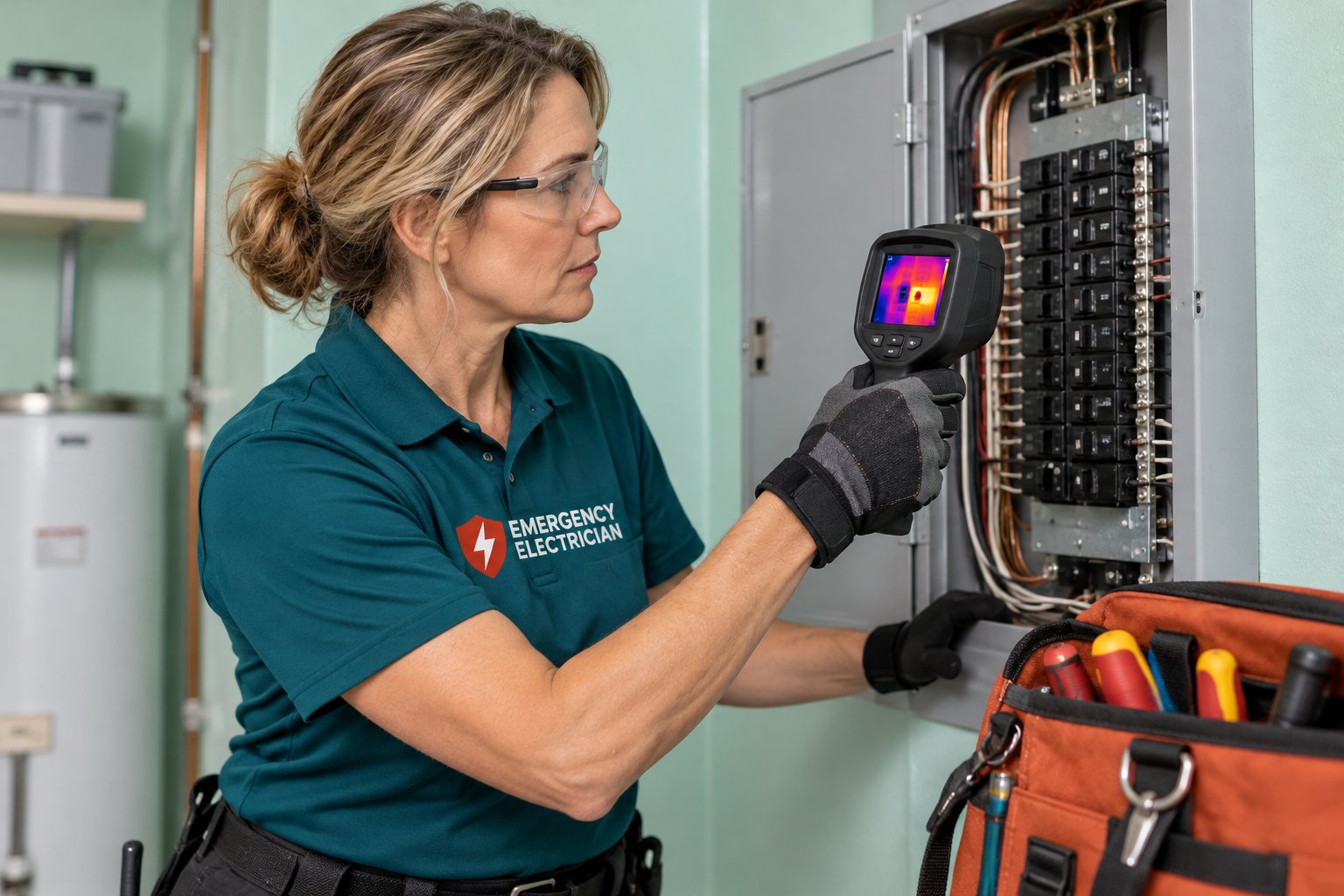
Why water in a panel is an emergency
A breaker panel holds exposed metal bus bars and terminals carrying household current, close to the grounded metal enclosure. Water that reaches those parts can create a path for current between conductors and to ground. That can trip breakers, cause arcing that burns insulation and metal, start a fire, and put anyone touching the panel or standing in water at risk of shock. Water can also corrode copper, aluminum and steel, which means that damage can show up weeks later even if the panel dried out and seemed fine.
The risk is not only from a flood. A small, steady drip from a roof leak, a roof vent, a pipe above, an air conditioner condensate line or a missing knockout cover can be enough. Water running down a conduit from the roof or the service mast can enter the panel at the top and drip onto the main breaker. Wind-driven rain can enter an outdoor panel with a poor seal. In South Florida, heavy rain, high humidity and heat make all of these more likely, and so does an old panel with rusted covers or missing gaskets.
Step one: decide whether it is safe to approach
Before you do anything, look at the situation from a distance. Is there standing water on the floor around the panel? Is water running or dripping from the ceiling or wall onto or near the panel? Is the panel door open? Can you see rust, steam, smoke or scorch marks? Can you smell burning? Do you hear buzzing, hissing or crackling? Are you wearing wet shoes, or is your skin wet?
If there is standing water around the panel, if water is actively pouring into it, or if you notice smoke, burning, noise or sparks, do not go near it. Leave the area, keep others away, and if there is fire or smoke call 911. Call the power company and tell them there is water in the panel; the utility may be able to disconnect power at the meter or the pole, which is the safest way to remove power when you cannot reach the main safely. Never walk through water to reach a panel, even if you think the power is off, because you cannot be sure what is energized.
- Standing water around the panel: stay out.
- Water pouring or spraying into the panel: stay out.
- Smoke, burning smell, buzzing or sparks: leave and call 911.
- Wet skin or wet shoes: do not touch the panel.
When shutting the main breaker is reasonable
If the floor is dry, the water is limited to a drip or a small area, you are dry, you can reach the panel without stepping through water, and there is no sign of fire or arcing, switching off the main breaker is a reasonable way to reduce risk. Stand to the side of the panel, not directly in front, turn your face away, use one firm motion with one hand, and keep your other hand away from metal. Do not open the inner cover, do not touch any wire or bus bar, and do not wipe the panel.
If the main is in a separate disconnect outside, the same rules apply: dry hands, dry footing, and no standing water. If you are not sure that these conditions are met, it is better to call than to take the chance. Our guides on how to find your main breaker and when it is safe to use the main breaker describe the limits in more detail. After the main is off, do not turn it back on until a qualified electrician has inspected the panel.
- Confirm the floor is dry and you are dry.
- Confirm no smoke, burning smell, buzzing or sparks.
- Stand to the side, and use one firm motion on the main.
- Do not open the inner cover or touch anything inside.
- Leave the main off until an electrician has inspected the panel.
Where the water usually comes from
Several sources are common. A roof leak can send water down a wall cavity, along a cable or conduit, and into the top of the panel. A failed roof penetration, such as a vent stack or an air conditioner line, can leak next to the panel's wall. A leaking pipe, a water heater, or an air handler drain line in an adjacent closet or above a garage ceiling can drip onto an indoor panel. Outdoor panels and meter bases can take water through a torn weatherhead, a cracked conduit, a missing cover or a bad gasket. A mast that has separated from the roof flashing lets water follow the cable into the panel.
Flooding is different: water rising from the ground can reach the bottom of a low panel, particularly in garages, utility rooms and ground-floor locations. If water has risen to the level of outlets or panel, the house needs to be de-energized and inspected before any use. See our pages on flooded home electrical first steps and what floodwater does to wiring for that case. Condensation can also cause a minor amount of moisture in a panel in a humid garage, and that is a different level of concern, but it still deserves an inspection if you see rust or water droplets.
- Roof leaks following cables or conduit into the panel.
- Plumbing, water heater or air handler leaks above or next to the panel.
- Torn weatherheads, cracked conduit and missing covers on outdoor equipment.
- Flood water reaching a low panel.
- Condensation in humid garages and utility rooms.
Stop the water, but do not touch the electrical
Once power is off, or if the water source is far from the panel and safe to reach, deal with the water itself. Turn off the main water supply if a pipe or appliance is leaking, and use buckets and towels on the floor, standing on a dry surface and not near the panel. If rain is coming in through a roof, a tarp or a roofing contractor can help, but do not climb on a wet roof or use a ladder near electrical service equipment.
Do not point fans or heaters at a wet panel, spray it with any product, wipe inside it, or dry it with a hair dryer. Do not remove the panel cover to look inside; a wet panel with the cover off is the most hazardous state to be in. Do not reset breakers that have tripped, since a breaker tripped by water may be reporting a fault that has not been cleared. Treat the panel as damaged until a technician says otherwise, and keep the main off and the area clear. Our page on smoke from the panel covers the case where things have gone further.
What happens to a wet panel over time
Water can leave quiet damage behind. Copper and aluminum conductors can corrode, particularly where salt air is present; aluminum can form a white oxide that increases resistance. Steel enclosures and breakers can rust, which can make breakers stick or fail to trip. Bus bars can pit, and terminal screws can loosen or seize. Moisture can also leave conductive residue on insulating surfaces, which creates leakage paths and arcing over time.
That is why a panel that has had water should be inspected even if it dried and appears to work. Breakers that have been wet may not trip at their rated current, which leaves the wiring they protect at risk of overheating. Ground fault and arc fault breakers may fail internally. In some cases, a technician will recommend replacing individual breakers, and in others the whole panel, if the bus bars or enclosure are corroded. Our page on a burned bus bar explains what heat damage inside a panel looks like, and panel repair versus panel replacement describes how that decision is made.
What a technician will do
On arrival, the technician will first confirm that the panel is de-energized, or arrange for the utility to disconnect power if it cannot be switched off safely. They will check the area for water, trace the source of the leak, and make sure the path of the water is stopped or diverted. With power off and verified, they will remove the cover and inspect the interior: bus bars, breakers, neutral and ground bars, lugs, and wire insulation. They look for water marks, rust, corrosion, scorching, melted insulation and signs of arcing.
Depending on the findings, the work can include drying and cleaning the panel, replacing damaged breakers, replacing corroded lugs or bus components, replacing the whole panel, or replacing the meter socket or service entrance. If water ran along cables, those cables may need inspection or replacement. The technician will also correct the cause: re-sealing a weatherhead, repairing conduit, replacing a gasket or cover, or recommending that a roofer or plumber repair the leak. Permits and inspection are normally required for panel replacement, and the technician coordinates with the utility for disconnection and reconnection. Our page on urgent panel replacement describes that process.
Complicated repairs usually need an on-site visit before a quote can be given, and quotes are given only by phone. A service call charge applies and is explained on the phone before dispatch.
Condos, garages and outdoor panels
In a condominium, water in an electrical room or a unit panel may be coming from a neighbor's unit or a roof or riser leak, so the building manager and association need to know right away. Do not enter an electrical room with standing water. Our page on condo electrical room fire risk explains why those rooms need quick attention. If you are a tenant, notify your landlord or property manager in writing.
Garages and utility closets are common homes for panels and also for water heaters, air handlers and washing machines, which can leak. Keep the area in front of a panel clear and dry, and do not store items that can leak or hold water above or beside it. For outdoor panels and meter bases, look for missing covers, cracked or missing gaskets, unsealed conduit entries, and drip loops that no longer slope down. Heavy rain or a hose spray hitting an outdoor panel can drive water into it, and that is a reason to have the equipment checked even when everything works.
- Condo: tell the building manager at once; do not enter a wet electrical room.
- Garage: keep leak sources away from the panel.
- Outdoor: check covers, gaskets, conduit seals and the weatherhead.
- Renters: notify the landlord in writing.
What to have ready and what to say
When you call, say clearly that water is getting into or onto the panel, where the water is coming from if you know, whether the panel is in a garage, closet, outdoor location or electrical room, whether the main is off and who switched it, whether there is any smoke, burning smell, noise or sparks, and whether there is standing water on the floor. Say whether anyone depends on medical equipment that needs power. Give the address and whether you own or rent.
Take a photograph of the panel and the water source from a safe distance and a dry position, without opening the panel. Keep the area clear so a technician can reach the panel. Do not use the panel until it has been inspected, and do not let anyone touch it. If the water entry is from the roof, call a roofer as well, since the leak will return with the next rain. Water in a panel is not a situation to wait out. Call so a qualified technician can make it safe, find the cause, and restore power properly.
Questions people ask
Should I turn off the main breaker if water is dripping into the panel?
Only if the floor is dry, you are dry, you can reach it without touching water, and there is no smoke, buzzing or sparks. Stand to the side and use one firm motion, and do not open the panel. If any of those conditions is not met, stay away and call. The utility can disconnect power at the meter.
Is it safe to use the panel once it has dried?
Not until a qualified electrician has inspected it. Water can corrode bus bars and breakers and can stop breakers from tripping correctly, even when the panel looks dry. A technician checks the interior with power off and decides whether cleaning, breaker replacement or panel replacement is needed.
Can I dry out the panel with a fan or hair dryer?
No. Do not open the panel or direct heat or air at it. Tools and moisture near energized parts are dangerous, and a damaged panel needs inspection regardless. Stop the source of the water if it is safe, keep the main off if you could switch it off safely, and call.
The water came from a roof leak. Who do I call?
Call both an electrician and a roofer. The electrician makes the panel and wiring safe and checks for damage, while the roofer or a plumber stops the source of the water. Without fixing the leak, water will return, and the electrical repair may be damaged again.
My outdoor panel got wet in a rainstorm. Is that a problem?
Outdoor equipment is designed to shed rain, but gaskets, covers, conduit seals and weatherheads wear out. If water is inside, there is rust, or the breakers trip after rain, have it inspected. Do not open it yourself, and do not spray it with a hose or a pressure washer.
Will the power company help if I cannot reach the main?
In many cases the utility can disconnect service at the meter or pole when there is a safety hazard such as water in a panel and standing water that prevents you from reaching the main. Call the utility's emergency line, describe the hazard, and call an electrician as well, since your equipment will need repair before reconnection.
About "Water Getting Into the Electrical Panel": call and give us the details, and we will explain what is safe to do while you wait and what the visit would cover. Jobs that cannot be quoted blind need a look on site.
Related pages
- Panel Smoke: Smoke from a breaker panel is a 911 event. Learn what to do while waiting, what the fire crew does, and how the electrician visit follows afterward.
- Flood First Steps: What to do about electricity in a flooded home: stay out of water near power, how the utility disconnect works and why inspection comes before power returns.
- Repair vs Replace Panel: Inspection findings that push an electrical panel toward repair or replacement, including heat damage, corrosion, and obsolete designs, with no figures given.
- Panel Replace: Fire, flood or failure can force a panel swap. See when replacement is needed, how permits, utility disconnect and inspection work, and how to prepare.
- Water in Outlet: Water dripping from a ceiling light, fan or outlet is both a leak and an electrical hazard. Learn how to separate the water from the circuit and stay safe.
- Surge Device Failed: A whole-house surge device with a red light, alarm or burn marks has done its job or failed. Learn what the indicator means and what to do after a big surge.
Drying out is not the same as being safe again
Once the water stops and the panel looks dry, it is tempting to believe the danger has passed. It has not. Moisture can sit behind the breakers, inside the bus bars, around the cable entry points and in the gap between the cabinet and the wall. Salt in the humid South Florida air can leave a conductive film as the water evaporates, which gives electricity a path it was never meant to have. A panel that looks fine on the surface may still be unsafe to energize, which is why a visual check by the homeowner is not a verdict.
Do not use a hair dryer, heat gun, space heater or fan to dry the panel, and do not spray any cleaner or contact product inside it. Heat can warp plastic parts and drive moisture deeper, and sprays can leave residues that burn. Avoid opening the cover even if it seems loose. If the main breaker is already off and it is dry and safe to stand where you are, leave it off and keep children and pets away from the area. Put a note on the panel so nobody switches it back on out of habit.
A technician decides what is salvageable by testing and by looking at specific signs: corrosion on terminals, stains or tracks on the insulating surfaces, breakers that no longer move freely, and any smell of scorching. Some parts can be cleaned or replaced, while others, especially those that have been wet for a long time, point toward replacing larger sections. The reasoning and the scope are explained before work begins so you can decide with the facts in hand, rather than having the panel simply declared ruined or fine. Take your time describing it, and say so if you are unsure, because an honest I do not know is more useful than a confident guess.