
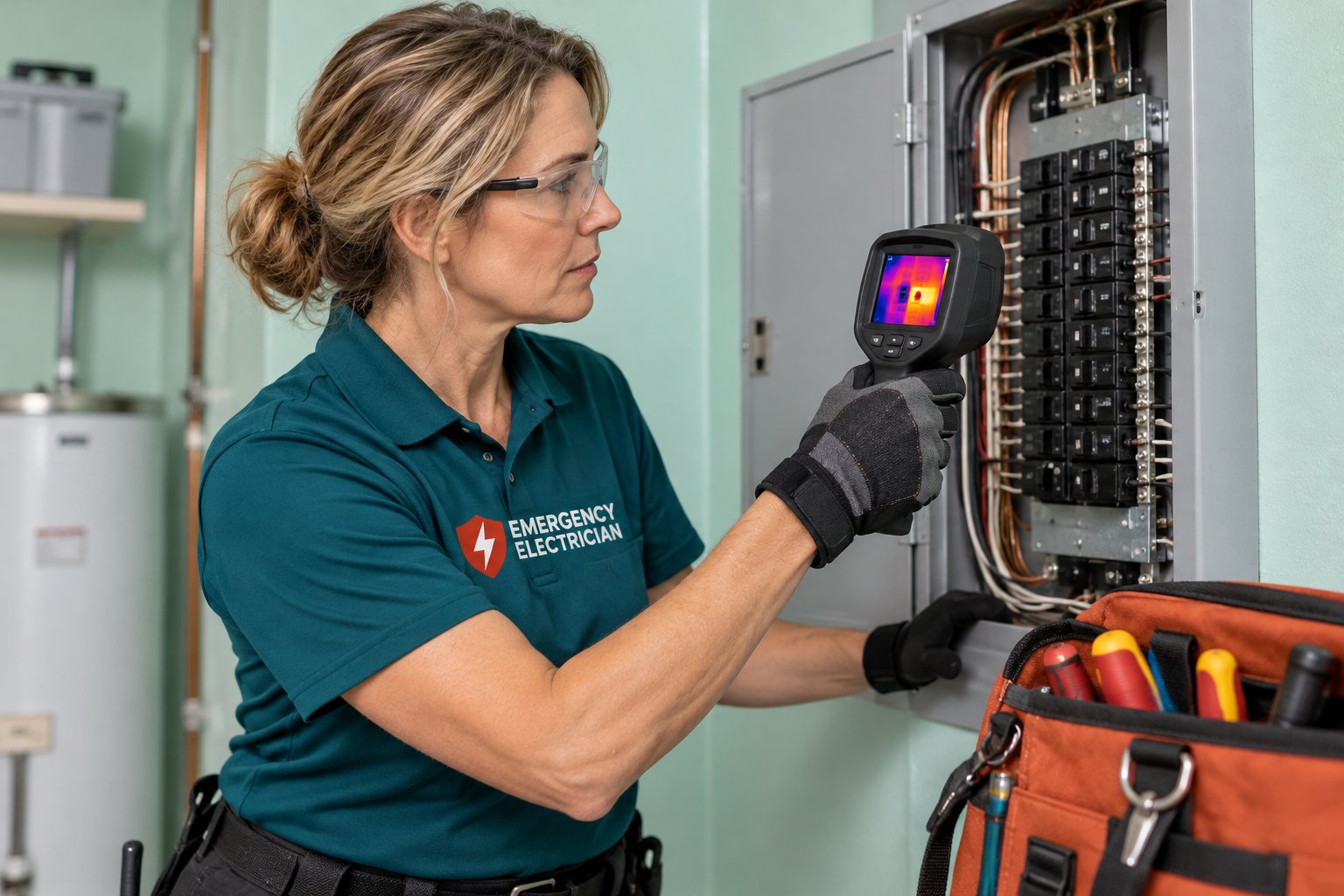
Safety first: 911, wet equipment, and gates that move
Start with danger. If you see smoke, flames, sparking, a burning smell, or a person who has been shocked, call 911. In a community, the most common electrical hazards are outdoors and involve water: a pool equipment pad with standing water, a pedestal that has been hit by a vehicle, a gate operator box with a damaged conduit, or a landscape light that is buzzing in wet grass. Keep people and children away and do not touch anything metal in the area until it has been checked.
Gate operators add a mechanical hazard. A gate that has lost power may be released to move by hand, and a gate that is about to regain power may start moving without warning. Do not stand in the path of a gate or put hands in a track while power is uncertain. If someone is trapped by a gate or a vehicle is stuck in it, call 911. Do not attempt to repair a gate operator while it is connected to power, and do not remove covers on live equipment.
Pool areas deserve extra care. Water and electricity are a dangerous pair, and a pool with electrical faults can energize the water. If swimmers report tingling, clear the pool right away, keep everyone out of the water, and shut off the pool equipment only if you can do so without standing in water. Then call an electrician. For related guidance, see pool equipment tripping power.
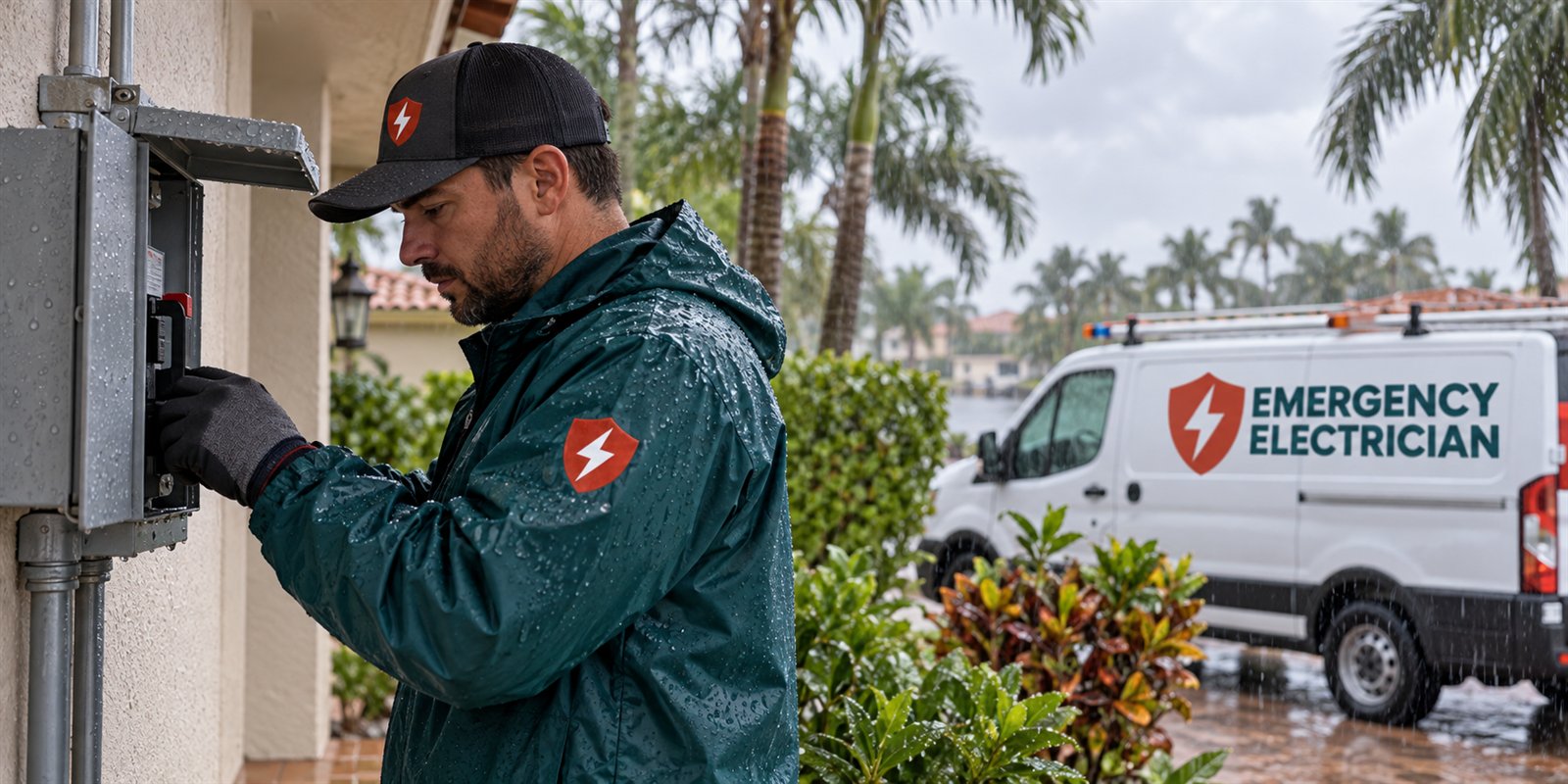
What a managed community's electrical system looks like
A typical community has one or more utility services for common areas. There may be a meter at the entrance for the gate and lighting, another at the clubhouse, another at the pool, and another for irrigation. Each service feeds a panel or a pedestal, and from there circuits run to the equipment. Some are underground, some in conduit on walls, and some in boxes at the edge of the road. The board owns and maintains them.
Because the equipment is spread out and outdoors, it faces rain, sun, salt air, irrigation spray, and vehicle impacts. Wiring may have been installed years ago by a series of contractors, with additions that do not appear on any drawing. Labels fade. Nobody may know which breaker serves the gate. These are common conditions, and they are why a short list of contacts and a simple diagram are among the most useful things a manager can have.
Equipment also has different owners. The utility owns its meter and service line up to the point of connection. The community owns everything after it. A gate vendor may own or lease the operator. A pool company may maintain the pumps. The electrician handles the supply, the panels, the wiring, and the connections. Knowing who is responsible for each piece speeds up an emergency call.
The gate will not open: electrical or not
When a gate fails, the cause may be electrical or mechanical. Check the simplest things first, from a safe position. Does the keypad or the access control panel have a display or light? Does the operator box show any indicator? Is the gate stuck against an obstruction? Is there any sign that a vehicle hit it? Is the whole entrance dark, or only the gate? A dead display suggests no power. A powered display with a gate that does not move suggests the operator, a safety sensor, or an obstruction.
If power seems to be off, look at the breaker that serves the gate. If it is tripped, one reset is reasonable if there is no smoke, no burning smell, and no water. If it trips again, stop. A gate operator draws a heavy current when it starts, and a breaker that trips at that moment can point to a failing motor, a loose connection, or an undersized circuit. Repeated resets can overheat wiring.
Battery backup is common on gates. Operators often include batteries that let the gate open and close for a limited number of cycles during an outage. When batteries are old or exhausted, the gate stops working soon after power fails. That is a maintenance item for the gate vendor, and the electrician can confirm whether the supply to the operator is present. Both may be needed, and a clear description of what you saw helps each of them.
Manual release and security during an outage
Most operators have a manual release so that the gate can be moved by hand during a power failure. Know where it is and who is allowed to use it. Releasing the gate leaves the community open, which is a security matter, so the board should decide in advance whether to leave it closed, open it in the daytime, or post a guard. Do not force a gate that is not released, since you can damage the mechanism or injure yourself.
Emergency access for fire and police is a related matter. Many communities have a keyed switch, a siren sensor, or a lock box that allows responders to open the gate. If these depend on power, a long outage can affect them. Ask your gate vendor and your local fire department how access works during an outage, and test it. Residents should be told what to expect, for example that visitors may not be able to call residents by the keypad during an outage.
If the gate must stay open, put up clear notices and consider a temporary arrangement for security. If the gate must be closed, ensure that residents can still get in. A power failure that coincides with a storm can make this hard, and the plan should consider it. After the power returns, check the operator and the access control before relying on them, because a surge or a brownout can damage boards.
Pool pumps, heaters, and the equipment pad
Pool equipment is a major electrical load in a community. Pumps, heaters, salt systems, lights, and controllers share a panel at the equipment pad. Failures are often related to water. Wiring is exposed to rain and splashes, and ground fault protection is meant to trip when current leaks to ground. A ground fault device that trips repeatedly is doing its job and signals a real problem.
If a pool pump has stopped, look first at the breaker or ground fault device and at the time clock or controller. A pump that has overheated may have tripped its own protection. A motor that hums but does not turn may have failed. A pool service company can address the pump and plumbing, and the electrician addresses the power supply, the ground fault protection, the wiring, and the connections. Do not keep resetting a ground fault device that will not hold.
Pool lights, deck outlets, and bonding are life-safety items. Do not allow swimming if lights flicker unexpectedly, if the water tingles, or if equipment buzzes or smells hot. Close the pool and get an electrician to inspect it. After a storm or a flood, equipment pads can be underwater, and equipment should not be re-energized until it has been inspected. See pool and spa electrical after a flood.
Clubhouse, irrigation, and lighting loads
The clubhouse behaves like a small commercial building, with a panel, air conditioning, kitchen equipment, lighting, and sometimes a gym. Treat it as you would an office. The loads are larger and more varied than in a home. A tripped breaker may point to an air conditioner or an oven, and a persistent trip can mean an overload or a failing appliance.
Irrigation controllers and pumps run on schedules, often at night, and failures may go unnoticed until plants die. A controller that has lost power may lose its schedule, depending on the model. Irrigation pumps draw heavy current and are exposed to moisture. If a pump has failed, check the breaker and any ground fault device, and call a contractor if it will not hold.
Landscape and street lighting are often low-voltage systems fed by transformers and long cable runs. Faults can occur where cables have been cut by gardeners or chewed by animals. A section of dark lights may point to a transformer, a timer, or a damaged cable. Water in a fixture can trip protective devices. See urgent landscape lighting short and parking lot and pole light outage.
What a manager can safely check before calling
A manager does not need to be an electrician to collect useful facts. Note which equipment has failed and which has not. Note whether the failure began after rain, a storm, a vehicle impact, a flicker, a bang, or maintenance work. Note whether the utility reports an outage in the area. Check whether neighbors outside the community have power. Photograph visible damage from a safe distance.
Look at the outside of the panel or pedestal, without opening it, for signs of water, damage, burning, or insects. Look at breakers in a panel only if the panel is in a dry, accessible place and the door can be opened without touching energized parts. Do not open pedestals or utility boxes. Do not touch anything that is hot, wet, or damaged.
Check who has keys to the equipment rooms, who has the gate vendor's number, and who holds the community's service records. If the board has an emergency authority policy, confirm who may approve work. Prepare to describe the community's equipment to the dispatcher in a few sentences. The more specific the description, the more likely the right technician and tools arrive.
What the electrician checks on arrival
A technician will begin by making the area safe, confirming that nothing is energized that should not be, and checking for water. They will identify the supply to the failed equipment, test voltage at the panel and at the equipment, and look for tripped devices, loose or corroded connections, and damaged conductors. They will check ground fault devices and bonding, most of all around pools.
If the fault is in a buried cable or a conduit, they may need to trace and test the circuit. That can take time, and repairs may require digging or replacement of a section. If the fault is in the equipment itself, such as a gate operator motor or a pool pump, they will say so and recommend that the vendor or manufacturer's service be called. They can usually make the supply safe and restore power to the parts that are healthy.
If the work is more than a simple repair, an on-site visit is needed before a quote is given. There is a service call charge, explained before dispatch. Quotes are given by phone for simple work. The technician cannot promise an arrival time. See what to expect when a technician arrives.
Storms, floods, and South Florida conditions
Communities in South Florida see heavy rain, flooding, hurricanes, lightning, and salt air. Gate operators and pedestals often sit at the lowest part of a property. A storm can flood a pedestal, and corrosion follows. Lightning can send a surge down a cable and damage boards in the gate, the access control, and the lighting controls. Often the symptom is an intermittent fault rather than a total failure.
After a storm, check the site from a safe distance. Do not walk through standing water near electrical equipment. Do not touch fallen wires. Report downed lines to 911 and the utility. Wait for the water to recede and for an electrician to inspect before re-energizing equipment that was wet. Salt water damage may not show up until later.
Before the next storm, ask the electrician and the gate vendor to look at the equipment. Are connections sealed? Are boxes rated for the environment? Are batteries fresh? Is there a surge device on sensitive equipment? These are questions for a visit. See hurricane season electrical readiness in Florida.
Board responsibilities, records, and resident communication
Boards have a duty to maintain common equipment and to act sensibly in emergencies. Keep a log of failures, repairs, and findings. Ask for written findings from the electrician and the gate vendor. Keep photographs. These records help the board plan reserves, prove diligence if there is a dispute, and support an insurance claim if damage occurs.
Residents should hear what is going on. Post a notice at the entrance or send a message that says what is affected, what the board is doing, and what residents should do. Remind them not to touch damaged equipment, not to force the gate, and not to swim if the pool is affected. Provide a number for reporting problems and make sure it is monitored.
Consider a standing emergency policy that names who may approve emergency repairs and up to what limit, in line with the governing documents. A board that must hold a meeting before a gate repair may leave the community open for days. Ask the association's attorney how to structure this properly.
Preventing the next failure and calling for help
Many gate and common equipment failures are preventable with attention. Have the gate vendor test batteries and sensors on a regular schedule. Have an electrician inspect pedestals and panels from time to time, tighten and clean connections where appropriate, and look for water intrusion. Replace corroded boxes and fittings. Label every breaker. Keep vegetation off equipment, and protect pedestals from vehicles with bollards or curbs if needed.
If a part of the system keeps tripping, do not ignore it. A pattern such as a breaker that trips every rainy afternoon points to water. A pattern such as a gate that fails every summer may point to heat. Share these patterns with the technician.
If you have an urgent problem now, think in order: people first, 911 if there is any danger, the utility if the whole area is dark, and then call to describe your equipment and what you saw. A dispatcher can explain how the visit works and help you decide whether the gate vendor or the pool company should also be involved.
Questions people ask
Can a board member reset the gate breaker?
A single reset is reasonable if the panel is in a dry, accessible place and there is no smoke, burning smell, or water. If the breaker trips again, stop. Repeated resets can overheat wiring. Do not open pedestals or utility boxes, and do not touch anything wet or damaged. Call an electrician.
Do I call the electrician or the gate company first?
If the keypad and operator have no power at all, start with the breaker and the electrician. If power is present but the gate will not move, the gate company is more likely to be right. Often both are needed. Tell each of them what you saw so they do not repeat checks.
Is it safe to leave the pool open when the pump trips?
If a ground fault device keeps tripping, if lights flicker, if the water tingles, or if equipment buzzes or smells hot, close the pool and keep people out of the water. Do not reset a ground fault device repeatedly. Call an electrician to inspect the supply, bonding, and wiring.
What if the gate is stuck closed during an outage?
Most operators have a manual release. Know where it is and decide in advance how to handle security. Do not force the gate or put hands in the track. If someone is trapped or hurt, call 911. After power returns, have the operator and access control checked for surge damage.
Why do community electrical problems often follow rain?
Water gets into pedestals, boxes, and fittings, trips ground fault protection, and corrodes connections. Equipment at low points also floods. A pattern of trouble after rain is a useful clue to give the technician. Do not touch equipment standing in water, and do not re-energize wet equipment until it has been inspected.
Can the electrician quote the repair over the phone?
Simple problems may be priced on the call. Complicated jobs, such as buried cable faults or pedestal replacement, need an on-site visit first. There is a service call charge, explained before dispatch. Have the equipment location, access, and any gate vendor contact ready so the visit goes smoothly.
Reading about "Gate Power: What to Know and Do"? Tell us what stopped working and when. We will say what an electrician would check first, and quotes are given by phone when the job can be described.
Related pages
- Condo Emergency: Board members and managers: a call order for condo electrical emergencies, who handles shared rooms, what residents report, and what to document afterward.
- Pool Equipment Trips: A pool pump, heater or light that keeps tripping the breaker can signal water intrusion or a bonding fault. Learn what to do, who to call and what to tell them.
- Landscape Short: A burned landscape lighting transformer or shorted low-voltage run can hide a bigger problem. Learn the triage steps and when a technician should check it.
- Parking Lights: A dark parking lot is a safety and liability concern. Learn what causes pole light outages, what to check from a distance, and what to tell the electrician.
- Season Readiness: A calendar-style plan for South Florida hurricane season electrical readiness: panel, generator, surge, documents and who to call, without promising outcomes.
- Common Area Outage: Corridor lights, stairwells, and elevators dark in a condo building? Life-safety steps, who handles what, and what managers should tell residents.