
Life safety first: people in the dark and people in elevators
Start with the people. If someone is trapped in an elevator, they should use the elevator's emergency communication or the building's emergency number, and responders should be called. Do not attempt to open elevator doors or climb out. Elevators have their own safety systems, and forcing doors or hoistway access can cause serious injury. Stay calm, tell the person inside that help is coming, and call 911 if there is any medical concern or the situation is not resolved quickly.
In a dark stairwell or corridor, the risks are falls, panic, and confusion in a fire. If there is smoke, a burning smell, or a fire alarm, treat it as a fire: leave by the stairs with a flashlight, close doors behind you, and call 911. Do not use the elevators when the fire alarm is sounding. Emergency lighting is meant to give a limited period of illumination for exiting, and it can fail if batteries are old, which is a safety problem in its own right.
If there is no fire, warn residents who are older, have mobility issues, or depend on powered medical equipment. They may need help getting down stairs or reaching a charging point. A manager should keep a list of residents who have asked for assistance, if the association has one. The association cannot promise power or elevator service, and every household should have its own plan, but a quick knock on a few doors can make a large difference.
Utility outage or building fault: the first sorting question
The scope of the outage points to its source. Look at whether the whole neighborhood is dark. If neighboring buildings and street lights are out, it is probably a utility outage, and the utility must restore its equipment. Report it and ask for information. Do not assume someone else has reported it. A building manager's report adds useful detail, such as a bang before the outage or a visible fault.
If only the building is dark, the cause may be at the service entrance, the main switch, the meter room, or a failed building-side device. If units have power but the common areas do not, the common area panel, its feeder, or a breaker may have failed. If common areas are lit but a few units are dark, the problem is closer to those units. Each pattern points in a different direction, and describing it to the dispatcher is valuable.
Do not open meter rooms or switchgear unless authorized and trained. In many buildings, only the utility and contractors may open the equipment, and doors are locked for good reason. See electrical emergency plan for a condo association for call order and roles.
Corridor and stairwell lighting: why failures matter
Lighting in an exit path is a life-safety system. A building usually has normal lighting and emergency lighting, and exit signs. When the normal lights fail, the emergency lights should switch on from batteries or a central source. If they do not, the building has two problems at once: a power failure and a failed safety system. The fire department and the building's insurer will care about both.
Common causes of normal lighting failure include a tripped breaker on a lighting panel, a failed contactor or time clock, a photocell that no longer works, or a failed feeder. Water intrusion can also trip protective devices, most often in outdoor corridors and open stairwells that are exposed to rain. Salt air corrodes fixtures and connections over time, and a failure that looks sudden may have been building for months.
If a breaker has tripped, a single reset may be reasonable if there is no sign of burning or water. If it trips again, stop, because that means something is wrong. Do not defeat a breaker or replace it with a larger one. Residents should not try to repair corridor fixtures. Report exposed wires, hanging fixtures, or burning smells right away. For exit lights specifically, see emergency lighting and exit sign failure.
Elevators: what the electrician does and what the elevator company does
An elevator is a machine with its own controller, drive, and safety circuits, and its service belongs to an elevator contractor. The electrician's role is the power to it: the feeder, the disconnect, the breaker, and the building-side connection. When an elevator does not run after an outage, there are several possibilities. The building power may be off. The disconnect may be tripped. The controller may be waiting to be reset, which only the elevator company should do. Or the elevator may have stopped on a safety device.
Some buildings have an emergency power arrangement for elevators, such as a generator or battery lowering device, that brings a car to a floor and opens the door. These systems have their own tests and limits. If your building has one, the manager should know what it does and does not do. A generator may power only one elevator at a time, or only run elevators in a recall mode for evacuation.
After power returns, elevator equipment may be sensitive to irregular voltage or phase problems. A technician may need to check that the supply is balanced and correct before the elevator is restarted. This is more important in three-phase systems. See three-phase loss of phase problems for why that can matter. Do not attempt to bypass elevator safety circuits to hurry service back.
What managers can safely do while waiting
While waiting for responders, the manager can do several useful things that do not involve touching electrical equipment. Post notices at entrances and on each floor, if it is safe, saying what is known and where updates will be given. Place staff at stairwell entrances if the building is dark. Use battery lanterns or flashlights, and avoid candles, which are a fire risk in a building with stairwells and crowded corridors.
Check on residents who are known to need help. Ask residents to stay out of electrical rooms and not to reset building breakers. Ask them to keep refrigerators closed and to unplug sensitive electronics if power may return with surges. Remind them not to run generators indoors, in garages, or near windows, because carbon monoxide can build up quickly.
Gather facts for the dispatcher: when the outage began, what preceded it, what is affected, whether there are smells or sounds, and who has keys. Take photographs of any visible damage from a safe distance. Avoid wading into water to reach a panel. If water is present near electrical equipment, treat it as energized and keep people away.
What a technician checks for a common area outage
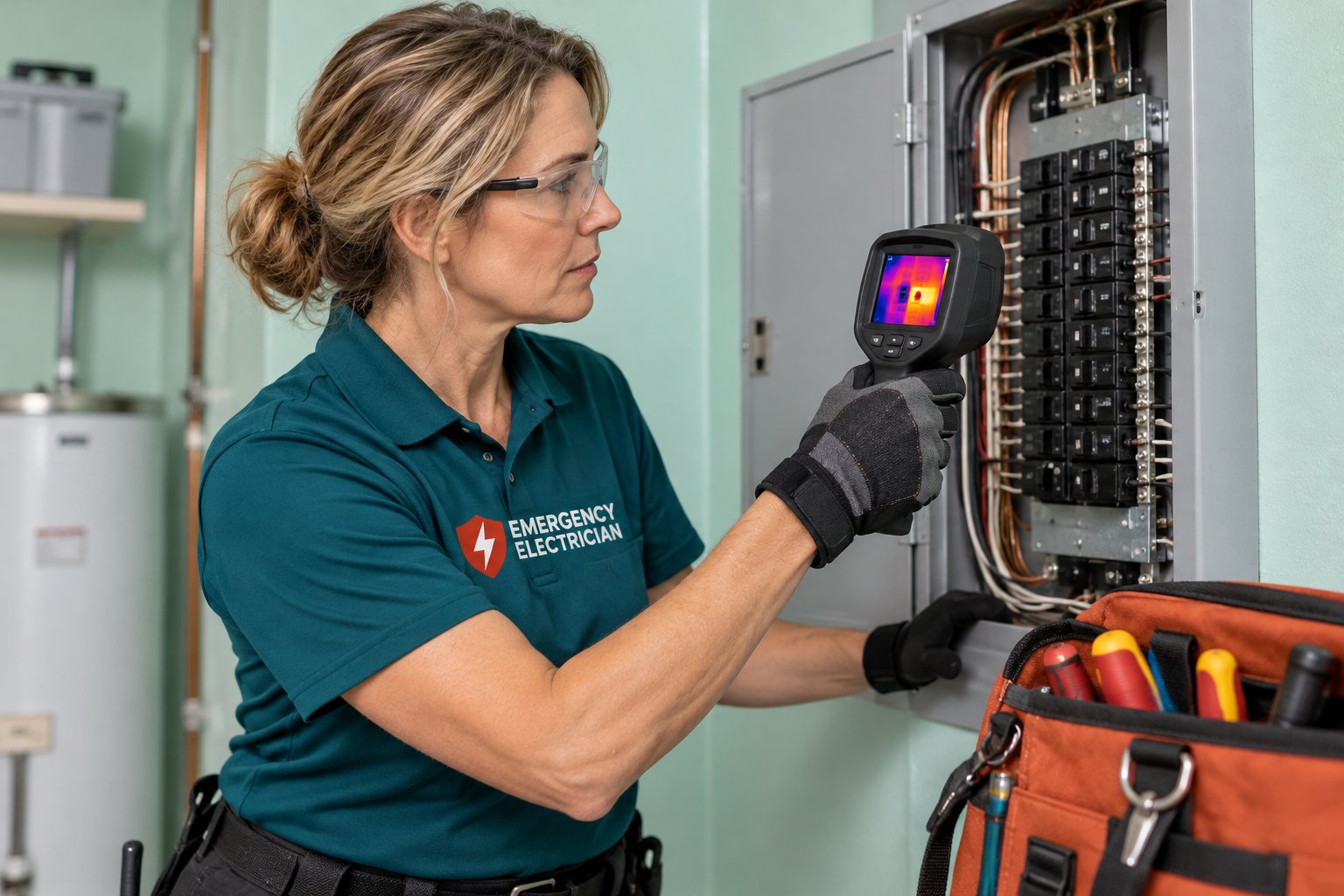
A technician usually starts at the point where power enters the building and works toward the affected area. They check the incoming service, the main disconnect, and the meter room for tripped or damaged equipment. They then check the house panel serving common areas, the feeders to risers, and the breakers and contactors that control lighting. They measure voltage at several points to find where it disappears.
They look for signs of heat, such as discolored breakers or melted insulation, loose lugs, corrosion, water intrusion, and damaged conductors. In older buildings, they may find equipment that has been modified over the years, panels with mismatched breakers, or labels that do not match what is installed. They will tell you what they find and what is safe to re-energize.
If they find damage, they will explain what is needed. Some repairs, such as replacing a breaker or a contactor, are straightforward. Others, such as replacing a feeder or switchgear, need planning, parts, and coordination with the utility and the building's authority. Quotes are given by phone for simple work, and complicated jobs need an on-site visit. There is a service call charge, explained before dispatch. See what to expect when a technician arrives.
Storm and flood complications
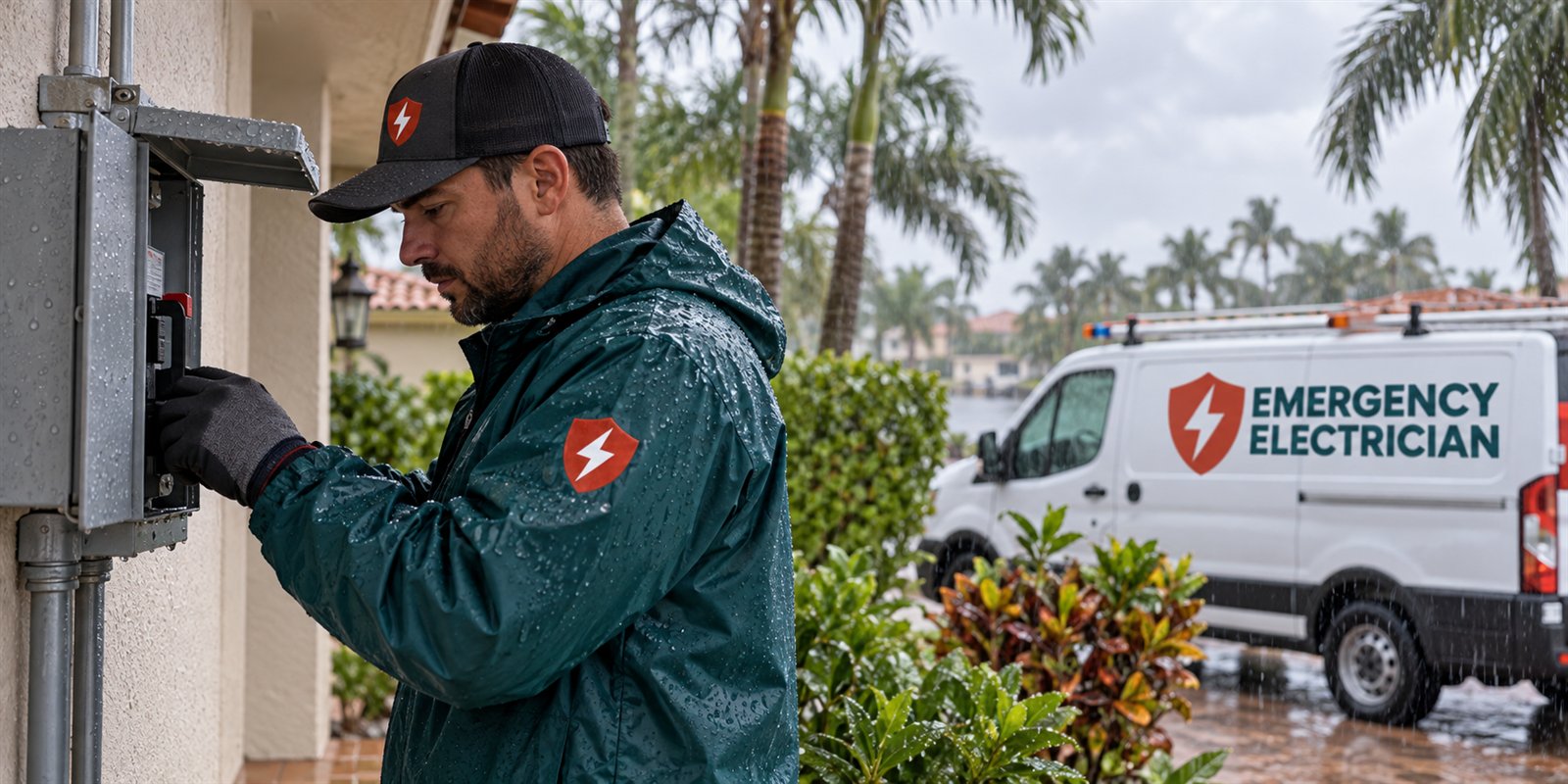
In South Florida, many common area outages follow storms. High winds damage rooftop equipment, flooding affects ground level rooms, and lightning can trip or damage devices. After a storm, a building may have power from the utility but still have failed common systems because water or lightning damaged them.
If an electrical room has been flooded, do not enter it, and do not allow anyone else to do so. Standing water around energized equipment is dangerous, and salt water leaves corrosion that can cause failures later. A qualified electrician should inspect and test the equipment before it is re-energized, and some components may need replacement. See after storm power restoration safety.
Lightning can send a surge through the building's wiring that damages control boards in elevators, fire alarm panels, gate operators, and lighting controls. The damage may show up as intermittent faults rather than an immediate failure. If problems begin after a storm, tell the technician about the storm. It is a clue.
Three realistic scenarios and how to read them
Scenario one: a mid-rise building loses all common lighting on a clear afternoon, but every unit still has power. That pattern suggests the house panel or the feeder that serves common areas, or a control device such as a contactor or time clock, rather than the utility. The manager should check whether an obvious breaker has tripped, but only if the room is dry and accessible to authorized staff, and then report what was found. The electrician will begin at the house panel and trace the feeder.
Scenario two: after an afternoon thunderstorm, one elevator will not run, the lobby lights flicker, and the fire alarm panel shows a trouble message. The storm raises the possibility of a surge or a brief loss of one phase. The elevator company and the fire alarm vendor each have a part, and the electrician checks the supply voltage and the building-side equipment. Telling each of them about the storm shortens their search.
Scenario three: a ground floor stairwell light fixture is hanging and a hallway smells like burnt plastic. Do not investigate. Treat it as a possible fire, alert residents, and call 911. The smell may come from a failing fixture, a loose connection above a ceiling, or an overloaded circuit. Anything that burns inside a wall or ceiling can spread unseen, and the fire department has thermal tools to look for it. After they clear the building, the electrician can find and repair the cause.
In all three, the same logic holds. Safety first, then scope, then the right responder. The dispatcher can help you decide who else to involve, but your own notes on what was affected, and when, are the foundation of a fast repair.
Residents with limited mobility and medical needs
A power loss that closes the elevators can strand people on upper floors. Residents who use wheelchairs, walkers, or oxygen concentrators, or who cannot manage stairs, are in a different position than the rest of the building. If your association keeps a voluntary list of residents who would like a call during an emergency, keep it current and make sure the manager can reach it without power. Do not promise rescue or transport that the building cannot deliver. Say instead that you will contact emergency services if someone reports a need.
Residents with powered medical equipment should have their own plan: a backup battery where their provider recommends one, a charged phone, a list of contacts, and a decision made in advance about when to go to a relative or a facility. They should call 911 for a medical emergency rather than waiting for building staff. A manager can help by relaying information, but cannot supply medical power from the building.
If an outage may be long, tell residents early. Early notice lets those who need to leave do so while stairwells are manageable and daylight remains. Keep stairwells clear, post a staff member where practical, and keep a supply of flashlights and batteries at the management office. Avoid candles, and warn about generators, which should never be run inside or near open windows.
Keeping records and preventing a repeat
After the event, document what happened and what was done. Record times, photographs, names, and findings. Ask for a written report from the electrician. These records help with the board's decisions, with insurance, and with questions about responsibility. See getting a written findings report.
Use the incident as a prompt to review the building's life-safety lighting. Test emergency lights and exit signs on a regular schedule, using whatever method the manufacturer and local rules specify, and replace failing batteries. Make sure the manager knows how to reach the elevator company and the electrician after hours. Check that stairwell doors, corridors, and electrical rooms are kept clear.
If the outage is happening now, work in order: 911 for smoke, fire, or anyone trapped or hurt; the utility for an area outage; then call the dispatcher to describe the building. Say that it is a condominium, what is out, whether residents are at risk, and who has access. A calm, specific report is the fastest route to a useful visit.
Questions people ask
What should I do if someone is stuck in an elevator during a power loss?
Use the elevator's emergency communication or the building's emergency number, and call 911 if there is a medical concern or the situation is not resolved quickly. Do not try to open the doors or climb out. Reassure the person and wait for responders or the elevator company. An electrician is not the right first call.
Are emergency lights supposed to come on when the power fails?
Yes, exit paths are meant to have emergency lighting that switches on when normal power fails, and exit signs are meant to stay lit. If they do not, that is a safety problem in addition to the outage. Report it, and have the system inspected and the batteries or source checked.
Can a resident reset a tripped breaker for the hallway lights?
No. Building breakers are in shared rooms that should be locked, and only authorized staff or contractors should enter them. A tripped breaker may mean a fault. If it trips again after one reset, stop and call. Residents should not open panels or repair fixtures.
Is the electrician or the elevator company the right call for an elevator that will not run?
Both may be needed. The elevator company services the machine and its controls, while the electrician handles the power supply, disconnects, and building wiring. If the whole building is dark, start with the utility. If only the elevator is off, ask the elevator company first and call the electrician if the power supply seems at fault.
Why do outages sometimes follow storms even after the utility power returns?
Storms can damage equipment through water, wind, or lightning surges. Control boards, pumps, and lighting controls can fail even when the utility is back. Salt water can corrode connections and cause failures later. A technician should inspect equipment that was flooded or struck before it is re-energized.
What should I tell the dispatcher about a condo outage?
Say it is a condominium, what is out, what still has power, when it started, and whether there were sounds or smells. Say whether anyone is at risk, whether elevators have people inside, and who has keys to the electrical room. If you can, share whether the neighborhood is also dark.
If "Condo Common Area and Elevator Power Loss" matches what is happening, call and describe it plainly: the room, the breaker, any burning smell or tripped circuit. We explain what the repair would involve before a visit is set.
Related pages
- Condo Emergency: Board members and managers: a call order for condo electrical emergencies, who handles shared rooms, what residents report, and what to document afterward.
- Electrical Room Risk: Managers: what to watch for in condo meter stacks and riser rooms, which signs mean call 911, which mean call an electrician, and how to keep rooms safe.
- Exit Lights: Exit signs dark or emergency lights failing in an occupied building? Learn why it is a life-safety issue, safe first steps, and what a technician will check.
- Loss of Phase: One phase dropped in a three-phase business? Learn the warning signs, which motors to shut down, who to tell, and what is checked.
- When They Arrive: The arrival routine for an emergency electrical visit: identification, safety isolation, testing, plain-language findings and what to have ready.
- Unit vs Building: Your condo unit lost power. Sort a unit panel problem from a building fault, know who to call first, and what to tell the manager and the electrician.