
Safety first: when loss of phase is a 911 call
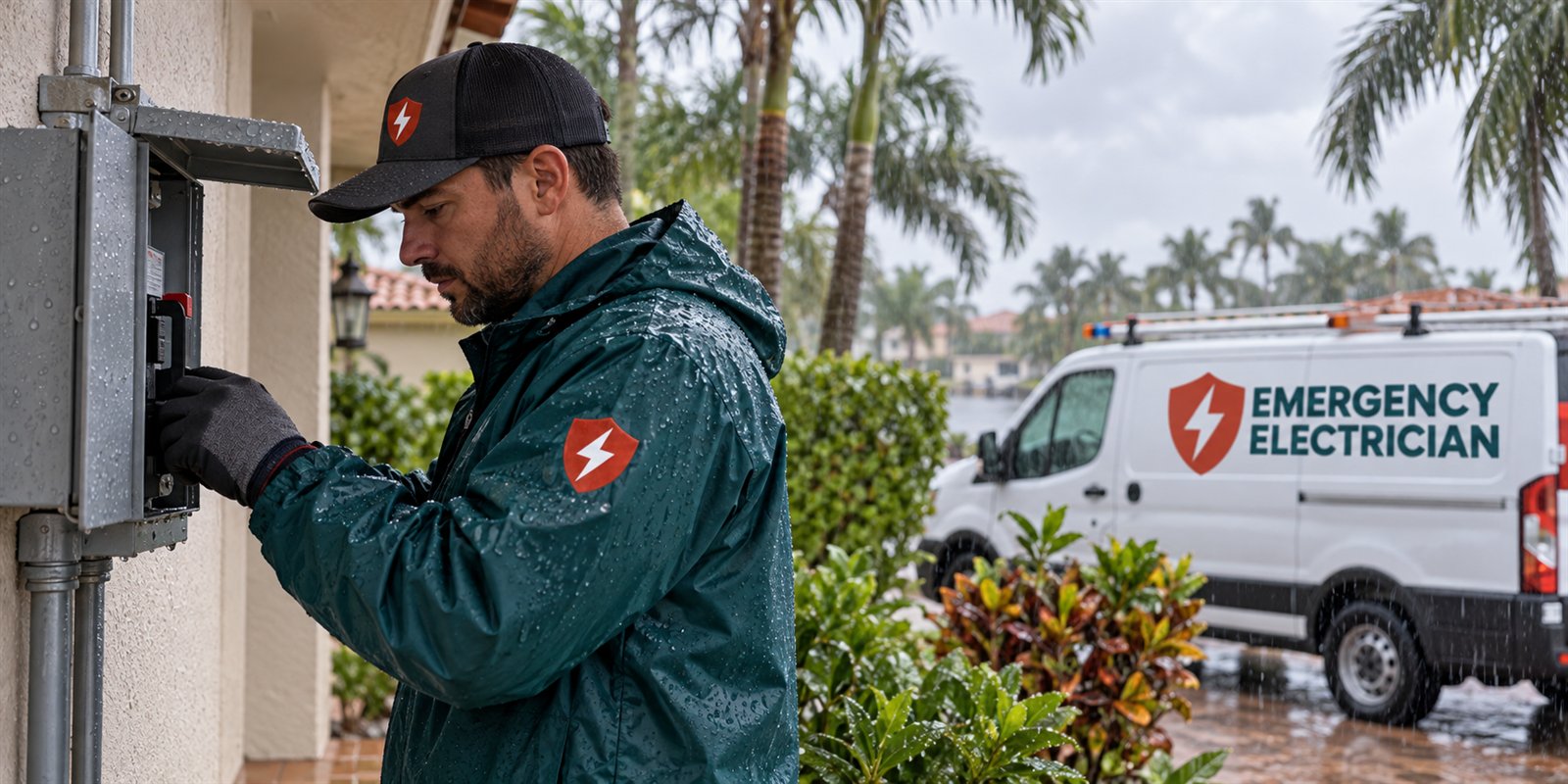
Loss of phase by itself is not always an emergency, but it can come with one. If you see smoke, flames, or sparking, if you smell burning or hot insulation, if equipment is humming loudly or glowing, or if a wire is down outside, call 911 and move people away. A downed line on the property or the street should be treated as live. Do not approach it, do not drive over it, and do not try to move it. Call 911 and the utility.
A line that has come down in a storm is a common cause of lost phases. A tree limb can take down one conductor while the others remain energized. A burned jumper at a pole or a blown fuse on one leg of a distribution line can do the same. In these cases the utility owns the problem, and its crews need to repair it. If you can see damage to the lines or equipment on the street side of your building, report it to the utility and keep people clear.
If the problem is inside your building and there is no sign of fire, you have time to act in an orderly way. The steps below explain how to recognize a lost phase, how to protect motors by shutting them down, and what to tell the people you call. Do not open panels or disconnects to look for the cause. Large equipment can cause serious injury through arc flash, and the cause may not be visible anyway.
What three-phase power is, in plain terms
A residential service typically brings two energized conductors and a neutral. Many commercial and industrial services bring three energized conductors, called phases, along with a neutral and a ground. Each phase carries an alternating voltage, and the three are offset in time. Large motors are designed to run on all three. The rotating field they create depends on the three arriving together and in balance.
Lighting and small outlets in a three-phase building are usually fed from one phase at a time, or from combinations of two phases. That is why, when one phase fails, part of a building may lose lights and receptacles while the rest looks normal. A business may see only half its lights dark, or a few registers dead, while the air conditioner keeps running. The pattern of what works and what does not carries information.
The utility delivers power to the building, but the building's equipment decides how it is used. If the utility has lost a phase, the building sees the same problem. If a fuse or breaker inside the building has failed on one leg, the problem is the building's. It is hard to know which from inside, so describe what you observe and let the utility and the electrician sort it out. A technician with a meter can tell quickly which side the problem is on.
How a lost phase shows up in a business
The most obvious sign is partial power: some lights out, some equipment dead, others normal. But the more dangerous signs are subtler. A three-phase motor that loses one phase may keep running, drawing more current in the remaining two, and heating quickly. It may hum, run slowly, vibrate, or refuse to start. Air conditioners may blow warm air or cycle on and off. Pumps may lose pressure. Elevators and escalators may stop or behave erratically.
A different kind of fault is a low phase rather than a lost one. Voltage on one leg sags, perhaps because of a bad connection, and the equipment sees an unbalance. The symptoms are similar but less dramatic: motors run hot, lights dim on part of the building, electronics reset. Over time, an unbalance shortens equipment life and can damage controls.
Some equipment has phase monitors, relays that detect a missing phase or low voltage and shut the equipment down to protect it. If equipment has stopped and shows a phase fault message, the protection is working. Do not defeat it. Many modern drives and air conditioning units have similar protection built in, but older equipment may not, and may run until it fails.
Why motors are at risk and what to shut down
A three-phase motor running on two phases is under strain. It may keep turning, but its windings carry more current than they were designed for, and heat builds. A motor that runs this way for a short time can be damaged, and one that runs for hours can burn out. Compressors, in particular, are expensive to replace and are often among the first casualties.
If you suspect a lost phase, shut down large motors and compressors using their normal controls: air conditioning, refrigeration compressors, pumps, fans, and shop machines. Do it from the controls, not by opening an enclosure. If you cannot tell which equipment is affected, shut down the large loads in a sensible order and leave lights and small loads on. Keep refrigerators and coolers closed to preserve temperature while the problem is found.
Do not repeatedly try to restart a motor that has stopped. Each start draws a large current, and repeated attempts on a bad supply can damage it. Do not bypass protective devices. When power is restored, bring loads back one at a time rather than all together, and watch for odd sounds, heat, or smells. If a motor behaves strangely after restart, shut it down and have it checked.
Utility side or building side: who fixes what
The first sorting question is whether the problem is in the utility's equipment or yours. If neighbors are experiencing similar issues, if lines or poles outside are damaged, or if the utility reports an outage, it is likely on the utility side. Report the problem and describe the symptoms: partial power, equipment tripped, any bang or flash before the event. The utility will check its equipment up to the meter, and may need to replace a fuse, a connection, or a transformer.
If the utility says the supply is normal at the meter, or if only your building has the problem, the cause is on the building side. It could be a failed main breaker pole, a blown fuse in a fused disconnect, a burned connection in a panel, a failed contactor, or a damaged feeder. An electrician should look. See utility or electrician: who fixes what for a general approach.
Do not assume that the utility has fixed everything just because some power has come back. When a lost phase is restored, equipment can be hit by a surge or can restart in unexpected ways. Wait a moment before restarting, and bring up loads gradually. If something still seems wrong, such as flickering, dim lights, or hot equipment, tell the electrician and the utility.
Fused disconnects, main breakers, and what often fails
Many commercial buildings have fused disconnects. A blown fuse on one phase is a classic cause of a lost phase. The fuse may have blown because of an overload, a short circuit, or a loose connection that heated. Replacing the fuse is not enough if the cause remains. A technician will check the load and the connection, and find out why it blew before putting in a new one.
Main breakers can also fail on one pole. A breaker with a worn or damaged mechanism may open one pole and not the others, or a burned connection inside may open the circuit on one leg. Panel connections loosen over time with heat cycles, particularly under large loads. Corrosion plays a role in coastal areas, where humid salty air attacks metal parts.
These are not repairs for a layperson. Panels and disconnects have live parts, and fuses are not safe to pull without proper tools and procedures. If you see a fuse disconnect with the handle open and a fuse that looks blackened through a window, do not touch it. Report it. Describe the location and any labels. A technician will take it from there, using proper lockout and personal protective equipment.
Elevators, pumps, and equipment with specific protection
Some equipment needs extra attention after a phase event. Elevators, escalators, and large pumps are designed with specific phase protection and may need to be reset or checked by their service company after the supply is restored. Do not try to restart an elevator that stopped on a phase fault. Call the elevator company and have a technician verify that the supply is correct. See condo common area and elevator power loss for a related discussion.
Air conditioning compressors may have internal protection that locks them out for a time after a fault. Do not assume that a unit that does not start after a repair is broken. Check with the technician about the lockout and wait. A restart too soon may damage it. If the unit cycles on and off or trips again, shut it down.
Variable frequency drives and electronic controls can fault on phase loss, and they have error messages that identify the cause. Write down any message you see. It may help the technician. Do not clear faults repeatedly without understanding the cause, since a drive that restarts into a lost phase may be damaged.
Two examples from South Florida businesses
Example one: a small restaurant plaza loses part of its power during an afternoon thunderstorm. The lights in two units are dim and flickering, the walk-in cooler hums but does not cool, and the rooftop air conditioner for the dining room has shut off. A transformer fuse on the utility side has blown on one leg. The restaurant manager keeps the cooler door closed, switches off the air conditioner at its controls, and calls the utility. When the utility replaces the fuse, the manager brings the cooler back first, then the air conditioner, and watches for odd sounds.
Example two: a light industrial unit has a fused disconnect for its compressor. One fuse blows without any storm. The compressor stops, the lights are normal, and the shop sees nothing wrong except that the air tool pressure is gone. The utility reports normal supply at the meter. The electrician finds a loose connection that heated and blew the fuse, repairs it, and checks the compressor for damage. The lesson is that a plain blown fuse is rarely just a blown fuse. Something made it blow.
In both, the owner described what worked and what did not, shut down the large motors, and called the right party for each part of the problem. That is the pattern to follow.
What to tell the dispatcher
Say that it is a three-phase business and describe the footprint: what has power, what does not, and what has been shut down. Say whether you have called the utility and what they said. Mention any bang, flash, smell, or visible damage outside. Say whether it began during a storm. Name the large equipment affected, such as an air conditioner, compressor, pump, or elevator.
Say who will meet the technician and whether the building is leased. Say what is most time sensitive, but understand that no dispatcher can promise an arrival time. Say whether the equipment has been shut down, and what has been tried. If a breaker has been reset or a fuse replaced, say so, since it affects what the technician finds.
Quotes are given by phone. Complicated jobs need an on-site visit before pricing, and there is a service call charge, which is explained before dispatch. A first visit may be to find the cause and make the building safe, followed by a repair. See what to tell the electrician dispatcher.
What the technician checks
A technician will begin by checking safety and then measuring voltages. With a meter, they check each phase to ground and between phases at the service entrance, at the main, and at the panels, working from the source toward the load. This tells them where a phase disappears or sags. They check fuses and breakers, connections, and contactors, and look for signs of heat.
If the supply from the utility is missing a phase, they will advise you to wait for the utility and keep equipment off. If the building side is at fault, they will find the failed component, repair or replace it, and verify balance. They also verify phase rotation where it matters, since a repair that swaps two conductors makes motors run backward. They may test insulation resistance on motors that were running during the event, if damage is suspected.
They will explain what is safe to restart and in what order. They may suggest installing phase monitoring relays on critical equipment so that a lost phase shuts it down automatically in the future. That kind of work needs planning and an on-site visit. See warehouse panel or disconnect failure for related guidance.
Documenting the event and preventing a repeat
After the event, write down what happened: the time, what was affected, what was shut down, and what was said by the utility and the electrician. Keep photographs and the technician's findings. If motors or compressors were damaged, keep notes for insurance, and ask the manufacturer's service company to evaluate them. See documenting a business outage.
Ask what caused the lost phase, and whether anything should change. Perhaps connections need to be retightened, a fuse type should be changed, or phase protection should be added. Plan these changes at a time that does not disrupt operations. A business that depends on three-phase equipment benefits from knowing where its panels and disconnects are, and from having labels that match reality.
If you are facing this now, think in order: danger first, 911 if needed; the utility for outages and line damage; shut down large motors; then call to describe the situation. A calm, specific description gets the right technician and tools to your door sooner.
Questions people ask
How can I tell if my business has lost a phase?
Common signs are partial power, with some lights and outlets out and others normal, large motors humming or running hot, air conditioners blowing warm air, pumps losing pressure, or equipment showing a phase fault message. If you suspect it, shut down large motors using normal controls and call. Do not open panels to look.
Is it safe to keep running the air conditioner if one phase is out?
No. A three-phase motor running on two phases draws extra current and overheats, and compressors can be badly damaged. Shut the unit off at its controls and leave it off until the supply is verified. Repeated restart attempts can make the damage worse.
Do I call the utility or an electrician first?
If there is a downed line, smoke, or fire, call 911 first, then the utility. If neighbors are affected or the utility reports an outage, call the utility. If the supply at the meter is normal or only your building is affected, call an electrician. Tell each what the other found.
Can I just replace a blown fuse myself?
No. Fused disconnects have live parts, and fuses blow for a reason. Replacing one without finding the cause can lead to repeat failures or fire. A technician will de-energize the equipment safely, check the load and the connections, and then replace the fuse if appropriate.
Why do some lights work while the compressor will not run?
Lights and small outlets are usually fed from one or two phases, while large motors need all three. If one phase is lost, lights on the remaining phases still work but motors may refuse to start or run poorly. That pattern is a clue worth describing to the dispatcher.
Can protection be added so a lost phase shuts equipment off automatically?
Yes, phase monitoring relays and similar devices can be installed on critical equipment. They need planning and an on-site visit, and some modern equipment already has protection built in. Ask the technician whether your equipment has it, and whether adding it makes sense for your building.
About "Three-Phase Loss of Phase Problems": call and give us the details, and we will explain what is safe to do while you wait and what the visit would cover. Jobs that cannot be quoted blind need a look on site.
Related pages
- Warehouse Panel: Warehouse panel or disconnect failed? Learn the safety steps, how to shut down shift operations, what to tell the dispatcher, and what a technician will check.
- Business Power Loss: Your business just lost power. Follow a safe first-hour sequence for owners and managers: safety, isolating the cause, informing staff, and documenting.
- Common Area Outage: Corridor lights, stairwells, and elevators dark in a condo building? Life-safety steps, who handles what, and what managers should tell residents.
- Who Fixes What: Where utility equipment ends and customer equipment begins, in general terms, so you know whether to call the power company, an electrician, or 911 first.
- Lost Leg: Lights work but the dryer, oven or air conditioner will not run? A lost leg may be the cause. See the symptoms, where the fault can sit and what to do next.
- Breaker Replace: A bad breaker can leave circuits dead or overheat in the panel. Learn when replacement is urgent, what is inspected beyond the breaker, and why testing follows.