

Life safety comes first: 911, the fire department, and evacuation
The first line of any condo emergency plan is simple. If there is smoke, fire, sparking, a burning smell from a shared room, a shock injury, or flooding that reaches electrical equipment, call 911 before calling anyone else. Do not wait for the manager to arrive, do not ask a vendor whether it is serious, and do not send maintenance staff to investigate a smoking panel. The fire department can isolate power, ventilate, and make the area safe.
Residents need to hear one consistent message, and it should be written into the plan: if you smell burning, see smoke, or hear popping in a hallway or electrical closet, leave, close the door behind you, pull the fire alarm if your building has one, and call 911. Do not use elevators during a fire alarm. Do not stop to collect belongings. A resident who is told in advance what to do will act faster than one who has to decide in the moment.
Once responders are on scene, the board or manager should designate one person to speak with them, give building plans, and identify where the main disconnects and meter rooms are. Knowing where equipment is located, and having a key or a lock box available, prevents delays. After the fire department clears the building, the question shifts from safety to restoration, and the call order in the next section applies.
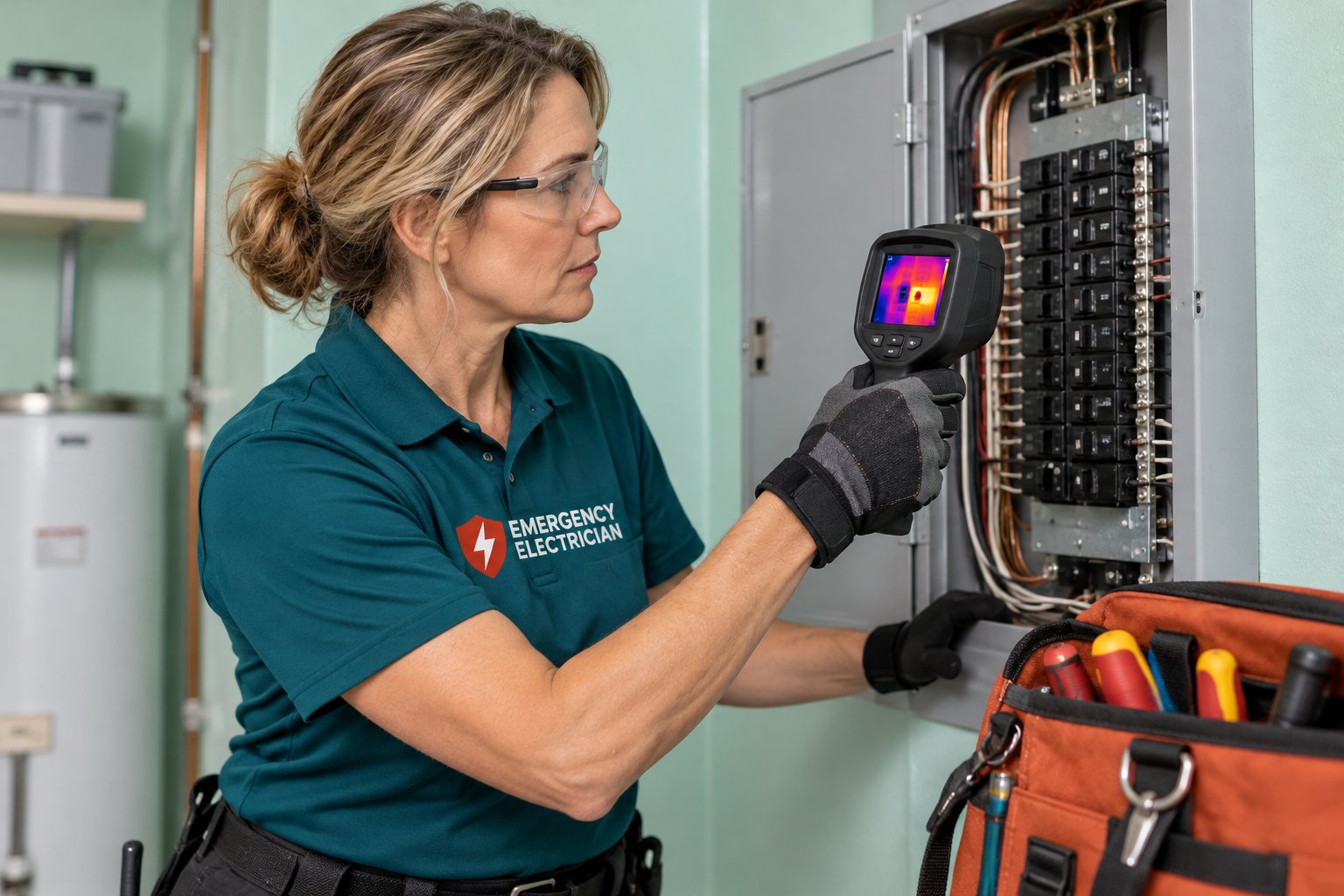
The call order after the immediate danger passes
After life safety is handled, the sequence of calls matters. First, find out whether the outage is a utility problem. Look at neighboring buildings, check the power company's outage map or phone line, and ask. If the service to the building is down, the utility owns the repair up to its equipment, and your electrician cannot restore power until the utility does its part. Report the outage and any damage such as a bent mast or sparking at the meter bank.
Second, call the building's electrician if the outage is on the building side: a tripped main, a failed feeder, a burned bus bar, a damaged meter stack, or a failed transfer switch. Give the dispatcher the facts: what is out, what is not, any smells or sounds, and who has access to the electrical room. Third, call the insurance contact and the management company if they are not already involved. Fourth, tell residents what is happening.
Keep the call order printed, with phone numbers, in a binder and in the manager's phone. The plan should list who is authorized to approve emergency work, since a repair that needs a decision at night cannot wait for a quorum. Many associations adopt a standing authorization for emergency repairs up to a defined limit, with a requirement to report to the board afterward. Check your governing documents and your attorney for how that works in your association.
Roles: board, manager, staff, and residents
A good plan names roles rather than people, so it still works when someone is away. The board sets policy and approves vendors. The manager is the day-to-day contact for the utility, the electrician, and residents. On-site staff, if any, can identify the location of panels, shut-offs, and rooms, and can meet responders. Residents are responsible for their own units and for reporting what they see.
Decide in advance who has keys or access combinations for each electrical room, the roof, the garage, and the pump rooms. Many delays at night are caused by someone who has the key being out of town. Keep a spare in a controlled lock box with an access log, and make sure the electrician and the fire department know how to reach it. The same applies to gates and parking areas that limit vehicle access.
Write down who is the backup for each role and how they will be reached. If your building is managed by an outside company, confirm what its after hours coverage includes and how the board is notified. Do not assume that a call to the main office reaches someone. Test the number occasionally, and keep notes of when you did.
Shared electrical rooms: what the association owns and what residents own
The line between building and unit equipment varies with the documents. In many condominiums, the association is responsible for the main service, the meter room, risers, common area panels, and wiring up to or including the meter for each unit, while owners are responsible for the panel and wiring inside the unit and everything beyond. In others the boundary is drawn differently. The declaration and any rules specify the line, and every manager should know where it falls.
This division matters during an emergency because the first technician on site needs to know what they may touch and who will pay. A unit that has lost power because its panel failed is the owner's responsibility in many cases. A unit that has lost power because a feeder or a meter failed is typically the association's. See condo unit lost power: owner or association for a way residents can sort the two.
Shared rooms deserve attention for safety. Keep them locked, clear of storage, and dry. Do not allow residents or contractors to open energized equipment without authorization. Keep doors closed to limit smoke and water. For more about managing these rooms, read condo electrical room heat, water, and fire risk.
Common area outages: lights, elevators, pumps, and gates
Common area loads are often the first thing residents notice. Corridor and stairwell lighting, elevators, garage doors and gates, fire pumps, sump or sewage pumps, pool equipment, and the clubhouse all draw on building power. When any of them fails, the question is whether it is a breaker, a feeder, or a utility problem. Each has different responders.
Stairwell and corridor lighting are life safety systems, and failures should be treated as priorities. Elevators are controlled by their own equipment and are typically serviced by the elevator company, with the electrician supplying and verifying power to them. See condo common area lights and elevator power loss for details. Gate operators and pool equipment are discussed in community gate and common equipment power failure.
Prepare residents for outages that last. Tell them where to get updates, such as a posted notice, a text list, or an email group. Remind residents with medical equipment to have a plan of their own, since the association cannot promise power or elevator service. Do not promise restoration times you cannot control.
Storms, floods, and South Florida building conditions
Condominiums in South Florida face hurricanes, heavy rain, flooding, salt air, and heat. Ground floor and garage level electrical rooms are exposed to water. Rooftop equipment is exposed to wind and salt. High rise buildings may have risers and equipment rooms on many floors, each with its own risks. Hurricane planning should include electrical equipment, not just shutters and supplies.
Before a storm, confirm access to electrical rooms, check that rooms are dry and clear of storage, and decide who will shut down equipment if required. After a storm, never enter a flooded electrical room, and do not allow staff to try. Flood water can energize metal and conduct electricity, and equipment exposed to salt water may corrode and fail later, even after it dries. A qualified electrician should inspect it before it is re-energized. See flooded home electrical first steps for related information.
When utility power returns after a storm, voltage can be irregular. Elevators, pumps, and building systems may be sensitive. Coordinate with the utility and technicians about restart order, and avoid restarting everything at once if there is a doubt about the supply.
Communicating with residents during an incident
People tolerate bad news better than silence. Post an initial notice as soon as you know the scope of the problem, even if it only says that the issue has been reported, who is responding, and where updates will appear. Update it on a schedule you can keep. Avoid guessing restoration times. If you do not know, say so, and say when you will next report.
Give residents concrete instructions: stay out of electrical rooms, do not reset building breakers, use flashlights rather than candles, keep refrigerator doors closed, and call 911 for any smoke or fire. Remind them not to run generators indoors or in garages. Generators produce carbon monoxide, which has killed people in South Florida after storms. A generator must never be connected to a building circuit without proper transfer equipment.
Provide a clear route for reporting problems. A resident who sees a sparking light fixture in a corridor needs to know whom to tell. Provide a number and a way to leave a message, and monitor it. Log reports with the time and location, because patterns often reveal the real cause, such as several units on one riser losing power at once.
A sample first-night timeline for a board to rehearse
It helps to rehearse a scenario so that roles feel familiar. Suppose a residential tower loses power at night after a loud bang near the meter room. The first person to notice, often a resident or a security guard, calls the manager and, if there is smoke or a burning smell, 911. The manager confirms whether the whole street is dark by looking out, checking the utility's outage tools, and calling the utility. In parallel, a staff member stands in the lobby with a lantern to answer questions and keep people away from the meter room.
If the fire department attends, the manager meets them with a key, a floor plan, and the location of the main disconnect. Once they clear the building, the manager phones the electrician and describes the scope: which floors, whether elevators are stuck, whether the lights in stairwells work, and what was heard. The manager then updates a posted notice and sends a message to residents, saying what is known and when the next update will come.
The next steps depend on what the electrician and the utility find. The manager keeps a log, records the names of everyone contacted, and asks the electrician to explain what is safe to re-energize and what is not. If the building cannot be made safe overnight, the board may need to decide with the manager whether residents should relocate. Those decisions are easier when the plan names who may make them and what limits apply.
What to ask the electrician and what to expect
Ask the dispatcher how the call works: what information they need, how the service call charge is explained, and when a quote is possible. Quotes are given by phone. A board should expect that complicated work in shared equipment needs an on-site visit before pricing, and that major repairs may need permits, parts, and coordination with the utility. Ask who will meet the technician on site and what access they need.
When the technician arrives, ask them to explain the findings in plain terms: what failed, why they think it failed, what is safe to power up now, and what remains. Ask for photographs and a written summary. If they recommend follow-up work, ask what happens if it is delayed, so that the board can weigh urgency fairly. Do not feel pressure to approve large work on the spot, unless safety requires it, and the technician should say so clearly if it does.
Remember that a technician cannot promise a time of arrival, a time of restoration, or the absence of future failures. They can give an honest assessment, make the equipment safe, and document what they found. That honest assessment is worth more to a board than a promise.
Documentation, insurance, and records worth keeping
During and after an incident, keep a log. Record the time the problem began, what was affected, who was contacted and when, what the responders said, and what work was done. Take photographs of panels, damaged equipment, water lines, and any burned or discolored components before repairs. Ask the electrician for a written findings report describing what was found and what was done. See getting a written findings report.
These records support insurance claims, help the board decide how to spend reserve funds, and help the next manager. They also help if responsibility is disputed between the association, an owner, a tenant, or a vendor. Store them in a shared drive and keep a printed copy of the most important items.
Keep a register of equipment: panel locations, main disconnects, last inspection dates, and any known issues. If a technician recommends follow-up work, record it and bring it to the board with the findings report. Decisions about replacement or upgrade can be planned, scheduled, and budgeted, instead of waiting for the next emergency.
Building the plan before you need it
The best time to write an electrical emergency plan is on a calm day. Gather the board, the manager, and a representative of any on-site staff. Walk the electrical rooms with a technician, if the association is willing to schedule a visit, and ask them to point out equipment that looks aged, hot, wet, or poorly labeled. Update the labels. Make a short, one page sheet with the call order, keys, shut-off locations, and contacts.
Review the plan once a year and after any incident. Ask what worked and what did not. Check that phone numbers are current and that after hours coverage still exists. Make sure the plan matches the governing documents on emergency authority and spending.
When an emergency does happen, call. A dispatcher can help the manager sort scope, safety, and responsibility, and explain how the visit and the service call charge work. Quotes are given by phone, and larger repairs to shared equipment require an on-site visit first. Keeping the information in this page ready will make that call faster and calmer.
Questions people ask
Who should the manager call first in a condo electrical emergency?
Call 911 first for smoke, fire, sparking, burning smells, shocks, or flooding that reaches electrical equipment. If there is no danger and the area is dark, check with the utility. If the problem is inside the building's equipment, call the electrician. Then notify the board, the insurer if needed, and residents.
Is the association or the owner responsible for a unit that lost power?
It depends on the governing documents and on where the fault is. Often the association owns the main service, risers, and common equipment, and the owner owns the panel and wiring inside the unit. Check the declaration, and see the page on owner and association responsibility for a way to sort the question.
Can residents reset a tripped breaker in the common electrical room?
No. Shared rooms should be locked, and only authorized staff or contractors should enter them. A tripped building breaker can mean a fault, and resetting it without understanding why can cause damage or injury. Residents may reset a breaker inside their own unit if it is safe, but not in common areas.
How should a board prepare for hurricane season?
Confirm access to electrical rooms, keep them dry and clear of storage, and list who will shut down equipment if required. Never enter a flooded electrical room, and have equipment inspected before it is re-energized after flooding. Keep a written plan, a contact list, and a communication method for residents.
Can the electrician promise how fast they will restore power?
No. Restoration depends on the utility, the fault, the parts needed, and safety. A dispatcher can explain the process and arrange a visit, but cannot promise a time. Be wary of anyone who does. Tell residents what you know, what you are doing, and when you will next report.
What records should the association keep after an incident?
Keep a time log, photographs taken before repairs, names of those contacted, and the electrician's written findings. Record any recommended follow-up work and bring it to the board. These records help with insurance, with questions about responsibility, and with planning repairs or upgrades before the next emergency.
About "Electrical Emergency Plan for a Condo Association": call and give us the details, and we will explain what is safe to do while you wait and what the visit would cover. Jobs that cannot be quoted blind need a look on site.
Related pages
- Common Area Outage: Corridor lights, stairwells, and elevators dark in a condo building? Life-safety steps, who handles what, and what managers should tell residents.
- Electrical Room Risk: Managers: what to watch for in condo meter stacks and riser rooms, which signs mean call 911, which mean call an electrician, and how to keep rooms safe.
- Unit vs Building: Your condo unit lost power. Sort a unit panel problem from a building fault, know who to call first, and what to tell the manager and the electrician.
- Outage Records: What to record during a business power outage for managers, landlords and insurers: timelines, photos, losses and technician findings, with no coverage claims.
- 911 Script: Calling 911 about sparks, smoke, a shock or a downed wire? These are the facts that help dispatch most: address, hazard, people at risk and power status.
- Exit Lights: Exit signs dark or emergency lights failing in an occupied building? Learn why it is a life-safety issue, safe first steps, and what a technician will check.