
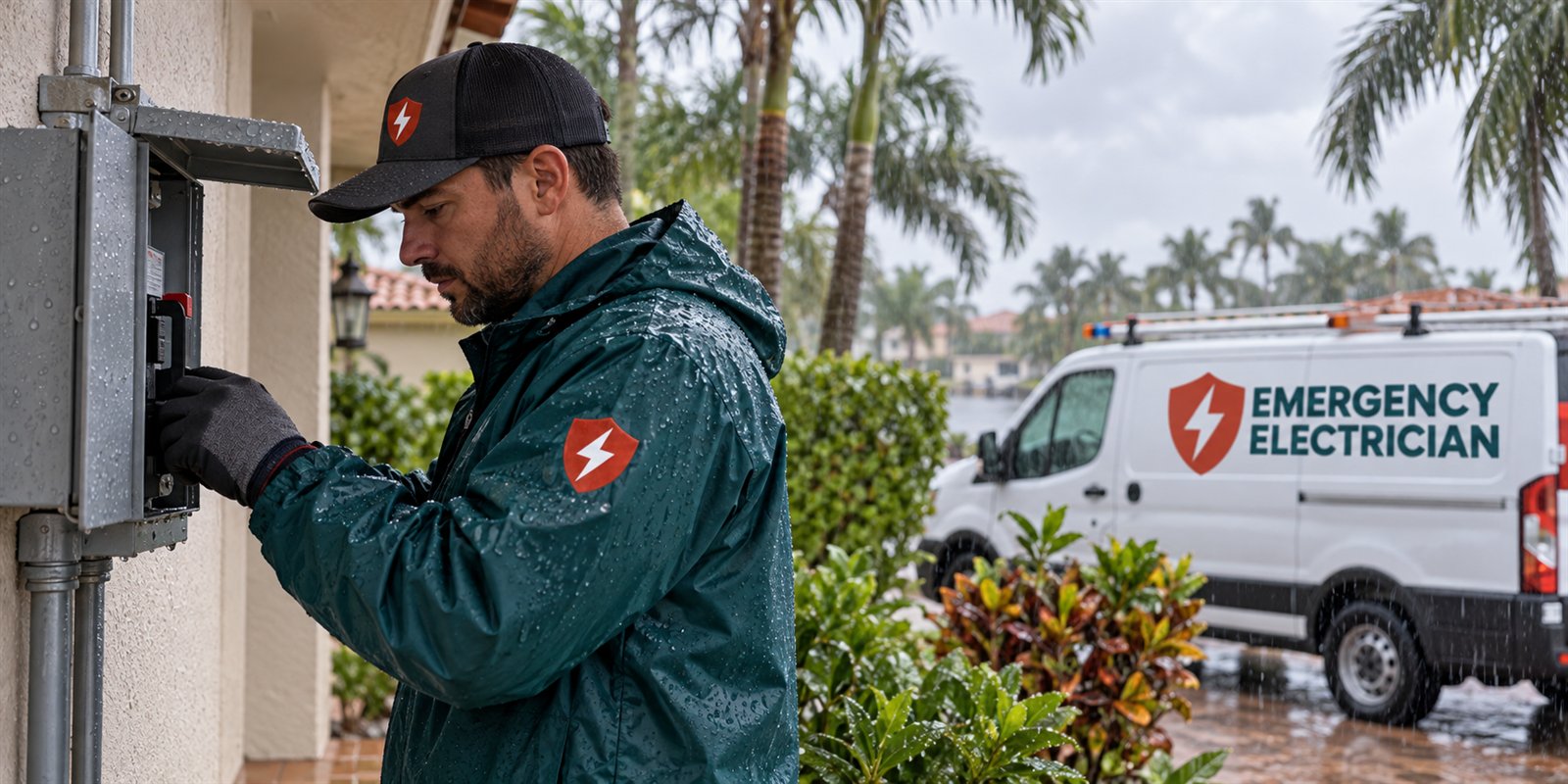
Triage first: 911, the utility, then everything else
If anyone in the water feels a tingling, a pet refuses to enter, or someone has been shocked in or near the pool, call 911 and get everyone out without becoming a second victim. Do not jump in to help. Reach with a non-conductive object such as a wooden pole, a rope, or a pool hook only if the power is believed to be off, or wait for responders. Electric shock drowning is a real hazard, and a person affected by current may not be able to call out.
Call 911 as well if you see smoke, flames, or burning smells at the equipment pad, or if an underwater light is smoking or glowing oddly. If there is a downed power line anywhere near the yard, treat the water and the fence as possibly energized and keep everyone back. For the broader picture of storm electrical safety, see flooded home electrical first steps.
If there is no fire, nobody is hurt, and the situation is stable, the pool is still off limits. Do not swim, do not let children or pets near the water, and do not enter the water to retrieve debris. The only people who should be working around a flooded pool are people who understand how to confirm that power is off and that the equipment is safe. Treat the area as an electrical hazard until a technician says otherwise.
Why floodwater and pool electrical systems are such a risky mix
A pool is an electrical environment with unusual rules. It contains a large body of conductive water, people in swimwear with wet skin, and equipment that runs on household and higher voltages. Pool wiring is designed with protection layers, such as ground fault protection, bonding of metal parts, and waterproof fittings. Floodwater defeats many of those layers at once.
Floodwater is not clean water. It carries salts, soil, fertilizers, sewage, and chemicals, and it is more conductive than rainwater. It rises into equipment pads, pump housings, and control boxes that were never meant to be submerged. Once inside a motor or a junction box, water leaves behind residue that continues to conduct when conditions are humid, and corrosion starts almost right away. Our page on what floodwater does to wiring goes through those mechanisms.
The problems are not always visible. A pump that spins may still have wet windings. A light that comes on may have a damaged seal. A bonding wire that looks intact may have a corroded connection that no longer ties the metal parts together. A pool that looks clear and calm can hide equipment that is one fault away from a serious hazard.
The equipment that is usually involved
The pump is the most common casualty. Pool pumps sit low to the ground, often in an open or partly enclosed pad, and floodwater can reach the motor and the wiring box. The motor, the capacitor, and the connections need inspection. A pump that has been submerged is frequently replaced, but that is a question for the technician and the pool service company together.
The control system comes next. Many pools have a control panel, timer, or automation unit that manages the pump, heater, lights, and sometimes a salt system, a blower, or a spa. These controls contain electronics and relays that do not tolerate water. A panel that has been wet may fail unpredictably or hold dangerous voltages in places that should be isolated. The wiring that feeds the controls often comes from a sub-panel, which also needs inspection.
The heater, whether gas or electric or a heat pump, has its own electrical components. Gas heaters have control boards and ignition systems, and electric heaters carry a heavy load. Underwater lights are a distinct case, because they sit in the water and are supplied by a dedicated circuit with protection. If floodwater has stressed the fixture seals or the junction box, the light may be a hazard even when it is off. The relationship between these parts is why a pool inspection looks at the whole system, not one device.
Bonding and grounding: the hidden safety system
A pool has a bonding grid, which is a network of wires and connections that ties together metal parts, such as the pool shell reinforcement, ladders, rails, pump housings, and sometimes nearby fences or equipment. The purpose is to keep all those metal parts at the same electrical potential so that a fault does not create a voltage difference that a swimmer could feel. Bonding is not the same as the ground wire for a circuit, though the two work together.
Floodwater, soil movement, and corrosion can compromise bonding connections. A wire that was buried or hidden under the pad may have corroded or pulled loose. A connection at a pump or a ladder anchor may have loosened. These faults do not announce themselves. The pool operates normally until another fault, such as a leaking pump motor, creates the situation the bonding was supposed to protect against.
This is one reason the pool is not restored by simply drying the equipment. A technician can test the continuity of the bonding connections and check the ground fault protection that supplies the pool circuits. If these tests fail, repairs are needed before the pool can return to service. The decision is not a matter of opinion, and it does not depend on how the pool looks.
Ground fault protection: what it does and why it must be tested
Ground fault protection is a device that monitors the current going out and coming back on a circuit. If a small amount of current leaks away, for example through water or a person, the device trips and cuts the power in a fraction of a second. Pool circuits are protected this way because the consequences of a leak are severe. See what GFCI and AFCI protect against for a plain-language explanation.
After a flood, the protection device itself can be damaged, or it may be doing its job by tripping repeatedly. A device that trips and will not reset is telling you something is wrong on the circuit. Do not bypass it, do not replace it with a regular breaker, and do not keep resetting it. Our page on when a GFCI will not reset explains why a stubborn device usually means a real fault.
The technician tests the protective device with the proper equipment and checks that it trips as intended. They may find that the device is fine and the equipment downstream is faulty. They may also find that the device itself has been compromised by water or by repeated surges, and it needs replacement. In either case the pool stays off until the protection is confirmed working.
What not to do around a flooded pool
Do not turn the pool equipment on to see whether it works. Starting a wet pump or a wet control system is how a minor repair becomes a major one, and it is how people get hurt. Do not reset a breaker or a ground fault device that tripped on the pool circuit. Do not touch the equipment pad if there is standing water around it. Do not use the pool lights, the spa jets, or the heater.
Do not enter the pool or the spa for any reason until the electrical system has been inspected and cleared. That includes quick dips, pulling out debris, and testing water chemistry from within the water. Use a pole or a net from the deck, and only if the deck and surrounding area are dry and clear of exposed wires.
Do not try to dry out equipment with a heat gun, a hair dryer, or a space heater while it may be connected to power. And do not assume that a pool service company can make the electrical system safe on its own. Pool professionals are skilled at water and equipment, but electrical diagnosis and repair of the supply circuits belongs to an electrician. The two trades often work together, as noted in our guide to what never to do in an electrical emergency.
What a technician checks, step by step
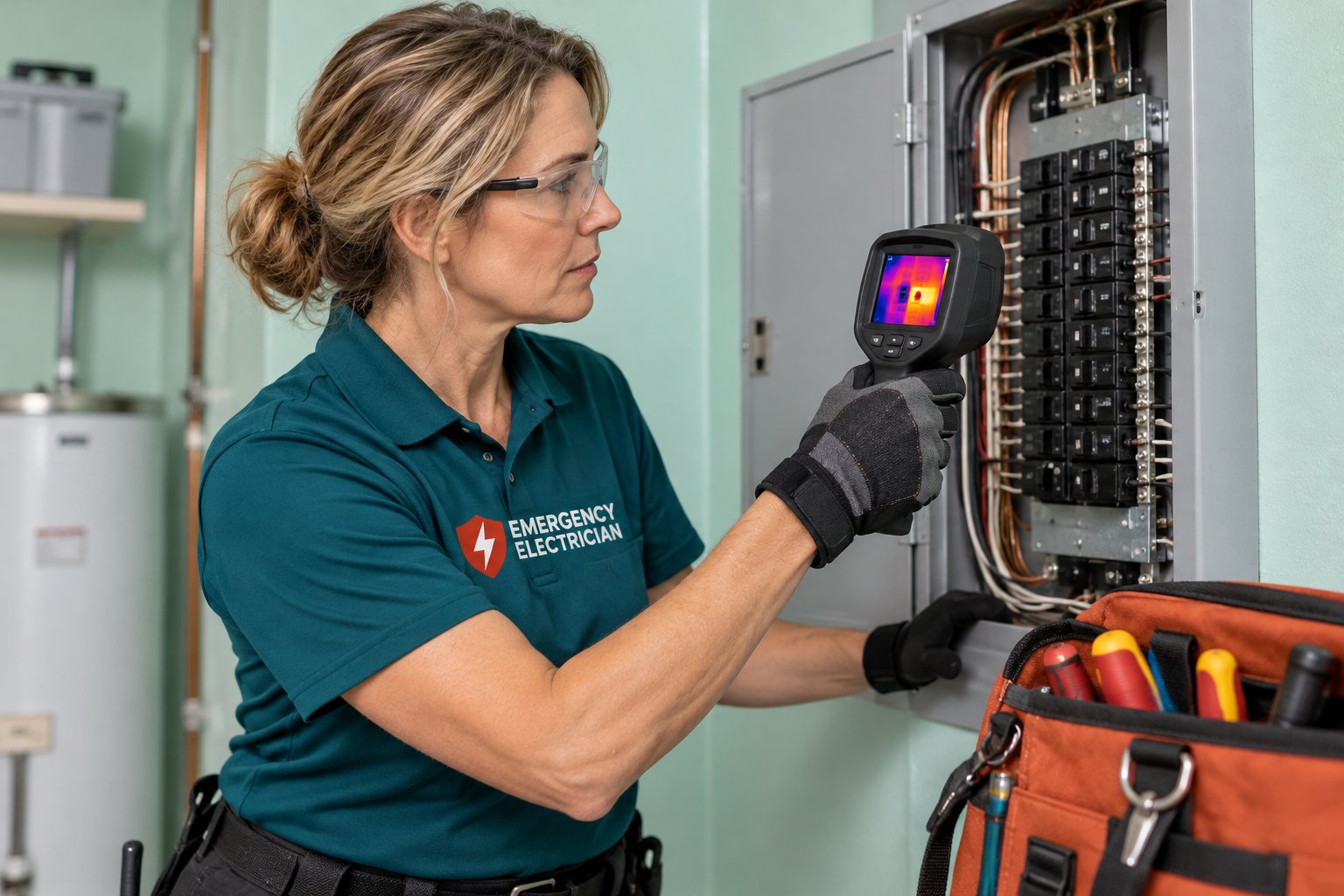
The technician begins by identifying and isolating the circuits that feed the pool, whether from the main panel or a sub-panel, and confirming that power is off and verified off. Then they inspect the equipment pad and the visible wiring for water marks, debris, corrosion, and loose or burned connections. They check the disconnects, the junction boxes, the conduit connections, and the fittings for signs that water has entered.
Testing follows. The technician measures insulation resistance and continuity where appropriate, checks bonding connections, and confirms that the ground fault protection device works as intended. They examine the underwater light fixture and its junction box for water entry. They assess the pump, heater, and controls, and they decide which can be returned to service, which need repair, and which should be replaced.
The result is a plan. Some of the work may be the electrician's, such as replacing a damaged disconnect, repairing a circuit, or restoring bonding. Some will belong to a pool contractor, such as replacing a pump or a heater. A permit and inspection may be required for certain repairs, and the technician can explain what applies in your area. Our page on storm rebuild permits and inspections explains the general process.
Common flood scenarios around South Florida pools
A canal-front home may see a storm surge or heavy rainfall push water over the seawall and across the yard. The pool deck can be covered with brackish water that is more conductive than fresh water. In that case, equipment on the pad can be affected even if the pool itself looks normal, and corrosion can continue for weeks afterward if parts are not cleaned or replaced.
An inland home with poor drainage may collect rainwater around the pool equipment for days. The pad sits low, the pump motor sits in water, and the conduit that feeds it may fill. Even after the water recedes, the conduit may hold water at low points, and the wiring inside can be compromised. This is a case where the visible damage is small and the hidden damage is not.
A screened enclosure can seem protected, but wind-driven rain can still soak the equipment, and a torn screen can let debris fall onto the pad. A condo or community pool brings an added layer: the association or the management company controls the equipment, and residents should not try to use the facility until it has been inspected. If you live in such a community, see condo association electrical emergencies.
Planning the return to service and what to have ready
When the technician and the pool contractor have completed their work, the return to service should be deliberate. The electrical system is tested, the equipment is started under supervision, and the protective devices are confirmed to work. Water chemistry and filtration, which belong to the pool service side, come after. Ask the technician for a clear statement of what was tested, what was replaced, and what remains open.
Before you call, gather what you can: the location of the pool equipment and any sub-panel, whether power to the pool is currently off at the breaker, what you noticed about the water level and any smells or sounds, and whether any devices tripped. Take photographs from a safe distance, including the water line on the equipment. Our guide on photographing damage before repairs and the page on electrical damage and insurance documents help with the claim process.
Be honest with yourself about the timeline. A pool that has been flooded may be out of service for days or longer, depending on the extent of the damage and the availability of parts and contractors. That is frustrating, but it is far better than a shortcut that exposes your family to risk. When you are ready, call, describe what you see, and let a technician decide the safest next step. Quotes are given only by phone, complicated work needs an on-site visit, and the service call charge is explained before dispatch.
Questions people ask
Can I swim if the pool water looks clear after a flood?
No. Clear water says nothing about the electrical system. Pumps, lights, bonding, and wiring may be damaged and could energize the water or create a voltage difference. Keep everyone out of the pool until a technician has inspected and tested the electrical equipment and the circuits have been cleared for use.
Should I turn the pool pump on to test it?
No. Starting a pump that was in floodwater can cause a short, trip protection devices, damage the motor, or create a shock hazard. Leave the pump off at its breaker, keep people away from the pad, and let a technician test the circuit and motor before it is energized.
Why does the ground fault device keep tripping on the pool circuit?
It is doing its job. A device that trips repeatedly is detecting leakage current, often from water in a motor, a light, or a junction box. Do not bypass it or replace it with an ordinary breaker. Leave it off and have the circuit and equipment tested to find the actual fault.
Does the pool light need to be checked even if it is off?
Yes. The fixture sits in the water and has a sealed junction, and flooding can compromise seals and connections even when the light is switched off. The circuit may still be energized at the breaker. A technician tests the circuit and inspects the fixture and junction box before the light is used again.
Who should I call first, an electrician or a pool company?
Call the electrician first when equipment has been flooded, because the hazard is electrical. The pool contractor can then handle pumps, heaters, and water systems. The two trades often coordinate, and the electrician's findings help the pool company decide what to repair or replace and in what order.
How do quotes and the service call charge work?
Quotes are given only by phone. A flooded pool system is the kind of job that needs an on-site visit, and there is a service call charge that is explained before dispatch. Call, describe the equipment and conditions, and the dispatcher will explain how the visit works before a technician is sent.
Reading about "Pool and Spa Electrical After a Flood"? Tell us what stopped working and when. We will say what an electrician would check first, and quotes are given by phone when the job can be described.
Related pages
- Pool Equipment Trips: A pool pump, heater or light that keeps tripping the breaker can signal water intrusion or a bonding fault. Learn what to do, who to call and what to tell them.
- GFCI Won't Reset: A GFCI that will not reset means a fault or a failed device. Learn what safe checks you can do, what to avoid, and how to describe the problem by phone.
- Flood First Steps: What to do about electricity in a flooded home: stay out of water near power, how the utility disconnect works and why inspection comes before power returns.
- Flood and Wiring: How floodwater damages wiring, breakers, outlets and panels: corrosion, contamination, trapped moisture, and why wet devices are replaced instead of dried.
- After-Storm Power: What to check before the utility re-energizes your service after a storm, what to leave off, and how to bring a house back online without damage or hazards.
- Pre-Storm Checklist: A calm, practical electrical checklist for the days before a hurricane: what to check, what to charge, what to leave alone and when to call a professional.