
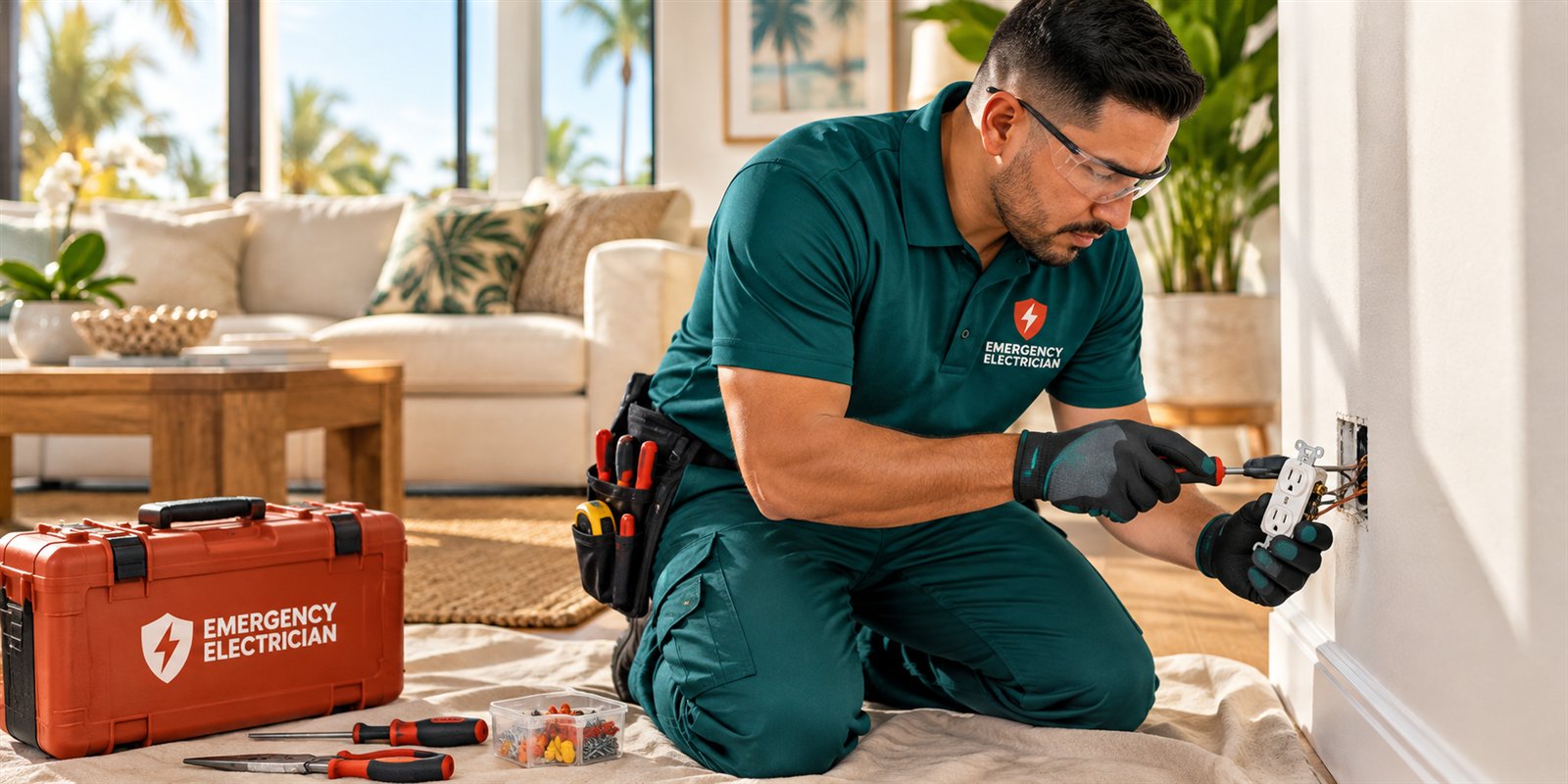
What a GFCI is doing
A ground-fault circuit interrupter, usually called a GFCI, watches the current flowing out on the hot wire and the current coming back on the neutral wire. In a healthy circuit the two are equal. If some current takes another path, for example through a person, through water, or through a damaged wire to a grounded surface, the numbers no longer match. The GFCI notices a difference as small as a few thousandths of an amp and opens the circuit in a fraction of a second.
That speed is what makes it life-saving, particularly in kitchens, bathrooms, garages, laundry rooms and outdoors, where water and electricity meet. It is the reason these devices are installed in wet locations. When a GFCI trips, it is not being fussy. It has detected a leak that could hurt someone.
A single GFCI outlet often protects other outlets downstream of it, called load-side outlets. That is why a tripped GFCI can leave a bathroom, a garage and an outdoor outlet dead at the same time, and why the reset button you need to press may be on a different wall from the dead outlet.
Why it will not reset
There are two broad reasons. The first is that a fault is still present. The device is designed to refuse to reset if it still sees a ground fault or a wiring problem on its protected circuit. In that case it is working correctly, and the problem lies in the wiring or in something plugged in.
The second is that the GFCI has failed. These devices contain electronics and a mechanism that wear out. Surges, moisture and age can damage them, and a failed unit may refuse to reset, may reset but not restore power, or may click but immediately trip again. Many are expected to last for a limited number of years, and the older the device, the more likely it is the cause.
A stuck GFCI is a symptom, and the cause may be several steps away. The fault could be a wet outdoor outlet, a damaged cord on a tool, a refrigerator with a leaking compressor wired to a protected outlet, or moisture inside a wall. The device is simply the messenger.
- A real ground fault on the circuit or on something plugged in
- Moisture in an outlet, box or fixture on the protected circuit
- A damaged cord, tool or appliance leaking current
- A failed or worn-out GFCI device
- Wiring problems such as a miswired neutral
- Damage from a surge or lightning event
Safe checks you can do
There are a few simple checks that do not involve opening anything or touching wiring. Start by unplugging everything from the GFCI outlet and from any outlets it protects, including outdoor, garage and bathroom outlets that may be downstream. A faulty appliance, a damaged cord or a wet tool is the most common cause, and removing the load tells you whether the circuit itself is clean.
With everything unplugged and with dry hands, standing on a dry surface, press the reset button firmly. If it clicks and holds, the problem was probably a plugged-in device. Plug items back one at a time, and watch for the one that trips it. Retire that item or have it checked.
If it will not reset even with everything unplugged, stop. Do not try to hold the button in, tape it, or repeat the process many times. Do not remove the cover plate or the device. If the area is wet, stay out of it. Check whether a downstream outdoor or garage outlet has water in it, but only from a dry position and without touching it.
- Unplug everything from the GFCI and the outlets it protects.
- With dry hands on a dry floor, press the reset button once, firmly.
- If it holds, plug devices back one at a time and note which one trips it.
- If it will not hold, stop and leave it alone.
- Note which outlets and lights are dead nearby and call.
What not to do
The temptation with a GFCI that will not reset is to defeat it. Do not do that. Do not replace it with an ordinary outlet to restore power, and do not bypass it. Doing so removes the protection that caught the fault in the first place, and leaves a hazard in a place where water and electricity are close together.
Do not use extension cords to run power from another room to the dead area unless you are certain the source is protected and the cord is safe. Do not use a different GFCI from a different circuit as a fix. Do not keep resetting a device that trips immediately. Each reset sends current through the fault.
Do not assume a nuisance trip and ignore it. Some trips are caused by equipment that leaks small amounts of current, such as older appliances, and some are caused by humidity. But repeated or immediate trips should be investigated, because the same signs can come from damaged wiring or water in a box. Remember also that GFCI protection is about people. A GFCI that is misbehaving may be the only barrier between a damaged circuit and someone who touches it with wet hands.
Where the fault might be hiding
In a wet location, the first suspects are outdoor receptacles, pool equipment, garage outlets, landscape lighting and kitchen counter outlets. Water that gets into a weatherproof cover, a hose-down of a wall, a sprinkler spraying an outlet, or a day of heavy rain can all leave moisture inside a box. In South Florida, humidity and driving rain make this common.
Inside the home, a refrigerator, dishwasher, disposal or washing machine plugged into a protected outlet can leak current through a failing part. Small appliances with damaged cords or a heating element that has cracked can do the same. A bathroom fan or a heated mirror that has taken on moisture is another suspect.
Hidden wiring may be the cause. A cable damaged by a nail or screw, a splice that got wet in an attic, or a neutral wire that touches ground at a point it should not, can all trip a GFCI. These are the faults that need testing equipment and an electrician to find. See our guide on urgent ground-fault tracing for how technicians locate them.
Why nearby power is off too
People often report that a GFCI will not reset and that several other outlets are dead. That pattern is normal when the GFCI is the first device on a chain, since its protection extends to outlets wired after it. In some homes, a single GFCI near the kitchen protects the kitchen counters, a bathroom, the garage and an outdoor outlet. In others, the original GFCI is in an unexpected place, such as a garage or a bathroom that is not the one that lost power.
To find the controlling device, look for GFCI outlets with test and reset buttons in nearby wet areas. If you find one that has tripped, you may be able to reset it, and this may restore power. If the dead outlets have no GFCI of their own, the protection may be at the breaker, since some panels use GFCI breakers. A tripped breaker in the middle position or off should be noted for the dispatcher.
Remember that dead outlets can also indicate a tripped regular breaker, or a failure of a connection further back. If the outlets are dead and no GFCI or breaker is tripped, mention it, since this suggests a different problem. Our page on power off in one room only goes through other causes.
Outlet type or breaker type
Ground-fault protection comes in two common forms. One is the outlet with test and reset buttons on its face. The other is a GFCI breaker in the panel, which protects the whole circuit. The behavior when something goes wrong is similar, but where you look is different. A tripped GFCI breaker will usually sit in the middle or off position and may need to be pushed fully off before it can be switched back on.
If a GFCI breaker will not reset, the panel is the place to leave alone beyond the simple attempt. Do not remove the panel cover or touch the wiring. A breaker that will not hold after the loads are removed is telling you that the circuit has a fault, or that the breaker itself has failed. Our page on a breaker that will not reset covers the panel side of the story.
Some homes have both kinds, a GFCI breaker for a circuit and a GFCI outlet along it, which can make troubleshooting confusing. If you are not sure which device is protecting what, say so on the phone. The technician can trace it.
Kitchens, bathrooms, garages and outdoors
Each location has its own usual suspects. In a kitchen, counter outlets feed appliances that have heating elements and motors, and a leak in any one can trip the device. Water splashed or spilled near an outlet can do the same. Steam from cooking can also reach the device over time.
In a bathroom, hair dryers, curling irons and heaters are frequent culprits, along with moisture from showers. A bathroom GFCI that trips only after showers may have moisture in the box or a failing device.
In a garage, the GFCI may protect freezers, chargers and tools, and the garage door opener can also be on the circuit. Outdoors, weather and insects are the main risk. A pool or patio area adds equipment that works in wet conditions. A GFCI that trips only when it rains is a strong sign of water getting in somewhere.
Living without the circuit for a while
Losing a kitchen or garage circuit is inconvenient, and it can affect food and equipment. If a refrigerator or freezer is on the dead circuit, check whether it is plugged into a protected outlet. Keep the doors closed to hold the cold, and tell the dispatcher so the visit can be prioritized. Do not run an extension cord from a different room unless that source is protected and the cord is suitable and undamaged.
If anyone in the home depends on powered medical equipment on that circuit, say so at the start of the call and arrange a backup right away. Tell the dispatcher the type of device, since the plan may change.
Use flashlights for light and avoid opening the dead outlet or the GFCI to investigate. Wait for the technician. If the situation involves water on the floor, stay out of that area until the power source is confirmed to be off.
Describing it by phone
A good description saves time. Tell the dispatcher where the GFCI is, which outlets and lights are dead, whether it clicks, resets briefly, or refuses entirely, and whether it trips immediately or after a delay. Say what you have unplugged and whether the problem changed when you did.
Mention whether it has rained, whether you or anyone has used a pressure washer, sprinkler or hose near outlets, and whether anything in the area has been wet. Say if there is any buzzing, smell or visible damage. Say if you also have a tripped regular breaker.
You may also be asked whether the home is a rental, how old the home is, and whether the GFCI is on a bathroom, kitchen, garage or outdoor circuit. It also helps to know whether you have a refrigerator or medical device that depends on the protected circuit, since that changes the priority. Our guide on what GFCI and AFCI protect against explains the devices if you want background.
What the technician does
The technician begins by testing the GFCI itself, with the circuit isolated, to see whether it is the faulty part. A tester that simulates a ground fault shows whether the device trips as it should and whether it resets. If it is bad, the device is replaced with a new one.
If the device is sound, the technician looks for the fault. They isolate branches of the circuit, disconnecting downstream outlets one by one, and test each section for leakage with an insulation resistance tester. Outdoor and garage outlets are opened and inspected for water, corrosion and insects. Fixtures, motors and appliances on the circuit are checked. If the fault is in a wall, the technician locates the damaged section and decides whether to repair or replace it.
Also checked is the wiring of the GFCI itself. A GFCI that has its line and load connections reversed, or that is wired with a shared neutral from another circuit, will not behave properly. After the repair the device is tested again, and the technician explains what was found. Complicated jobs need an on-site visit for a firm quote, and quotes are given only by phone, with the service call charge explained before dispatch.
Example situations
A homeowner found the garage and back patio outlets dead after a heavy rain. The GFCI in the garage would not reset. Unplugging everything did not help. The technician found water in the patio receptacle box, where a cover gasket had failed. After the box was dried, the receptacle replaced and the cover sealed, the GFCI reset normally.
In a condo kitchen, the GFCI by the sink would not reset and the dishwasher stopped. The dishwasher heating element had developed a leak to ground. The GFCI was working correctly. The element was replaced and the circuit tested clean.
In an older house, a bathroom GFCI would not reset and had a faint scorched smell. This one had simply failed after years of use. It was replaced, and the technician also noticed the next outlet in line was loose and corrected it.
Preventing a repeat and what to do next
Test GFCI outlets regularly using their test and reset buttons, as the maker suggests. Replace old units that no longer behave. Keep outdoor covers closed and in good shape. Do not run sprinklers or hoses at outlets. Replace cords and tools with damaged insulation.
If a GFCI in your home will not reset, unplug the loads, try once from a dry position, and if it still will not hold, leave it and call. A dispatcher can explain the service call before anyone is sent.
Questions people ask
Is a GFCI that will not reset always broken?
No. Often the GFCI is working correctly and refusing to reset because a real fault is present on the circuit, such as a wet outlet or a leaking appliance. Unplug everything and try once. If it still will not hold, the device may have failed or the wiring has a fault, and it needs testing.
Can I replace a GFCI with a regular outlet to get power back?
You should not. A regular outlet removes the ground-fault protection and leaves the underlying fault in place in a wet location. The result can be a shock hazard. Have a qualified electrician find the cause and repair the circuit, keeping protection in place.
Why are my garage and outdoor outlets dead?
They are often wired downstream of one GFCI, sometimes located in a garage or bathroom. When it trips, everything after it loses power. Look for a tripped GFCI nearby. If you cannot find one or it will not reset, tell the dispatcher which areas are dead.
How often should I test a GFCI?
Many makers recommend pressing the test button periodically, and a working device should trip and then reset. If the test button does nothing, or the device will not reset afterward, it has failed or has a wiring problem. Follow the instructions printed on the unit and replace failing devices.
Is it dangerous to keep pressing reset?
Yes, if the device trips immediately each time. Repeated resets can push current through a fault, which can heat wiring or put people at risk. Try once with everything unplugged. If it does not hold, stop, keep the area dry and call for a technician to test the circuit.
How will I know the price?
Quotes are given only by phone, and the dispatcher explains the service call charge before anyone is sent. Replacing a failed GFCI can often be described by phone, while tracing a fault in wiring or an outdoor circuit needs an on-site visit so the real scope is known.
About "GFCI Outlet Will Not Reset": call and give us the details, and we will explain what is safe to do while you wait and what the visit would cover. Jobs that cannot be quoted blind need a look on site.
Related pages
- GFCI/AFCI Fix: GFCI and AFCI devices trip for real reasons. Learn what repeated trips mean, why bypassing them is dangerous, and how a technician traces the fault behind them.
- Water in Outlet: Water dripping from a ceiling light, fan or outlet is both a leak and an electrical hazard. Learn how to separate the water from the circuit and stay safe.
- One Room Dead: When one room loses power but the rest of the house is fine, the cause is usually local. Learn the safe checks, what a hidden connection means and when to call.
- GFCI and AFCI Explained: A plain explanation of ground-fault and arc-fault protection, where each is used, what each catches, and the limits that still call for caution.
- Panel Buzzing: Some panel hum is normal, but loud buzzing can signal arcing or a loose connection. Learn to sort the sounds and what to tell the dispatcher about them.
- CO and Generator: A carbon monoxide alarm with a generator running is a life-safety emergency. Get out first and call 911. Learn why, and when an electrician call comes later.