
Why these outlets are different from ordinary ones
A standard wall outlet serves lamps, chargers and small appliances. A range outlet and a dryer outlet are built for something much larger. They connect appliances that use a lot of power for long stretches: an electric range with its oven and burners, or an electric dryer with its heating element and motor. Both operate on a higher-voltage circuit with a double-pole breaker, and both use heavy conductors and a large, distinctive receptacle, usually with three or four slots.
Because the current is large, small flaws matter more. A loose connection that would be unnoticeable on a lamp circuit can produce serious heat at a high-current terminal. The power delivered at the plug is substantial, and any resistance at the contact points turns a share of it into heat right where the plug meets the receptacle. That heat is concentrated in a small area made of plastic and copper, which is the recipe for melted housings and scorched walls.
These outlets also live in demanding spots. The range outlet is behind a heavy appliance in a warm kitchen, and the dryer outlet is often in a laundry closet or garage where lint, humidity and movement are constant. Plugs get pushed and pulled when the appliance is moved for cleaning, and the cords flex at the connection.
All of this explains why this page treats a spark or a hot smell at one of these outlets as urgent. It is a failure at a high-energy point, and the appliance, the outlet and the wall behind it may all be affected.
What counts as a warning sign
Signs fall into two groups: things you see or smell, and things you notice about how the appliance behaves. On the visible side, look for a plug face that is brown, black or blistered; a receptacle with scorch marks, melted plastic or a warped cover; a cord that is stiff, discolored or soft near the plug; or a wall around the outlet that feels warm or shows staining.
On the smell and sound side, a hot or fishy plastic odor, a sizzling or crackling sound, and a faint buzz near the outlet are all red flags. A visible spark when the plug is moved or when the appliance starts is another. A single brief flash as a plug is pulled out under load can happen, but repeated sparking, blue or orange flashes inside the outlet, or arcing that does not stop are signs of a failed connection.
Behavioral signs matter too. A dryer that takes much longer than it used to, a range element that struggles to heat, a clock or display that flickers, or an appliance that runs on only half its power can indicate that one leg of the supply is weak or loose. A dryer that tumbles but does not heat is a classic example of a lost leg, and it can be accompanied by a hot connection somewhere along the path.
Any one of these, especially heat, smell or sparking at the plug, means stop using the appliance. Related symptoms are discussed in a plug melted into an outlet and a lost leg on high-voltage appliances.
What to do right now
If you see flames or heavy smoke, get everyone out and call 911 from outside. That takes priority over everything else on this page, and the guide on small electrical fires explains the reasoning.
If there is no fire but the outlet has sparked, smells hot or feels hot, the safest steps are these. Turn the appliance off at its own controls: set the range knobs and oven to off, or stop the dryer cycle. Then, if you can do it safely, switch off the dedicated double breaker in the panel for that appliance. Make sure the floor is dry, you are not touching metal that connects to the appliance, and the panel shows no sign of heat or damage.
Do not unplug a plug that is hot, melted, blackened or sparking. A hot plug can burn skin, and pulling it out under a fault can draw an arc. If the plug is only warm and the breaker is off, you may leave it in place until the technician arrives. Do not try to pry apart a fused plug.
Do not use the appliance again, even to finish a load or cook a meal. Do not move the appliance away from the wall to look behind it if the outlet is hot or sparking. Keep children and pets away from the area, and keep anything flammable, such as towels, boxes and cleaning products, clear of the outlet.
Then call an electrician and describe what you saw, smelled and heard.
- Flames or heavy smoke: everyone out, then 911.
- Switch the appliance off at its own controls.
- Turn off its double breaker only if the panel is safe to approach.
- Do not unplug a hot, melted or sparking plug.
- Keep the appliance off and the area clear, then call.
How these outlets fail
Several mechanisms explain most failures. The first is a loose terminal. At the back of the receptacle, the heavy conductors are held by screws. If those screws were never torqued properly, or if they loosened over time with heating and cooling cycles, the connection develops resistance. Heat then softens the surrounding plastic, which loosens the grip even more, and the process accelerates.
The second is a worn receptacle. The contacts that grip the plug blades lose tension from repeated plugging and unplugging, and from heat. A plug that sits loosely arcs at the contacts and pits the metal. Over time the pitting adds resistance, and the arcing leaves carbon deposits that make more heat.
The third is a mismatch. Older homes may have three-slot receptacles with three-prong cords on appliances that now come with four-prong cords, or the other way round. Adapters and improvised cords can create weak connections. A cord that is too small for the load, or a plug that is not correctly matched to the receptacle, can run hot.
The fourth is the wiring behind the outlet. A damaged or undersized conductor, a connection in the box that has loosened, or aluminum wiring in an older installation can heat at the point where it connects. The fifth is the appliance itself: a failing heating element or terminal block inside the range or dryer can draw excess current or arc internally. In many real cases, more than one of these contribute, which is why the technician looks at the whole path from the breaker to the appliance and not just the plug.
Range versus dryer: what differs in practice
A range outlet sits behind or beside the appliance, often hidden by it, and the cord hangs loose or sits tucked behind. Heat from the oven and burners warms the area, which accelerates wear. Moving the range for cleaning can strain the cord and the plug, and grease and moisture can reach the outlet. The range is used heavily at predictable times, so a fault often shows up when several burners and the oven run together, such as holiday cooking.
A dryer outlet faces different stresses. Lint accumulation around the appliance and in the vent can add fire fuel near the outlet. The dryer runs for long cycles at high current, which stresses any weak connection steadily. Laundry closets and garages are often poorly ventilated and may be humid. Dryers are also moved when vents are cleaned, which can disturb the cord and the plug.
In both cases, the connection at the appliance end matters too. The terminal block on the back of the range or dryer, where the power cord attaches, can be loose or corroded. A technician may check this once the appliance is safely disconnected and pulled out. Repairs inside the appliance itself may be a matter for an appliance technician, while the outlet, the cord and the circuit are the electrician's job.
If you are renting, tell your landlord or property manager promptly, as the outlet and circuit are typically part of the building. The guide on which repair is yours in a home or rental explains the usual split.
Why a hot plug can exist without any obvious spark
People often wait for dramatic signs before they call, but heat at a plug end can be quiet. A connection can run hot enough to deform plastic and discolor metal without ever producing a visible spark. The only signs may be a plug that feels uncomfortably warm after a cycle, a faint smell, or slight discoloration of the faceplate. Each of these should be taken seriously.
Temperature is the central issue, not the spark. Resistance heating is steady and cumulative. The softened plastic loses its grip, the contacts loosen, resistance rises, and the heat rises with it. By the time a spark appears, the process has often been underway for weeks or months. That is why a technician is interested in the history: when did you first notice warmth, and has the dryer or range seemed slower or weaker?
If your hand can rest on the plug comfortably, it is likely not in trouble. If it is hot enough that you pull away, treat that as a failure. Do not test by touching a plug that looks damaged. Assess from a distance and by smell, and if in doubt, switch off the appliance and its breaker, and call.
This is not an area for improvisation. Replacing a receptacle on a high-current circuit requires the right device, the right conductors, correct torque and correct matching with the cord. Mistakes at these terminals create the same heat problem again, sometimes more severe. For related heat issues in lower-current outlets, see warm or discolored outlets.
What the technician will check
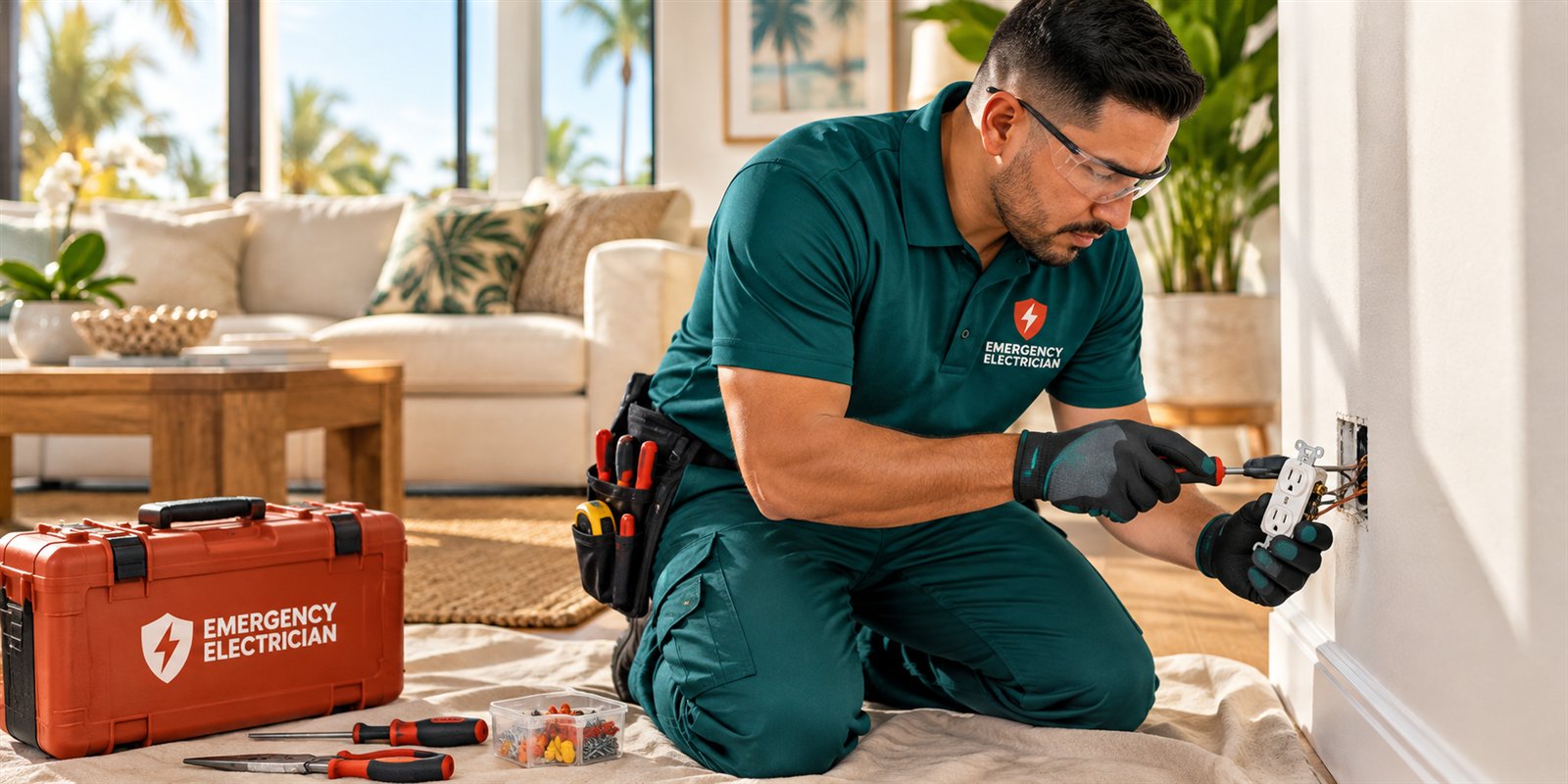
A technician starts by confirming the circuit is off and safe to work on, then inspects the plug, the cord, the receptacle and the wall box. They look for melting, pitting, carbon deposits and heat damage. They check the terminals at the receptacle and at the appliance for tightness and corrosion, and use instruments to measure voltage and look for imbalance between the legs.
They also examine the breaker that serves the circuit. A double-pole breaker that is aging or has run hot may need replacement. The technician checks the conductor size against the breaker rating and the appliance requirements, looks at the condition of the wiring where it enters the box, and may follow the run back toward the panel if there are signs of damage.
Common repairs include replacing a burned receptacle and cord end, remaking a loose termination, replacing a weak breaker, correcting a plug and receptacle mismatch, and repairing damaged conductors. If the wall around the outlet is scorched or the insulation is damaged inside the wall, the repair grows in scope, and more extensive work may need an inspection or a permit from the city or county.
Related services appear under urgent appliance circuit repair and urgent outlet repair. The technician will tell you whether the appliance itself should also be examined by an appliance specialist before you use it again.
Preparing for the call and preventing a repeat
Before calling, gather simple facts. Which appliance, range or dryer? What did you see, smell or hear, and when? Is the appliance off and the breaker off? Has the appliance been moved recently, or has a cord or plug been replaced? Is the appliance gas or electric, and does it have a three-prong or four-prong cord? Have the address, the access instructions and the best contact number ready.
Clear space around the outlet if you can do so safely. Keep the area dry, and keep flammable items away. If lint is visible around a dryer, do not vacuum or clean near a sparking outlet until it has been made safe. Take a photo from a distance if it helps, and do not remove anything.
To prevent a repeat, ask the technician about the condition of the receptacle and the cord end, and whether the circuit is sized for the appliance. Avoid moving the appliance more than necessary, and when you do, push it back gently without crushing the cord. Keep dryer vents clean on a sensible schedule, and do not use adapters or extension cords on these circuits. See preventing a repeat electrical emergency for more.
Quotes are given by phone only. Simple repairs can often be done at the visit, while complicated jobs need an on-site look first. There is a service call charge, explained on the phone before dispatch. If your range or dryer outlet has sparked or smells hot, keep the appliance off and call.
Questions people ask
Is it dangerous if my dryer plug feels warm after a cycle?
A plug that is mildly warm is not unusual, but one that is hot enough to make you pull your hand away is a warning. Heat at the plug end usually means a loose or worn connection. Stop using the dryer, switch off its breaker if it is safe to do so, and have the outlet and plug inspected before it runs again.
Should I unplug the range if the outlet sparked?
Not if the plug is hot, melted or still sparking. Switch the appliance off at its controls and turn off its dedicated breaker if the panel is safe to approach. Leave the plug in place until the technician arrives, unless it is cool and undamaged and the breaker is off. Keep everyone and anything flammable away from the outlet.
Can I keep using the oven if only the burners are affected, or vice versa?
No. The oven and burners share the same supply and the same plug and outlet. A problem at the connection can affect everything the range does and can worsen with load. Keep the whole appliance off until the circuit has been inspected, and avoid using extension cords or adapters as a workaround.
Why does my dryer spin but not heat?
The heating element and the motor use different parts of the supply. A dryer that tumbles but does not heat may have lost one leg of the high-voltage supply, a failed element or a weak connection. Because a loose connection can be hot, do not keep running it. A technician can tell whether the fault is in the circuit or in the appliance.
I rent. Who is responsible for fixing the outlet?
The outlet, wiring and breaker are generally part of the building, so tell your landlord or property manager right away, in writing if you can. Keep the appliance off, and describe what you saw and smelled. If the problem is an immediate hazard, such as flames or smoke, call 911 first and report it afterward.
How much will the repair cost?
Quotes are given only by phone, and complicated jobs need an on-site visit first. There is a service call charge, and it is explained on the phone before dispatch. The repair depends on what is found, such as a burned receptacle, a loose termination or a weak breaker. Call and describe what you see, and the dispatcher will explain how the visit works.
If "The Range or Dryer Outlet Sparked" matches what is happening, call and describe it plainly: the room, the breaker, any burning smell or tripped circuit. We explain what the repair would involve before a visit is set.
Related pages
- Melted Plug: When a plug fuses into an outlet, do not pull it. Learn how to cut power at the breaker, what to report to the dispatcher, and how a technician clears it.
- Warm Outlet: A warm, browned or melted outlet is a heat warning. Learn how to read the damage, what to unplug, when it is a same-day call, and what a technician checks.
- Lost Leg: Lights work but the dryer, oven or air conditioner will not run? A lost leg may be the cause. See the symptoms, where the fault can sit and what to do next.
- Appliance Circuits: When a range, dryer or water heater goes dead, the circuit may be at fault, not the appliance. Learn triage steps and what to check before you replace anything.
- Outlet Repair: A dead, warm or heat-damaged outlet needs attention. Learn what is safe to do, how a technician repairs a receptacle, traces the cause and how to prepare.
- Small Fire: Small flames at an outlet, cord or appliance still mean get out and call 911. Learn why water is wrong, when an extinguisher is an option and what follows.