
An honest starting point
Electrical systems age, weather changes, loads grow, and equipment fails. A technician who tells you that a repair makes a failure impossible in the future is promising something no one can deliver. A more honest way to put it is that the right follow-up reduces the chances of a similar failure and makes it easier to catch trouble early. This page is written in that spirit.
If there is any immediate danger, such as smoke, fire, sparks, a shock or a downed wire, call 911 and get everyone to safety before reading further. Prevention is for the calm days after an event, not for the moment of an emergency.
The best prevention starts with understanding what happened. If you have not already done it, read the guide on understanding the root cause after a repair and ask the technician the questions it lists. What you learn about the cause shapes every step below.

Ask for a follow-up inspection plan
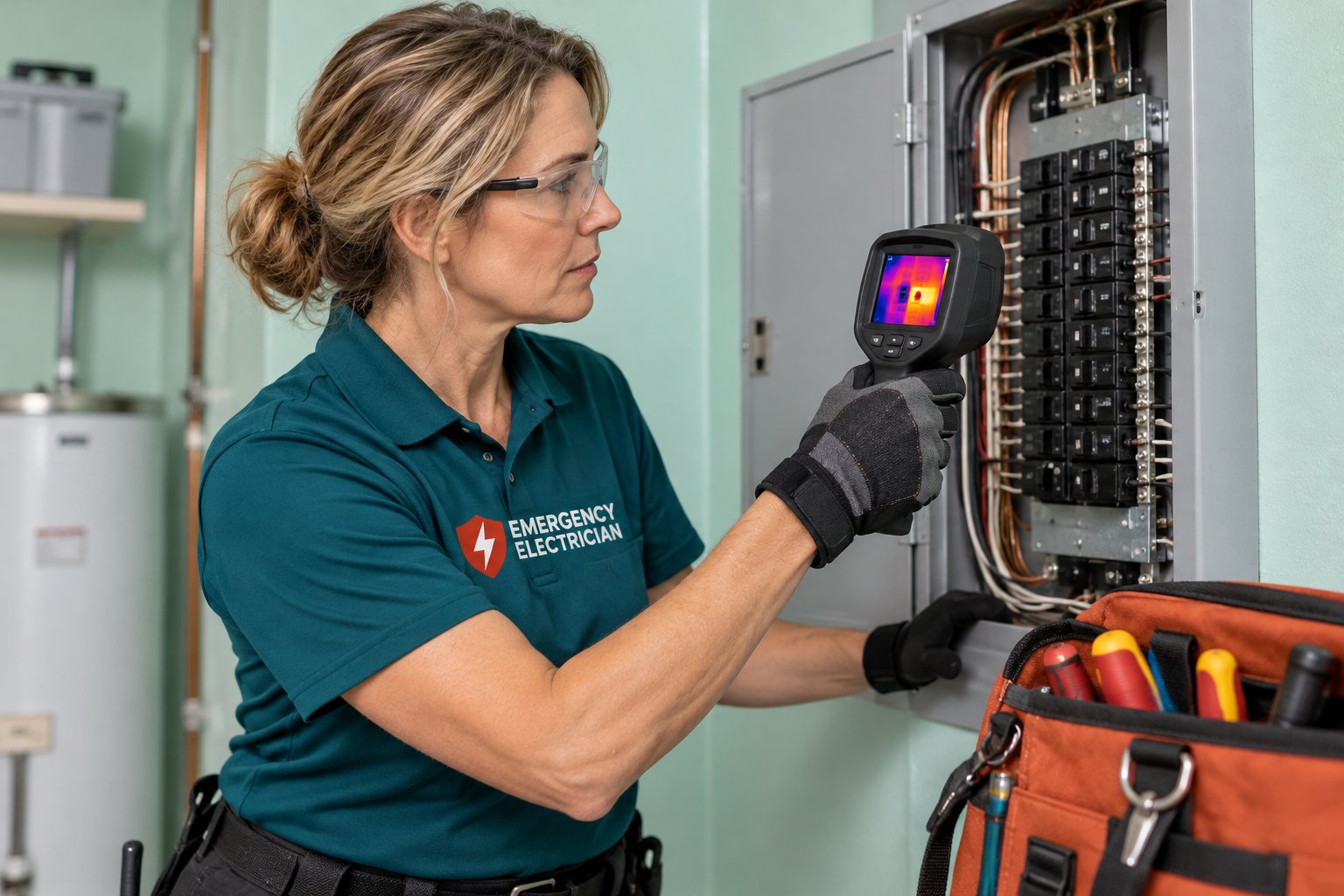
After an emergency repair, the technician often has seen only part of the system. They fixed what failed and maybe checked what was nearby. A follow-up inspection looks at the rest in a calmer setting. It can be done at a time that suits you, with the power on or off as needed, and with enough time to examine the panel, the service equipment, the main circuits and the devices.
Ask what the technician would look at in a follow-up, and what they would not. A reasonable inspection plan describes the areas to be examined, the tests to be performed and the kind of report you will receive. It does not promise to find everything, and it does not need to be a long list of upsells. Complicated jobs need an on-site visit before a quote can be given, and quotes are given by phone after that.
If the technician recommended follow-up in the written report, use those recommendations as the starting point. The guide on getting a written report of the electrical findings explains how to make sure they are written down.
Fix the cause, not only the symptom
If the investigation of the failure pointed to a cause that can be addressed, address it. A circuit that was overloaded may need to be split or supplemented. A weatherhead that let water in may need to be replaced. A panel that is corroded may need more than a new breaker. A connection that loosened may suggest checking other connections of the same type.
Prioritize by risk. A condition that could cause a fire or a shock comes first. A condition that causes nuisance trips or inconvenience comes later. A technician should be able to explain which category each recommendation falls into and why, without using fear as a sales tool.
If you rent, share what you learned with the owner or manager in writing and ask them to arrange the work that belongs to them. If you live in a condominium, bring the findings to the association. See which repairs are yours in a home or rental for the usual division.
Habits that help in a hot, humid, stormy climate
South Florida's weather is hard on electrical equipment. Heat in attics and garages ages insulation and connections. Humidity and salt air corrode metal parts, especially outdoors and near the coast. Sudden afternoon storms bring lightning and wind-driven rain. Hurricanes bring flooding, falling trees and long outages. Habits that respect these conditions are worth the small effort.
These are everyday habits, not technical procedures, and none of them involves touching live parts or opening equipment.
- Keep the area in front of the panel and the meter clear, and keep the panel door closed
- Do not plug heaters, window air conditioners or heavy appliances into extension cords or power strips
- Spread large appliances across different outlets and circuits, and avoid running many high-power devices on one circuit at once
- Test GFCI and AFCI devices using their built-in test buttons, and note any that will not reset
- Replace damaged cords and do not run cords under rugs or through doors
- Keep sprinklers, hoses and pressure washers aimed away from outdoor outlets, meter bases and equipment
- Keep trees and branches trimmed away from the service line and the mast, using the utility or a qualified tree service for anything near wires
- Report flickering lights, warm cover plates, buzzing or burning smells promptly instead of waiting for a failure
Surge protection: what it can and cannot do
Surges from lightning and utility events are a regular fact of life in the region. Surge protection comes in layers: a device at the panel that protects the whole home, and plug-in protectors at sensitive electronics. These can reduce the risk of damage from some surges, but they do not make equipment immune, and they wear out as they absorb events. A direct lightning strike can overwhelm any protective device.
If your failure involved a surge, ask the technician whether a panel-level device makes sense for your home and whether any existing device has been used up. Ask what its indicator lights mean and how you will know when it needs to be replaced. The guide on when to add a surge device or generator offers a way to think about the decision.
Do not rely on a protector as a substitute for fixing a failing connection or an overloaded circuit. Surge protection is one tool among several, and it works best when the underlying wiring is in good condition.
Water: the habit that matters most
Water is behind a large share of serious electrical problems in Florida. Roof leaks, window leaks, plumbing leaks, air conditioning condensate, sprinklers, floods and storm surge all send water toward wiring. A single wet outlet or a damp panel can be a hazard. Keeping water away from electrical equipment, and acting quickly when it gets in, is probably the most valuable prevention habit.
Check for stains on ceilings and walls near fixtures, outlets and panels. Look at the seals around outdoor equipment, and make sure covers on outdoor outlets are intact. Fix leaks promptly, and if water has reached any electrical equipment, keep the circuit off and have it checked before using it. The guide on what floodwater does to wiring explains why wet wiring is not simply dried and reused.
If you notice a stain or drip near a light fixture, do not switch the light on or off. Turn off the circuit at the panel if you can reach it safely and the area is dry, and call for help.
Labeling, access and knowing your panel
In an emergency, knowing where the main breaker is and what each breaker controls saves time and reduces risk. Take a calm hour to find your panel, make sure it is accessible and, with the help of a technician if needed, have the circuits labeled clearly and accurately. The guides on how to find your main breaker and panel labeling before an emergency walk through the preparation.
Make sure everyone in the household who is old enough knows where the panel is and what to do in an emergency, which is usually to leave and call 911 first, not to experiment with breakers. Teach children and guests not to open the panel. If your home has more than one panel or a detached building with its own subpanel, make sure they are labeled as well.
For a business or a multi-unit building, keep a list of who has keys to electrical rooms and who to call after hours. Post the information somewhere that responders can find it.
Planning for storms and outages
Many repeat emergencies happen in the same season each year, when the same weather returns. Prepare before hurricane season, not during it. Review your plan for shutting off power, for protecting electronics, for backup power and for communication. If you use a generator, make sure it is used safely outdoors and connected in a way that cannot backfeed the utility. If you want to connect one to the home, a properly installed transfer switch or interlock is the right approach, and it requires a permit and an inspection.
The guides on hurricane season electrical readiness and the pre-hurricane electrical checklist cover this in detail. They are written for planning, not for the middle of a storm.
Keep your records together, including the written findings from any earlier repair. If a storm damages the same part of the system again, the history will help the next technician.
Loads that grow over time
Many repeat problems come from a system that was adequate when it was built and has been asked to do more every year. A home gains a second refrigerator, a larger television setup, a home office, a window air conditioner, a pool pump, an EV charger or a workshop in the garage. Each addition is reasonable on its own. Together, they can push a circuit, a subpanel or even the service itself past what it was designed to carry comfortably.
Signs that loads have outgrown the wiring include breakers that trip when two particular appliances run together, lights that dim when a large appliance starts, power strips that feel warm and outlets that are crowded with adapters. These are not emergencies by themselves, but they are messages. A technician can look at how the circuits are divided, what is on each one and whether a new circuit or a larger upgrade makes sense.
Before adding a large load, such as a charger, a heat pump or a hot tub, ask a qualified electrician whether the existing panel and service can support it. Doing that check first is much calmer than discovering the answer through a failure. Large additions normally require a permit and an inspection, and the contractor handles those. The guide on panel repair versus panel replacement explains how technicians think about that choice.
Maintenance without scare tactics
Some building owners schedule periodic electrical checks, and some do not. How often is a judgment that depends on the age of the system, the climate, the use and the history of problems. Nobody can give a fixed schedule that fits every building, and anyone who insists on one without looking at your system is selling a program, not giving advice.
A sensible approach is to inspect after significant events, such as a flood, a nearby lightning strike, a fire or a series of unexplained trips, and to inspect when something changes, such as a new appliance, an EV charger, a pool or a major renovation. Beyond that, use your own observations. Warm devices, flickering lights, buzzing, burning smells and frequent trips are signals to have something looked at.
A good technician will explain what they check and why, will tell you honestly what they found, and will not use fear to push work you do not need. If you feel pressured, ask for the findings in writing and take time to decide, unless there is a clear hazard.
When to call
Call a qualified electrician when you notice warning signs: breakers that trip repeatedly, outlets or switches that are warm, discolored or crackling, lights that flicker or dim for no clear reason, a burning smell, buzzing from the panel, or any sign of water near electrical equipment. Call 911 first if there is smoke, fire, a shock or a downed wire.
When you call, explain what you have noticed and what happened previously. The dispatcher can describe the service call charge before anyone is sent and can tell you whether the situation looks like it needs an on-site visit before a quote. Pricing and quotes are given by phone, and complicated jobs need an on-site visit.
If you simply want a qualified person to look at your system after an emergency and tell you what deserves attention first, call and say that. That is a reasonable request, and it is the first step in any follow-up plan.
Questions people ask
Can an electrician promise it will not happen again?
No, and you should be skeptical of anyone who says so. Electrical systems age and conditions change. A technician can find and address the contributing factors within reach, explain what could not be determined and recommend sensible follow-up. That lowers the chance of a similar failure but cannot eliminate it.
How often should I have my electrical system inspected?
There is no single schedule that fits every building. A sensible approach is to have it checked after significant events such as a flood, a fire, a nearby lightning strike or repeated trips, and when something changes, such as a pool, an EV charger or a renovation. Ask a technician what makes sense for your system.
Will a whole-house surge protector stop damage?
It can reduce the risk from some surges, but it does not make equipment immune, and a direct lightning strike can overwhelm any protective device. These devices also wear out. If you are considering one, ask the technician how to tell when it needs replacing, and do not use it as a substitute for fixing wiring problems.
What is the most useful habit for preventing electrical trouble?
Keeping water away from electrical equipment and acting quickly when it gets in. In South Florida, leaks, sprinklers, storms and floods are behind many serious electrical problems. Fix leaks promptly, keep outdoor covers intact, and have wet equipment checked before using it. Also avoid overloading circuits with heaters and extension cords.
Should I do my own electrical checks?
Limit yourself to safe observations: test GFCI and AFCI buttons, look for warm or discolored cover plates, notice flickering and smells, and keep the panel clear. Do not open panels, remove covers or touch wiring. If you notice anything concerning, call a qualified electrician instead of investigating it yourself.
What if I rent and the problem is the building's wiring?
Tell the owner or property manager in writing, include photos and dates, and keep copies. Building wiring is generally the owner's responsibility, though the details depend on your lease and local rules. If there is immediate danger, call 911 and the utility as appropriate, and avoid using the affected circuit.
Reading about "Prevent Repeat: What to Know and Do"? Tell us what stopped working and when. We will say what an electrician would check first, and quotes are given by phone when the job can be described.
Related pages
- Root Cause: Why asking what caused an electrical failure helps prevent repeats, what honest findings sound like and which questions to ask the technician after the repair.
- Panel Labeling: Why an accurate circuit directory matters in a crisis, what a good one looks like, and how labels are updated safely without opening the panel yourself.
- Surge or Generator: Surge protection and backup power solve different problems. Learn which one fits yours, how each is installed safely, and what to ask before dispatch.
- Season Readiness: A calendar-style plan for South Florida hurricane season electrical readiness: panel, generator, surge, documents and who to call, without promising outcomes.
- Call Order: Electrical trouble, three possible calls. A plain decision order for when to dial 911, when to phone the power company, and when to call an electrician.
- Emergency Check: A branching guide from symptoms to urgency, showing when to call 911, when to call the utility, when to call an electrician now, and when a visit can wait.