
Triage: sparks, smoke and heat come first
Start with the question of immediate danger. If an outlet is sparking repeatedly, smoking, has visible flames, or the wall around it is hot, call 911, get everyone out of the room, and do not touch it. If you can reach the breaker for that circuit without going near the outlet, switching it off can help, but do not hunt for it in a smoky space. Leave that to the fire department, who can have the utility cut power if needed.
If a plug has melted into the outlet, if the plate is brown or black, or if the outlet smells of hot plastic, treat it as an urgent hazard even without flames. Switch off the breaker if you can do so safely, unplug nothing that is hot or melted, and keep people away. Heat that has already damaged the receptacle can continue inside the wall. Our page on a plug melted into an outlet explains how that situation unfolds.
If the outlet is simply dead, with no heat, smell or sparks, the urgency is lower. Nobody is in danger from an outlet that has no power, but the cause could still be a loose or burned connection somewhere upstream, and some dead outlets are only the first sign of a circuit-wide problem. Avoid using the circuit for anything critical until it has been checked. Do not poke at the outlet or remove the cover plate to look inside.
What the outlet is doing and what it means
A receptacle fails in recognizable ways. A dead outlet has lost its supply or its internal contacts. A warm outlet has resistance somewhere, usually at a loose terminal or a worn contact, and resistance produces heat. A discolored outlet has been through repeated heating. A loose outlet that lets plugs fall out has worn contact springs, which increases resistance further. A crackling or buzzing outlet is arcing, which is a fire risk.
Those symptoms usually stem from a handful of causes. The first is a loose connection: the screw or push-in terminal behind the outlet has loosened over time, because of heat cycling or poor original installation. The second is an overloaded outlet, where a heater, a hair dryer, a space heater or a cluster of power strips pulls more current than the receptacle or the circuit is meant to carry. The third is physical wear from years of plugging and unplugging.
The fourth cause is damage elsewhere on the circuit. An outlet that goes dead may do so because a different outlet upstream has failed, because a splice has burned in a box, or because a breaker or ground fault device has tripped. The visible outlet may be the victim rather than the culprit. A technician therefore examines the circuit, not just the outlet, which is why simply swapping the receptacle sometimes does not solve the problem.
What you can safely do before the visit
Your goals before the technician arrives are to keep the situation safe, collect clues and avoid making things worse. Unplug devices from the affected outlet only if the plug is cool and not melted, and only with a dry hand. If a plug is stuck or hot, leave it. Move any flammable materials, such as curtains, cardboard or clothes, away from the outlet. Keep children and pets from touching it.
If the breaker for the circuit is easy to identify, you may switch it off. If you do not know which breaker is which, do not trial and error a panel in the dark. Note the room, the outlet's position, what was plugged in, and what happened when the outlet failed. Did a device stop mid-use? Did you hear a pop? Was there a smell? Did a light flicker or other outlets go dead too?
Check whether nearby outlets are working. If an entire group of outlets is dead, the problem is likely upstream. If it is a single outlet, the problem may be local. Check whether any ground fault outlet in the house, such as in a bathroom, kitchen, garage or outdoors, has tripped, because these can control other outlets downstream. Resetting a ground fault outlet once is reasonable, but if it will not reset, see our page on a GFCI that will not reset.
- Which outlet or outlets are affected and what room they are in
- What was plugged in, and whether the plug or cord looks damaged
- Whether you heard a pop, saw a spark or smelled something hot
- Whether neighboring outlets or lights are also off
- Whether any ground fault outlet in the home is tripped
What not to do with a damaged outlet
Do not keep using an outlet that is hot, discolored or loose. Do not plug in another device to see whether it works. Do not tape over a damaged outlet and keep using it. Do not remove the plate and probe inside with a screwdriver, a pen or a tester you are not trained to use. Do not replace a receptacle yourself on a circuit that you have not confirmed is dead, since a mislabeled breaker is a common cause of shocks.
Do not use a power strip to extend a failing outlet, since the strip adds more connection points and more load. Do not run a cord from a different room under a rug or through a doorway as a long-term replacement. Do not plug a space heater, an air conditioner or a refrigerator into a questionable outlet. These loads draw large currents and are common causes of outlet overheating. Our page on extension cord and power strip limits explains why.
Do not paint over an outlet, spray it with cleaner, or use a hair dryer to dry it. If the outlet got wet, leave it off and see our page on water in an outlet or switch. Each of these actions can either hide a symptom or create a new hazard. The simple approach is to leave the outlet alone, switch off its breaker if you can, and call.
How a technician repairs and tests a receptacle
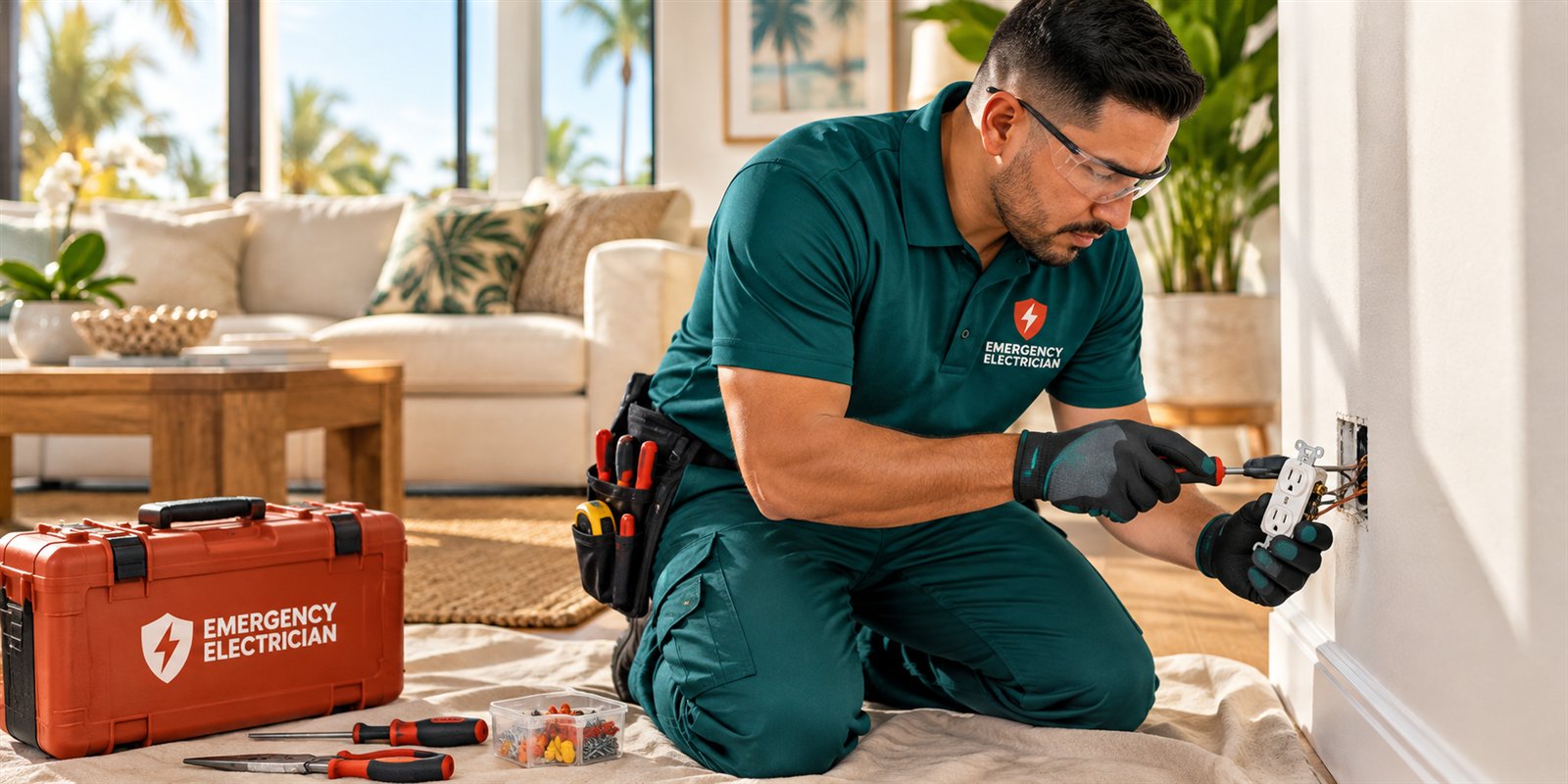
The technician begins by confirming which breaker feeds the outlet and switching it off, then verifies with a tester that the outlet is dead before removing the plate. They inspect the receptacle, the wires, the box and the cover plate. They look for burn marks, melted insulation, discoloration, loose terminals, damaged conductors and signs of moisture or insects. They check whether the box is the right size and whether the wire is the right gauge for the circuit.
If the wires are damaged, they cut back to clean copper and re-terminate them properly. If the box has been scorched, they may replace it. They install a new receptacle of the correct rating and type: standard, tamper-resistant, ground fault, arc fault or weather-resistant, depending on the location. They secure the connections with the correct torque, avoid push-in terminals where inappropriate, and seat the receptacle and plate firmly.
Then they restore power and test. They confirm correct voltage, correct polarity, a good ground connection, and that the outlet holds a plug firmly. If the outlet is a ground fault device, they test it. They also test the circuit under load where appropriate, because a repaired outlet that runs hot under a real load has not been fixed. A thorough technician will explain what they found and show you the failed parts.
Tracing why the outlet failed
Replacing the receptacle is only the first half of the job. The second half is finding out why it failed, because the cause will often still be present. If the outlet burned because of a loose terminal, the other outlets on the same run may have similar loose connections. If it burned from overload, the circuit may be too small for its use. If it burned from a device with a fault, such as a failing heater, that device must be fixed or retired.
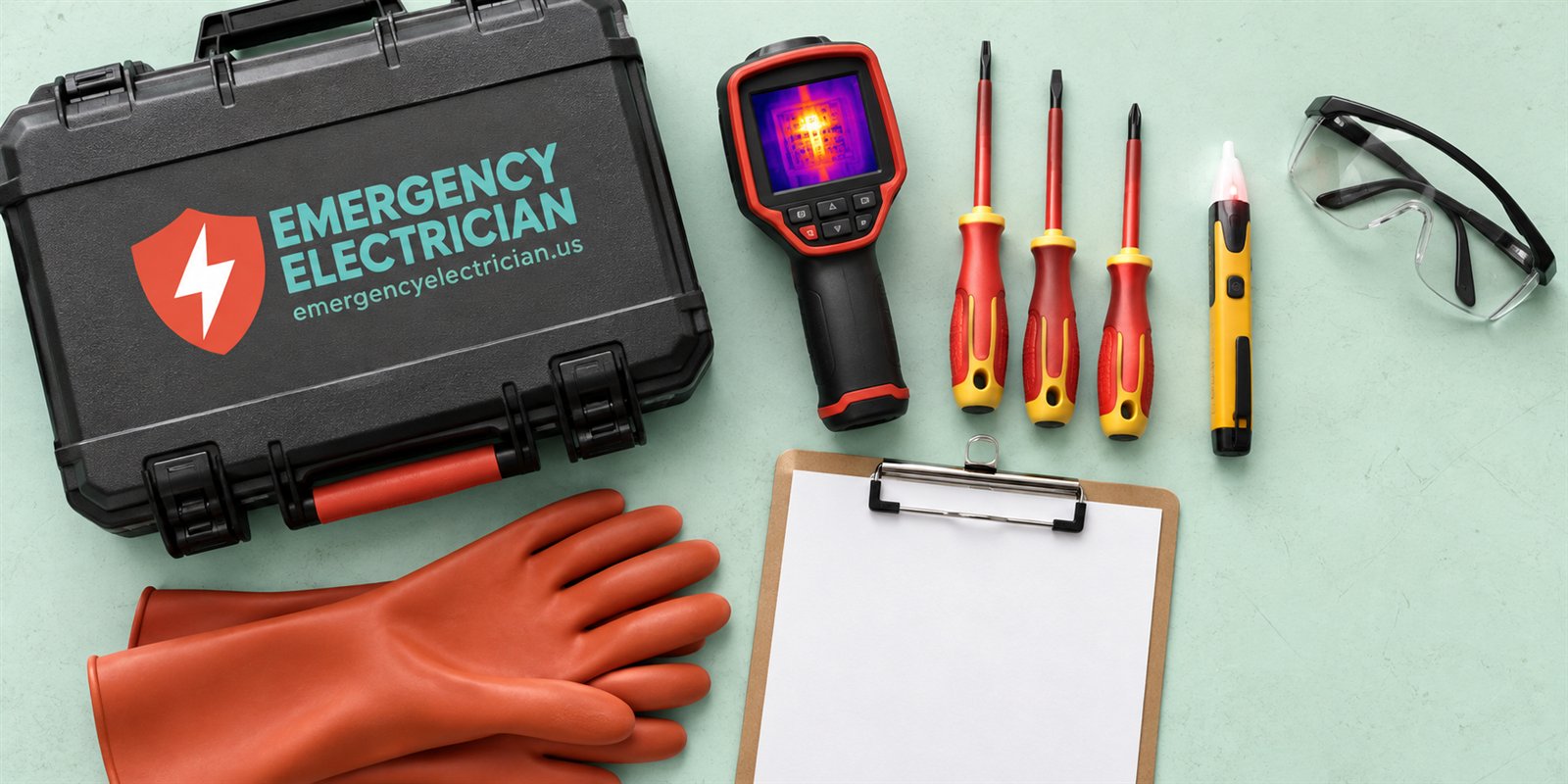
The technician may check neighboring outlets and switches on the circuit, looking for warmth, loose connections and damage. They may use a thermal camera or an infrared thermometer to find hot spots while the circuit is under load. They may check the wiring in the box and the first junction upstream. If the home has aluminum branch wiring, or older wiring with brittle insulation, they will advise on the risk and the options.
The technician may also look at what you plug in. A single outlet that serves a window air conditioner, a space heater and a microwave is overloaded by design. In that case the fix may include adding a dedicated circuit rather than just replacing the outlet. These recommendations should be explained clearly, with the option to defer, and with an honest account of what each choice means for safety. Our page on short circuit location explains how deeper tracing works.
Home types, local conditions and recurring patterns
Outlet failures occur in every kind of home, but patterns differ. In older South Florida houses, particularly those built before newer grounding and receptacle standards, outlets may be two-prong, ungrounded, or fed by brittle cloth or early plastic insulated wire. Receptacles from decades ago have worn contacts that no longer hold plugs firmly. In newer homes, push-in terminals and tight boxes can produce loose connections that surface after several years of heating and cooling.
Humidity, salt air and moisture intrusion contribute in coastal areas and in ground floor and garage locations. Outlets on lanais, patios and exterior walls are exposed to rain and sprinklers and may corrode inside. Condominium units often have shared walls and tight boxes, and may have rules about who can work on which parts of the electrical system. Rental properties may have outlets that tenants have overloaded with space heaters during cool snaps and window units in summer.
Seasonal patterns also matter. Summer heat and air conditioner loads put stress on circuits, while holiday decorations and portable heaters produce winter peaks. After a storm, outlets that were wet may appear to work but have corroded contacts that fail later. If you suspect water exposure, see our page on flooded outlets after water intrusion.
Preparing for the call and the visit
When you call, explain what the outlet is doing and what you saw, heard and smelled. Say which room it is in, whether a plug is stuck, whether other outlets are affected, and whether you have switched off the breaker. Mention if there are young children, pets or anyone who depends on medical equipment on that circuit. The dispatcher will ask whether anything is smoking or hot and will direct you to 911 if the situation is dangerous.
Quotes are given only by phone. Repairing a single outlet can often be described on the call, but if the damage has spread to wiring, boxes or multiple outlets, an on-site visit is needed before a firm figure can be given. A service call charge applies and is explained on the phone before anyone is dispatched. The dispatcher cannot promise an arrival time, but will explain how the process works.
Before the visit, clear furniture from around the outlet, keep pets and children away, leave the damaged outlet unplugged and off, and have the photographs ready. Make a note of anything else in the home that has seemed odd, such as flickering lights or warm switch plates. When you are ready to have a qualified electrician repair the outlet and look for the cause, call and describe what is happening.
- If there are flames, heavy smoke or a hot wall, call 911 and leave.
- Switch off the circuit breaker if you can identify it and reach it safely.
- Leave melted or hot plugs in place and keep people away from the outlet.
- Photograph the outlet and note what happened and what was plugged in.
- Call and describe the damage, the room and whether other outlets are affected.
Questions people ask
Is a warm outlet an emergency?
A slightly warm plug under a heavy load can be normal, but an outlet plate or receptacle that feels hot, smells, or is discolored is not. Unplug the device if the plug is cool enough to handle, switch off the breaker if you can, and stop using the outlet. Heat points to a loose or overloaded connection that can worsen, so call.
Can I just replace the outlet myself?
Replacing a receptacle is not recommended without proper training. Breakers are often mislabeled, wires may share a neutral, and a damaged box can hide faults. A qualified electrician confirms power is off, repairs the connections, installs the right receptacle type and tests the circuit afterward, which includes finding the reason for the original failure.
Why is one outlet dead when others work?
It could be a failed receptacle, a loose connection, a tripped ground fault device elsewhere on the circuit, or a burned splice upstream. A single dead outlet is not always a single-outlet problem. The technician tests the circuit to find where power stops, so the repair addresses the cause and not only the symptom.
Why does the plug keep falling out of the outlet?
The contacts inside the receptacle have worn and no longer grip firmly. A loose grip increases resistance and heat, which can scorch the receptacle and the plug. It is a repair item, not a nuisance. Replace the receptacle promptly through a qualified electrician, and avoid using it for heavy loads in the meantime.
Can a damaged outlet start a fire?
Yes, damaged or overheated outlets are a recognized source of electrical fires. Heat from a loose connection or overload can ignite nearby materials or damage wiring inside the wall. If an outlet shows scorching, melting, sparking or a burning smell, switch off the circuit if you can do so safely and call for repair.
How do I get a price for an outlet repair?
Quotes are given only by phone. A single outlet repair may be described on the call, while damage that spreads into wiring, boxes or several outlets needs an on-site visit before a firm figure can be given. A service call charge applies and is explained on the phone before anyone is dispatched.
If "Urgent Outlet Repair" matches what is happening, call and describe it plainly: the room, the breaker, any burning smell or tripped circuit. We explain what the repair would involve before a visit is set.
Related pages
- Warm Outlet: A warm, browned or melted outlet is a heat warning. Learn how to read the damage, what to unplug, when it is a same-day call, and what a technician checks.
- Melted Plug: When a plug fuses into an outlet, do not pull it. Learn how to cut power at the breaker, what to report to the dispatcher, and how a technician clears it.
- Outlet Sparks: Sparks from a wall outlet are an electrical emergency. Learn the safe order of steps, when to call 911, and what to tell the electrician on the phone.
- GFCI/AFCI Fix: GFCI and AFCI devices trip for real reasons. Learn what repeated trips mean, why bypassing them is dangerous, and how a technician traces the fault behind them.
- Switch Repair: A hot, crackling or dead switch or dimmer can point to an overloaded circuit behind it. Learn what is safe, how repair works and what the technician checks.
- Mast Repair: A bent, torn or storm-damaged service mast or weatherhead is a hazard. Learn who disconnects power, who repairs what, and how permits and inspection work.