
Start with people, not the outlet
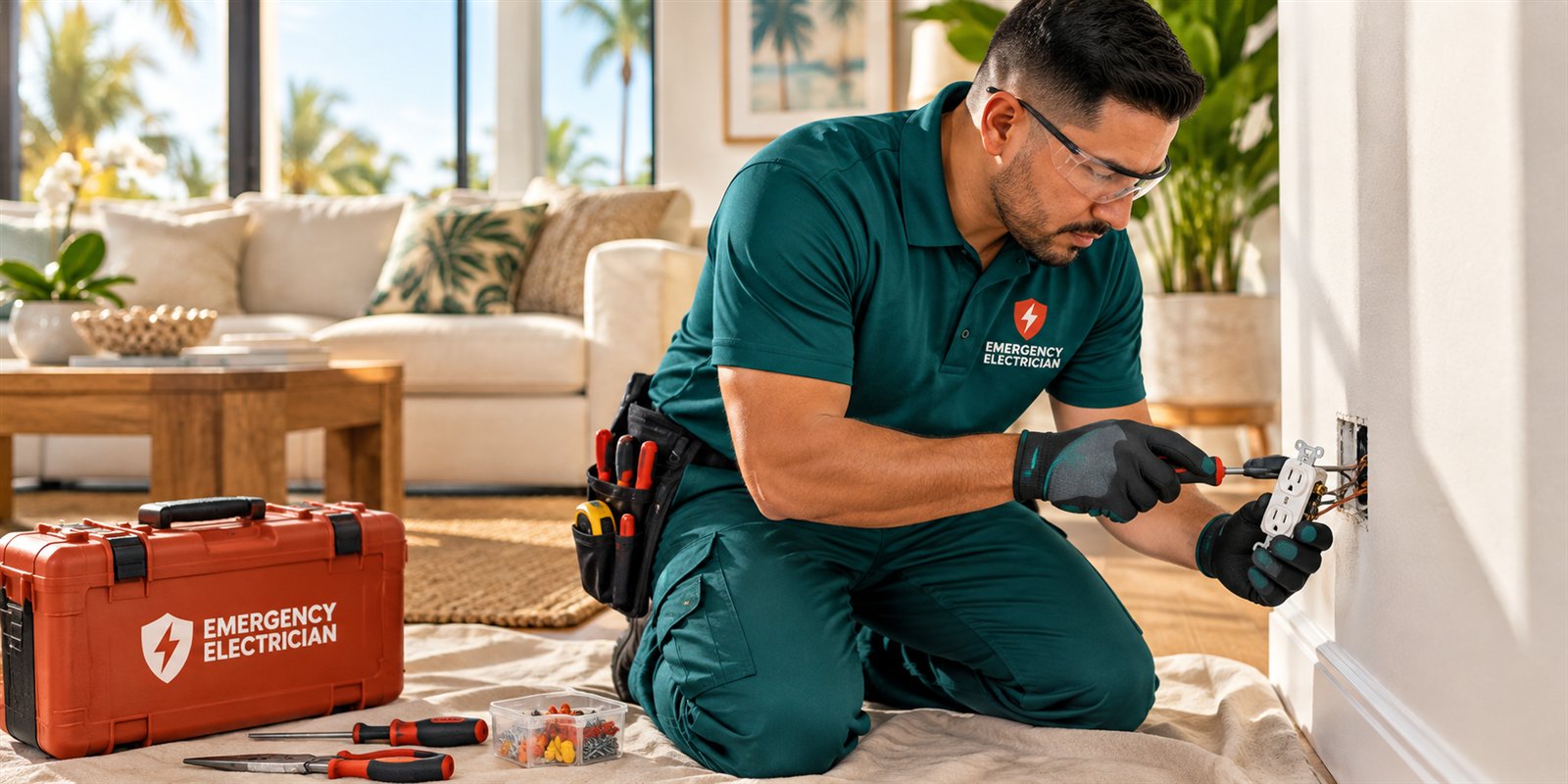
The first job when you see sparks is to get yourself and everyone else away from the outlet. Do not lean in to look, do not wave a hand near it to see whether it is hot, and do not try to pull a plug out of a sparking receptacle. A plug that is arcing inside the outlet can pass current through the cord and into your hand, and the heat at the contact points can be far greater than the plastic around them suggests.
Take children and pets out of the room, and close the door behind you if that can be done without passing in front of the outlet. Moving away is not an overreaction. Electrical faults that begin as a few sparks can move into the wall cavity, where insulation, wood framing and old cable jackets will burn. Once that happens the fire is hidden from view and you may notice it only when smoke appears somewhere else.
Once everyone is clear, take a breath and look at the situation from a distance. You are trying to sort the event into one of three buckets: a visible fire or smoke, which is a 911 call; a single brief spark with no lingering signs, which is still an urgent electrical call but not necessarily a fire call; or a continuing problem such as repeated sparks, a crackling sound or a scorched look, which calls for 911 and an electrician.
When sparks mean call 911 right now
Call 911 immediately, before any electrician, if you can see flame, if there is smoke coming from the outlet or the wall around it, if the sparking continues for more than a moment, if the plastic faceplate is melting or blackened, or if you smell something burning that gets stronger. Fire crews have equipment to check for heat inside a wall, and they can cut power at the source if needed. An electrician cannot do that from a phone call, and a delay while you wait for a callback is a delay you should not take when a fire may be developing.
Also call 911 if anyone received a shock, even a small one, from the outlet or from something plugged into it, or if the sparks happened near water, such as a kitchen counter outlet near a sink or a bathroom outlet. Water and sparking electricity together raise the risk to people, and the shock may have effects that are not obvious right away.
- Flames, glowing, or smoke at or near the outlet
- Sparks that repeat or continue after the first flash
- A melted or blackened faceplate or plug
- A burning smell that gets stronger as you stand in the room
- Anyone who felt a shock, tingling, or was thrown back
- Any sparking near standing water or a wet surface
- Pets or children who bit or pulled on a cord attached to that outlet
A single brief spark when you plugged something in
Not every spark is the same. A tiny, quick flash at the moment you plug in a heavy appliance, particularly in a dry room, can happen at the metal contacts as the connection is made. People sometimes see it with a vacuum, a space heater or a hair dryer. That alone does not prove the outlet is failing, but it is also not something to ignore if it is new, if it is bigger than a pinpoint, or if it comes with a pop, a smell or a visible mark.
If you saw one brief flash and nothing else, leave that appliance unplugged only if you can do so without touching a hot plug, and do not use that outlet again until it has been checked. Treat it as an urgent call rather than something to mention at the next visit. A worn outlet that sparks on plug-in is typically worn inside, with loose or weakened contacts that heat up under load, and the next time it may do more than flash.
Photograph the outlet from a safe distance if you can, including any scorching, because this helps the technician decide what to bring. Do not rub or wipe a black mark off the faceplate, since the pattern of soot can tell the technician where the heat started.
Cutting power safely, and when not to try
If the outlet has stopped sparking and nobody is in danger, the safest next step is usually to switch off the breaker that feeds it. This only applies when the breaker panel is in a dry, easy-to-reach location, your hands and the floor are dry, and you can reach the panel without passing the outlet in question. If the panel is in the same wall, in a flooded garage, or in a place where you would have to walk through water or smoke, leave it alone and let the fire department or the utility handle shutoff.
If you do go to the panel, stand to the side of the panel door rather than directly in front of it, use one hand, and move the single breaker you believe feeds that circuit to the off position. If you are not sure which breaker it is, do not start flipping many of them in a hurry. Switching off the main breaker is also an option for some homes, and our guide on when it is safe to use the main breaker explains the conditions in more detail.
Do not pull a breaker that is hot, buzzing, smoking or discolored. If the panel itself looks wrong, step back and treat it as a panel emergency instead, which is covered on the page about smoke at the electrical panel.
Mistakes that make sparks worse
People under stress reach for quick fixes, and several of them raise the danger. Pouring water on a sparking outlet is the clearest example, since water conducts electricity and a wet outlet may energize whatever the water touches. A fire extinguisher is only appropriate for a small fire if you know how to use it and have a clear exit behind you, and even then the right class of extinguisher matters. If you are unsure, leave and call 911.
Another common mistake is to unplug everything from the room and then keep using the outlet for lighter loads. A damaged outlet can fail with nothing plugged in, because the heat is generated by a loose connection in the wiring behind it, not by the appliance. Similarly, wrapping the outlet in electrical tape or pushing the plug in more firmly does not repair anything. Tape can trap heat, and pushing harder on worn contacts can damage them further.
Finally, do not assume the problem is gone because the sparks stopped. An outlet that sparked once has shown you something. Even if it works again after you reset a breaker, the underlying fault, whether a loose wire, damaged insulation or a failing receptacle, is still in the wall.
- Do not use water on any sparking or smoking electrical equipment
- Do not keep using the outlet for small loads
- Do not tape over the outlet or the plug
- Do not open the faceplate to look inside
- Do not reset a tripped breaker again and again hoping it holds
- Do not touch the plug or cord with a bare hand if it looks damaged
What may be causing the sparks
Technicians see a small group of causes again and again. A worn receptacle is the most common, especially in older homes or in outlets that carry a lot of use, such as a kitchen counter or a bedroom where a window air conditioner or space heater is plugged in. The metal contacts inside lose their grip, which creates resistance, and resistance creates heat and arcing. Loose wire connections on the back or sides of the receptacle behave the same way.
Damaged cable behind the wall is another cause. Rodents, nails driven during picture hanging, or a staple pressed too hard during an earlier renovation can wear away insulation. In South Florida, moisture is a frequent contributor: humid air, a roof leak that has run down inside a wall, or flooding can corrode terminals and lead to arcing. Our page on water in an outlet or switch covers the wet case in particular.
A third group of causes involves the equipment, not the outlet. A frayed cord, a damaged plug, or a failing appliance can spark at the plug end and make it look as though the outlet is at fault. A technician will usually test both, which is why it helps to tell them exactly what was plugged in at the time and to keep that item unplugged and set aside.
What to tell the electrician on the phone
A dispatcher can only judge urgency from what you describe, so a clear description helps you get the right response. Begin with your location, including the street address, and a phone number where you can be reached. Then say what you saw, in order: sparks, how many times, whether there was a sound such as a pop or a crackle, whether there was a smell, and whether anything has changed since.
Tell them which room and which wall the outlet is in, whether it is a standard outlet, a ground fault outlet with test and reset buttons, or a dedicated outlet for an appliance. Say what was plugged in, whether the power in that room is now off, and whether you turned off a breaker or left the panel alone. If anyone was shocked or if you called 911, mention that, since it affects how the visit is planned.
You can read more about how to prepare this information in our guide on what to tell the electrician dispatcher. Expect the dispatcher to ask whether there is any sign of fire, because they may tell you to hang up and call 911 first. That is a sign the process is working, not a brush-off.
- Address and callback number
- Which room, which wall, which outlet
- What you saw, heard and smelled, in the order it happened
- What was plugged in and whether it is now unplugged
- Whether any breaker was switched off and which one
- Whether anyone was shocked or whether 911 was called
- Whether water, rain or flooding is involved
What a technician will check on arrival
A qualified technician will begin by making the area safe, which usually means confirming the circuit is off and testing that it is dead before touching anything. After that, the visit follows a rough sequence. They will look at the faceplate and receptacle for heat marks, test the circuit for voltage and polarity, remove the receptacle to inspect the wire ends and the box, and check the neighbouring outlets and switches that share the same circuit, since a loose connection upstream can show up at a different point.
The technician may find that the receptacle alone needs replacement, or that the wire insulation has been cooked back and the wire must be cut back or replaced to sound conductor. If the wall box itself is melted, or if there is a burn mark on the framing, the repair is larger, and a permit and inspection may be involved depending on what the municipality requires. Where the fault is behind the wall, the visit can end as a safe shutoff with a plan for a follow-up repair, not a complete fix on the spot.
Quotes are given by phone for straightforward items, and more complicated jobs need an on-site visit. There is a service call charge, which is explained on the phone before dispatch, so there are no surprises when someone arrives. Ask any question you have before the technician starts.
Safe habits while you wait
While waiting for help, keep people away from the room, keep the door closed if no smoke is present, and leave the outlet and its breaker as they are unless you have already switched it off. If power is off to that circuit, avoid running extension cords from other rooms across the floor to substitute for it. Extension cords add their own heat and trip risks, and borrowing power from a nearby circuit can overload it. The page on extension cord and power strip limits explains why.
Keep a phone charged and nearby, and keep the area around the outlet clear of curtains, bedding or stored items so the technician can reach it. If there are medical devices on that circuit, such as an oxygen concentrator, a CPAP machine or a medication refrigerator, tell the dispatcher at the start of the call and make a plan for temporary power or a safe place to stay, since losing that power can be a medical issue and not only an inconvenience.
If you smell smoke at any point while waiting, or if the sparking returns, leave the house and call 911. It is better to have a fire crew arrive and find nothing than to wait for something that was not safe to wait for.
Preventing a repeat
After the repair, ask the technician what caused the sparking in your case. A worn receptacle suggests that other receptacles of the same age and use may be worn, particularly in kitchens, garages and rooms with window air conditioners. A loose connection suggests checking other terminations on that circuit. Moisture suggests tracing where the water entered. Understanding the cause helps you decide what else to check.
Some habits lower the odds of repeat trouble. Plug heavy appliances directly into a wall outlet and not into a power strip, avoid pulling a plug out by the cord, replace cords that are cracked or warm, and do not let outlets stay loose in the wall. If a plug feels loose in the outlet, that is the early signal of a worn contact. Add ground fault protection in areas where water is present, which is described in what GFCI and AFCI devices protect against.
If sparks have shaken your confidence in the house, that is a reasonable reaction. Whenever you are ready, call and describe what happened, and let a qualified technician advise you on whether a broader check is worth doing.
Questions people ask
Is it normal for an outlet to spark once when I plug something in?
A very small, quick flash at the moment of plugging in a heavy appliance can happen at the metal contacts and does not always mean the outlet is failing. However, a larger spark, a pop, a smell, a mark on the faceplate, or sparks that repeat are not normal. If you see anything beyond a pinpoint flash, stop using that outlet and call an electrician.
Should I call 911 or an electrician first when an outlet sparks?
Call 911 first if there is flame, smoke, a melting or blackened outlet, repeated sparks, a burning smell that is getting stronger, or if anyone was shocked. For a single brief spark with no other signs, call an electrician promptly. If you are unsure which situation you are in, calling 911 first is the safer choice.
Can I just turn off the breaker and wait until morning?
If the breaker is easy to reach, dry, and the panel looks normal, switching off the circuit is a sensible first step. The fault is still in the wall, though, so the outlet should stay unused until a qualified technician has checked it. Do not wait if you smell burning or see smoke, since a hidden fire can develop even with a breaker off in some cases.
Why did my breaker not trip when the outlet sparked?
Standard breakers protect against overloads and large faults, but a loose connection can arc at a current too low for the breaker to notice. That is why sparking and heat can occur without a trip. Arc fault breakers are designed to detect some of these patterns, but even they do not catch every case, so a spark with no trip still needs attention.
Can a technician fix the outlet in one visit?
Often a worn receptacle can be replaced during the visit after the circuit is tested. If the wire insulation is damaged, the box is burned, or the fault is farther back in the wall, the first visit may focus on making it safe and the repair may need more work. Complicated jobs need an on-site look, and quotes are given by phone for simple items.
What should I do with the appliance that was plugged in?
Unplug it only if the plug is not hot and the outlet has stopped sparking, then set it aside and do not use it until it has been checked. A frayed cord or failing appliance can be the cause. Tell the technician what it was, and if possible keep it available so they can test whether the equipment or the outlet is at fault.
Reading about "Sparks Coming Out of a Wall Outlet"? Tell us what stopped working and when. We will say what an electrician would check first, and quotes are given by phone when the job can be described.
Related pages
- Panel Smoke: Smoke from a breaker panel is a 911 event. Learn what to do while waiting, what the fire crew does, and how the electrician visit follows afterward.
- Warm Outlet: A warm, browned or melted outlet is a heat warning. Learn how to read the damage, what to unplug, when it is a same-day call, and what a technician checks.
- Melted Plug: When a plug fuses into an outlet, do not pull it. Learn how to cut power at the breaker, what to report to the dispatcher, and how a technician clears it.
- 911 Script: Calling 911 about sparks, smoke, a shock or a downed wire? These are the facts that help dispatch most: address, hazard, people at risk and power status.
- Burned Bus Bar: Scorch marks, melted plastic or a burned bus bar inside an electrical panel: what it means, why the panel is often replaced and what to do right now.
- Shock Victim: If someone was shocked at home, call 911 first and do not touch them while still energized. Learn the safe order of steps and the electrical check afterward.