
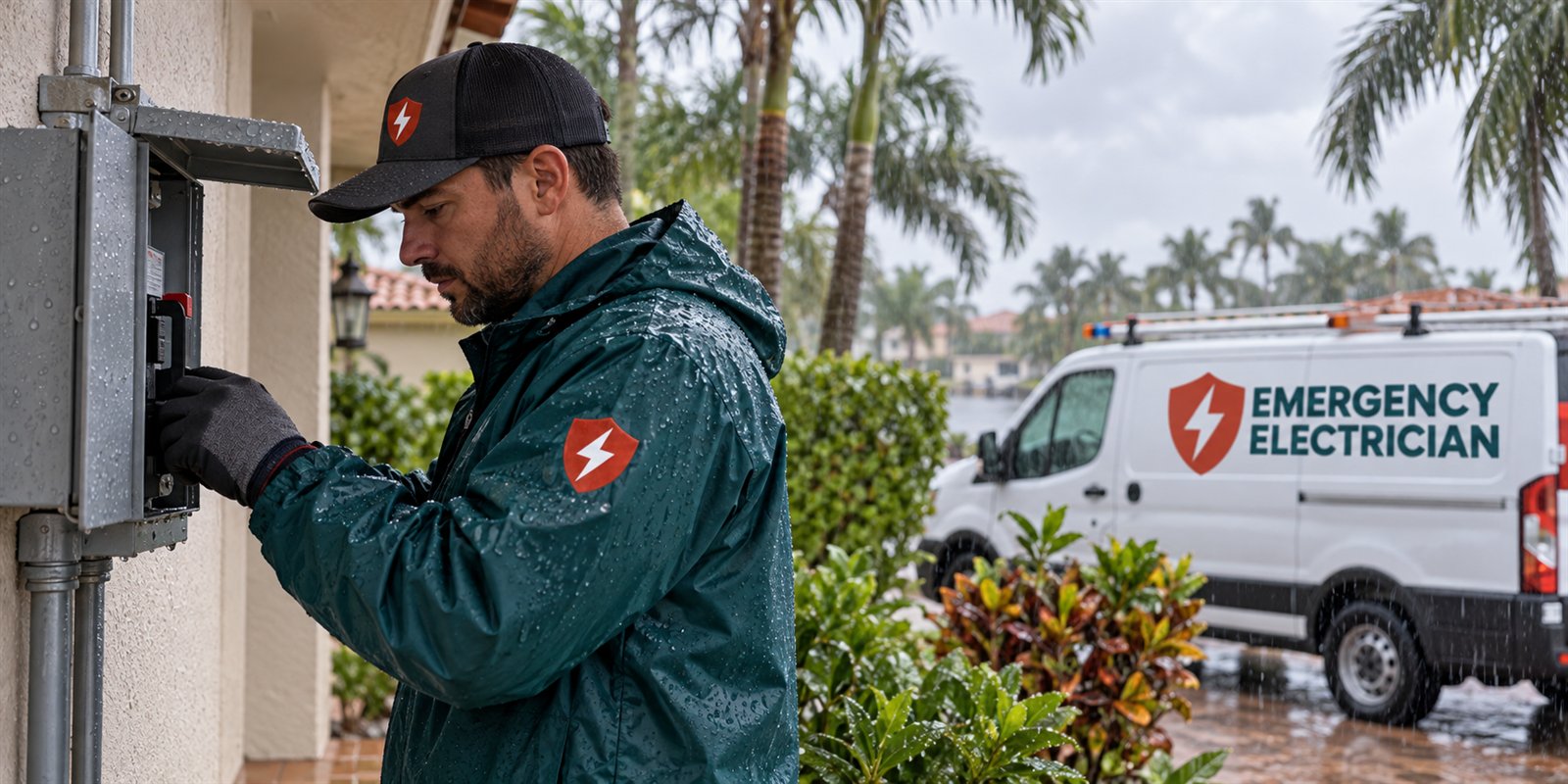
Why the vocabulary matters on a phone call
A dispatcher cannot see your panel, your meter or your lights. All they have is your description. If you say the power surged, they hear one thing. If you say it flickered, dipped and then came back, they hear another. Some words are used interchangeably in everyday talk, but they mean different things to the people who sort out the cause.
Getting the words right does not require technical training. It requires noticing what actually happened: did the lights get brighter, dimmer, or go out, and for how long, and was it the whole house or one part? Those observations map onto a handful of terms, and the terms map onto likely causes, some on the utility side and some in your own wiring.
This glossary is written in everyday language. It explains each term, gives a plain example, and says what to report. It does not ask you to measure anything or to open anything. If you ever see smoke, sparks, flames or a person hurt, skip the vocabulary and call 911 first. Everything else on this page is for the calls that come after you are safe.
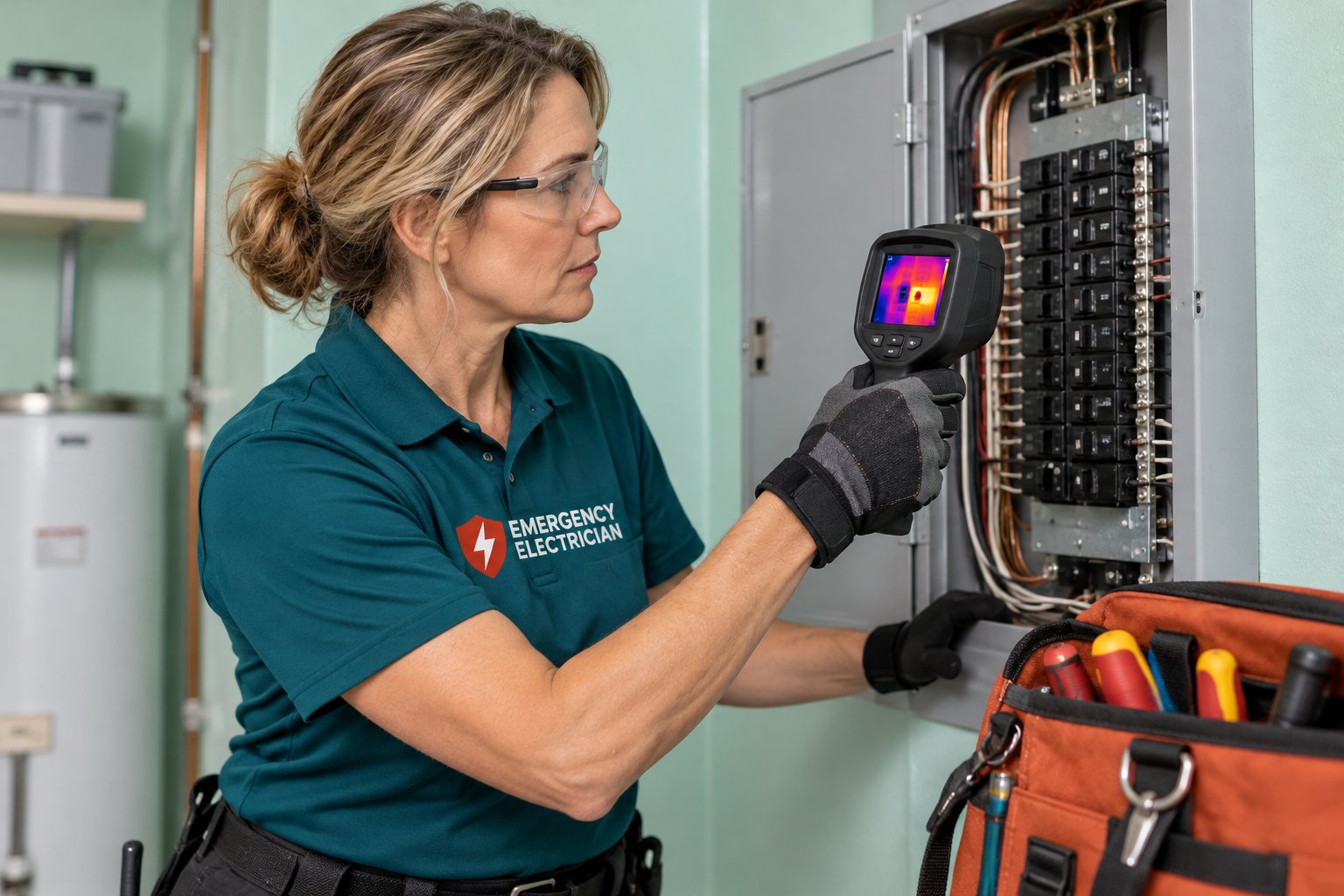
Surge and spike: too much, briefly
A surge is a short increase in voltage above normal. A spike is a sharper, shorter version of the same thing, a very fast jump that may last only a tiny fraction of a second. In casual conversation people use the words as one, and for a phone call that is fine, but it helps to know the difference in feel. A surge might make lights briefly brighter or make electronics click. A spike may do its damage before you notice anything.
Common causes include lightning near the home or utility lines, utility switching, a large motor or appliance turning off, a fault on the utility system, and power returning after an outage. Surges can also be generated inside the home, for example when a large air conditioner compressor cycles on and off.
What to report: that lights flashed bright, that you heard a pop or a click from devices, that electronics or appliances stopped working afterwards, and whether this happened during a storm. The page on lights that go extra bright explains why bright lights are worth a prompt call, because they can signal a wiring problem as well as a utility event.
Sag, dip and brownout: too little
A sag or dip is a short drop in voltage below normal. Lights dim, motors slow, and then conditions return. A brownout is a longer period of reduced voltage, long enough that equipment may struggle, lights stay dim, and motors may run hot. The word comes from the way incandescent lights used to glow brown when voltage fell.
Sags often follow a heavy load starting up, such as an air conditioner compressor, a well pump, or a large appliance. If lights dim briefly each time the air conditioner starts, that is often a sign of a heavy startup load combined with a weak connection somewhere along the supply path. Brownouts on the utility system occur when demand is high or when there is a problem on the line.
What to report: how long the dimming lasts, whether it is tied to a specific appliance, whether neighbors see it too, and whether anything stopped working. Equipment can be damaged by sustained low voltage, since motors draw more current to compensate. The page on lights flickering across the whole house describes the questions a technician will ask.
Outage, blackout and power loss: none at all
An outage, also called a blackout or power loss, means there is no power at all. The word outage is used for both the utility-wide event and the loss in a single building, so be specific when you call. Say whether the whole neighborhood is dark, only your home, or only part of your home.
These three situations have very different meanings. If neighbors are dark too, it is probably a utility problem, and the utility is the right call. If your house is dark but neighbors have power, the problem may be at your service, your meter or your main breaker. If only part of the house is out, a breaker, a GFCI or a wiring fault is more likely. The pages on whole-house power out with neighbors lit and half the house with no power go through each case.
A scheduled outage is one the utility has announced for maintenance. A momentary outage is a short interruption, such as a few seconds, often caused by a utility device recovering from a fault. Mention these details, since they point to different causes.
Partial power loss and lost legs
Homes in the United States are normally supplied with two hot legs and a neutral, which together provide the 120-volt power for ordinary outlets and 240-volt power for large appliances. If one of the two hot legs is lost, half the house may have power and the other half may not, and 240-volt appliances such as a range, dryer, water heater or air handler may not work at all.
A related condition is a loose or damaged neutral, which can cause some lights to burn very bright and others very dim, because the voltage is no longer shared evenly between the two sides. This is a serious condition that can damage equipment quickly, and it deserves a prompt call. The pages on a lost leg and no 240-volt appliances and loose neutral symptoms describe what to watch.
You do not need to diagnose this. Describe what you saw, such as half the lights dead, appliances that do not run, or lights that swing from dim to bright when something turns on. Those descriptions are exactly what a technician needs.
Flicker, transient and intermittent
Flicker is a rapid variation in brightness. It can be caused by a bulb, a dimmer, a loose connection, a heavy load turning on, or a utility problem. A transient is a very brief disturbance, a blip, that may not be visible at all but can still upset electronics. Intermittent means it comes and goes without a clear pattern.
These terms matter because the pattern is often more informative than any single event. Flicker that follows a particular appliance points to that appliance or its circuit. Flicker across the house at random times points to a connection in the service or the utility supply. Intermittent faults are the hardest to diagnose, which is why a written log helps.
What to report: where it happens, whether it follows a device, how often, and whether there is any smell, buzzing or warm surface. The guide on warning signs that come before an electrical failure describes how to keep a simple record.
Short circuit, overload and ground fault
These three terms describe faults inside the building rather than events on the supply. A short circuit is an unintended low-resistance path between conductors, causing a sudden, large current that trips the breaker immediately. An overload is more current than a circuit is designed to carry, over a longer period, from too many devices. A ground fault is current flowing to ground along an unintended path, such as through water or a damaged appliance.
The practical difference is how the protection responds. A short usually trips the breaker instantly with a bang or a click. An overload trips after a while and often when the same combination of devices is on. A ground fault may trip a GFCI, and sometimes it does not trip a standard breaker at all, which is why it can be hazardous.
What to report: what was running, how fast it tripped, whether there was a spark, a pop or a smell, and whether it happens only when wet. The guide on reading a tripped breaker helps you collect those facts without opening anything.
Utility words: service, meter, mast and line
A few more terms come up in calls. The service is the set of conductors and equipment that bring power to the building. The meter measures the energy used and is owned by the utility. The mast, sometimes called the service mast or riser, is the pipe on the roof or wall that holds the service wires up and into the weatherhead. The line is the wire running from the pole or transformer to the house.
These matter because ownership and responsibility differ. The utility generally handles the lines and meter, while the homeowner is generally responsible for the equipment on the building side, but the exact boundary can vary. If you see a leaning mast, a torn weatherhead, sagging or frayed service cable, or sparking at the meter, say exactly that, and stay back. The guide on utility or electrician: who fixes what explains the boundary.
Do not touch or move any wire outside, even if it seems dead. Wires on the ground or in trees can be live, and calling 911 and the utility is the right response.
Storm-season terms: lightning, power restoration and reconnects
South Florida storm season adds its own vocabulary. A lightning strike can be direct, meaning it hit your structure or equipment, or nearby, meaning it hit a pole, tree or the ground close enough to send a surge through the lines. Both can damage electronics, and a direct strike can also damage wiring inside walls. Say which you think it was, and say what you heard and saw.
Power restoration is the moment the utility brings the lines back. It often arrives with a brief surge or a series of on and off cycles, which is why breakers trip and electronics fail around that moment. A reconnect is the step where a meter or service is reenergized after being disconnected, for example after repair work. In some cases an inspection or permit has to be cleared first.
A transfer switch is the device that safely moves your home circuits between utility power and a generator. Backfeed is the dangerous condition where generator power flows out through the house wiring toward the utility lines. If you used a generator and the outlets or panel behaved oddly, say so plainly.
The pages on lightning strike house damage and after-storm power restoration safety cover these events in detail. Describing which of them applies helps the dispatcher decide what to send and what to ask next.
Putting it together: a short script for the call
When you call, you do not need to sound technical. A plain, organized description beats jargon. Start with safety: is there smoke, fire, or anyone hurt? If so, 911 first. Then say what happened in simple words, using the right term where you are sure, and plain description where you are not.
A useful structure is: what you saw, how long, how much of the house, what you smelled or heard, and what you have done. For instance, the lights in the whole house got bright for a second during a storm, then half the outlets went dead, and the air conditioner will not start. Or the lights dim every time the dryer starts, and the outlet near it feels warm.
Quotes are given by phone, larger jobs need an on-site visit, and a service call charge is explained before dispatch. The guide on what to tell the electrician dispatcher lists everything worth having ready. If any of the situations on this page matches yours, call and describe it.
Questions people ask
What is the difference between a surge and a spike?
Both are brief increases in voltage. A spike is the sharper and shorter version, a very fast jump, while a surge lasts a little longer. For a phone call the distinction rarely matters. Describe what you saw, such as lights flashing bright, a pop from electronics, or devices that stopped working afterwards.
Is a brownout the same as a blackout?
No. A brownout is reduced voltage, so lights dim and motors struggle but power is still present. A blackout is no power at all. Say which one you have, how long it lasted, and whether neighbors are affected, since these point to different causes and sometimes to different responders.
My lights are very bright on half the house and dim on the other half. What is that?
That pattern can indicate a loose or damaged neutral, which causes uneven voltage between the two sides of the system and can damage equipment quickly. Turn off sensitive devices if you can do so safely, avoid touching the panel, and call promptly. If there is a burning smell, smoke or sparks, leave and call 911 first.
Do I call the utility or an electrician for a power outage?
If neighbors are also dark or you see damaged lines, call the utility. If only your home or part of it is out, an electrician is likely needed, though checking your breakers and any GFCI first is reasonable if the panel is dry and normal. Downed wires or fire go to 911 first.
Can a surge damage things without any visible sign?
Yes. Electronics and appliances can be stressed or damaged by surges even when nothing looks wrong at the time, and failures may show up later. If you had a strike nearby or a power event with a pop or flash, mention it when you call and note which devices are behaving differently.
What should I say if I am not sure what happened?
Describe it plainly. Say what you saw, heard and smelled, how much of the house is affected, how long it lasted, what was running, and what you have already done. A clear description in everyday words is more useful than a guess at the correct term.
Reading about "Describing Power Problems: A Plain-English Glossary"? Tell us what stopped working and when. We will say what an electrician would check first, and quotes are given by phone when the job can be described.
Related pages
- Electrician Dispatch: Calling an electrician about a problem? Learn which symptoms, timing details and photos to describe so the right technician and tools are sent the first time.
- Pulsing Lights: Lights pulsing or dimming all over the house can mean a loose service connection. Learn what to notice, what to do right away, and when to call urgently.
- Loose Neutral: Lights that get brighter in one room and dimmer in another, buzzing and failing electronics can mean a loose neutral. Learn the signs and why it is urgent.
- Who Fixes What: Where utility equipment ends and customer equipment begins, in general terms, so you know whether to call the power company, an electrician, or 911 first.
- Call Order: Electrical trouble, three possible calls. A plain decision order for when to dial 911, when to phone the power company, and when to call an electrician.
- Emergency Check: A branching guide from symptoms to urgency, showing when to call 911, when to call the utility, when to call an electrician now, and when a visit can wait.
Words that sound technical but mean something simple
Many people describe electrical problems with words they half remember, and that is perfectly fine. What matters is the description behind the word. If you say the power went weird, add what you saw: the lights brightened, a device clicked off, a smell appeared, or half the house lost power. A person on the phone can translate your observations into the right category far more easily than they can guess what weird meant. Keep a flashlight or battery lantern nearby rather than a candle, since open flame near a damaged electrical area adds a second hazard.
Some terms are used interchangeably in daily speech but differ in practice. Voltage describes the pressure of electricity, current describes how much flows, and a load is whatever is using it. You do not need to memorize these. It is enough to say what was running, what stopped, and what changed. If a term comes up that you do not understand, ask for it to be explained in plain words, since a clear conversation helps everyone. Small details often turn out to matter most, so include them even when they seem unrelated or awkward to mention.
Avoid diagnosing in your description. Saying it must be the transformer or the meter may point the wrong way and leave out the clue that matters. Instead, report the pattern: all lights at once, one room only, only when the air conditioner runs, only during storms. These patterns are the real information. A glossary is a tool to help you speak, not a test you must pass before asking for help. Take your time describing it, and say so if you are unsure, because an honest I do not know is more useful than a confident guess.