
What the neutral conductor does
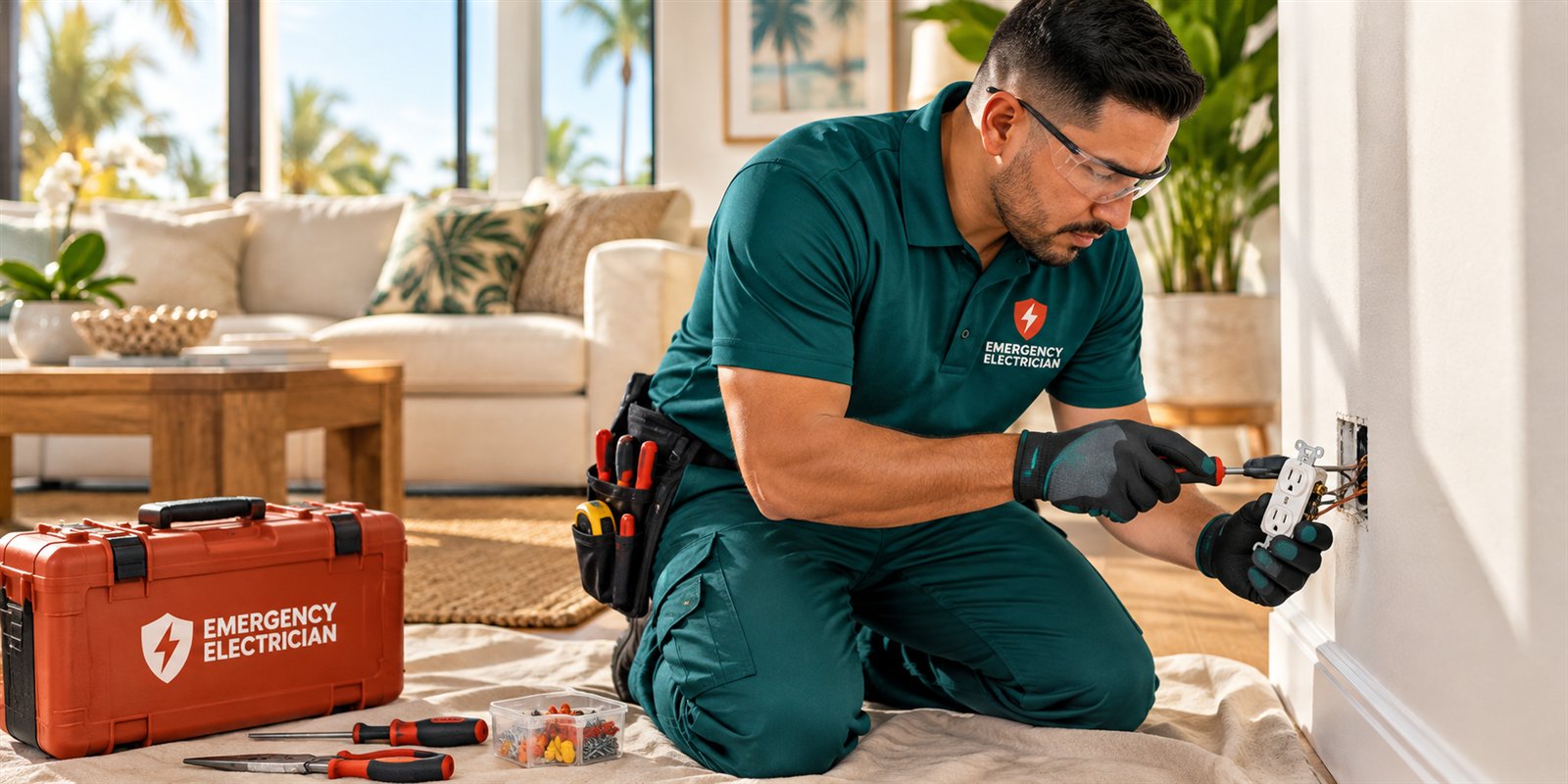
A typical American home receives two hot conductors and one neutral from the utility. Each hot carries about 120 volts relative to the neutral, and the two hots together give about 240 volts for large appliances. Lights, outlets and small appliances run on one hot and the neutral. The neutral is the return path that completes the circuit and holds the voltage on each side of the panel balanced.
The neutral is also bonded to ground at the service, which gives the system a stable reference. When the neutral is solid, each half of the house sees its expected voltage regardless of how much load is on the other half. When it is not solid, that reference can float.
Because the neutral carries the unbalanced return current, it is working whenever the house is. Connections at the meter, the service entrance, the main panel and each device are all places where a neutral can loosen, corrode or break. The problem can be on the utility side, on the customer side, or inside a single circuit.
The classic pattern: brighter on one side, dimmer on the other
The textbook sign of an open neutral at the service is a split in voltage. Some lights and outlets in the house get too much voltage, and others get too little. The two sides still add up to 240 volts, but the neutral is no longer holding the midpoint steady, so the voltage on each side depends on how much load is attached to it.
In practice, you might notice that lights in the kitchen glow brighter than normal while the bedroom lights look dim. When you turn on a large appliance on one side, the lights on the other side change brightness. Fans may run faster or slower than usual, and incandescent bulbs may burn out quickly or flare and fail.
The effect can be intermittent, appearing when wind moves the service cable, when the air conditioner starts, or when the load changes through the day. That variability makes it easy to dismiss as a quirk. Treat any consistent pattern of brighter and dimmer lights across different parts of the house as a reason to call.
Other symptoms that point toward a neutral problem
Several of these also appear with other faults, which is why a technician measures rather than guesses. A single flickering bulb is usually a bulb or a fixture. A pattern across rooms, particularly one that changes with load, points toward the shared parts of the system.
- Electronics, chargers or appliances that fail suddenly, especially several at once
- Light bulbs, particularly LED drivers and incandescents, that burn out repeatedly in a short time
- A tingle or shock from metal surfaces such as faucets, appliance frames or the cases of devices
- A buzzing or humming from the panel, the meter or a particular outlet
- A smell of hot plastic or burned insulation near the panel, an outlet or a fixture
- Voltage readings that vary widely from one outlet to another when measured by a technician
- Flickering that changes with wind or with load changes elsewhere in the house
- Warm outlets or switches without an obvious overloaded device
Why this is an urgent fault
Equipment is designed to run at about 120 volts or 240 volts, with some tolerance. When a neutral opens, one side of the system can climb well above that, and the devices on it can be overstressed in moments. Computers, televisions, routers, refrigerator control boards, inverter air conditioners and LED lighting are particularly sensitive.
The danger is not only to electronics. A neutral that is loose at a connection carries current through a poor contact, which makes heat. That heat can melt insulation and char the surrounding material over time. Because the current through a bad connection may be within a breaker's rating, the breaker does not trip, and there is no automatic protection. This is why loose neutrals are linked to fires in service equipment and in panels.
Finally, the voltage-reference problem can energize metal parts that should be at ground potential, which is how a tingle at a faucet or a shock from an appliance can appear. Our page on shock from a faucet or pipe explains this link and what to do if it happens.
Where a neutral can be loose or open
On the utility side, a neutral can fail in the service drop, at the pole, at a transformer or at a connection in the supply path. Storms, falling branches, corrosion and animals are common causes. If the problem is there, the utility fixes it, though it is often found first by a homeowner or an electrician measuring voltage.
On the customer side, the neutral can loosen at the meter socket, at the service entrance conductors, at the main lugs, on the neutral bus bar in the panel, or in the grounding and bonding connections. Older aluminum service conductors can loosen over years of heating and cooling. Salt air near the coast and humidity inland can corrode connections where water finds a way in.
Within a branch circuit, a neutral can be loose at an outlet, a switch box, a fixture or a splice. The effect is typically limited to that circuit or a shared neutral between circuits. A shared neutral, sometimes called a multiwire branch circuit, is a configuration where two hots use one neutral, and an open neutral there can drive voltage up on one of the paired circuits.
What you can safely do right away
If you suspect a neutral problem, reduce risk without touching anything inside the panel. Turn off or unplug sensitive equipment such as computers, televisions, game consoles and medical devices that can be safely moved to another supply, if you can reach the plug without touching damaged equipment. Switch off large appliances at their own controls.
Avoid turning on additional load. If the air conditioner is running, consider switching it off at the thermostat. Do not test outlets with improvised tools, and do not touch the panel, the meter or the service cable. If you have a plug-in voltage tester and you know how to use it, a reading well above or below the normal range is useful information for the dispatcher, but do not take risks to get one.
If the situation includes smoke, a hot smell, sparking or a shock to a person, call 911 first. Our page on when a person is shocked at home explains what to do. If someone has been shocked, even if they feel fine, medical evaluation is recommended.
Whether to switch off the main
Turning off the main breaker can stop the voltage imbalance inside the house, which protects devices that you cannot unplug in time. In some situations it is the right step, especially if lights are flaring or the buzzing is getting worse. But it is not an automatic recommendation, and the dispatcher can help you decide.
The main must be reachable safely and without standing in water. If the panel is hot, humming loudly or discolored, do not approach it. If the main will not move, do not force it. Our page on a burned or seized main breaker explains that situation.
Remember that switching off the main does not de-energize the service conductors or the meter. It protects the house wiring behind it. When power is back on, the underlying neutral problem will still be there until it is fixed. Do not switch the main back on until the dispatcher or the technician has told you it is reasonable to do so.
How a technician finds the fault
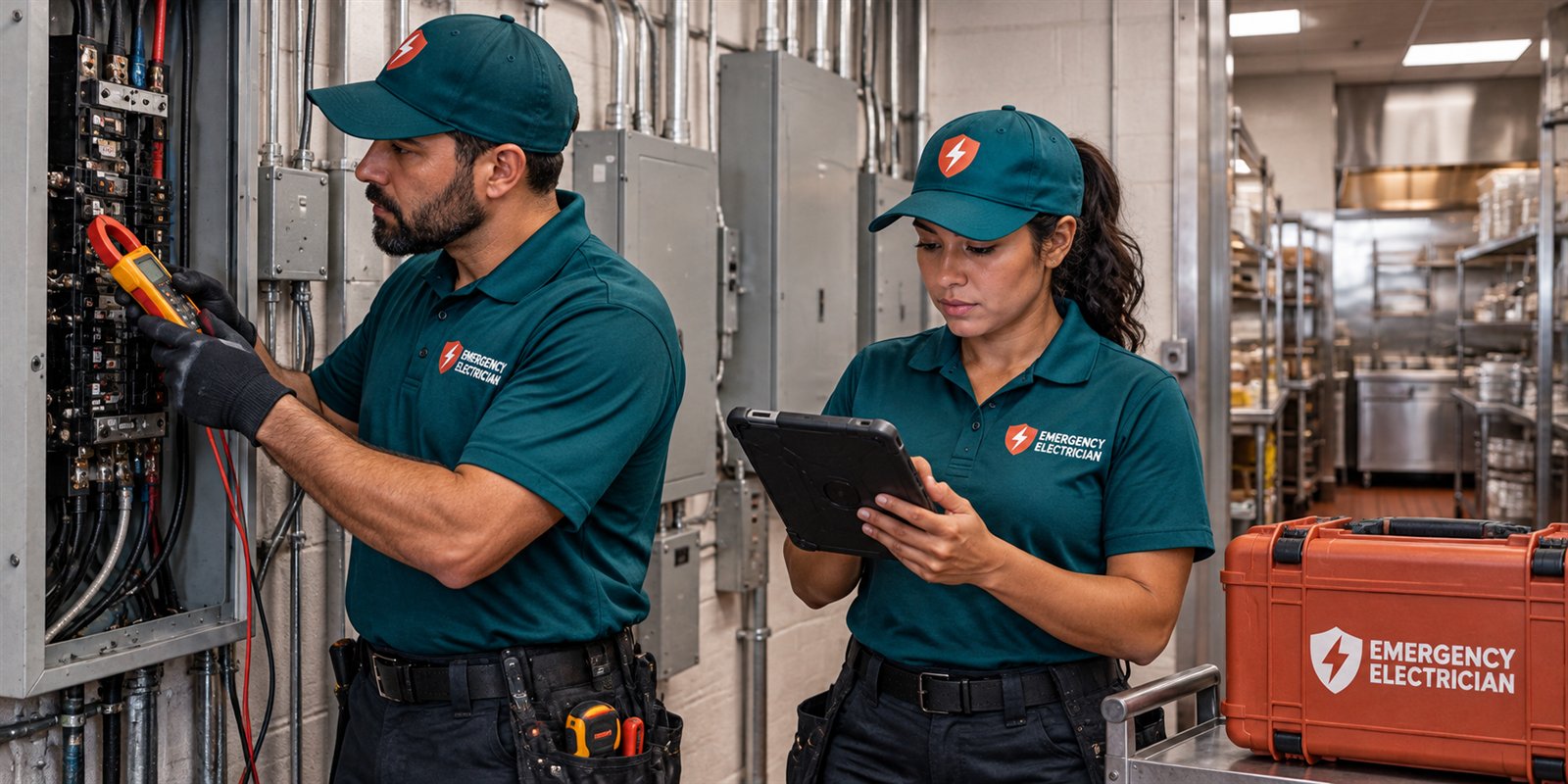
The first step is measuring voltage. The technician checks voltage from each hot to neutral and between the two hots at the panel and at several outlets. A healthy system shows about 120 on each side and about 240 across both. A large imbalance, or a reading that shifts when a load is turned on, strongly suggests a neutral problem.
Next comes a trace. They compare readings at the meter, at the main and at branch circuits to narrow down whether the fault lies ahead of the main, in the panel or in a branch. If the problem is on the supply side, they will advise you to notify the utility and may do so on your behalf. If it is on the customer side, they inspect the lugs, the neutral bar, the meter socket and the grounding conductors.
Tools may include a multimeter, a clamp meter and a thermal camera. A thermal camera can show a hot neutral connection without disturbing it. Tightening a lug or replacing a corroded connector is sometimes the whole repair, though the technician will check for heat damage and may recommend replacing parts. Our page on the urgent troubleshooting visit describes what such a visit usually covers.
Why South Florida homes see this fault
Several local conditions raise the odds of a neutral problem. Salt air along the coast corrodes connections that are exposed to it, particularly at meter sockets, weatherheads and outdoor disconnects. Heavy afternoon rain finds its way into poorly sealed service entrance fittings, and standing moisture inside a conduit can corrode conductors from the inside.
Many homes here are fed by aluminum service conductors, which expand and contract more than copper as they heat and cool. Over years of heavy air conditioning use, a lug that was tight when installed can loosen slightly, and loose aluminum connections can oxidize and heat up. Pest intrusion is another cause: lizards, rodents and insects occasionally find their way into meter cans and panels and disturb connections.
Hurricane season adds mechanical stress. Wind moves service cables, trees strike masts, and surges during outages and restoration put extra current through weak connections. A neutral that was marginal before a storm can fail afterward. Our page on what happens when power returns and breakers trip covers related patterns.
Checklist for the person on the phone
You do not need technical language. Plain statements such as 'the bedroom lights get dimmer when the dryer starts, and the kitchen ones get brighter' are exactly what a dispatcher and a technician want to hear. They help separate a supply-side fault from a problem inside the home, and they help the technician bring the right tools and parts.
- Say which lights are bright and which are dim, and whether the pattern changes when something large turns on.
- Say whether any devices have failed, which ones, and roughly when.
- Mention buzzing, hot smells, warm outlets or a tingle from metal surfaces.
- Say whether the weather was windy or stormy when the symptoms began.
- Give the address, the type of building and whether the service comes overhead or underground.
- Tell the dispatcher if anyone in the home relies on powered medical equipment.
- Note whether you have switched off appliances or the main, so the technician knows the starting state.
Protecting equipment while the fault exists
Until the fault is found, the goal is to limit exposure. Devices that stay plugged in during an open-neutral event can see abnormal voltage repeatedly. Where you can safely reach plugs, unplug computers, televisions, routers, game consoles and chargers. Appliances with electronic control boards, such as refrigerators and inverter air conditioners, are harder to protect, because turning them off may spoil food or leave the home hot.
A reasonable balance is to turn off the air conditioner at the thermostat, leave the refrigerator on only if the lights in its area are behaving normally, and keep the doors closed to hold the cold. If lights in the kitchen are flaring, it is more prudent to unplug or switch off the refrigerator until a technician checks the voltage. The dispatcher can talk through these choices based on what you describe.
Do not assume a surge strip protects against this fault. Plug-in strips are designed to clamp short spikes, not to hold back sustained overvoltage from an open neutral, and they can overheat if they are subjected to it. A whole-house surge device has a different role, and our page on when to add a surge device or generator explains how it fits.
Realistic examples
In a Plantation ranch house, the owner notices that the living room lamps are glaring while the kitchen lights are dim. When the dryer starts, the pattern reverses. A technician measures the voltages and finds a neutral lug at the main panel that has loosened and darkened. After the connection is cleaned or replaced and torqued, the voltage settles. The owner then has the electronics checked for damage.
A condo owner in Hallandale Beach reports that two televisions and a router failed in the same week, and that the building's lights flicker in windy weather. The technician measures stable voltage inside the unit and suspects the supply. The building manager is notified and the utility finds a deteriorated connection on its side. The unit's equipment is not at fault, but surge devices are discussed.
In a Deerfield Beach older home with a shared neutral on a multiwire kitchen circuit, a loose connection at a junction box makes one side of the circuit run hot and the other dim. Replacing the connection and separating the circuits resolves it. In each example, the symptoms looked like electronics problems, but the cause was in the neutral path.
Repair, protection and what to ask afterward
Most neutral repairs involve tightening, cleaning or replacing the affected connection, and checking the bonding. On older services with damaged or corroded conductors, replacing the service entrance cable or the meter socket may be advisable. Where the panel is old or heat-damaged, replacement may be recommended. See urgent panel replacement and urgent meter base replacement for those paths.
After the fault is fixed, ask the technician to measure and note the voltage on each leg and to inspect for heat damage elsewhere. Ask whether a whole-house surge device makes sense for your situation. Ask for a written findings note, and keep photographs of damaged equipment for any claim. Our page on appliance and electronics damage after an event explains how to document it.
Have your questions and details ready, and call the number on this page. Quotes are given only by phone, a service call charge is explained before dispatch, and a complicated job may need an on-site visit before a quote can be given. Describe the pattern you saw, such as which lights were bright and which were dim, and the dispatcher will take it from there.
Questions people ask
How do I know it is a neutral problem and not just a bad bulb?
A bad bulb affects one fixture. A neutral problem tends to show up across rooms, with some lights too bright and others dim, with patterns that change when large appliances start, and sometimes with several electronic devices failing close together. If the pattern spans the house, call rather than replacing bulbs. A technician measures voltage to confirm.
Can a loose neutral cause a fire?
Yes. A loose connection carries current through a poor contact, which produces heat, and the current can stay within the breaker's rating, so the breaker does not trip. Over time the heat can damage insulation and nearby materials. That is why technicians treat symptoms such as buzzing, hot smells or odd voltage as urgent and recommend prompt inspection.
Should I unplug my electronics?
If you can do so safely, unplugging or switching off sensitive electronics reduces the chance of damage while the fault exists. Do not reach through or around damaged equipment, and do not approach the panel. If the plugs are hot or there is smoke or a burning smell, leave them and call 911 if there is fire. Otherwise, call the number on this page for guidance.
Is this the utility's problem or mine?
It could be either. A neutral can be open on the utility side, in the service drop or at a transformer, or on the customer side at the meter, panel or a circuit. A technician measures voltage at several points to locate it. If the fault is on the utility side, the utility repairs it, and the technician can tell you what to report.
Will my homeowner's insurance cover damaged electronics?
That depends on your policy, and this site cannot advise on coverage. What helps any claim is documentation: photographs of damaged items, a written findings note from the technician describing the cause, and receipts or model information. Ask the technician to note the voltage readings and the location of the fault in the report.
How do I get a price for finding and fixing a neutral fault?
Quotes are given only by phone. A service call charge applies and is explained before anyone is dispatched. Tracing a fault can lead to a simple tightening or to a larger repair at the panel or service entrance, and a complicated job needs an on-site visit before a quote can be given. Describe the symptoms and the pattern of the lights when you call.
About "Signs of a Loose or Open Neutral": call and give us the details, and we will explain what is safe to do while you wait and what the visit would cover. Jobs that cannot be quoted blind need a look on site.
Related pages
- Too-Bright Lights: Lights burning unusually bright can signal overvoltage from a lost neutral. Learn how to protect appliances, what to switch off, and who to call first.
- Pulsing Lights: Lights pulsing or dimming all over the house can mean a loose service connection. Learn what to notice, what to do right away, and when to call urgently.
- Lost Leg: Lights work but the dryer, oven or air conditioner will not run? A lost leg may be the cause. See the symptoms, where the fault can sit and what to do next.
- Meter Sparking: Sparks or arcing at the electric meter are an emergency. Learn why to call 911 and the utility first, who owns which part and what an electrician does after.
- Troubleshooting Visit: A walkthrough of an urgent electrical troubleshooting visit: arrival, safety isolation, testing, findings explained in writing, and how phone quotes work.
- Panel Buzzing: Some panel hum is normal, but loud buzzing can signal arcing or a loose connection. Learn to sort the sounds and what to tell the dispatcher about them.