
Triage first: when this decision does not apply
If anyone is in danger, call 911 first. If there is smoke, a burning smell from the panel, sparking or flames, do not go near the panel to turn anything off. Get everyone out and call 911. If a utility line is down, stay back and call 911 and the utility. The main breaker decision on this page is for planning ahead in calm conditions, not for dealing with an active fire or an active hazard.
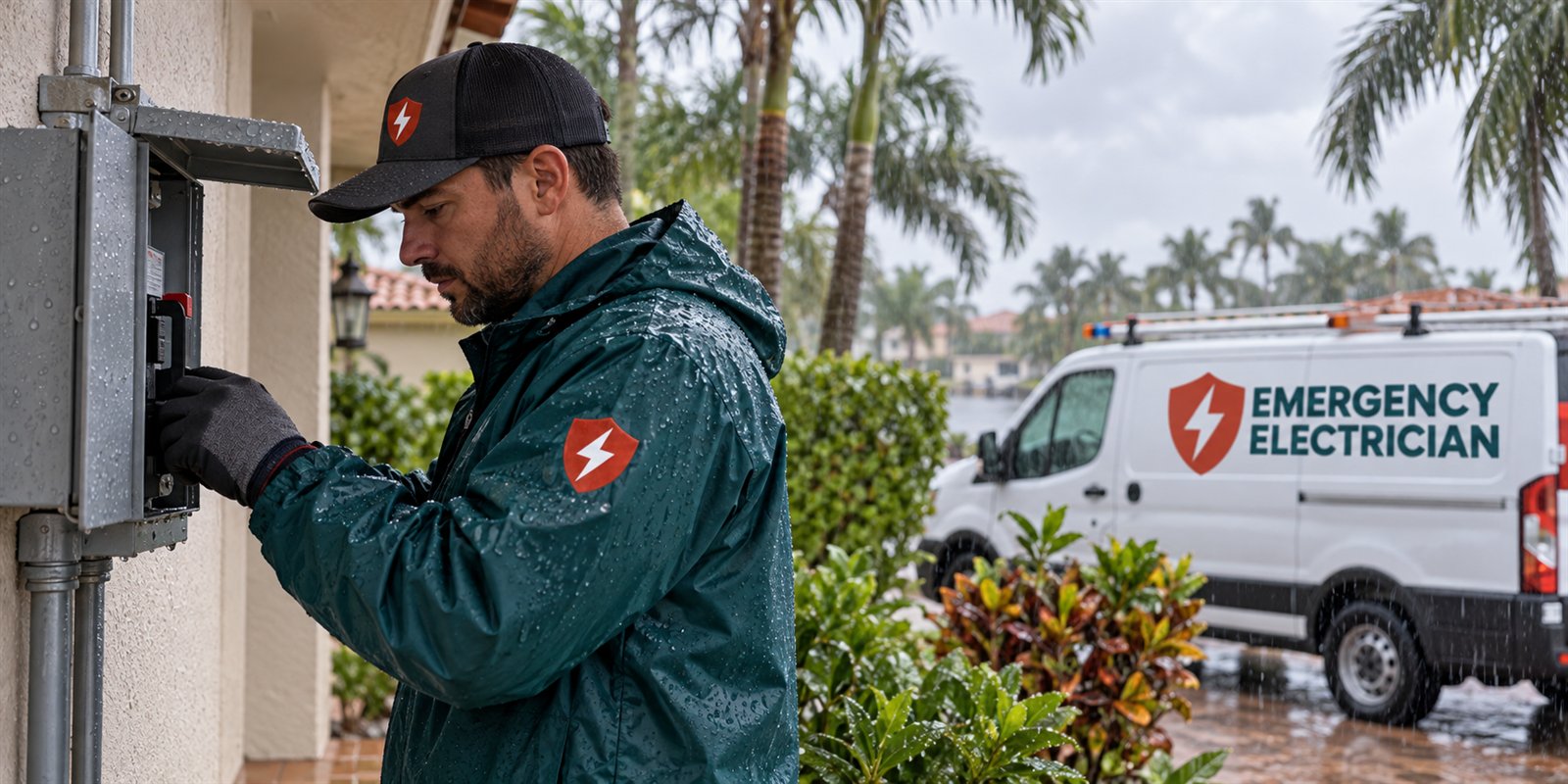
The same applies to water. If there is already standing water on the floor around the panel, if the panel is wet, if you hear buzzing or you smell something hot, do not step into the water to reach the main. Contact the utility, who can disconnect power at the meter, and call 911 if anyone is at risk. Water and live equipment together are among the most dangerous combinations in a home.
So the main breaker decision belongs earlier, in the hours or days before the weather arrives, when the floor is dry, the light is good and you can think clearly. This page assumes you are in that situation and that no one is in immediate danger.
- Fire, smoke, sparking or injury: 911 first, do not approach the panel.
- Standing water around the panel: do not enter, call the utility and 911 if anyone is at risk.
- Downed line: stay back, call 911 and the utility.
- Calm, dry conditions before a storm: use the decision steps below.
What the main breaker actually does
The main breaker is the large switch, usually at the top of your main panel, that disconnects all the branch circuits in the house from the utility supply. When it is off, nothing downstream of it should be energized, including the individual breakers and the wiring in the walls. It does not de-energize the utility conductors that bring power to the panel, so the wires entering the top of the panel, and the meter, are still live.
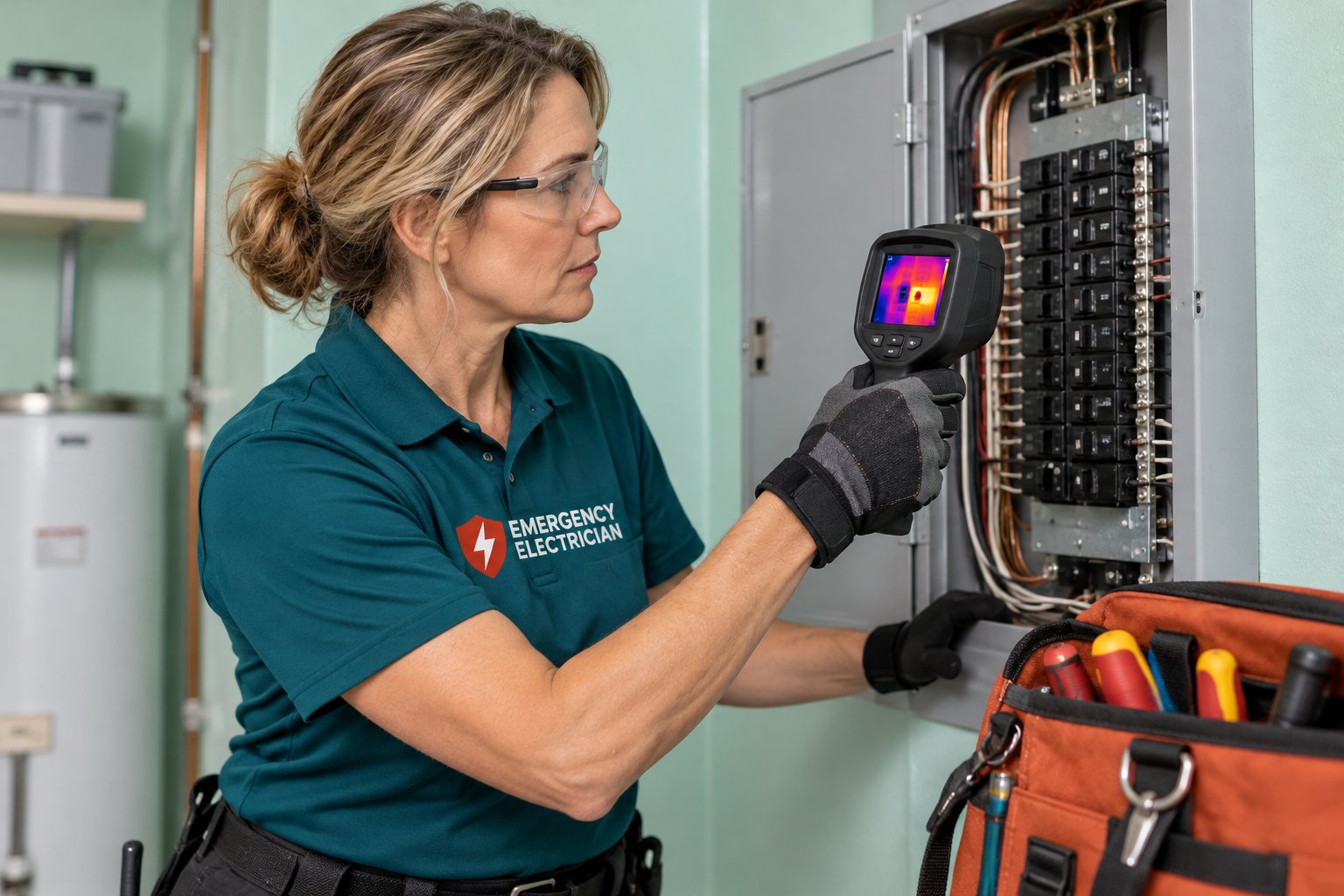
That distinction matters. Turning off the main reduces risk inside the house, but it does not make the panel completely safe to open. The lugs where the service conductors connect are still energized, and the panel cover should not be removed by anyone other than a qualified electrician. Turning off the main is an operation that uses the handle on the outside of the panel, nothing more.
In some homes the main breaker is in the main panel. In others there is a separate main disconnect outside near the meter, and the panel inside is fed from it. In a condominium or apartment building, your unit panel may have its own main, but the building has a separate service. If you are not sure, read how to find your main breaker before the weather arrives.
The case for turning it off: flooding and surge
There are two main reasons to turn off the main before a storm. The first is flooding. If water is expected to rise into outlets, the panel or the meter, power left on creates a shock and fire risk, and equipment that is energized when it gets wet can be destroyed more severely than equipment that was off. In an area likely to flood, shutting off the main in advance, while the floor is dry, is a sensible precaution.
The second reason is surge protection. When utility power is interrupted and restored, voltage can spike or flicker, and the spike can damage appliances, electronics, controls and sometimes wiring. With the main off, the house is isolated from those events, and you can bring it back deliberately after power is stable. This protection is not complete, because a direct lightning strike can still do damage, but it can reduce exposure to routine surges.
A third benefit is peace of mind in a house that will be unoccupied. If you are evacuating, leaving the main off means no circuit is carrying power while you are gone, and nothing in the house can start a fire from an electrical fault. Before you go, think about what must stay powered, such as a sump pump or a refrigerator, and weigh that against the risks.
The case for leaving it on
There are good reasons to leave the main on. If someone in the home depends on powered medical equipment and you are sheltering in place, shutting off the main can be harmful. If you have a sump pump, a well pump or other equipment that protects the property from water, those may need power until the last moment. If you are not at risk of flooding and the utility will cut power anyway, shutting off the main may offer little benefit.
Turning off the main also has a practical cost. Food spoils faster, security systems stop, and in a rental or a condo you may not be allowed to. If you are not sure the panel can be reached safely, do not do it. Standing in a dark, wet garage trying to find a main breaker is more dangerous than the problem you are trying to avoid.
Your situation will decide. A third-floor condo in a building with its own generator has a very different risk profile from a ground-floor home on a low street. Think about elevation, how fast water has risen in the past, how old the wiring is and whether anyone depends on power. If you cannot decide, call and talk it through with a qualified electrician before the storm arrives.
A simple decision path
A useful way to decide is to ask a few plain questions. Is flooding of the ground floor plausible, given the forecast and your location? Is your panel low to the ground, in a garage or in an area that has flooded before? Does anyone rely on powered medical equipment? Are you evacuating or staying? Can you reach the panel with a dry floor and a flashlight?
If flooding is plausible, the panel is low, nobody needs medical power and you can reach the panel safely, turning off the main before the water arrives is usually the better choice. If you are staying and someone depends on power, plan around that need, perhaps by relocating the person before the storm. If you are evacuating and flooding is possible, turning off the main when you leave is a common precaution.
If the answers conflict, favor safety over convenience. A house without power for a day is an inconvenience. A shock in a wet room or a fire from equipment energized under water is a tragedy. When you are not sure, ask. The page on the electrical checklist before a hurricane places this decision among the other preparations.
- Ask whether flooding of the ground floor is plausible.
- Check whether the panel is low, in a garage or in a flood-prone spot.
- Consider whether anyone depends on powered medical equipment.
- Decide whether you are evacuating or staying.
- Confirm you can reach the panel on a dry floor with a flashlight.
How to turn it off safely
Do it early, while the floor is dry, the weather is calm and you have light. Stand on a dry surface, keep your hands dry and use only the handle of the main breaker. Do not use tools, do not open the cover over the wiring and do not touch anything inside the panel other than the breaker handle. If the panel door sticks or the breaker is hard to move, stop and call an electrician rather than forcing it.
Before turning off the main, switch off the large loads so that the breaker is not interrupting heavy current. That means turning off the air conditioner, the oven, the dryer and the water heater at their own breakers or controls. It is a gentler way to open the main and it makes restoration smoother. Unplug sensitive electronics, and turn off or unplug anything that should not start by itself when power returns.
Move the main handle firmly to the off position, and confirm that the lights go out. Leave a note on the panel that the main is off, particularly if other people live in the home. Keep a flashlight handy, because the house will be dark. Do not use candles near the panel or in wet rooms, because open flame adds to the hazard. The guide on when it is safe to use the main breaker covers this in more detail.
What not to do
Do not turn off the main while standing in water, with wet hands or on a wet floor. Do not try to reach a panel by wading through a flooded garage. Do not remove the panel cover to see what is inside. Do not try to turn off the main if you can see smoke, scorching, sparking or melted parts. In those cases, move away and call for help.
Do not rely on turning off the main to make the house safe to work on. The conductors entering the panel and the meter stay energized. Do not trust that all circuits are off merely because the main is off, particularly if you have a generator or a solar system that can feed the house. Backup sources can energize circuits even when the utility is disconnected.
Do not turn the main back on in a house that has taken on water or has a burning smell, a wet panel or visible damage. Wait for an inspection. The pages on what never to do in an electrical emergency and wet hands, wet floors and electricity explain these hazards.
Re-energizing after the storm
Bringing the main back on is not a simple reversal of turning it off. First, look around. Is there standing water in the home or near the panel? Is there a burning smell, visible damage, a wet panel, a wet outlet or a service line that looks displaced? If any of these is true, do not turn the main back on. Call an electrician, and if your service line or meter was damaged, the utility will need to reconnect after an inspection.
If the house is dry, the panel is dry and nothing looks damaged, check that utility power is actually back. Then switch off all the branch breakers, turn the main on, wait a moment and bring the branch breakers on one at a time, starting with lighting circuits and leaving large loads for last. Listen and look for anything unusual as you go: a buzz, a smell of burning, a breaker that trips at once. If any of those happens, switch it off and call.
Wait a few minutes before restarting the air conditioner and other large appliances, so that you do not create a sudden demand just as the grid is stabilizing. The page on restoring power safely after a storm goes through the process, and what it means when breakers trip as power returns explains the symptoms that need a call.
When to call a professional about the main
Call a qualified electrician if the main breaker is hard to move, if it feels loose or hot, if it does not stay on, if there is discoloration, if the panel is in a flood-prone spot and you are unsure about relocating it or if you want help planning the shutoff and restoration sequence. A main breaker that is stuck or failing can be a sign of a deeper problem, and it is better to find that before the storm than during it.
After the storm, call if the house took on water, if the panel or meter was wet, if you smell burning or if breakers behave strangely after power returns. Quotes are given only by phone, and complicated jobs need an on-site visit. There is a service call charge, and it is explained on the phone before dispatch.
When you call, say clearly whether the main is on or off, whether the house flooded, whether you smell anything and whether anyone depends on power. That information shapes the advice you will get. When you are ready to talk through your situation, call and the dispatcher will walk you through the next safe step.
Questions people ask
Should I always turn off the main breaker before a hurricane?
Not always. It makes sense when flooding or a damaging surge is plausible and nobody depends on powered medical equipment. It may not make sense if you rely on a sump pump or medical device. Never do it while standing in water or with wet hands. When you are unsure, call and talk through your situation before the storm.
Does turning off the main make the panel safe to open?
No. The wires entering the panel and the meter stay energized even when the main is off, and a generator or solar system could also energize circuits. Only a qualified electrician should remove a panel cover. Use only the breaker handle on the outside and leave everything else alone.
My main breaker is hard to move. What should I do?
Do not force it. A stiff or stuck main can signal a worn mechanism or heat damage. Leave it as it is, keep people away if there is any burning smell or warmth, and call an electrician. If you see smoke or scorching, call 911 first. Doing this before a storm gives time for a proper repair.
Is it safe to turn the main back on after the storm passes?
Only if the house is dry, the panel is dry, there is no burning smell or visible damage and the utility has restored service. Switch the branch breakers off, turn the main on, then bring branch breakers back one at a time. If the house flooded or anything looks damaged, wait for an inspection first.
How does pricing work for a visit about the main breaker?
Quotes are given only by phone. Complicated jobs need an on-site visit before a quote can be given. There is a service call charge, and it is explained on the phone before dispatch so you know the terms up front. Describe the breaker's behavior, what you noticed and whether the house has flooded.
I live in a condo. Can I shut off the main for the building?
No. The building service and shared electrical rooms belong to the association and are handled by building staff and the utility. You may have a main or disconnect for your own unit panel. Ask management in advance what the plan is for flooding and outages, and do not open shared electrical rooms yourself.
Reading about "Shutting Off the Main Breaker Before a Storm"? Tell us what stopped working and when. We will say what an electrician would check first, and quotes are given by phone when the job can be described.
Related pages
- Pre-Storm Checklist: A calm, practical electrical checklist for the days before a hurricane: what to check, what to charge, what to leave alone and when to call a professional.
- After-Storm Power: What to check before the utility re-energizes your service after a storm, what to leave off, and how to bring a house back online without damage or hazards.
- Using the Main Breaker: Plain guidance on when shutting off the main breaker is reasonable, when to stay away from the panel, and who to call first in an electrical emergency.
- Post-Outage Trips: Power returned after the storm but breakers keep tripping. Learn what causes it, what is safe to check, and when to call an electrician for triage.
- Medical Power Plan: Plan for powered medical equipment in a long outage: 911 and your provider first, utility notice, safe backup power, and how an electrician can help.
- Flood First Steps: What to do about electricity in a flooded home: stay out of water near power, how the utility disconnect works and why inspection comes before power returns.