
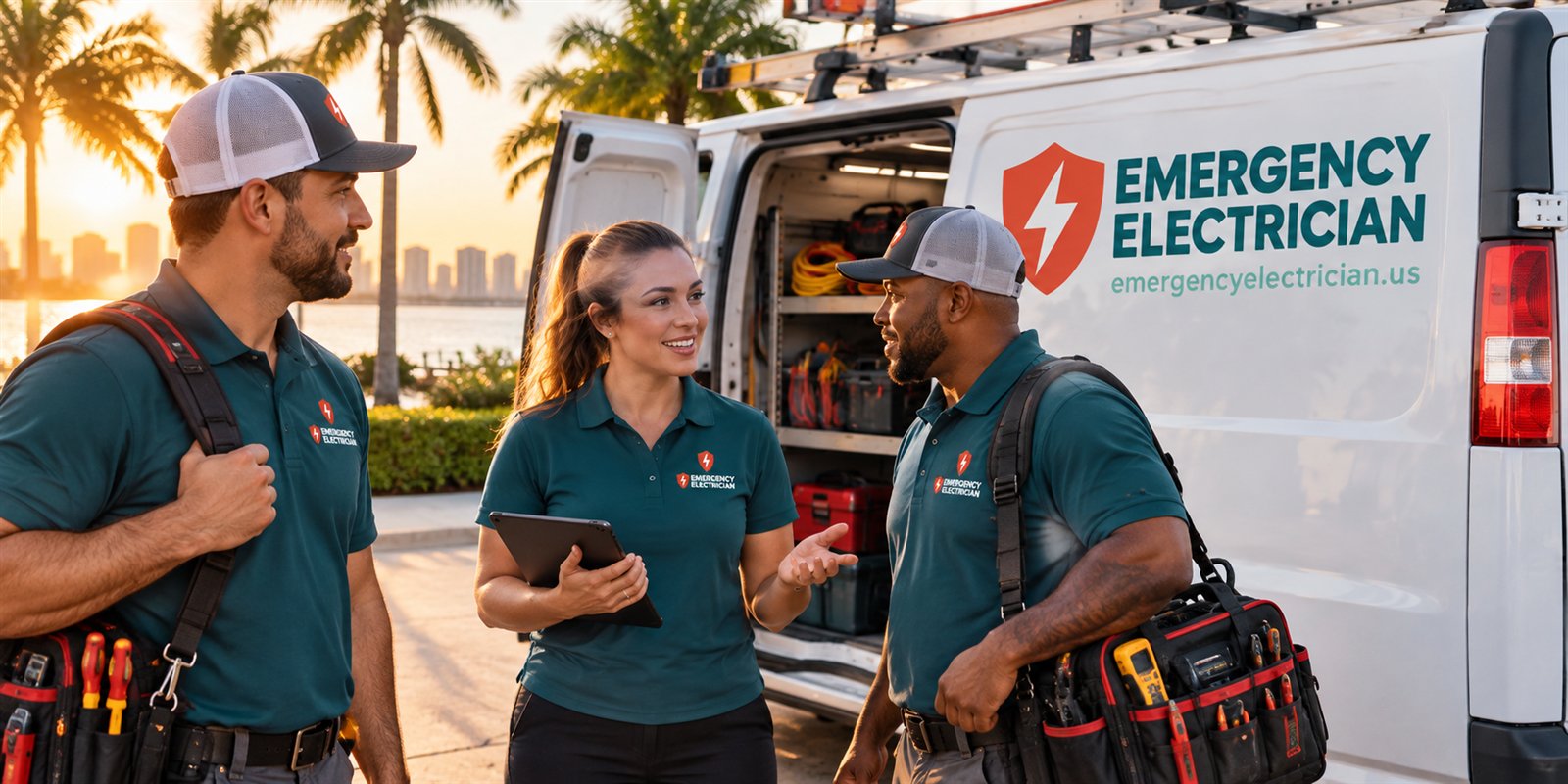
Triage first: who to call in Plantation
In any life-threatening electrical situation, call 911 first. That means visible fire, heavy smoke, a person shocked and hurt, anyone unresponsive and anyone with chest pain, confusion or trouble breathing after contact with electricity. Give the address, say it is an electrical emergency and follow the dispatcher's instructions. Fire rescue crews handle electrical fires and shock injuries as routine work.
If a utility line is down, sagging or sparking, stay far back, keep others away and call 911 and the power company. Do not touch a fence, a vehicle or a puddle near it. In older neighborhoods with mature trees and overhead lines, storms can bring limbs onto wires, so this is a real possibility after a bad afternoon.
If nobody is in danger but something is clearly wrong, such as a hot or buzzing panel, a burning smell, a plug that has melted into an outlet or a breaker that will not reset, call an emergency electrician. The dispatcher will ask safety questions, explain how the visit works and tell you what to leave alone while you wait.
- Fire, heavy smoke, injury or unresponsive person: 911 first.
- Downed or sparking utility line: stay back, call 911 and the power company.
- Smoke, heat or buzzing from the panel: stay clear, 911 if there is smoke, then an emergency electrician.
- Warm outlet, melted plug, tripping breaker or dead circuit: call an emergency electrician.
Ranch homes from earlier decades
The classic single-story ranch house is common in established South Florida suburbs. It usually has a compact floor plan, a low roofline, a carport or garage, a modest panel and a handful of circuits for lighting, outlets and a few appliances. When it was built, a typical household had a refrigerator, a television, some lamps and perhaps a window air conditioner. Wiring and panel were sized to match.
Over the decades, the house changed. Central air arrived. The kitchen gained a microwave, a dishwasher and a disposal. A bedroom was converted to an office. A screened porch, a pool or a Florida room was added. A washer and dryer were moved indoors. Each of those additions drew more current, and most were connected to the existing system rather than to a new one.
Wiring in that kind of house can vary from room to room. Original circuits may use insulation that has aged. Additions may use newer cable connected to older wiring in junction boxes that were never meant to hold that many conductors. Our page on older home electrical red flags lists the signs that a house has outgrown its wiring.
Aging panels and what they show before they fail
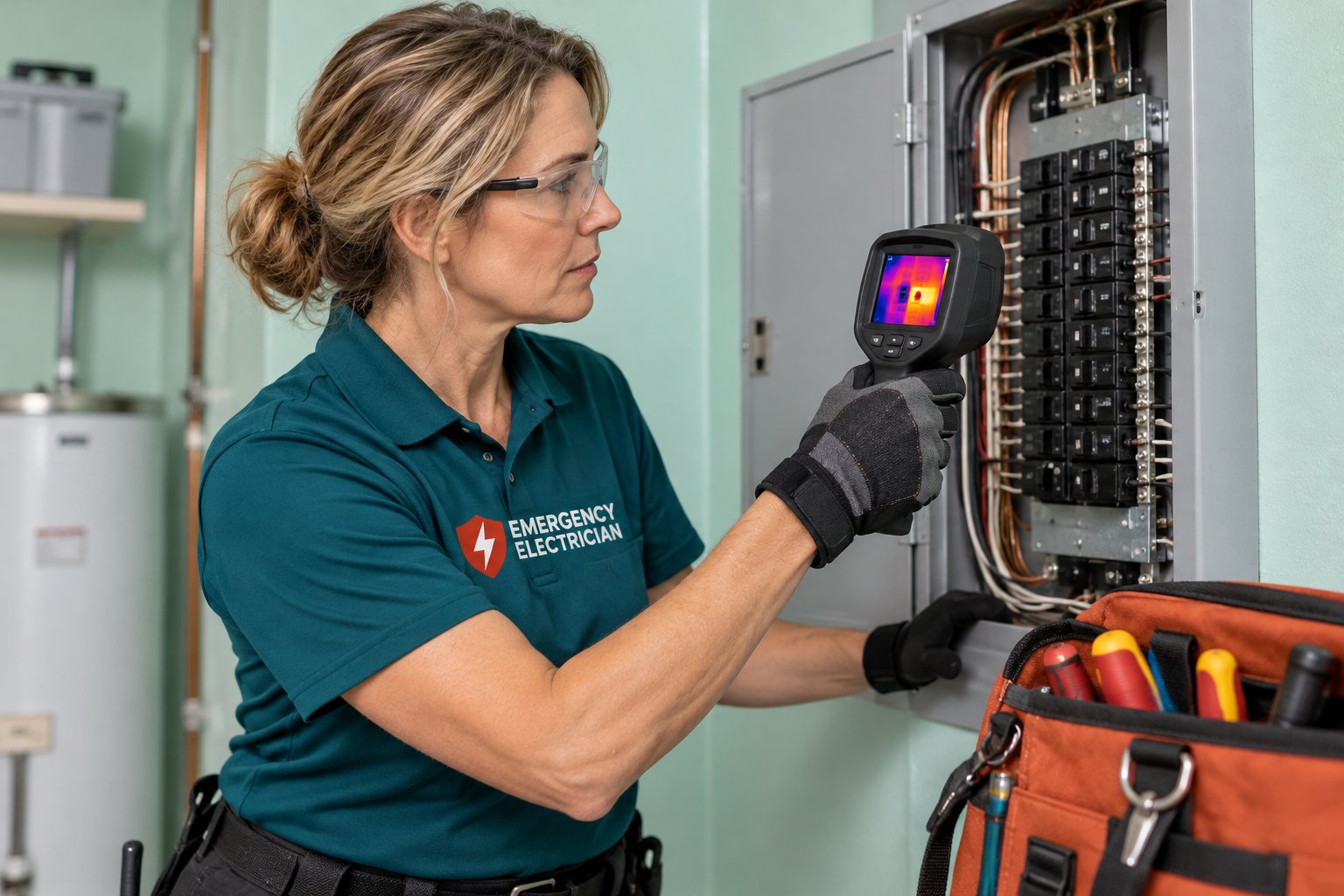
A panel is the heart of the system, and an older one shows its age in several ways. Breakers that trip for no clear reason, handles that feel loose or will not stay on, a panel cover that is warm, a faint buzz, a smell like hot dust, scorch marks around a breaker or discolored wires inside are all symptoms. A panel with several breakers sharing a single lug, or with handles tied together to serve a larger load, has been modified in ways that should concern you.
A panel can also fail abruptly. A main breaker can seize or fail to trip. A bus bar can burn where a breaker has been loose for years. A breaker of a brand that has been the subject of safety concerns can fail to trip when it should. Our pages on a burned panel bus bar, a failed or seized main breaker and recalled breaker brand failure describe what happens and what to do.
If your panel is hot to the touch, buzzing loudly, smoking or smells of burning, do not open it and do not keep switching breakers. Keep clear, call 911 if there is smoke, and call an emergency electrician. If the panel looks and sounds normal but is old and crowded, call before it fails rather than after.
Added room loads and the circuits that carry them
The most common trouble in an older house is a circuit asked to do more than it was designed to. A bedroom that became an office now runs a computer, monitors, a printer, a space heater and a fan from one outlet circuit. A garage that became a workshop runs tools and a second refrigerator from an old lighting circuit. A kitchen with a new microwave shares a circuit with a toaster and a coffee maker.
An overloaded circuit does one of two things. It trips, which is the system working. Or it fails to trip until the wire gets hot, which is the system struggling. A breaker that trips under normal use is telling you the circuit is carrying too much. Resetting it again and again is not a fix. A plug that is warm, a cord that is warm or an outlet that is discolored is the more worrying case, because heat is building in a place where you can see it.
Our pages on extension cord and power strip limits and space heater and window air conditioner circuit safety explain the limits, and a warm or discolored outlet tells you what to do right now.
| Plantation home situation | Likely cause | First move |
|---|---|---|
| Home office outlet warm | Overloaded or loose circuit | Unplug loads, stop using, call |
| Breaker trips when oven or dryer runs | Undersized circuit or failing breaker | Leave off, call |
| Panel cover warm or buzzing | Loose connection or overload | Stay clear, call |
| Lights dim when air conditioner starts | Heavy load on a weak connection | Reduce load, call |
| Screened room or pool outlet dead | GFCI tripped or wet connection | Check GFCI, call if it will not reset |
Older wiring materials: what technicians look for
Homes of this era can contain a few wiring materials that have caused trouble over the decades. Some used cable with cloth or rubber insulation that has dried and cracked. Some have aluminum branch wiring from a period when it was used for cost reasons, which can overheat at connections that were not made for it. Some have panels that predate the protective devices now required in kitchens, bathrooms and outdoor areas.
None of those facts means a house is unsafe by default. Many older homes have been updated carefully, and many original circuits still work. The point is that connections and insulation age, and an inspection is the way to know what is present. A technician will open a few boxes, look at the type of cable, check connections for heat damage and test the protective devices.
Our pages on urgent aluminum wiring failure and urgent burned wiring replacement explain what that work involves. If your outlets are two-prong, if wires crumble when touched or if you have seen scorch marks behind a cover plate, call rather than wait.
Attics, carports and hidden splices
Hidden wiring is where older houses surprise their owners. Attics hold splices made by earlier owners, wires that were extended with tape and cable that has been chewed by rodents. Carports and garages may have exposed wiring and lights that were added without much planning. Junction boxes may sit behind insulation or ceiling tile, where nobody sees them for decades.
A hot attic accelerates the aging of insulation. A roof leak adds water. Rodents add chewed cable. A fault in an attic can arc without tripping a breaker, and a fire there can spread before anyone notices. Signs of trouble include lights that flicker, a burning smell without a visible source, discolored ceilings near fixtures and a breaker that trips for no apparent reason.
Do not go into an attic to look for the fault yourself, in the heat and with wiring all around. Our page on urgent attic wiring repair explains how technicians approach it, and a burning smell with no visible fire explains what to do while you wait.
Storm season in an established neighborhood
Established neighborhoods have mature trees and overhead wires, and storms take advantage of that. Wind and rain bring limbs down on lines and masts. Heavy rain finds weak spots in old roofs and old weatherheads, and water that enters the service can damage the meter, the panel and the wiring inside the walls. Lightning adds surges that hit older equipment hard.
Before a storm, know where your main breaker is, photograph the panel and meter and raise valuable items off the floor. Our before-hurricane electrical checklist explains more. After a storm, avoid standing water, stay away from downed lines and do not switch on any system that was wet. Our page on after-storm power restoration safety explains the careful sequence.
Older equipment is also more likely to fail when power returns. A tired breaker or a weak connection can give way under the sudden load of everything turning on at once. If a breaker trips as soon as power returns, leave it off and call. Our page on power returns and breaker trips goes through the possibilities.
What a technician checks when they arrive at an older home
A visit to an older house starts with listening. The technician will ask what you saw, heard and smelled, when it began and what was running at the time. Those answers narrow the search before a single cover comes off. They will also ask about earlier work on the house, because past remodels explain much of what is inside the walls.
Then comes the physical inspection. The service equipment is checked first: the meter base, the mast and the main disconnect, looking for heat damage, corrosion, loose parts and water entry. The panel is examined next, with attention to the condition of breakers, the tightness of connections, signs of overheating on the bus and the way circuits have been labeled and loaded. The faulty circuit is then traced from the panel outward, testing for shorts, ground faults and loose splices.
Safety measures come before repair. If there is a hazard, the technician will isolate the circuit, make it safe and explain what has been done and why. Anything that cannot be fixed on the spot is described plainly, with the options for what comes next. You should leave the visit knowing which circuits are safe to use, which are not and what the next step is. Our page on what to expect when the technician arrives explains the visit in more detail.
Repair or replace: how to think about an older system
When something fails in an older system, the choice is not always between a patch and a rebuild. A technician can often make the situation safe on the spot, restore power to most of the house and explain what else deserves attention. The question of whether to repair or replace depends on what the inspection shows: the condition of the panel, the type and age of the wiring, how much load the house carries and what the failure revealed.
A temporary fix is a legitimate step when it restores safe operation and buys time to plan. It is not a substitute for a full repair when the underlying problem remains. Our pages on temporary fix versus full repair and should I repair or replace after failure explain how to weigh it.
Ask for a written findings report so you can see what was found, what was done and what is recommended. Quotes are given by phone, and larger jobs need an on-site visit first. A good technician does not push work that is not needed, and explains the difference between urgent and eventual. Our page on getting a written findings report explains what to ask for.
Permits, dispatch and preparation
Some repairs need a permit and an inspection through the city's building department. Replacing a device is generally minor, while replacing a panel, a meter base or a service mast, or adding circuits, usually involves a permit and an inspection. The utility may wait for the inspection before reconnecting after a major repair. A technician should tell you what applies and how it will be handled.
When you call, give the address, say what happened, what you saw, heard and smelled and what you have done. Mention whether the area is wet, whether a breaker is tripped, whether anyone felt a shock and whether anyone relies on medical equipment. You will be asked safety questions and told how the visit works, including the service call charge, explained on the phone before dispatch. Our page on what to tell the electrician dispatcher offers a short script.
To prepare, learn where your main breaker is, label the panel, keep flashlights and a charged power bank handy and keep notes about which circuits misbehave. Do not ignore small signs. A warm outlet or a repeated trip is the earliest warning you get. If something looks or smells wrong, call.
Questions people ask
Who do I call first for an electrical emergency in Plantation?
For fire, heavy smoke, a person shocked and hurt or anyone unresponsive, call 911 first. For a downed or sparking utility line, stay back and call 911 and the power company. For trouble at your property without immediate danger, such as a hot panel, a melted plug or a breaker that will not reset, call an emergency electrician.
Does my older ranch home need a new panel?
Not always. Some older panels work well after targeted repairs, while others are crowded, damaged or undersized for current loads. Warm covers, buzzing, scorch marks, loose handles and frequent trips are signs worth investigating. A technician can inspect the panel and service and explain whether repair, replacement or monitoring fits.
Why does one outlet get warm when I use a space heater or office equipment?
The circuit may be carrying more than it was built for, or a connection at the outlet may be loose and heating. Unplug everything, stop using that outlet and do not reset it repeatedly. A warm or discolored outlet should be inspected before it is used again.
Is a breaker that trips often a problem or just a nuisance?
It is information. The breaker is reacting to an overload, a short or a ground fault. Do not keep resetting it, and do not replace it with a larger one. Unplug what is on the circuit and see whether the trips stop. If they continue with nothing connected, call a technician.
Should I check my attic wiring myself?
No. Attics are hot, cramped and often hold hidden splices, chewed cable and live wiring. Describe the symptoms to a technician, such as flickering, burning smells or ceiling stains near fixtures, and let them inspect it safely. If you smell burning or see smoke, call 911.
How are quotes given for emergency electrical work?
Quotes are given by phone after you describe the problem, and more involved jobs need an on-site visit first. There is a service call charge, explained on the phone before dispatch. The technician explains findings and options in plain terms before any work begins, so you decide at each step.
About "Emergency Electrical Help in Plantation": call and give us the details, and we will explain what is safe to do while you wait and what the visit would cover. Jobs that cannot be quoted blind need a look on site.
Related pages
- Old Home Red Flags: Cloth wiring, two-prong outlets, fuse panels and other red flags in older homes: what each one means, how urgent it is, and what to do about it.
- Warm Outlet: A warm, browned or melted outlet is a heat warning. Learn how to read the damage, what to unplug, when it is a same-day call, and what a technician checks.
- Repair vs Replace Panel: Inspection findings that push an electrical panel toward repair or replacement, including heat damage, corrosion, and obsolete designs, with no figures given.
- Sunrise: Emergency electrical triage for Sunrise: active adult communities, condo buildings and shared electrical rooms. Learn who to call first and who owns it.
- Davie: Emergency electrical triage for Davie: rural-style lots, barns, wells and long service runs to detached buildings. Learn who to call first and what to check.
- Pompano Beach: Emergency electrical triage for Pompano Beach: beachfront condos, Intracoastal homes, marine exposure and older panels inland. Learn who to call first and why.