

Why a small part can still be a real hazard
It is natural to assume that a doorbell is harmless. The button, the chime and the thin wire between them carry only a small amount of voltage, and touching the button has never hurt anyone. The part that creates that voltage is the transformer, and a transformer is a device with two sides. One side is connected to full household voltage, the same as a wall outlet. The other side is the low-voltage output that powers the chime.
When a transformer gets hot, hums loudly, smells like burning or discolors its mounting spot, the problem may be on either side. A short circuit on the low-voltage side, for example from a stapled wire or a stuck button, can overload the transformer and make it run hot. A failing winding inside the transformer can overheat on its own. A loose or corroded connection on the line side, where the transformer is wired into household current, can arc and heat without any help from the doorbell at all.
That is why a burning smell around a doorbell transformer is not just a doorbell problem. The transformer is often tucked in an attic, a garage ceiling, a closet, an electrical panel enclosure or a junction box in a wall, where heat can build unnoticed and where nearby insulation, wood or dust can catch. Treat the smell with the same respect as any other burning smell, and see the page on a burning smell with no visible fire for the general order of steps.
Where low-voltage transformers hide in Florida homes
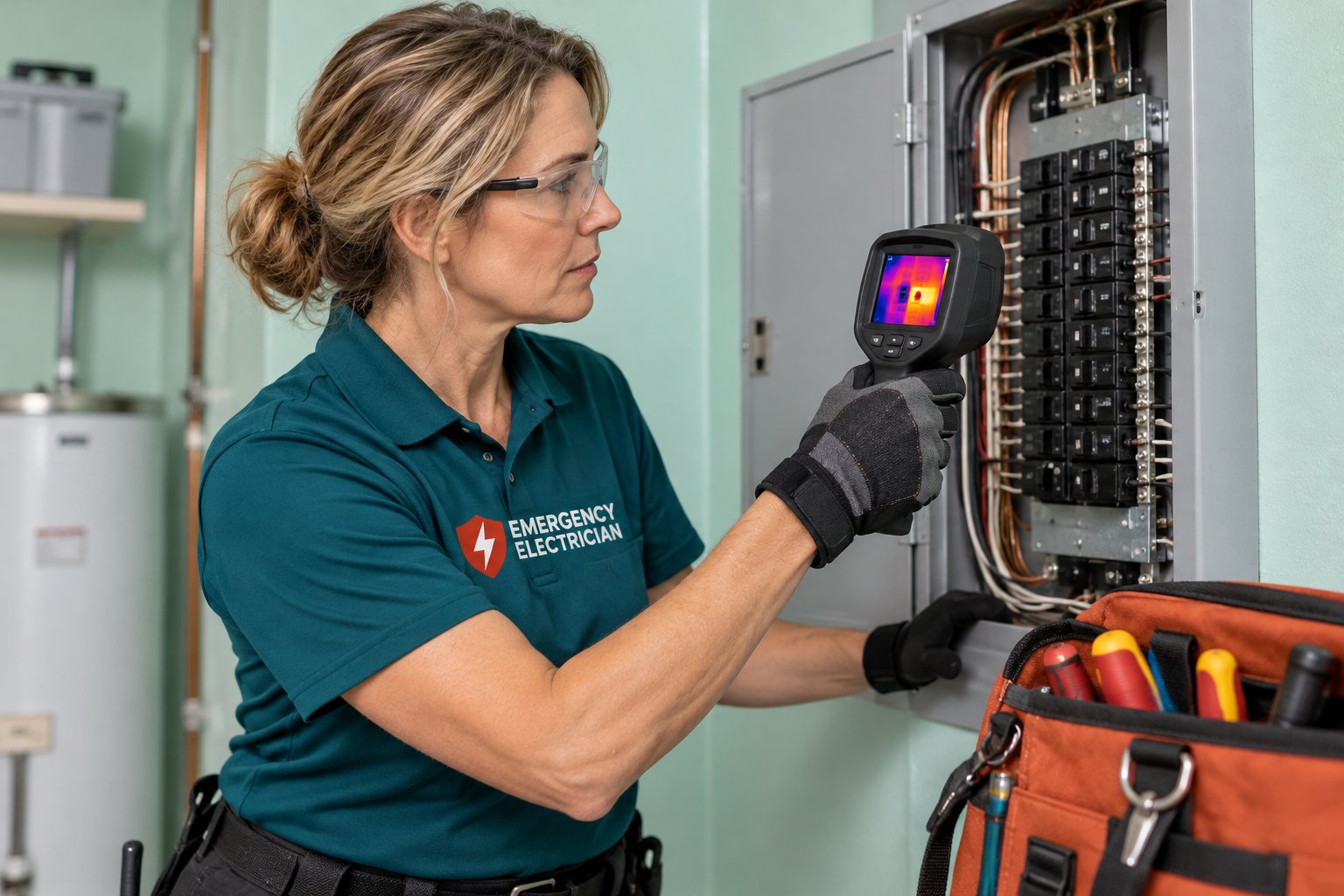
Doorbell transformers are usually small plug-in or hardwired boxes mounted near the main panel, on a junction box in the attic or garage, inside a closet, on the side of an air handler, or in a wall cavity behind the chime. In many South Florida homes built across several decades, the transformer is a small metal or plastic box with two screws on the low-voltage side and wire nuts or leads on the other. Some are plug-in types that sit in an outlet in a garage or utility room.
Other low-voltage transformers live elsewhere. Thermostats and some air handler controls use a transformer inside or beside the air handler. Landscape and pathway lights use a larger plug-in transformer mounted on an exterior wall or a post, often exposed to rain and salt air. Gate openers, irrigation controllers, some alarm systems, pool lighting and intercoms also use transformers or power supplies of similar kinds.
Because these parts are small, quiet and out of sight, they get forgotten. They sit in hot attics and humid garages for a long time, and the same environment that makes air conditioning necessary can shorten the life of their insulation. A part that has been in place for a long time and has been quietly warm for months is not unusual to find once someone tracks down a burning smell.
Signs that point to a failing transformer or low-voltage fault
Some signs are unmistakable. A burning smell near a closet, garage ceiling or panel area, a transformer that is too hot to touch comfortably, a plastic case that is discolored or deformed, a loud humming or buzzing that was not there before, or a chime that has stopped working along with a burning smell are all warning signs.
Others are subtler. A doorbell that rings weakly or only sometimes, a thermostat that goes blank intermittently, landscape lights that dim or flicker, or an air conditioning system that stops responding to the thermostat can all be low-voltage symptoms. These do not by themselves indicate danger, but if they come with warmth, smell or noise at the transformer, they should be reported.
- Burning or hot plastic smell near a closet, garage ceiling, attic access or panel
- Transformer casing that is hot, soft, bubbled or discolored
- A loud buzz or hum that is new or growing
- A doorbell that sticks, rings continuously or rings on its own
- A thermostat or air handler control that goes blank or reboots
- Landscape lights that dim, flicker or fail along one run
- A tripped breaker that resets and trips again when the transformer is connected
What to do first when you smell burning near low-voltage equipment
Start with the same checks you would use for any burning smell. If you can see flame or smoke, call 911 at once, leave the building and wait outside. If there is no flame but the smell is strong and getting stronger, treat it as an active fault: move people out of the room or area, keep pets away and call. The page on what to do in order if you smell burning gives the call sequence.
If the transformer is plugged into an outlet, do not pull it out of the wall if the plug is hot, melted, scorched or sparking. A plug that has overheated in its outlet is the same problem described on the page about a plug melted into an outlet. If the transformer is hardwired, do not open the box, do not cut the wires and do not touch the terminals.
If the breaker serving that area is dry, close and easy to reach, turning it off removes line voltage from the transformer and stops most heating. Do this only if the panel looks normal and you can reach it without crossing wet floors. If the panel itself looks hot, scorched or smells of burning, leave it alone and call 911. Once the power is off, do not turn it back on to test the doorbell. Leave the circuit off until a qualified technician has looked at it.
What never to do with a hot or smelly transformer
Because the voltage is low on the output side, people sometimes treat transformers as toys. They twist wires off, poke at terminals with a screwdriver or swap in a larger replacement to fix a weak chime. The input side is not low voltage. Opening a hardwired transformer box with the power on exposes you to full household voltage, and even a plug-in unit can have a failed enclosure that exposes live parts.
Do not cover a hot transformer with insulation, tape or a blanket to quiet the noise. Do not hold a hot transformer in your hand. Do not bypass the transformer by wiring the chime to a household circuit, which can destroy the chime and create a fire hazard. Do not keep resetting a breaker that trips when the transformer is connected, and do not replace a fuse or breaker with a larger one. These steps convert a nuisance into a danger.
A simple rule: if the part is hot, smells or hums, the first answer is to remove power at the panel if it is safe, and the second answer is to call. Replacement of a small transformer is usually straightforward for a qualified electrician, but only after confirming why the old one failed.
Why the cause may be somewhere else
A failed transformer is often the symptom and not the cause. A shorted low-voltage wire can overload a good transformer until it runs hot. That short may be a staple through the thin wire, a chewed section in the attic, a wet connection at the doorbell button, a corroded terminal at the chime or a pinched wire at a door frame. A technician will often test the low-voltage side with the transformer disconnected to confirm that the wire itself is healthy before installing a replacement.
A line-side fault can also create the symptoms. A loose or oxidized connection at the junction box where the transformer ties into household wiring can arc and heat up. In a humid attic, a poorly sealed box can collect moisture that corrodes the connection over time. A burning smell that persists after the transformer has been swapped may be the first clue that the real fault is the box or the supply wiring.
In some homes the transformer is fed from the same circuit as other devices, such as the garage lights or an outlet in the utility room, so a fault in one may show up in another. Mentioning any recent flickering, tripped breakers or warm outlets in the same area helps the technician see the pattern. See the page on lights that flicker through the whole house for related signs.
Thermostat, air handler and landscape transformers
A thermostat transformer in an air handler is small but sits in an enclosure that already holds heat, a blower motor and a capacitor. If the thermostat blanks and the air handler stops responding, the fault may be a failed transformer, a shorted thermostat wire or a blown low-voltage fuse. A burning smell at the air handler, especially with a tripped breaker, is an electrical emergency until proven otherwise. The air handler disconnect and its page, air handler and outdoor disconnect failure, cover the larger side of that equipment.
Landscape lighting transformers live outdoors and are exposed to rain, irrigation overspray, insects and salt air. A weathered cover, a plug-in unit mounted below the splash line or a buried cable with a nick can all lead to a fault. Landscape lights that fail in a row or flicker with the irrigation schedule are a classic sign of moisture. Because the transformer is plugged into an exterior outlet, a hot or scorched plug or a tripped outdoor GFCI should be treated seriously.
In both cases, the guidance is the same. Remove power at the breaker if you can do it safely, keep the area dry and clear, and have a technician check both sides of the transformer and the wiring it serves. The page on urgent landscape lighting short repair describes what that work looks like.
What the technician will check
The technician will begin by confirming the power is off and verifying it with a meter. They will look at the transformer, its mounting, the box it ties into and the wire insulation near it. Burn marks, brittle insulation, melted connectors and moisture are all signs they will note.
On the line side, they will check the connections for tightness and corrosion, check the circuit breaker and wire size, and test for voltage. On the low-voltage side, they will disconnect the load, measure the output of the transformer and then test the wiring and devices one at a time. A chime, a button or a thermostat may be the culprit, and each can be tested separately.
Repair is often a straightforward replacement of the transformer and any damaged wire or connector, plus a correction of the line-side connection if it was part of the problem. If heat has damaged nearby insulation, wood or a junction box, that will be repaired or replaced as well. Complicated jobs need an on-site visit, and the service call charge is explained by phone before dispatch. Quotes for simple jobs are given by phone.
What to have ready and how to describe the problem
When you call, say where the transformer is, what it powers and what you noticed: heat, smell, noise, discoloration or a device that stopped working. Say whether any breaker has tripped and whether you turned any breaker off. If you can see a label on the transformer from a safe distance without touching it, the voltage and size on the label can help.
Have access ready. Attics, closets and garage ceilings may need a ladder, and a technician cannot work around stored items that block the way. Clear a path to the panel and to the equipment. If the transformer is in a rented space, tell your landlord or property manager as well as the electrician. Keep pets and children out of the area.
Finally, if the smell or the heat gets worse while you wait, call 911 and leave the building. Otherwise, call now and describe the transformer, the smell and what you have done so far, and the dispatcher will tell you how to stay safe until the technician arrives.
Questions people ask
Is it normal for a doorbell transformer to feel warm?
A transformer can run slightly warm in normal use, especially a plug-in type. It should not be too hot to hold comfortably, should not smell, should not buzz loudly and should not discolor its housing. If it does any of those, remove power at the breaker if you can do so safely and have it checked by a qualified electrician.
My doorbell stopped working and I smell burning near the closet. What now?
Treat it as a burning smell with a possible electrical source. If you see smoke or flame, call 911 and leave. If not, move people away, switch off the nearby breaker only if the panel looks normal and is easy to reach, and call an electrician. Do not touch or open the transformer.
Can I replace the transformer myself since it is low voltage?
The output is low voltage but the input is full household voltage, so the connections can shock or start a fire. A replacement should also come with a check of why the old one failed. A short in the low-voltage wire, a bad chime or a loose line-side connection can destroy a new unit. Leave the swap to a qualified technician.
Why would a thermostat or air handler stop working along with a burning smell?
Air handlers often have their own control transformer, and a failure there can blank the thermostat. A smell at the air handler may also point to a motor, capacitor or wiring fault. Turn off the air conditioning at the thermostat only if the display is working, switch off the disconnect or breaker if it is dry and reachable, and call.
Landscape lights keep tripping the outdoor GFCI. Is that urgent?
It is a sign that moisture or damaged cable is leaking current. It is not usually an immediate fire risk, but it should not be ignored because the problem can get worse and the transformer may overheat. Keep the circuit off, keep people and pets off wet lighting runs, and arrange a visit.
What does an electrician do about a hot or smelly transformer?
They confirm power is off, inspect the transformer, the box and the wiring for heat damage, test both the line side and the low-voltage side, and find what overloaded or failed the part. Then they replace the transformer and any damaged wire or connector. Simple work is quoted by phone, and complicated jobs need an on-site visit.
About "A Hot or Burning Doorbell, Chime or Low-Voltage Transformer": call and give us the details, and we will explain what is safe to do while you wait and what the visit would cover. Jobs that cannot be quoted blind need a look on site.
Related pages
- Burning Smell: A burning smell with no flames is still a warning. Learn how to choose between 911 and an urgent electrician call, and what to do while you wait.
- Melted Plug: When a plug fuses into an outlet, do not pull it. Learn how to cut power at the breaker, what to report to the dispatcher, and how a technician clears it.
- AC Disconnect Burn: A melted or scorched AC disconnect box outside your home is an electrical hazard. See what to do now, who handles which part, and what to tell the dispatcher.
- Landscape Short: A burned landscape lighting transformer or shorted low-voltage run can hide a bigger problem. Learn the triage steps and when a technician should check it.
- Call Order: Electrical trouble, three possible calls. A plain decision order for when to dial 911, when to phone the power company, and when to call an electrician.
- Panel Buzzing: Some panel hum is normal, but loud buzzing can signal arcing or a loose connection. Learn to sort the sounds and what to tell the dispatcher about them.