
Triage first: water, heat, sparks and shock
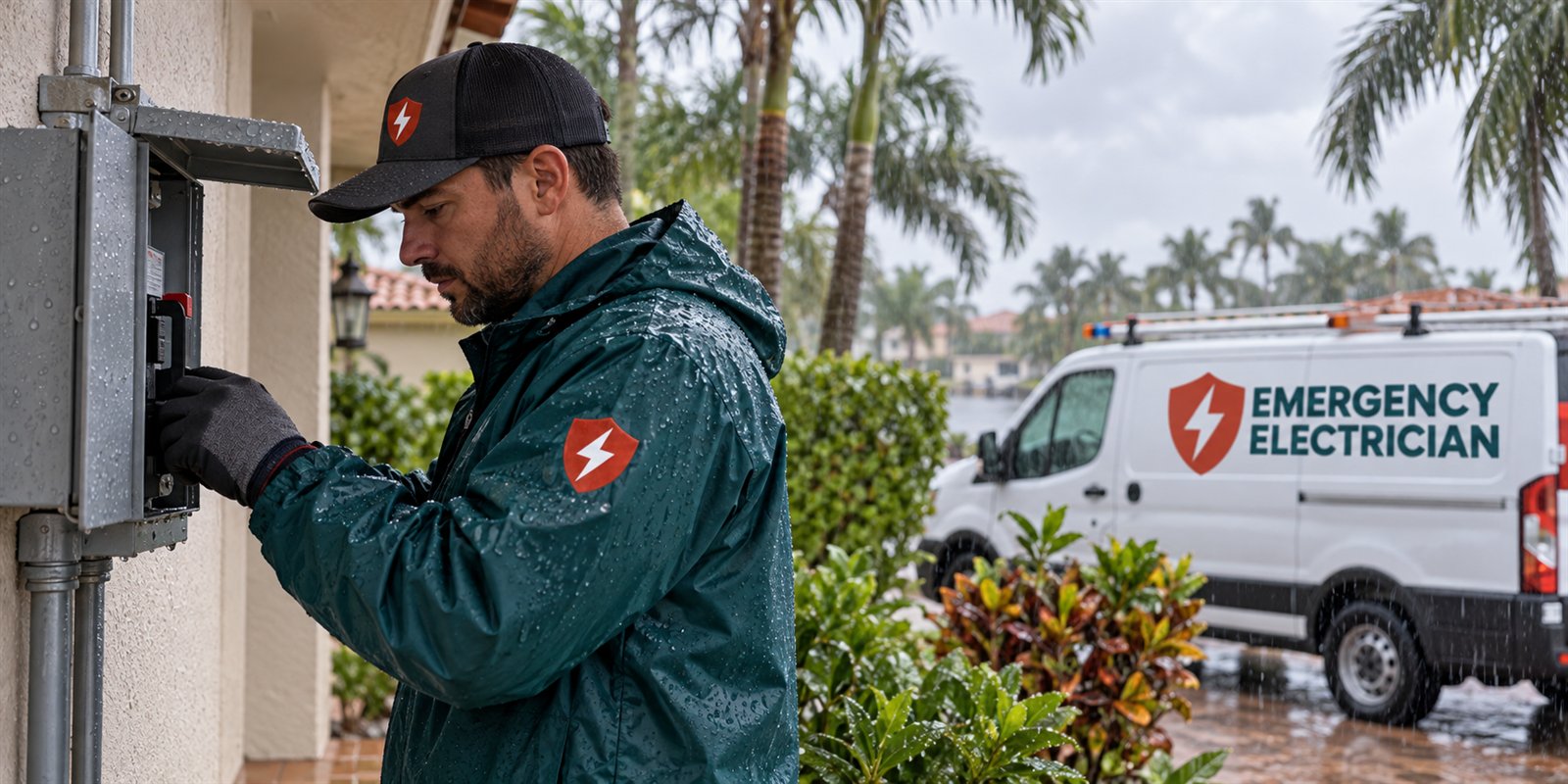
Start with the dangerous situations. If you see flames, smoke or sparks near the water heater, leave the area and call 911 from outside. If anyone has been shocked and is hurt, confused or in pain, call 911 first. If water is leaking from the tank and reaching the wiring, the panel or outlets, do not walk through it to reach the breaker. Standing water and live circuits are a poor combination.
If the heater is in a garage or closet and there is a strong burning smell or a hot metal smell, switch off the heater's breaker only if you can reach the panel dry and safely, and leave the room. If the panel is wet, hot or scorched, do not touch it, and call 911 and an emergency electrician. Our page on water in an electrical panel covers that situation in depth.
If a tank is leaking but nothing else is wrong, the water supply can be shut off at the valve above the tank, and the breaker switched off from a dry position. The leak is a plumbing problem, but it becomes an electrical one the moment water reaches the element wiring. Treat any wet water heater as a shock risk until the circuit is verified dead.
- Flames, smoke or sparks: leave, then 911.
- Shock to a person: 911 first.
- Water reaching wiring or the panel: stay out of the water, call for help.
- Cold water heater with no other sign: continue with this page.
How an electric water heater is wired
A typical tank has two heating elements, an upper and a lower, each controlled by its own thermostat. Power comes from a dedicated two-hundred-forty-volt circuit through a double breaker. The supply wiring enters a junction area under a metal cover on the side or top of the tank, then goes to a high-limit safety device and the thermostats, and from there to the elements.
The upper thermostat has priority. It energizes the upper element first until the top of the tank is hot, then hands off to the lower element. The high-limit switch, often a red reset button on the upper thermostat, cuts off power if the water gets dangerously hot. If the high-limit trips, the heater goes cold until someone resets it, and it will trip again if the cause is not corrected.
Some homes have a tankless electric heater instead. These draw much larger current and use heavy-gauge wiring and large breakers, and they share some failure modes, such as burned terminals and failed elements, but at higher stakes. If you have a tankless unit, the same safety triage applies, and the heavy circuit makes a loose connection even more serious.
Element side versus wiring side
The core question of this page is where the fault is. An element-side fault is inside the tank: a burned-out element, an element that has developed a leak to the tank wall, or a failed thermostat. A wiring-side fault is on the supply: a loose or burned connection at the breaker, a damaged cable, or a failed disconnect.
Symptoms overlap. A heater that is cold with the breaker on could have a failed element, a tripped high-limit, a failed thermostat or a lost supply. A heater that trips the breaker as soon as it is switched on usually has a short or ground fault, which is often an element that has failed to ground, but can also be a damaged cable or a wet junction area. A heater that makes a hot, scorched smell from the access area often has a burned connection.
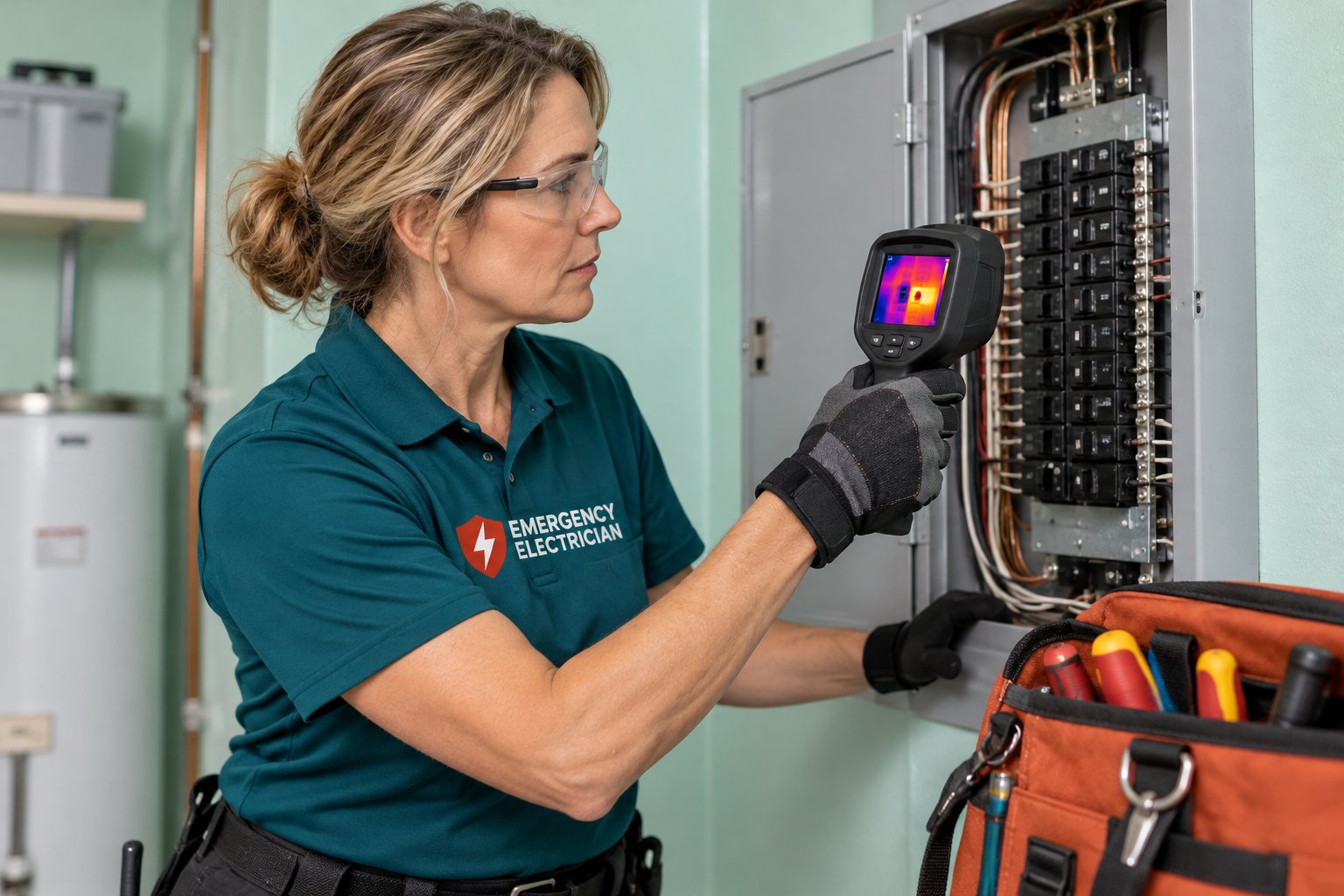
A meter separates the two quickly. With the circuit off, a technician measures the resistance of each element and checks for any path to the tank. With the circuit on and the access panel open by a qualified person, they confirm that the supply reaches the thermostat terminals at the correct voltage. The pattern of readings tells them which side is at fault.
| Symptom | Often element side | Often wiring side |
|---|---|---|
| No hot water, breaker on | Failed element or thermostat, high-limit tripped | Lost supply, burned connection |
| Breaker trips instantly | Element grounded to tank | Damaged cable, wet junction |
| Hot water runs out fast | Lower element failed | Rarely wiring |
| Scorched smell at access cover | Rarely element | Loose or burned terminals |
| Tingle from tank or pipes | Element leakage | Missing ground connection |
Why breakers trip when the heater runs
A water heater element draws a steady, heavy current. If that load is unusually high, the breaker may trip as designed. More often, a trip is caused by leakage or a short. An element that has developed a pinhole in its sheath allows current to flow into the water and the tank. That produces a ground fault, which trips protective devices immediately or after a short delay.
A breaker can also trip because the breaker itself is weak. A double breaker that has been through years of heat cycles may trip at a lower load than it should, or may not hold. A loose connection at the breaker terminal heats the breaker, and a hot breaker trips early. The tell-tale sign is a breaker that is warm or hot to the touch, which you should check only from a safe distance and only if the panel is dry.
Do not keep resetting. If the heater trips immediately, switch the breaker off, leave it off, and call. Repeated resets can heat connections further, damage the element and wiring, and in the worst case ignite insulation. And never replace the breaker with a larger one. The breaker is there to protect the wire.
Signs of a hot or failing connection
The wiring-side hazard that gets least attention is a loose connection at the water heater's terminals or at the breaker. A heavy two-hundred-forty-volt load can drive a loose connection to scorching temperatures. You may notice a hot smell near the heater, discoloration on the access panel, or a warm junction cover. Insulation may become brittle or brown.
At the breaker panel, a warm or discolored double breaker, a smell of hot plastic, or a buzzing sound are red flags. If the hot water heater is on a circuit that also shares a neutral or ground with another load, the problem can be more complex. Some older homes had water heaters wired with aluminum conductors, which require particular attention to connection hardware.
These signs are reasons to switch off the breaker, stay away, and call, not reasons to open the cover for a look. The access cover on a water heater exposes live terminals in a space that is often damp. A homeowner who removes that cover without confirming the power is off is taking a real risk.
- Burning or hot-plastic smell near the heater or the panel.
- Discolored or warped access cover.
- Warm or buzzing double breaker.
- Intermittent hot water that comes and goes with no pattern.
- Breaker that trips only when the heater has been on for a while.
What you can safely do
If the heater has gone cold and nothing smells or sparks, there are limited safe checks. Look at the breaker with dry hands from a dry floor. If it is tripped, switch it fully off and then on once. Check whether there is a wall switch or disconnect near the heater, and whether it is on. Check whether another appliance on the same circuit also has no power.
Do not press the reset button on the high-limit thermostat without first switching off the breaker, because that button is behind a cover with live parts. Do not remove the cover to see the element. Do not test with a household voltage tester unless you know how to use it on two-hundred-forty-volt circuits. And do not drain the tank with the power on, because an element that is out of water burns out within seconds.
Safe actions also include shutting off the water supply if the tank leaks, placing towels away from the wiring, and keeping children and pets out of the room. The right strategy for most people is to stop, take the heater out of service at the breaker, and call a technician.
- Look at the breaker from a dry floor with dry hands.
- Switch a tripped breaker fully off and then on once only.
- Check any nearby disconnect or switch.
- Do not remove the access cover or press the high-limit reset with power on.
- Do not drain the tank with the circuit energized.
- Turn off the breaker and call if anything smells, trips or leaks.
What a technician checks on site
A technician starts with safety isolation. They confirm which breaker supplies the heater, switch it off, and verify with a meter that the circuit is dead at the heater. They inspect the breaker, the panel connections and the cable run for heat damage, and they look at the disconnect if there is one.
At the heater, they remove the cover and inspect the wiring, the thermostats, the high-limit and the element terminals. They look for scorching, loose terminals, water stains, corrosion and rodent damage. With the power off, they test element resistance and check for leakage to the tank. They compare readings against the element's rating to see whether it is intact.
Then they energize the circuit carefully and measure voltage at the heater terminals, with the elements isolated if needed. If the supply is healthy and an element is bad, replacement may be straightforward. If the supply shows a lost leg, a voltage drop or a hot connection, the repair is on the wiring side. The technician will explain what they found, in plain terms, before recommending anything.
Repair or replace the whole heater
Not every failed heater should be repaired. If the tank leaks, replacing an element will not help. If the heater is old and has multiple failures, replacement may make more sense than another repair. If the tank is sound and only an element, thermostat or connection has failed, repairing it is often practical.
For the electrical side, the decision is simpler. A heater circuit with damaged wiring, a burned terminal or a failing breaker needs repair whether the heater is replaced or not. A new heater on a bad circuit will not last. Our page on repair or replace after a failure offers a framework for the decision.
A technician will also check that the wire size and breaker match the heater's nameplate, and that the grounding and bonding are present. If a replacement heater is planned, those checks matter before the new unit is connected. Plumbing and water heater replacement itself may involve a plumber, and the electrician's role is to make sure the supply is safe and correct.
Garages, closets and attics: where the heater lives
In South Florida, water heaters sit in garages, hall closets, utility rooms and attics. Each location has its own risks. A garage unit sees heat, humidity, and sometimes vehicle impact. A closet unit may be surrounded by stored items that block air and hold heat. An attic unit adds the risk of a leak damaging the ceiling and wiring below, and the attic's summer heat accelerates insulation aging.
Condominium units often have a heater in a small closet with limited access. A leak or electrical fault there can affect neighbors below, and the association may have rules about who may work on it. See our page on condo association electrical emergencies for how those cases usually run.
After a storm or flood, any water heater that was in contact with floodwater should be treated as unsafe until inspected. The element wiring, thermostats and connections can be damaged by water and silt, and a unit that seems to work may leak current. Do not switch it on until a technician has checked it.
Calling about a water heater problem
When you call, say what the heater is doing: cold, tripping, smelling, leaking, humming or sparking. Tell the dispatcher whether the breaker is off, whether any water has reached the wiring or the floor around the panel, and whether anyone has felt a tingle. Mention the heater's location and age if you know it, and whether it is a tank or tankless unit.
You will be asked safety questions, then told how the visit works, including the service call charge, explained on the phone before dispatch. Quotes are given by phone after you describe the problem. More involved work needs an on-site visit first. Nothing is approved without your understanding it.
If your water heater is tripping the breaker, smelling hot or leaking onto electrical parts, turn off its breaker if you can do so safely, stay out of any water, and call. A technician can tell whether the element or the wiring is at fault, and explain your options plainly.
Questions people ask
Why does my water heater trip the breaker as soon as I switch it on?
An immediate trip usually means a short or ground fault. A common cause is an element that has failed to the tank wall. A damaged cable or a wet junction area can do the same. Leave the breaker off and call. Repeated resetting can damage the wiring and does not fix the underlying fault.
Is it safe to press the red reset button on the water heater?
Only with the breaker switched off, because the button sits behind a cover that exposes live parts. A tripped high-limit means the water got too hot, and pressing reset without finding the cause may only delay the next trip. If it trips again, there is a thermostat or element problem that a technician should check.
How can I tell if the problem is the element or the wiring?
You cannot tell reliably without a meter. Cold water with the breaker on, a tripping breaker, and a scorched smell can each point either way. A technician tests element resistance, checks for leakage to the tank, and measures supply voltage at the terminals to separate the two sides.
Can I drain the tank to check the element?
Never with the power on. An element that is out of water can burn out in seconds, and draining a tank near live wiring adds risk. Switch off the breaker first, and confirm the circuit is dead. For most homeowners, element testing and replacement are best left to a technician.
My water heater was in floodwater. Can I turn it back on?
Do not. Floodwater and silt can damage the elements, thermostats and wiring, and a heater that seems to work may leak current to the tank. Keep the breaker off and have it inspected. Parts that were submerged usually need to be replaced. Our storm pages explain what to do in a flooded home.
How are quotes given for water heater electrical repair?
Quotes are given by phone after you describe the problem, and more involved work needs an on-site look first. There is a service call charge, explained on the phone before dispatch. The technician explains the findings and options in plain terms, so you can decide before any work starts.
If "Urgent Water Heater Electrical Faults" matches what is happening, call and describe it plainly: the room, the breaker, any burning smell or tripped circuit. We explain what the repair would involve before a visit is set.
Related pages
- Appliance Circuits: When a range, dryer or water heater goes dead, the circuit may be at fault, not the appliance. Learn triage steps and what to check before you replace anything.
- Breaker Replace: A bad breaker can leave circuits dead or overheat in the panel. Learn when replacement is urgent, what is inspected beyond the breaker, and why testing follows.
- Breaker Re-Trips: A breaker that trips again right after you reset it points to a hard fault. Learn why repeated resetting is risky and what to do and tell the electrician.
- Water in Panel: Water reaching an electrical panel is serious. Learn when to shut the main, when to stay out, what causes intrusion, and what an electrician checks first.
- Repair or Replace: A plain framework for deciding between repairing and replacing failed electrical equipment, based on evidence found on site, not guesses or sales pressure.
- Troubleshooting Visit: A walkthrough of an urgent electrical troubleshooting visit: arrival, safety isolation, testing, findings explained in writing, and how phone quotes work.