
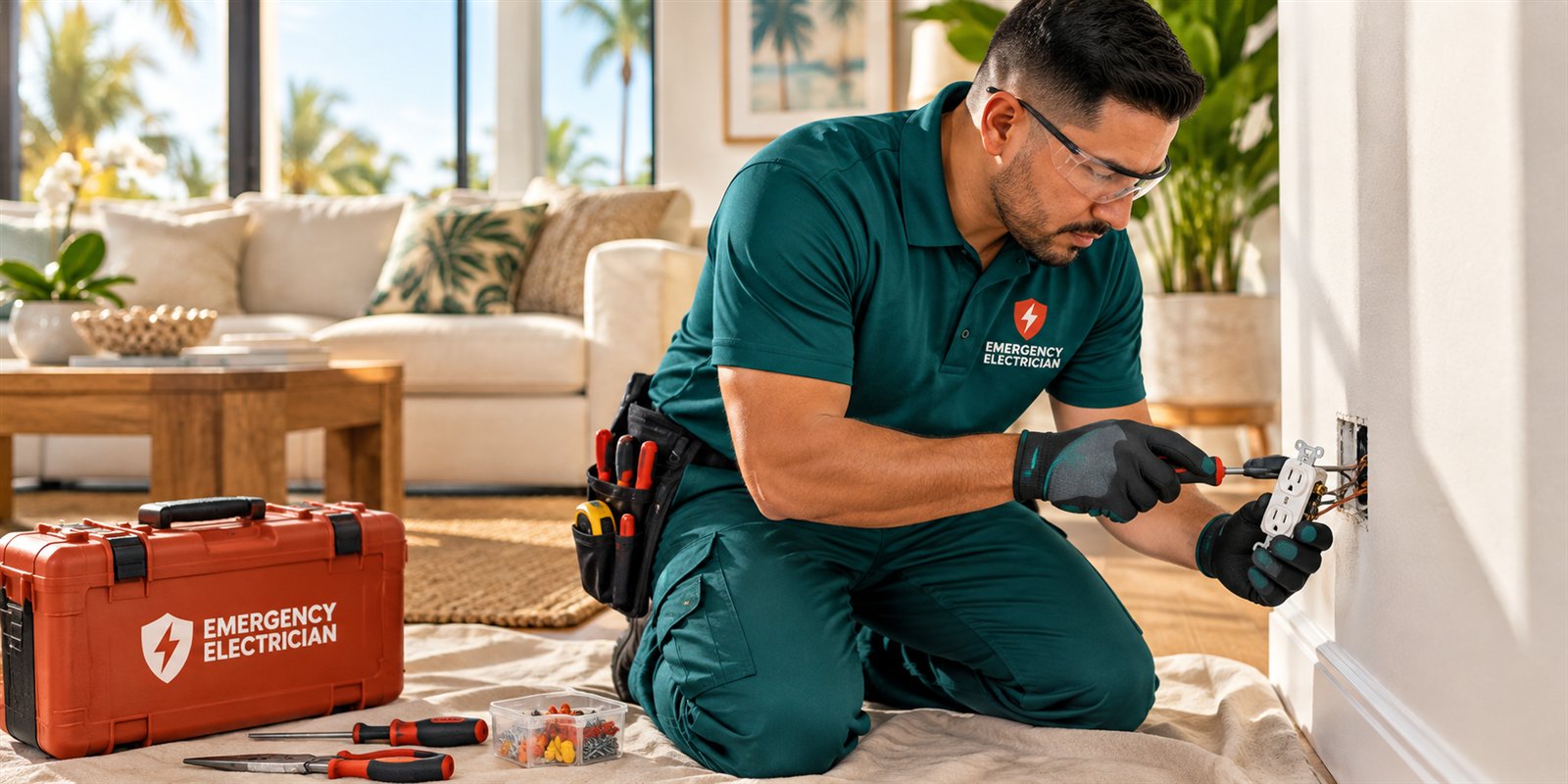
Why outdoor electricity needs extra care
Electricity is more dangerous when the ground is wet and the person touching a tool or a cord is barefoot or in sandals. Water lowers the resistance of the path through the body, and a fault that would be a mild jolt on a dry floor can be much more serious on a wet lawn, a damp patio or beside a pool. In a climate with heavy afternoon rain, sprinklers that run on a timer and humidity most of the year, outdoor electrical equipment is wet far more often than people realize.
Add heat, sun and salt air, and you have materials that degrade faster than the same materials indoors. Plastic covers become brittle, gaskets crack, metal screws corrode, and wire insulation hardens. Insects and small animals find their way into boxes. The result is that outdoor outlets and fixtures tend to be among the first parts of a system to fail.
If anything outdoors is sparking, smoking, burning or has shocked someone, call 911 first and keep everyone away. A person who has been shocked should receive medical attention even if they feel fine afterward.
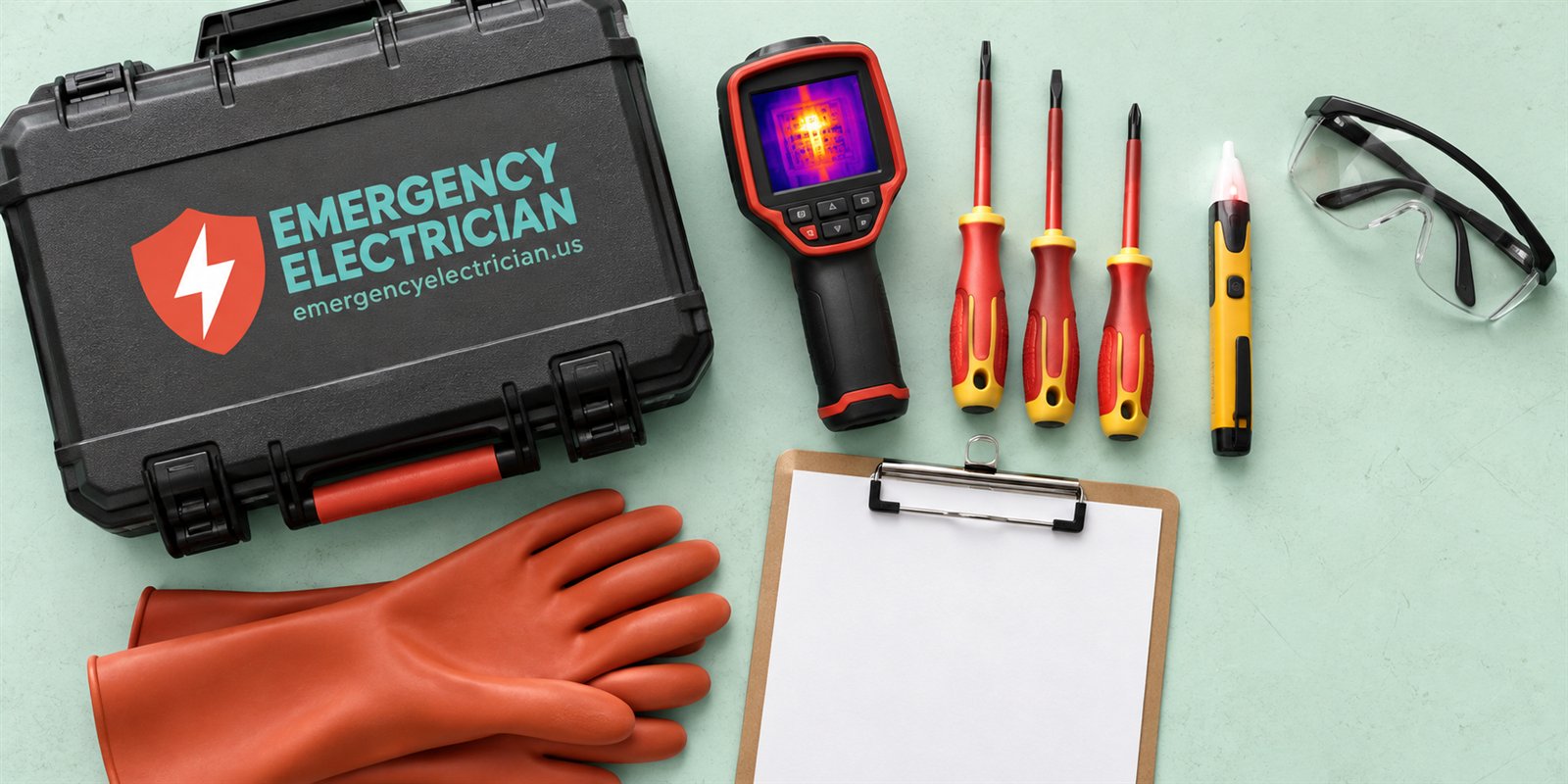
What a safe outdoor outlet looks like
A well-set-up outdoor outlet has several features that you can check with your eyes, without touching anything. Start with the cover. Outdoor receptacles should have a weatherproof cover that closes over the outlet, ideally one that keeps protection in place even when a cord is plugged in, often called an in-use cover. A flip cover that only protects when closed leaves the plug and outlet exposed to rain whenever something is plugged in.
Next, look at the box and the seal around it. The box should be firmly attached to the wall or post, with no gaps where water can run behind it, and the edges should be sealed so rain does not run into the wall. Check that the cover is intact, not cracked, warped or missing its gasket. Look for rust streaks, white corrosion, insect nests, stains or any signs of heat such as brown or black discoloration.
Finally, the outlet should be protected by a ground-fault circuit interrupter, either at the outlet itself or at the breaker. You will find a test and a reset button on a GFCI outlet. The guide on what GFCI and AFCI protect against explains why that device matters most outdoors.
GFCI protection: the key safeguard outside
A GFCI watches the current flowing out and back through a circuit. If some of that current leaks along a different path, such as through a person or through water, the device cuts power very quickly. It is designed to protect against shock, and it is the single most important protection for outdoor outlets, bathroom outlets, kitchen counters and other wet locations.
GFCI devices need occasional testing. Press the test button on the device. The reset button should pop out and the power should go off. Press reset to restore it. If it does not trip, if it will not reset, or if it trips repeatedly, that is a sign of a problem with the device, the circuit or the equipment plugged into it. Do not ignore it, and do not replace the device with a plain outlet to stop the nuisance.
In some homes, one GFCI protects several outlets downstream, including ones in other rooms. If an outdoor outlet is dead, a tripped GFCI elsewhere may be the reason. If the device will not reset, see the guide on what to do when a GFCI will not reset. Older homes may have outdoor outlets that predate GFCI requirements. A technician can tell you whether yours are protected and discuss options.
Sprinklers, hoses and pressure washers
Many outdoor electrical problems start with water from the irrigation system. Sprinkler heads that spray an outlet, a meter or an equipment enclosure for a few minutes every morning will eventually defeat even good covers. If your sprinklers wet an outlet, a light fixture or an outdoor unit, redirect or adjust the heads, or ask the irrigation provider to do it.
Be careful with pressure washers. Aiming a strong jet at an outlet, a light fixture, a meter base or a panel can push water past gaskets and into places it should not be. Keep the spray away from electrical equipment, and cover or avoid outlets when washing walls. Do not use an electric pressure washer, mower or trimmer on wet grass or while standing in water.
If you find that water has gotten into an outdoor outlet box or a fixture, turn off the circuit at the panel if the area is dry and the panel is reachable, and keep the outlet unused until a technician has checked it. A box that has been wet can have corrosion inside that causes heat and failure later.
Extension cords and outdoor tools
Cords and tools outdoors take punishment. Use cords that are labeled for outdoor use and rated for the load of the tool you are plugging in. Check the cord for cuts, cracks, exposed wires and loose plugs before every use, and do not use damaged cords. Never use indoor cords outside, and do not run a cord through standing water or leave it lying in puddles.
Keep connections off the wet ground. A plug that sits in a puddle is a hazard. Lift connections on a dry surface, or use a connector designed for wet locations. Do not daisy-chain multiple cords, and do not use a cord that feels hot. A cord that is warm under heavy load is a sign that it is too light for the job.
Do not use a cord as permanent wiring for outdoor lighting, a fountain, a pump or a fridge in the garage. If something needs permanent power outdoors, it needs a proper circuit, installed by a qualified electrician with the right protection. The guide on extension cords and power strips explains the limits.
Holiday lights, pool equipment and other seasonal loads
Outdoor lights, inflatable decorations, fountains and pool equipment add load to outdoor circuits and increase the chance of cord problems. Plug seasonal items into GFCI-protected outlets, use cords and fittings designed for outdoor use and keep connections out of puddles. Check that your decorations are labeled for outdoor use and replace any with cracked sockets or damaged wire.
Pool and spa equipment is a separate subject, because the combination of water and electricity is more serious and because the rules for pools are stricter. Pool pumps, lights and heaters should be on properly protected circuits installed by a qualified electrician, and any tripping, tingling or shock near a pool should be treated as an emergency. Keep people out of the water, and call for help. The guide on pool equipment tripping power describes the warning signs.
Holiday and party lighting also creates temptations to overload. See holiday and party lighting electrical safety for more.
Signs that an outdoor outlet needs attention
You can learn a lot by looking and smelling without touching anything. Do not open the box, remove the cover or poke at the outlet. If you see any of these signs, stop using the outlet and have it checked.
If the sign is a burning smell, visible sparks, smoke or heat from the outlet, treat it as an emergency and call 911.
- A cover that is cracked, missing, loose or that will not close
- Rust, white powder or green corrosion on the cover, screws or box
- Brown or black marks, melted plastic or a burning smell
- A GFCI that trips often, will not reset or will not trip when tested
- An outlet that feels warm to the touch, or a plug that is hot after use
- Plugs that fall out because the outlet no longer grips them
- Water inside the box or stains below it
- A tingle or shock when touching a metal item connected to the circuit
- Insect nests, spiders or lizards inside the box
- A dead outlet after rain or after the sprinklers run
Landscape lighting, pumps and other yard equipment
Low-voltage landscape lighting systems use a transformer that plugs into an outdoor outlet and runs thin cables through the garden. The cables can be cut by shovels, trimmers and aerators, and the connections corrode in wet soil. A problem with one fixture can trip protection or stop the whole run. The guide on urgent landscape lighting short repair describes how technicians trace those problems.
Pumps for fountains, ponds and irrigation, and equipment such as outdoor kitchens and fans, also depend on outdoor circuits. They should be on properly protected circuits with covers and fittings appropriate for wet locations. If a device trips protection repeatedly, do not keep resetting it. Unplug it, leave it off and have the circuit and the equipment checked.
Be aware of buried wiring. Before digging for a fence, a tree or a garden, ask a qualified person about the location of buried electrical lines on your property, and call the appropriate utility locating service for lines on the utility side. Striking a buried line can cause serious injury and damage.
After rain, storms and floods
After a heavy storm, check your outdoor outlets from a distance. If any are flooded, covered in debris or damaged by wind, do not use them. A flooded outlet should stay off until a qualified electrician has checked it. In a flood, do not wade through water to reach the outlets or the panel, because the water may be energized.
If an outlet is dead after a storm, look for a tripped GFCI before assuming the outlet has failed. If the GFCI will not reset and the area is wet, wait for conditions to dry and have it checked. Do not bypass a GFCI that keeps tripping in wet weather. It may be telling you that moisture has gotten into the circuit.
After storms, look for damage to light fixtures, cables and equipment, including anything knocked loose by wind or debris. Keep away from any downed wire and treat it as live. The guide on after-storm power restoration safety explains what to expect when power returns.
What to leave to a qualified electrician
Replacing a damaged weatherproof cover is something many people can do, but changing an outlet, adding a new outdoor outlet, repairing a circuit or installing a GFCI involves live wiring, and it should be done by a qualified person. Outdoor wiring has particular requirements for materials, burial depth, protection and support, and mistakes are not forgiving. Some work also needs a permit.
A technician can check the outlet and box, test the GFCI, inspect the wiring behind it and replace what is damaged. They can also explain whether the circuit is protected as it should be, whether the outlet is in a good location and whether another approach would be safer for how you use the space. Ask them to show you what they found.
Pricing is given by phone, and complicated jobs need an on-site visit before a quote can be given. There is a service call charge, which is explained on the phone before dispatch.
Calling for help
Call 911 if there is fire, smoke, sparks or a person who has been shocked. For an outdoor outlet that is cracked, corroded, hot, wet or tripping, call a qualified electrician, describe what you see and what you have done, and keep the outlet unused until it has been checked.
The dispatcher can explain the service call charge before anyone is sent, and can tell you whether your situation looks like it needs an on-site visit before a quote. If you are not sure whether an outdoor electrical problem is urgent, call and explain what you see, and a dispatcher can help you decide on next steps.
Keep your records of the problem and the repair, as described in documents that help after electrical damage, in case you need to refer to them later.
Questions people ask
Do all outdoor outlets need GFCI protection?
Modern practice is to protect outdoor outlets with GFCI devices, since the risk of shock is highest where people are standing on wet ground. Older homes may have outlets that were installed before that practice. A technician can check yours and explain options. Test any GFCI devices you have using their built-in test button.
My outdoor outlet is dead after rain. What should I check?
Look for a tripped GFCI, which may be at another outlet or at the panel, and try its reset button. If it will not reset, or trips again, moisture may be in the circuit. Do not bypass it. Keep the outlet unused, and have a technician check the box and wiring once things have dried.
Is a flip cover enough for an outdoor outlet?
A simple flip cover protects the outlet only when closed, which is not when a cord is plugged in. An in-use cover is designed to keep protection in place with a cord connected, which suits equipment that stays plugged in. A technician can recommend and install the right type for your outlet and location.
Can I use an indoor extension cord outside for a short time?
No. Indoor cords are not built for moisture, sun and abrasion, and their insulation can fail outdoors. Use cords that are labeled for outdoor use and rated for the tool's load, keep connections off wet ground and do not use any cord that is damaged or warm. For permanent needs, have a proper circuit installed.
What should I do if my sprinklers hit an outlet?
Adjust or redirect the sprinkler heads, or have the irrigation provider do it, so that water does not hit outlets, fixtures or equipment. If an outlet has been wet repeatedly, stop using it until a technician checks the box and wiring for moisture and corrosion. Repeated wetting shortens the life of even good covers.
Is it safe to replace an outdoor outlet myself?
Replacing a cover is simple, but changing the outlet involves live wiring, and mistakes outdoors are risky. Turning off a breaker is not always enough if a circuit is mislabeled or shares connections. Outdoor work also has requirements for materials and protection, and some work needs a permit. A qualified electrician is the safer choice.
If "Outdoor Outlets: What to Know and Do" matches what is happening, call and describe it plainly: the room, the breaker, any burning smell or tripped circuit. We explain what the repair would involve before a visit is set.
Related pages
- GFCI and AFCI Explained: A plain explanation of ground-fault and arc-fault protection, where each is used, what each catches, and the limits that still call for caution.
- Cord Limits: How extension cords and power strips overheat, which devices should never use them, the warning signs to watch for, and safer alternatives to ask about.
- GFCI Won't Reset: A GFCI that will not reset means a fault or a failed device. Learn what safe checks you can do, what to avoid, and how to describe the problem by phone.
- Exterior Lighting Repair: Why outdoor and security lights fail in South Florida, how moisture and fixture faults are diagnosed, and what to do safely when lights go out after dark.
- Emergency Permits: How urgent electrical repairs still move through permits and inspections in South Florida, what usually needs one, and what to ask before work starts.
- Insurance Documents: Which records to gather after an electrical failure, fire, flood or surge: receipts, photos, technician findings and notes, without claims about coverage.