
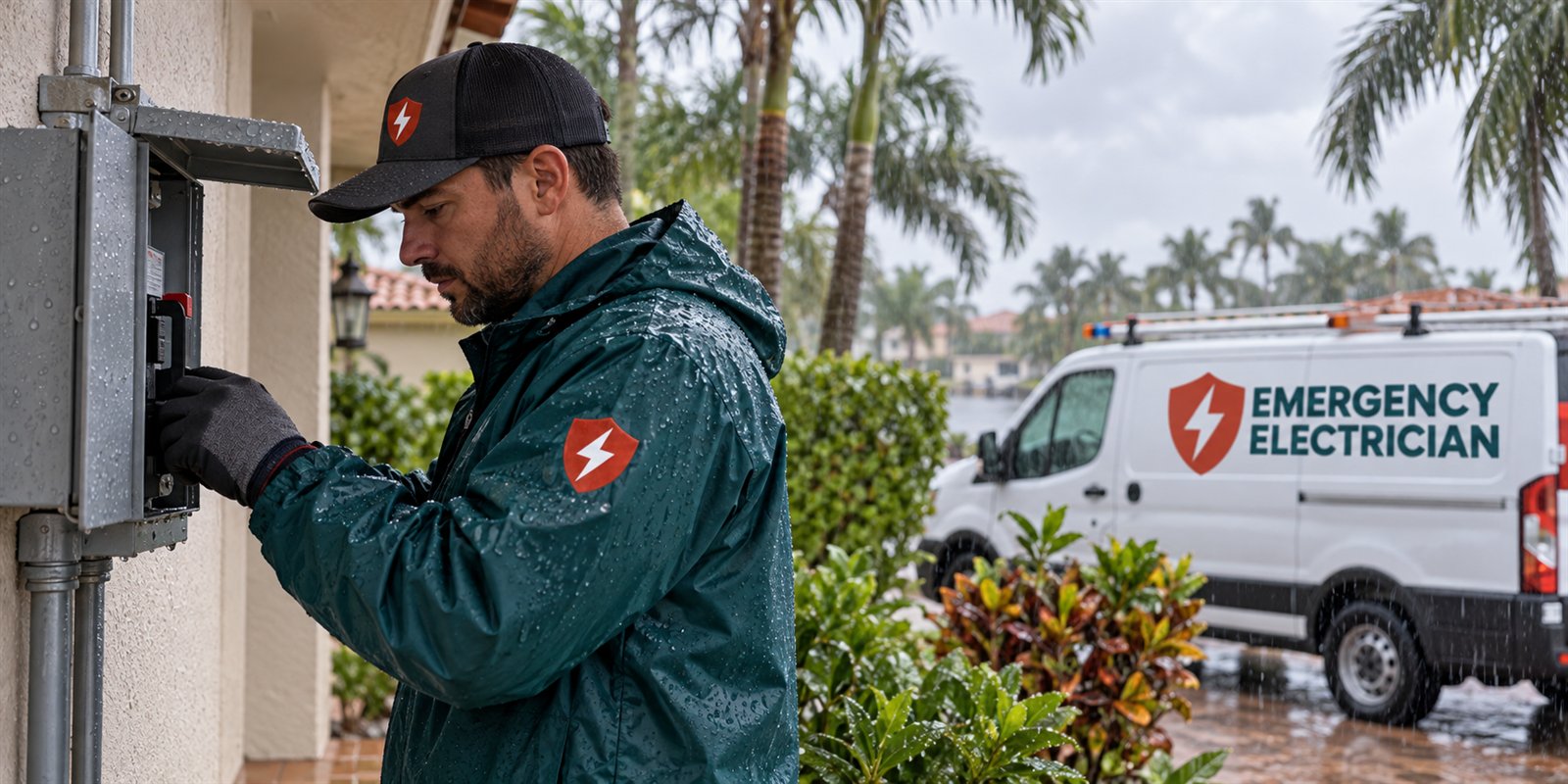
Triage first: danger before damage
If anyone is in danger, call 911 first. That means a person who has been shocked and is hurt, confused or unresponsive, someone trapped by water, visible flames or heavy smoke. If there is standing water in the home and power may still be on, stay out of the water, call the utility to disconnect service and call 911 if anyone is at risk. Seawater is highly conductive, so the shock hazard in a surge-flooded house is especially serious.
A downed or sagging line near surge water is also a major hazard. Stay well back, keep others away and call 911 and the utility. Do not touch a fence, a vehicle, a railing or any water that might be in contact with a line. After a surge, debris can hide wires.
This page is about understanding the damage once the immediate danger has passed and the utility has disconnected power. It does not teach you to inspect or repair electrical equipment, and you should not open panels or test devices yourself. If you have not yet read first electrical steps in a flooded home, start there.
- Anyone shocked, trapped, or flames or heavy smoke: 911 first.
- Standing seawater in the home with power possibly on: stay out, call the utility.
- Line down or hidden by debris: stay back, call 911 and the utility.
- Water gone and power disconnected: call an electrician for inspection.
Why saltwater is different from rain and freshwater flooding
Seawater contains a large amount of dissolved salt, which makes it a far better conductor than rainwater. When it contacts energized equipment, current spreads more readily. When it contacts de-energized equipment, it deposits salt that remains after the water evaporates. Both effects matter, but the second is why saltwater damage is so persistent.
Salt is hygroscopic, which means it attracts moisture from the air. A salt-coated terminal in a humid climate can stay damp for months, even in a house that has been dried out and aired. That damp salt film conducts current between terminals and corrodes metal. Equipment that looks clean and dry can be quietly deteriorating.
Rainwater leaves little residue when it dries. Freshwater flooding leaves silt and contaminants, which are a problem but are easier to wash out. Saltwater leaves a thin crystalline film that works its way into joints, threads and crevices, where it is hard to see and hard to remove. That is why many technicians treat saltwater exposure as a stronger case for replacement than other flooding.
How salt attacks metal, insulation and connections
Salt accelerates corrosion on nearly every metal used in electrical systems. Copper conductors, aluminum conductors, steel enclosures, zinc-plated screws, brass terminals and silver contacts all suffer. The corrosion products are often poor conductors, which raises resistance at connections, and the added resistance produces heat. A connection that runs hot loosens, and a loose connection arcs.
The corrosion also creeps. In stranded copper wire, salt moisture can wick along the strands and under the insulation, corroding the conductor inside a jacket that looks perfect from the outside. In aluminum, the oxide layer can grow into the connection. In steel enclosures, rust can penetrate and weaken the box and its fasteners.
Insulation and plastics are affected in different ways. Salt residue on plastic surfaces provides a conductive path across what should be an insulator, so tracking can occur between terminals. Over time, the residue can also embrittle some insulation. The result is leakage current, nuisance breaker trips and, in the worst case, arcing and fire. Read what floodwater does to wiring for the shared mechanisms.
Why damage extends deep into the panel
People often judge the damage by the waterline. If the water reached six inches up the wall, they assume only equipment below that line was affected. With saltwater, that is not safe. Salt can travel up by wicking and by humidity, and salt-laden moisture in the air can corrode equipment that never touched the water.
A main panel that was only partly submerged may have salt on its lower breakers and bus connections, and salty air inside the enclosure can affect the upper parts too. Neutral and ground bars, which are bare metal, are especially prone to corrosion. Even a panel mounted above the waterline may have salt-laden humidity inside it, if the house was closed up in a hot, wet environment afterward.
A technician inspecting a surge-flooded home will usually look beyond the obvious waterline. They may check for salt deposits, test insulation and open the panel to inspect the bus and breakers. If there is salt contamination, replacement of the panel is a common outcome. See what a burned bus bar looks like to understand how failures show up later.
Meter bases, service entrances and the utility side
The meter base, the mast and the service entrance cables take the first hit in a surge. Seawater can enter the meter socket and the weatherhead, saturating the connections. Salt deposits inside the meter can cause arcing when power is restored. Meter sockets and service equipment are often replaced after a surge because the damage is hard to assess.
The utility has its own equipment to evaluate. Transformers, pad-mounted enclosures and underground cables in flooded areas can suffer damage, and utilities often need to inspect and clear them before restoring service. That is one reason power returns more slowly after a surge than after a wind event. It is also why you should not assume that the street being restored means your house is safe to energize.
For the customer-owned equipment, a technician will check the meter base, the service conductors, the grounding and the main disconnect. Storm damage to those parts is covered on the page about storm-damaged meters and masts, and the process of reconnection is described in the power company disconnect and reconnect process.
Appliances, HVAC and equipment with electronics
Air conditioners, heat pumps, water heaters, pool equipment, garage door openers, electric vehicle chargers and appliances with control boards are all vulnerable to salt. Circuit boards are especially so, because salt creates conductive bridges between closely spaced traces, and corrosion eats the traces. A board that was washed and dried may fail weeks later.
Outdoor air conditioning units are a frequent victim in coastal surge zones. Salt reaches the coil, the contactor, the capacitor and the control wiring. Even when the unit was not submerged, salt-laden spray and humidity can corrode terminals. Technicians will often replace controls and electrical components and check for refrigerant side damage separately.
Do not power up flood-exposed equipment to test it. A saltwater-affected motor or board can short, trip breakers or start a fire. The pages on storm-damaged AC and outdoor equipment and garage and EV electrical after a flood describe how these are usually handled.
Delayed failure: why problems appear weeks later
One of the hardest things about saltwater damage is the delay. A house can be dried, cleaned and re-energized, and appear fine, and then problems start months later: breakers that trip with no apparent cause, outlets that run warm, flickering lights, a burning smell near a panel, appliances that fail one by one. The cause is salt-driven corrosion that has been working in the background.
Humidity makes the delay shorter. In a coastal climate, salt-contaminated equipment absorbs moisture whenever the air is damp, and the corrosion continues. An air-conditioned house may slow it, but hidden spaces, such as wall cavities, attics and outdoor enclosures, are exposed.
If your home was reached by surge water and you notice any of these signs, tell the electrician about the surge, even if the event was some time ago. It changes how the technician thinks about the cause. Do not assume it is a coincidence, and do not keep resetting a breaker that trips. See warning signs that come before an outage for symptoms to watch.
What a thorough assessment looks like
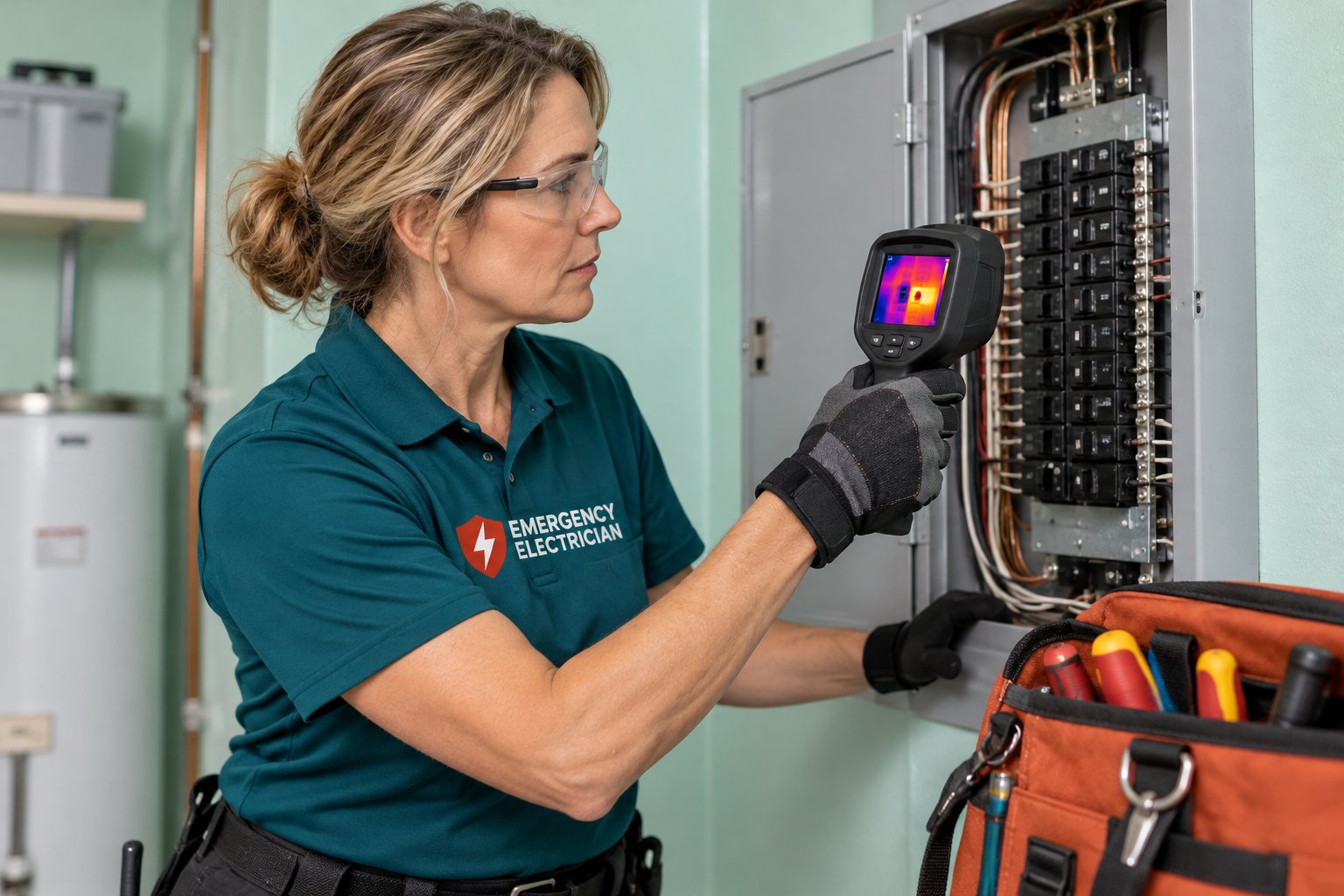
A good assessment after a surge starts with safety and then proceeds methodically. The technician confirms power is disconnected, inspects the meter and service equipment, opens the panel, looks for salt deposits, corrosion and waterlines, and tests the circuits. They may use an insulation resistance tester to look for leakage in wiring that cannot be seen.
They will check outlets, switches and fixtures at and above the waterline, because salt-laden air and splashes can reach higher than the water. They will inspect hard-wired appliances, outdoor equipment, the garage and any detached structures. They may recommend replacing components in bulk, because evaluating each one individually can be less reliable than replacing it.
Ask for a written findings report describing what was found, what was replaced and what remains. That document supports insurance claims and shows the local authority that the work was done properly. If the work needs a permit, ask who will pull it and how inspections will be scheduled. The page on rebuilding after a storm and electrical permits explains the usual process.
Coastal homes, barrier areas and recurring exposure
In South Florida, the homes most exposed to saltwater are those near the coast, along the Intracoastal Waterway and canals and on low barrier areas. Many have ground-floor garages, utility rooms and meter locations that sit low, because older buildings were designed before current flood planning. Pool equipment, air conditioning condensers and electrical panels are often placed at ground level for convenience, which leaves them first in line when surge arrives.
Even without a major storm, salt air wears these systems down. A home that has also experienced a surge may carry a double burden, with corrosion that began long before the storm and was then accelerated by it. A technician who knows the area will usually look at the age of the equipment, its enclosure type and its location, and may suggest improvements such as raising equipment, using corrosion-resistant enclosures or relocating a panel during a rebuild.
If you are deciding what to do after a surge, ask whether a replacement is a chance to improve location and protection, not just to restore what was there. Some changes require permits and design review, which is another reason to start the conversation early.
What you can do while you wait
Keep the power off, keep people and pets away from wet equipment and document everything. Photograph the waterline, salt crust, the panel, the meter, outlets, appliances and outdoor equipment. Mark wet outlets with tape. Keep a list of what was affected, with approximate ages, for insurance.
Do not try to wash electrical equipment with fresh water, and do not spray anything onto panels, outlets or meters. Washing can drive salt deeper and add moisture to equipment that cannot be dried properly. Do not use heaters or fans on wet circuits. Ventilate the house with open windows when it is safe, and keep wet materials accessible so the electrician can see wiring.
When you call an electrician, say that the water was seawater, how high it reached, how long it stayed, whether the utility has disconnected power and what equipment was affected. Quotes are given only by phone, and complicated jobs need an on-site visit. There is a service call charge, explained on the phone before dispatch. When you are ready to talk through your situation, call and the dispatcher will walk you through the next safe step.
- Keep power off and keep people and pets away from wet equipment.
- Photograph the waterline, salt crust, panel, meter and appliances.
- Do not wash or spray electrical equipment.
- Ventilate with open windows, not with wet electrical equipment.
- Call and say clearly that the water was seawater.
Questions people ask
Why is saltwater worse than regular flood water for electrical equipment?
Salt makes water highly conductive and leaves a residue that attracts moisture and corrodes metal for a long time after the water is gone. Equipment can look dry and clean yet develop leakage paths and hot connections. For that reason, saltwater exposure often leads to replacement rather than drying and reuse.
Can I rinse salt off outlets or the panel with fresh water?
No. Rinsing electrical equipment can drive salt deeper, add moisture and create shock and fire hazards. Leave it alone and let a qualified electrician decide what to replace. Keep the power off until the system has been inspected, and keep people and pets away from wet equipment.
My home was dried out and power came back, but breakers now trip. Why?
Delayed failure is common after saltwater exposure. Salt residue keeps absorbing humidity, corrosion continues and leakage develops between conductors. Do not keep resetting a tripping breaker. Tell the electrician the house had surge water, because that changes how they investigate. If there is a burning smell, call 911 first.
Does an air conditioner that was not submerged still need checking after a surge?
Yes. Salt-laden spray, wind-driven rain and humid air can reach the coil, contactor, capacitor and control wiring even without submersion. Do not run a unit that was in the surge zone before it is checked, because corrosion can cause shorts and tripped breakers.
How does pricing work for a post-surge assessment?
Quotes are given only by phone. Complicated jobs need an on-site visit before a quote can be given. There is a service call charge, and it is explained on the phone before dispatch so you know the terms up front. Have details ready, such as water depth, duration and which equipment was affected.
What should I photograph for insurance after a surge?
Photograph the waterline, salt crust on equipment, the meter, the panel with its door open if safe, outlets, appliances and outdoor units, with wide and close-up shots. Write down dates and times. Ask the electrician for a written findings report, and keep permits and inspection records with your claim documents.
Reading about "Saltwater Storm Surge and Electrical Damage"? Tell us what stopped working and when. We will say what an electrician would check first, and quotes are given by phone when the job can be described.
Related pages
- Flood and Wiring: How floodwater damages wiring, breakers, outlets and panels: corrosion, contamination, trapped moisture, and why wet devices are replaced instead of dried.
- Flood First Steps: What to do about electricity in a flooded home: stay out of water near power, how the utility disconnect works and why inspection comes before power returns.
- Mast and Meter: Why damaged meter sockets, masts and weatherheads must be repaired by an electrician before the utility reconnects, and how the process usually works.
- Outdoor Equipment: Debris, surge and water can wreck an outdoor AC condenser, disconnect or pool equipment. See what is safe to check, what to leave alone and what a tech tests.
- Rebuild Permits: How storm-damage electrical repairs move through municipal permitting and inspection in general terms, and what to ask before work starts on your home.
- Tree on House: A tree on the house can hide damage to attic wiring, fixtures and the service. Learn the hazards, the safe first steps, and what an electrician inspects.
Why cleaning with fresh water and fans does not finish the job
After saltwater reaches electrical equipment, an obvious reaction is to rinse and dry it. Unfortunately, rinsing and drying rarely solves the problem. Salt dissolves in water and is carried into tight spaces, such as the interior of a breaker, a terminal block or the sheath of a cable. When the water evaporates, salt crystals remain and attract moisture from the humid air, which means the equipment can become damp and conductive again without a new flood. This is one of the reasons a unit can look clean and dry yet still pose a hazard.
Mechanisms are the biggest concern. Breakers, relays, contactors and switches have springs, contacts and latches that must move freely. Salt deposits cause sticking, uneven contact and heating. Circuit boards in appliances develop slow corrosion that attacks traces and solder joints. Even if a device runs briefly after cleaning, it may fail later. A technician evaluating the system looks at what can be cleaned and what cannot, and the answer for sealed or internal parts is usually replacement, not scrubbing. The visible condition of a part is a poor guide to its internal condition after saltwater exposure, which is why testing matters.
You can help by avoiding well-meaning shortcuts. Do not spray cleaners or lubricants into equipment, do not power up wet devices to test them and do not use compressed air to blow salt deeper into openings. Keep things as they are, photograph them and wait for a professional assessment. Call us and describe what was exposed and for how long, and we will explain what the technician will inspect and confirm availability. The scope and any quote are explained before work begins, with realistic discussion of what can and cannot be saved.