
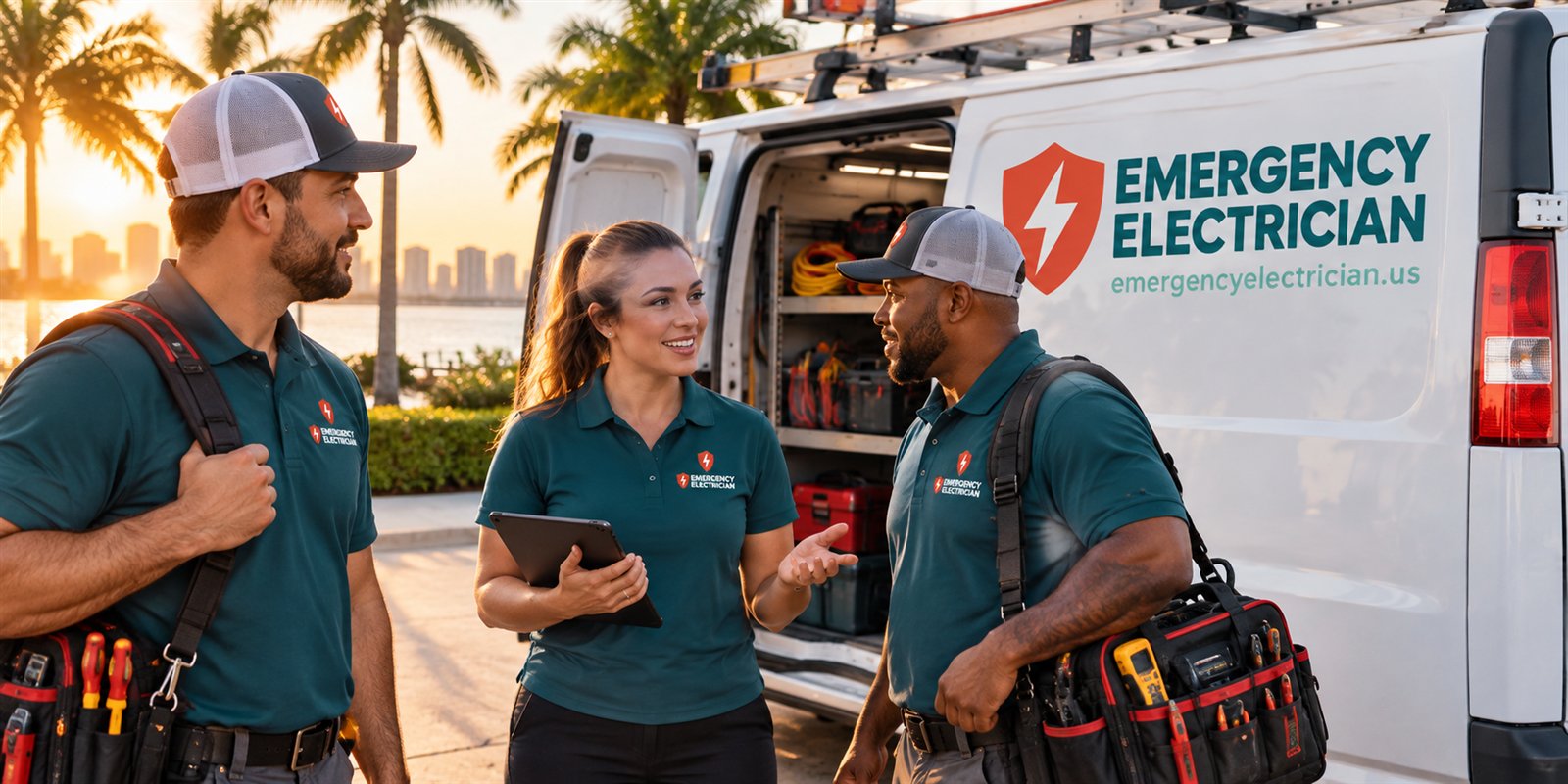
How building type shapes electrical emergencies in Lauderhill
A large share of Lauderhill's housing is in condominium and apartment communities, many of them laid out as clusters of two and three-story buildings around parking areas, pools and lakes. Many were built during the growth of western Broward County in the 1970s and 1980s, and they carry the electrical design of that time: meter banks on an exterior wall or in a utility room, a panel in each unit, and shared electrical rooms and landscape and parking lighting maintained by an association.
That structure changes how an emergency unfolds. In a single-family house, one household owns everything from the meter to the last outlet. In a multi-unit building, the line between what belongs to you and what belongs to the association, the landlord or the utility runs through the walls. A tripped breaker in your own panel is yours to handle, while a problem in the meter bank, the feeder cables or the building's main disconnect is a shared one. Knowing which one you have saves time on the phone.
The first questions are always the same: is anyone in danger, and what exactly is happening? If there is smoke, flame, a burning smell in a hallway or electrical room, a person who has been shocked or water in electrical equipment, call 911 first. After that, the questions are about scope: is it only my unit, my floor, my building or the whole community? The answers point toward the right party to call and the right information to give.
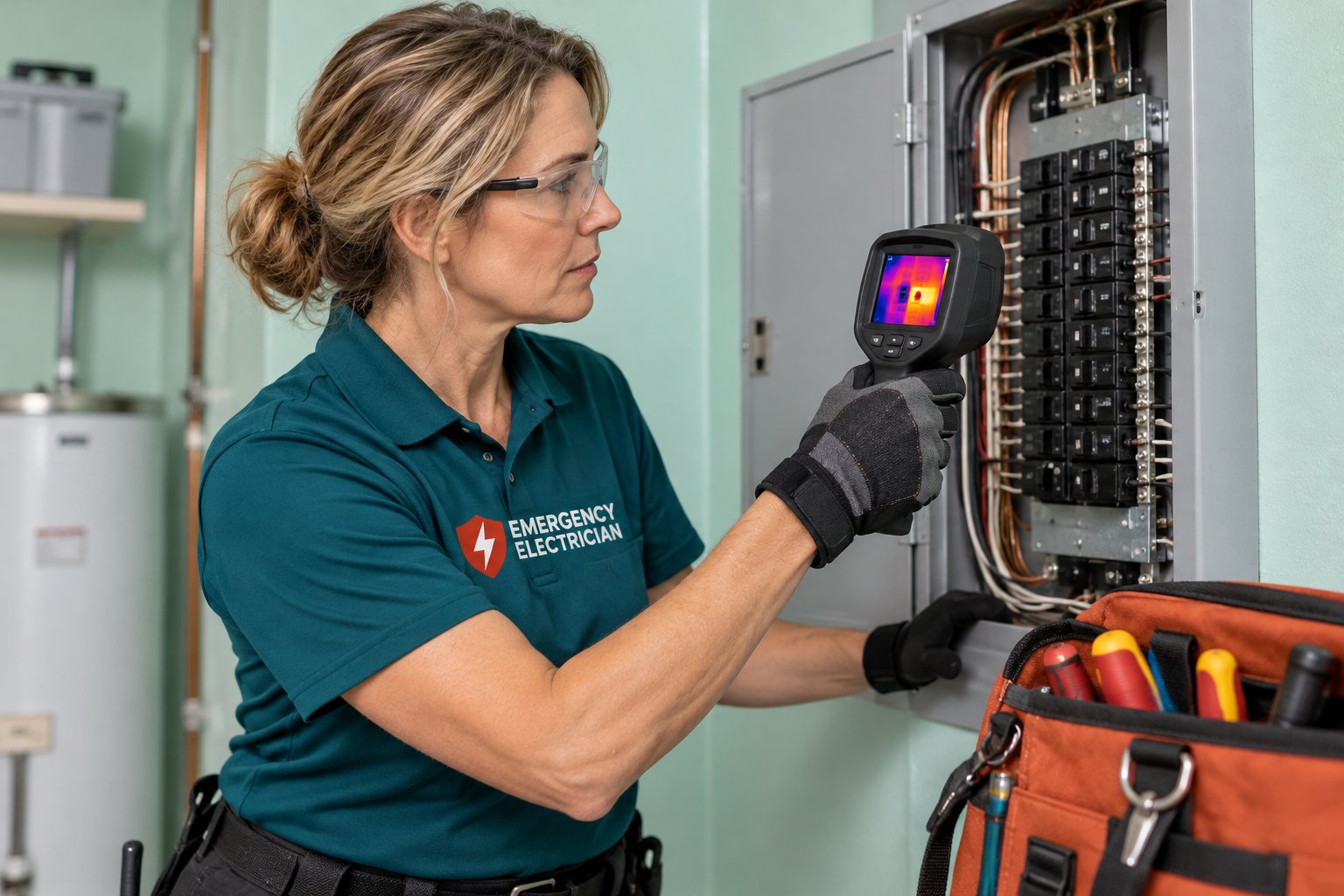
Is it only my unit? A quick sort
Before calling anyone, you can often sort the problem with a few observations that do not require touching any equipment. Look at whether neighbors have lights on, whether hallway and stairwell lights are working and whether the parking lot lights are on. Check your own panel from a safe distance, if you can reach it without standing in water, and see whether any breaker has moved to the off or middle position. If only your unit is dark and the breakers look normal, the issue may be at the meter or on the feed to your unit.
If the whole building is dark, the cause may be at the building's main disconnect or at the utility. If the whole community is dark, the likely cause is at the utility, and the utility's outage reporting is the right channel. In either case, do not open meter bank covers, do not touch the disconnects, and do not try to reset anything in a shared electrical room that you are not authorized to enter.
A few patterns deserve attention. Power that returns at lower voltage, lights that dim and brighten, appliances that run oddly or lights that are far too bright can point to a failing neutral in the feed to the building, which is covered on the page about loose neutral symptoms. A unit with half its outlets dead and half alive may have lost one leg of its supply, as described on half the house has no power. In both cases, tell the manager as well as the electrician.
- Neighbors and hallways are lit but your unit is dark: look at your own panel first
- Your whole floor or building is dark: report to management and the building's electrician
- The whole community is dark: likely the utility, so report the outage to them
- Lights very bright or very dim, or half your outlets dead: possible neutral or leg problem
- Smoke, burning smell, hot meter bank or water in an electrical room: call 911 first
Who is responsible for what
Responsibility in a condominium depends on the community's governing documents, and in a rental it depends on the lease and the landlord. In many communities, equipment inside the unit, from the unit's panel to the outlets and fixtures, is the owner's responsibility, while the building's common electrical elements, such as the meter banks, feeders, common-area lighting and shared rooms, belong to the association. In a rental, the landlord is normally responsible for the building and often for the unit's systems, but the details vary.
You do not need to settle the question before calling about a safety issue. A technician can make a hazard safe and the question of who pays can be sorted afterward. What you do need is to report the problem to the right party as soon as possible, in writing as well as by phone, so that there is a record. The pages on who to call when a condo unit loses power and tenant and landlord power responsibility explain how this commonly works.
If you suspect a shared problem, such as a hot meter bank, a buzzing electrical room or a damaged feeder, tell the management office and the association immediately. They may have an emergency contact or a preferred contractor, and they may need to restrict access to the area. Do not enter locked electrical rooms or climb on meter structures.
Shared electrical rooms and the fire risk they carry
In many older buildings, a ground-floor or exterior electrical room holds the meter bank, the main disconnects and sometimes the building's feeder panels. These rooms are often used for storage, and they can fill with boxes, paint, cleaning supplies and other combustibles. A loose connection or overloaded equipment in such a room can start a fire with plenty of fuel nearby, and a fire there can spread to the whole building.
Warning signs include a burning smell in a hallway or stairwell, a buzzing or humming from the room, a hot door or wall, discolored meters, smoke or haze, and lights that flicker across several units at the same time. Any of these is a reason to call 911 and to alert neighbors. The page on condo electrical room fire risk describes the conditions that make these rooms dangerous.
Residents should never store items in electrical rooms or in front of panels, and should report any room that has been left unlocked or used for storage. Managers should keep the room clear and arrange periodic inspections by a qualified contractor. After an incident, a written findings report helps the association decide on repairs.
Older building wiring: what to watch for
Buildings from the 1970s and 1980s may contain wiring and equipment that is now at or near the end of its design life. Some buildings have aluminum branch wiring, which expands and contracts differently from copper and can loosen at outlets and switches. Others have panels from brands with known issues, and some have outlets and switches that have been replaced in a piecemeal way. Many units were renovated at different times by different owners, with different standards of workmanship.
Warning signs include outlets that are warm, discolored or loose, switches that feel hot, lights that flicker, a smell of hot plastic, a panel that buzzes and breakers that trip for no obvious reason. Do not ignore these signs because the building is old and things have always been this way. The page on urgent aluminum wiring failure explains one common source of trouble, and the guide on older home electrical red flags lists others.
If you are a renter, report the signs to your landlord in writing, and keep a copy. If you are an owner, tell your association if the problem seems to originate outside your unit. Either way, if you see smoke, flame or sparks, or if anyone has been shocked, call 911 first.
Heat, humidity and storms in a South Florida community
Lauderhill shares the climate of the rest of Broward County, with hot, humid summers, intense afternoon storms and a hurricane season that brings wind, rain and long outages. Air conditioning in apartments and condos runs for long hours, and units that are old or undersized can draw high current and stress their circuits. Exterior disconnects, balcony outlets and common-area lighting are exposed to rain and sprinklers.
After storms, buildings may see tripped breakers, damaged meters, water in utility rooms or garages and surge damage to electronics. Flooded ground-floor units and parking areas bring the added hazard of water around electrical equipment. The pages on after-storm power restoration safety and power returns and breaker trips describe what to expect and what to avoid when power comes back.
In a community with many residents, an extended outage also raises practical issues: elevators, fire alarm panels, pumps, gate operators, emergency lighting and refrigeration. Residents who rely on powered medical equipment should have a plan, as covered in the page on extended outage food and medical power.
Common-area failures: lighting, gates, pumps and elevators
Beyond the units themselves, large communities depend on shared electrical systems: parking lot and walkway lighting, stairwell lighting, exit signs and emergency lights, gate operators, water pumps, elevators, pool equipment and clubhouse power. A failure in any of these can be a safety issue in its own right, such as dark stairs or a gate that will not open for emergency vehicles.
Residents who notice a failure should report it to management at once, with specifics: which light or device, where and since when. If a gate fails closed or a stairwell is dark, say so, because these are access and safety problems. The page on emergency lighting and exit sign failure describes why those devices matter and what repairs involve.
Associations should keep an updated list of electrical contacts and shutoff locations, and should keep an after-hours number for residents. When a technician arrives for a common-area fault, they will need access to electrical rooms and panels, and a representative who can authorize work. Delays at that step are common and avoidable.
What to do first, and what to avoid
If there is fire, smoke, a person shocked or active sparking, call 911, leave the area and alert neighbors by knocking on doors and, if safe, pulling the fire alarm. Do not use elevators in a building where there is a fire or an electrical emergency. If there is no immediate danger, stay clear of damaged equipment, switch off the affected circuit in your own unit if it is dry and easy to reach, and call.
Avoid touching meter banks, opening shared panels, resetting breakers in shared rooms or standing in water near any electrical equipment. Avoid using extension cords to run appliances from a neighbor's unit during an outage, because that spreads load onto circuits that are not designed for it. Do not use a generator inside a unit, on a balcony or near a window, because of carbon monoxide.
Take photos of what you see from a safe distance, note times and report to management in writing. If you are in a rental, keep copies of your communication. The guides on photographing damage before repairs and renters and electrical emergencies give practical steps.
What a visit looks like and what to prepare
On the phone, the dispatcher asks whether anyone is in danger, what you see, hear or smell, which unit and building you are in, and who controls access. Quotes for simple jobs are given by phone. Complicated jobs need an on-site visit before a quote can be given, and there is a service call charge that is explained on the phone before dispatch. No dollar amounts are listed on this site, because each situation differs.
On arrival, the technician confirms power is off where needed, finds the source of the fault and makes the situation safe. If the problem lies in shared equipment, they may need the manager's authorization and access to locked rooms. They will explain what they found and what is recommended, and can provide a written findings report on request.
To prepare, arrange access to the unit, the meter area and the electrical room if needed, give the technician the manager's contact, clear a path to your panel and keep pets away. Call now and describe what is happening and where, and the dispatcher will guide the next steps.
Questions people ask
My condo lost power but the hallway lights are on. What should I check?
Look at your own panel from a safe position, without standing in water, and see whether any breaker has tripped. If the breakers look normal and your whole unit is dark, the problem may be at the meter or on the feed to your unit. Tell management and call an electrician. Do not open meter bank covers.
Who pays for an electrical repair in a rental unit?
It depends on the lease and the landlord's responsibilities, which vary. Do not delay a safety call over this question. A technician can make a hazard safe, and responsibility can be sorted afterward. Report the problem to your landlord in writing and keep copies of messages and photos.
There is a burning smell in our hallway near the electrical room. What now?
Treat it as a possible fire. Call 911, alert neighbors, leave the building and do not use the elevator. Do not open the electrical room. After the fire department has made the area safe, the association should arrange an electrician to inspect the room and equipment.
Can I plug my fridge into a neighbor's unit during an outage?
Avoid long extension cords between units, because they can overload circuits and create trip and heat hazards. If a medical device or food storage is at risk, tell management and call for help rather than improvising. Generators must never be run inside a unit, on a balcony or near windows because of carbon monoxide.
Half of my outlets work and half do not. Is that an emergency?
It can indicate a lost leg or a loose neutral in the supply, which can cause voltage problems for devices. Reduce use of sensitive electronics, avoid running large appliances and call promptly. Report it to management as well, since the cause may be in shared equipment.
How does pricing work for an emergency visit?
Quotes for simple jobs are given by phone. Complicated jobs need an on-site visit before a quote can be given. There is a service call charge, and it is explained on the phone before dispatch. This site lists no dollar amounts because each situation differs.
If "Emergency Electrical Help in Lauderhill" matches what is happening, call and describe it plainly: the room, the breaker, any burning smell or tripped circuit. We explain what the repair would involve before a visit is set.
Related pages
- Sunrise: Emergency electrical triage for Sunrise: active adult communities, condo buildings and shared electrical rooms. Learn who to call first and who owns it.
- Plantation: Emergency electrical triage for Plantation: established ranch homes, aging panels and decades of added room loads. Learn who to call first and what to expect.
- Condo Emergency: Board members and managers: a call order for condo electrical emergencies, who handles shared rooms, what residents report, and what to document afterward.
- Electrical Room Risk: Managers: what to watch for in condo meter stacks and riser rooms, which signs mean call 911, which mean call an electrician, and how to keep rooms safe.
- Renters: What a renter should do in an electrical emergency: safety first, how to alert the landlord, what to document, and when to call an electrician yourself.
Helping a tenant, owner and board get on the same page
In a multifamily building, an electrical problem often involves three groups at once: the person living in the unit, the owner of the unit or building, and a board or manager who controls shared systems. Delay usually comes from confusion about who can authorize what, not from the repair itself. Before a technician starts, it helps to know who has the authority to approve entry and the work, and who is paying for it. Settling that early prevents the awkward pause that happens when the problem is found but nobody can say yes.
A simple way to prepare is to write a short summary: which unit, what happened, when it started, what you have already tried, and whether neighbors report the same issue. Send it to the manager or owner in writing so the timeline is clear. Staying reachable by phone during this time lets the technician ask a quick question without losing momentum. The technician can then explain findings in plain terms, separating what sits inside the unit from what belongs to the shared equipment, and you can pass that explanation along without translating technical jargon.
If the cause is outside your unit, your best move is to document it with photos and dates and let the responsible party decide how to proceed. If it is inside, the scope is explained and you decide whether to go ahead. Either way, nothing is done without that conversation, and you are never asked to approve work you do not understand. Keep copies of every message you send and receive. Where several people share responsibility for the property, agreeing on one contact person avoids mixed messages. Call us to confirm availability and describe your situation.