
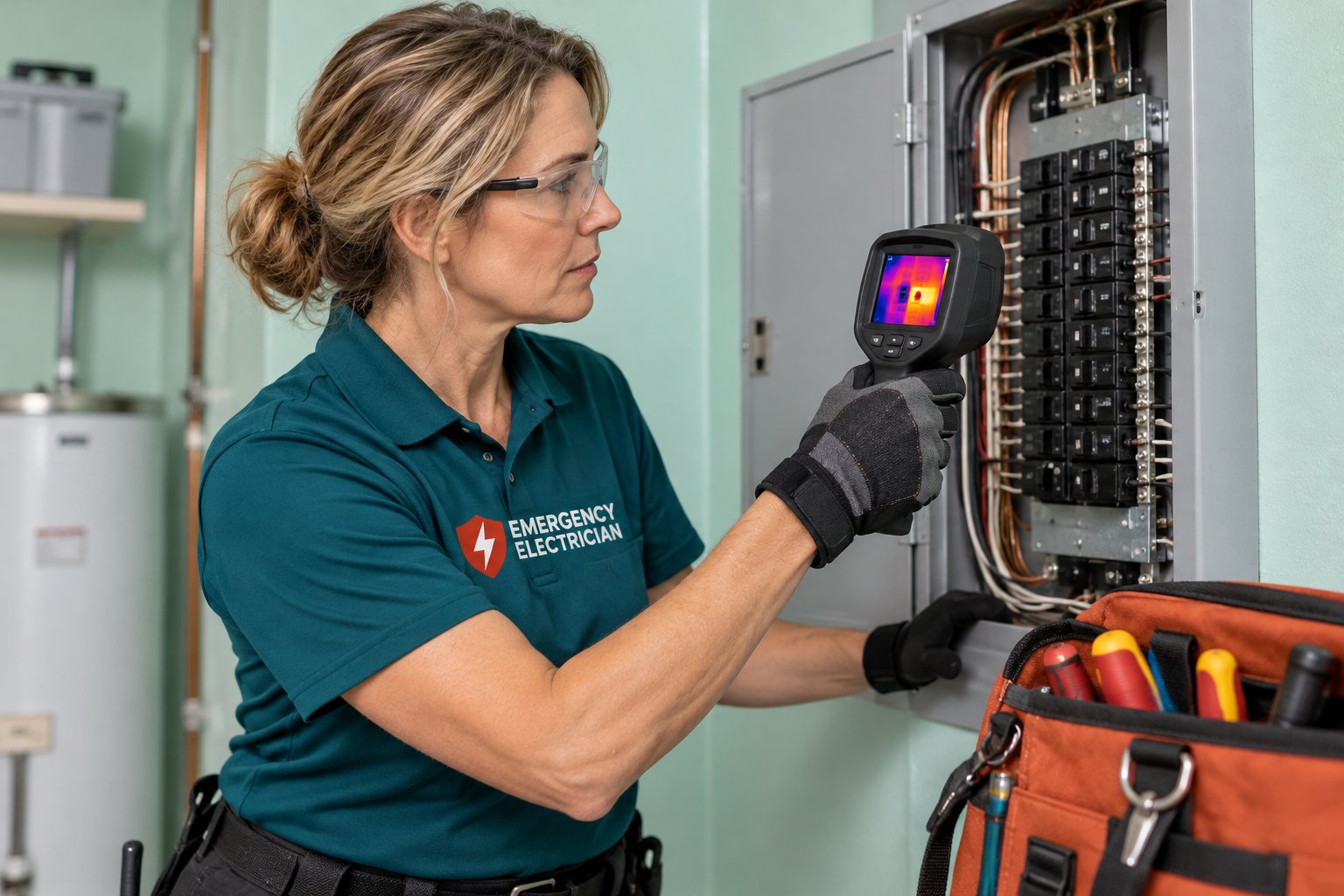
Why solar and battery faults are not like other electrical faults
In an ordinary house, turning off the main breaker removes power from nearly everything inside. In a house with solar panels, an inverter and possibly a battery, the picture is different. The roof panels produce direct current whenever the sun is on them, and they cannot be switched off like a lamp. The inverter converts that current to the type the house uses, and a battery can supply power at the same time as the utility, or on its own when the grid is down.
That means a fault can have two or three sources feeding it. A burning smell at the inverter may continue even with the utility disconnected, because the panels still send current down the roof wiring in daylight. A battery enclosure can hold stored energy long after every switch has been turned off. These features are what make the system useful, and they are the reason this page takes a cautious tone.
South Florida homes with solar systems experience a particular set of stresses: intense sun, heat in garages and attics where inverters sit, humidity, lightning-prone summer afternoons, salt air near the coast and the repeated wet-dry cycles of the rainy season. Equipment is designed for these conditions, but connections loosen, seals age and components fail, and a system that has worked quietly for a long time can show a fault with little warning.
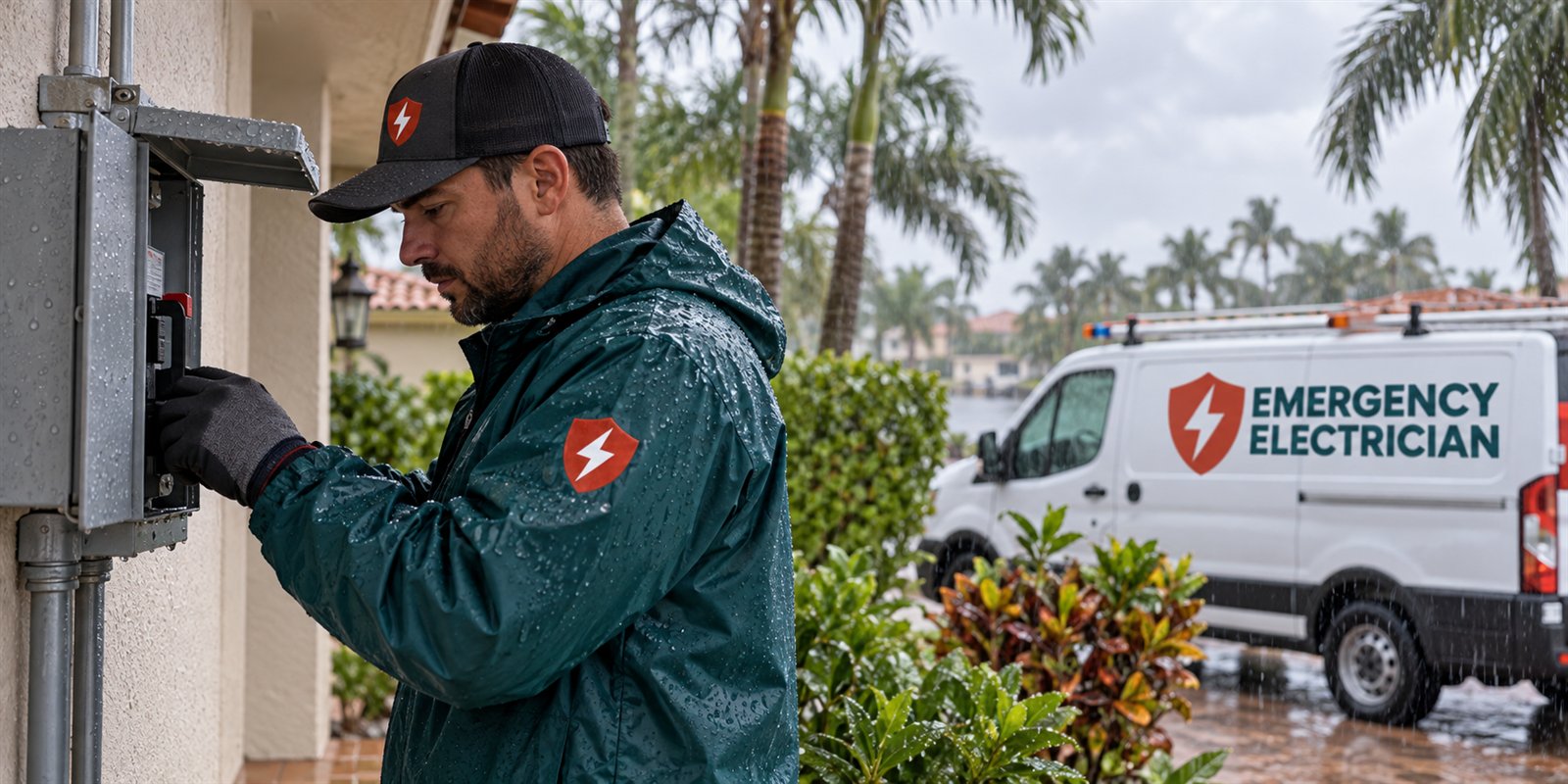
What counts as a fault, a warning and an emergency
Not every blinking light is a crisis. Inverters and battery systems show a range of messages. Some are simple notices, such as the grid being down or the system starting up in the morning. Others are warnings, such as a communication loss or a ground fault alert. A few are protective shutdowns that the equipment performs to keep itself and the house safe. An error light that appears once and clears is a different situation from one that stays on or returns daily.
The line between a fault and an emergency is physical evidence. Heat, smell, smoke, noise, swelling, leaking fluid and discoloration are emergency signs. An error message alone, with a cool enclosure and no smell, is usually an urgent service issue and not a fire call. Photograph the display and write down the message, because the technician and the manufacturer's support line will ask for it.
- Emergency: smoke, flame, popping or crackling sounds, a swollen or leaking battery, a sharp chemical or hot plastic smell
- Emergency: an inverter or battery enclosure too hot to touch, or discolored by heat
- Urgent: a ground fault, arc fault or isolation error that stays on
- Urgent: the system trips the main or backup breaker when it starts
- Urgent: a fault message together with lights flickering or a tingle from metal parts
- Service issue: a communication error, a monitoring outage or a one-time error that cleared
What to do right away if you see smoke, heat or a strong smell
If you see flames or smoke from the inverter, the battery, the panels or the wiring on the roof, call 911, get everyone out of the house and wait outside. Tell the dispatcher that the home has solar panels and a battery system so that firefighters know there may be a power source that cannot be shut off at the meter. Do not go back in to switch off equipment, and do not use water on a battery fire or a live solar array.
If there is a strong smell but no visible flame, treat it as an active fault. Move everyone out of the garage, utility room or area around the equipment, keep pets away and call. A battery that is overheating can release fumes and can progress quickly. A hot-plastic or sharp chemical odor near the battery is a reason to call 911 first and an electrician second.
Do not touch an enclosure that is hot, swollen or leaking. Do not try to move a battery. Do not open covers, and do not try to disconnect cables. Do not connect a hose or spray anything on the equipment. The goal is distance and a clear call. When firefighters arrive, tell them where the inverter, the battery and the rapid shutdown switch are located, if you know.
Shutdown switches: what is safe and what is not
Most solar systems have more than one switch: an AC disconnect near the inverter or meter, a DC disconnect on the inverter, a rapid shutdown device or switch on the roof or near the service equipment, a battery disconnect, and the breakers in the main panel and any backup panel. These exist so that crews and technicians can reduce hazards, but each has limits. A rapid shutdown reduces voltage on the roof wiring, but it does not necessarily remove all voltage from the panels in sunlight.
If the equipment is cool, dry and showing no smell, and you know where the AC disconnect for the system is and it is easily reachable, turning that disconnect off can be a reasonable step while you wait for a technician. If any switch is hot, scorched or hard to reach, leave it alone. Never open an enclosure to reach a switch, and never operate a DC disconnect under load unless you are trained to. In a hurricane or flood, do not go near the equipment at all.
Shutting off the utility main alone does not stop the solar or the battery from feeding the house. Know that before you assume the house is dead. For that reason, a technician will treat a solar home as live from more than one direction until all sources have been isolated and checked. The page on finding your main breaker is helpful for the utility side, but it is only part of the picture here.
What never to do with a faulty solar or battery system
Do not climb onto the roof to look at panels or wiring. Panels produce current in daylight, wires may be damaged, and a fall is a risk on its own. Do not pull wires from the inverter, do not open the battery, and do not try to reset a protective shutdown repeatedly. Do not hose off a smoking enclosure.
Do not use a generator connected to the house wiring while the solar or battery system is in a fault state. Backfeeding, where electricity flows out of the house to the lines outside, is a danger to utility workers and neighbors. Even without a generator, a solar system with a failed anti-islanding feature can feed power into a downed line. The page on generator backfeed risk explains the principle.
Do not ignore a repeated fault because the system still produces power. A ground fault or arc fault warning means current may be going where it should not, and some of these faults are a leading cause of fires in rooftop wiring. They deserve a visit even when everything else seems normal.
Heat, humidity and lightning: what stresses these systems in Florida
Inverters sit in hot garages, on exterior walls in direct sun, or in utility closets without much airflow. Heat shortens component life, and many inverters reduce their output to protect themselves. A system that loses output on summer afternoons and trips on hot days may have a ventilation problem, a failing fan or a loosened connection that heats under load.
Humidity and rain affect connectors on the roof and at the enclosure. Moisture in a connector can create a ground fault or corrosion that heats a joint. After a heavy rain, a ground fault message that clears as the system dries out is a classic sign of this. It is worth investigating even if it clears, because corrosion keeps going.
Lightning strikes near a home can send surges into the panels and the inverter through roof wiring. Even a near-miss can damage electronics without leaving a visible mark. The pages on lightning strike house damage and electronics after a lightning near miss describe what to watch for. A solar home that has had a nearby strike should have the inverter, battery and surge protection checked.
Batteries: why they need their own caution
A home battery stores a lot of energy in a small space, and that energy does not go away when switches are turned off. Modern battery systems have built-in protections, but those protections can fail, and a battery that has been damaged by heat, flooding, impact or age may behave unpredictably. Typical warning signs include a swollen case, unusual noise, fluid or residue, a fan that runs constantly, a sharp smell and a battery management warning that persists.
If the battery is in a garage, keep cars and stored items away from it while you wait for help. Do not charge or discharge it manually. Do not use it as a power source during the fault. If the home lost power and the battery did not take over, or took over and then shut down with an error, note exactly what the display said and whether the grid light was on.
Battery systems also connect to other equipment, including a backup panel, a transfer device and sometimes a generator. Faults can appear at any of those points. The technician will check the entire chain, and in some cases the manufacturer's installer or support line will need to be involved for the battery itself. A qualified electrician can make the electrical side safe and tell you what comes next.
What the technician will check and what to prepare
A technician will begin by confirming that all sources are isolated, including the utility, the solar array and the battery. They will check the inverter, its enclosure and its connections for heat marks, loose terminals and moisture. They will check the rapid shutdown equipment, the disconnects, the grounding and the breakers that connect the system to the house panel. On the roof side, they may look at the conductors and connectors at accessible points, and they may recommend a roof access inspection by the original installer for array-level faults.
Some faults can be repaired on the electrical side, such as a failed breaker, a burned connection, a damaged cable, a ground fault in a conduit or a worn disconnect. Others involve the inverter, battery or panels themselves, which are the manufacturer's or installer's domain. The technician will tell you which parts they can repair and which need a claim with the maker or the installer's attention.
To prepare, have the display photo or error message, the inverter and battery make and model, the name of the installer if you know it, and a note of when the problem started and what the weather was. Clear the area around the equipment. Complicated jobs need an on-site visit, and the service call charge is explained on the phone before dispatch. Call now and describe the fault, the smell or heat you noticed, and the system layout, and the dispatcher will guide the next steps.
Questions people ask
If I turn off the main breaker, is the house completely dead?
Not necessarily. A home with solar panels or a battery can still have power from those sources, and panels produce current whenever the sun is on them. Shutting off the utility main removes the grid but may not remove the other sources. Treat the system as live until a qualified technician has isolated every source.
My inverter shows an error message but nothing seems hot. Is it an emergency?
Usually not a fire emergency, but it is worth prompt attention, especially for ground fault, arc fault or isolation errors. Photograph the display, write down the message and note the time. Call to report it. If you see smoke, smell burning, hear popping or find the enclosure hot, call 911 first.
Is it safe to switch off the AC disconnect next to the inverter?
If the equipment is cool, dry and showing no smell, and the disconnect is easy to reach, switching it off can reduce hazard while you wait. If anything is hot, scorched, wet or hard to reach, leave it alone and call. Never open enclosures or operate a DC disconnect under load unless you are trained.
My battery smells sharp or looks swollen. What should I do?
Treat it as an emergency. Move everyone away, keep pets and children out of the area and call 911, telling the dispatcher it is a home battery system. Do not touch or move the battery, and do not spray water on it. After the situation is safe, an electrician can make the electrical side safe.
Can I use a generator if my solar system is faulty?
Do not connect a generator to the house wiring while a solar or battery system is in a fault state, and never backfeed through an outlet. Backfeed can endanger utility workers and neighbors. A generator used with a proper transfer device is a different matter, and a qualified electrician can confirm the setup.
Who fixes the problem, an electrician or the solar installer?
Often both. A qualified electrician can handle the electrical side, such as breakers, disconnects, wiring and house connections, and can make the situation safe. Panels, inverters and batteries may fall under the installer or manufacturer. Tell the dispatcher what you know about the system, and the technician will explain which parts they can address.
Reading about "Solar Inverter or Home Battery Showing a Fault, Heat or Smell"? Tell us what stopped working and when. We will say what an electrician would check first, and quotes are given by phone when the job can be described.
Related pages
- Backfeed Danger: Plugging a generator into a wall outlet can send power back onto the utility lines. Learn why backfeeding is dangerous and what proper isolation involves.
- Burning Smell: A burning smell with no flames is still a warning. Learn how to choose between 911 and an urgent electrician call, and what to do while you wait.
- Surge Device Failed: A whole-house surge device with a red light, alarm or burn marks has done its job or failed. Learn what the indicator means and what to do after a big surge.
- Lightning Strike: A lightning strike on your house can leave hidden electrical damage and fire risk. Learn the safe first steps, the fire watch, and what gets inspected.
- Find Main Breaker: Know where your main breaker is before an emergency. Where to look in homes, condos and businesses, how to recognize it, and what never to touch or open.
- Warm Outlet: A warm, browned or melted outlet is a heat warning. Learn how to read the damage, what to unplug, when it is a same-day call, and what a technician checks.
Reading the inverter display and app before you call
Most inverters and home batteries report on themselves through a small screen, a row of indicator lights or a phone app. Before you call, write down exactly what you see: the color of each light, any numeric code, and the time the message first appeared. Take a photo from a comfortable distance rather than leaning in. A code that appears once and clears is a different story from one that returns every afternoon, and a technician can only separate the two if you have a record. Do not scroll through menus or press buttons to find more detail if the unit feels warm or smells odd.
The app can be misleading in one common way. It may show that the system is offline simply because the home internet router lost power or the wireless signal dropped, while the equipment itself is working normally. Checking whether other devices are online helps you tell a communication problem from a real fault. If the app and the physical display disagree, trust the physical display and mention both when you call. Avoid resetting the app, reinstalling it or changing account settings during an active fault, because that can erase the very event history a technician wants to read.
Keep a short written log beside the unit for a few days if the fault is intermittent. Note the weather, whether the air conditioning was running, whether a storm passed, and whether the house recently lost grid power. Patterns such as faults only on hot afternoons or only after a thunderstorm point toward very different causes. When you call, read the notes aloud in order. Clear, factual detail lets the person on the phone judge how urgent the situation is and what to prepare, and it saves time once the technician is standing in front of the equipment.
Where the roof, the wiring and the main panel meet
A solar installation is really three zones joined together. On the roof are the panels and their wiring, then comes the conversion equipment, usually an inverter on an outside wall or in a garage, and finally the connection into the main electrical panel. A fault in one zone can show up as a symptom in another. An inverter that reports a grounding problem may be reacting to damaged wiring under the panels, and a battery that will not charge may be responding to a condition on the grid side. That is why a thorough visit follows the whole path instead of stopping at the first device.
Work on the roof side carries its own hazard, because panels keep producing electricity whenever light reaches them, even when the house breaker is off. That is one reason a homeowner should never climb up to look at connectors or lift a panel. In Florida the combination of intense sun, sudden rain and a hot roof surface is hard on connectors and wire insulation over time. A technician approaches the roof zone only after confirming how the system can be isolated, and may separate the roof circuit from the equipment below before measuring anything.
At the panel end, the technician looks at the breaker that feeds the solar or battery equipment, the labels, the condition of the connections and any signs of heat. Discoloration, a rattling cover or a breaker that feels warm are all noted. The scope of work, including which zones need attention and why, is explained before work begins, so you know whether the issue is a single replaceable part or something that needs a wider plan. Ask questions at that point, since changes are easier to discuss before tools come out.