

Safety and triage come before protection planning
Protection planning is a calm-day task. If you are still dealing with the aftermath, the first jobs are safety jobs. Smoke, burning smells, heat in a wall, or anyone who feels unwell after the strike means a call to 911 and leaving the building. A tripped main breaker, a damaged mast or a pulled meter means keeping away from the equipment and arranging an inspection, with the utility involved where its equipment is affected.
Once the house has been inspected and made safe, it makes sense to think about what to do differently. Many people discover after a strike that they had a power strip on a desk and nothing else. The strip protected one device, and the rest of the house was bare. That experience is the usual starting point for a more complete plan.
Keep in mind that this page is general education. A technician who looks at your house can tell you what fits your service, your grounding, and your equipment. Quotes and specific recommendations are given by phone and, for larger jobs, after an on-site visit.
What a surge actually is, in plain terms
A surge is a brief rise in voltage above the normal level of the electrical system. It might last a fraction of a second, but it can be many times the normal voltage. Lightning is one cause, but not the only one. Utility switching, a failing neutral, a large motor starting up, or a downed line touching another can also create surges.
Electronics are built to run in a narrow voltage range. A surge can push voltage through a component's insulation, producing a tiny arc that destroys the part. Heavier equipment such as motors and heaters tolerates more, but repeated surges still shorten its life. The result is either an obvious failure or a slow decline.
The terms can be confusing, and the page on surge, spike and outage terms sorts them out. For our purposes, a surge protective device is a component that gives a surge a path to ground before it reaches the equipment it is protecting.
The layered idea: why one device is not enough
Electrical engineers talk about protecting a building in layers because no single device can handle everything. The first layer handles the largest events at the point where electricity enters the building. The second layer handles what leaks through and protects individual equipment. The third layer protects the data and communication lines. Under all of them is a grounding and bonding system that gives the energy somewhere to go.
A useful comparison is flood defense. A seawall takes the largest waves, drainage handles what gets past, and sump pumps handle what reaches the basement. No single measure keeps the building dry in every storm, but together they reduce what gets through. The same is true of surge protection.
This is why a plug-in strip alone, though helpful, is not a whole plan. A strip sees only what flows through its own outlet. It does not protect against a surge arriving through a coaxial cable, a surge that raises the ground voltage, or a surge that wrecks the air handler's control board on a hardwired circuit.
Layer one: protection at the service entrance
A whole-house surge protective device is installed at or near the main panel. It connects to the incoming power and gives large surges a path to ground before they spread through the house wiring. It is the layer that handles the strongest events and protects hardwired equipment that cannot be plugged into a strip, such as the air handler, the water heater, and the lighting circuits.
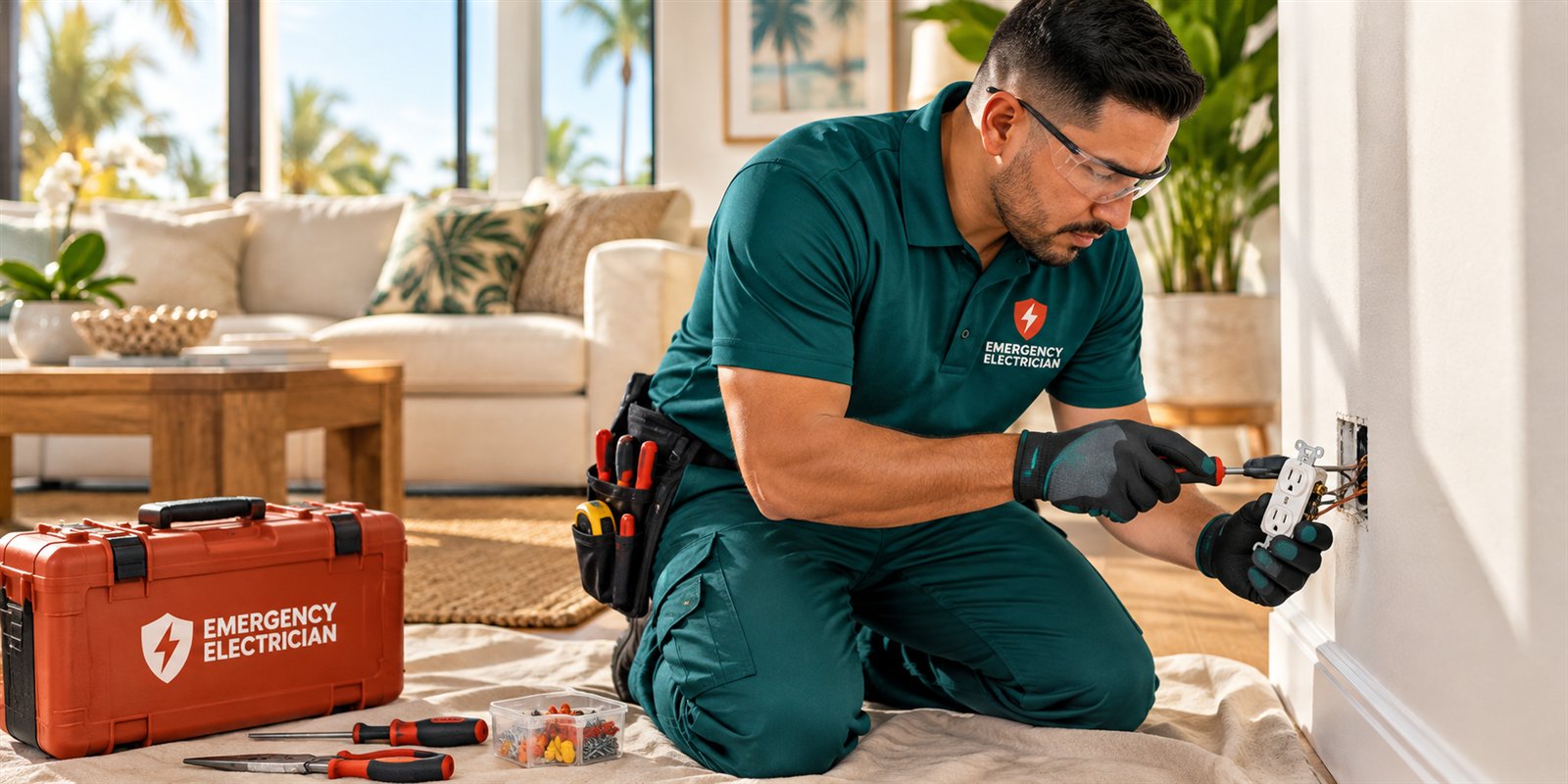
Installing one is electrical work inside the panel and should be done by a qualified electrician. The technician selects a device compatible with the service, connects it through a breaker or a dedicated connection with short leads, and verifies grounding. Lead length matters a lot, because long wires add impedance and reduce effectiveness. A device installed with long, looping conductors protects less than the same device installed neatly.
Most of these devices have an indicator showing their status, and they are designed to wear out by absorbing surges. After a major event, the indicator should be checked and the device replaced if it has failed. A device that has done its job once may no longer be protecting. See the page on a failed whole-house surge protector for what the signs look like.
Layer two: point-of-use protection
Point-of-use protectors are the familiar strips and outlet-mounted units. Their role is to catch the smaller surges that leak past the service device and the surges generated inside the house, such as when a large motor cycles. They are especially valuable for electronics with delicate chips: computers, televisions, audio systems, and network equipment.
Quality varies. A power strip that is only an extension with extra outlets provides no surge protection at all. Look for a clear statement of surge protection, a status light that shows whether the protection is active, and a rating on the label. Remember that these devices wear out, and a strip that has absorbed many surges may no longer protect even though it still passes power.
Do not daisy-chain strips and do not plug a strip into another strip. This overloads the first outlet and creates a fire risk. The page on extension cord and power strip limits covers the load rules that every strip user should know.
Layer three: data, cable and antenna lines
A big part of near-miss damage arrives by routes other than the power line. Cable television, satellite dishes, telephone lines, and Ethernet runs to outbuildings all provide paths. A surge that enters on a coaxial line and exits through the power cord of the television can destroy it, even if the power circuit has a good protector.
The idea is to protect each entry and to bond them together. Cable and satellite entries should be grounded at the point where they enter the building, and bonded to the same grounding system as the electrical service. This keeps the voltage differences between systems small, which is what actually destroys equipment.
Where a protector is added to a data line, it should be installed at the entry, with a short, direct path to the grounding point. A protector that is connected by a long wire or ground connection does little. A technician can inspect how the entries are grounded and bonded and tell you whether they match the electrical ground.
Grounding and bonding: the foundation
Protective devices work by diverting surge energy to ground, so they are only as good as the grounding they connect to. A corroded ground rod, a loose clamp, a broken conductor, or a missing bond between the gas, water, cable, and electrical systems weakens every layer above it.
In South Florida, humidity, salt air near the coast, and wet soil make corrosion a real concern. Ground clamps and connections at the meter, the panel, and the ground rod can deteriorate over time, and storms can disturb them. After a strike, a technician should visually inspect and test the grounding connections as part of the inspection.
Bonding means connecting metal systems together so that they rise and fall in voltage as one. When the cable shield, the water pipe, and the electrical ground are bonded, a surge raises all of them together and there is less difference across any piece of equipment. Improper bonding is a common finding in older homes and in buildings where utilities were added over the years.
Lightning rods and exterior protection systems
A lightning protection system, with air terminals on the roof, down conductors, and a grounding network, is a different category from surge protection. Its purpose is to carry a direct strike to ground without damaging the structure. It is sometimes installed on tall, exposed, or valuable buildings, and it requires specialized design and installation.
It is not a substitute for surge protection. A direct strike on a rod sends a large current into the ground, which can raise the ground voltage and induce surges in the building's wiring. Buildings with exterior systems still need surge protection inside, and bonding between the lightning system and the electrical grounding system is part of good design.
Whether such a system makes sense for a particular house is a question for a specialist, and it depends on the building, its height, its exposure, and the owner's priorities. A general electrician can tell you whether your situation is common enough to consider it and can refer you appropriately.
Equipment that deserves extra attention
Some equipment is both valuable and vulnerable. Air conditioner and air handler control boards, pool pumps and controllers, well pumps, medical equipment, home office computers, and security systems are good candidates for dedicated attention. A technician can suggest whether a hardwired protector at the equipment, or a circuit-level device, is appropriate.
Medical equipment deserves a separate note. If someone in the home relies on powered medical equipment, the surge protection plan should be discussed with the equipment provider, and the power plan should include what to do in a long outage. The page on power plans for medical equipment goes into that.
Generators and transfer equipment are another area. A standby generator has its own control electronics, and a poorly protected one may fail when it is needed most. A transfer switch can pass a surge from the utility into the house if it is not protected. These are details for a technician to review.
Older homes, rentals and condominiums
Older South Florida houses often have panels that were never designed with surge protection in mind, and some have limited space for an added device. Grounding in older buildings may rely on a water pipe or a single rod that has corroded over decades. A technician will look at whether the existing service can accept a protective device safely, or whether the panel itself is the larger concern. In some cases it is more sensible to address the panel first and add protection as part of that work.
In a rental, the building electrical system belongs to the owner, so a service-entrance device is a conversation with the landlord. What a tenant can do is use good point-of-use protection on personal equipment, unplug sensitive items during storms, and report damaged equipment promptly in writing. In a condominium, the meter bank and the main service are usually common elements, and the association may decide on protection there, while the owner decides about protection inside the unit.
Whatever the building type, ask who owns each part of the system before spending effort on it. Protection installed on equipment you do not control can be removed or lost when the property changes hands, while protection on your own equipment goes with you.
Questions to ask and how to prepare the call
When you call, describe the event and what failed, and ask what protection the technician would look at. Useful questions include: what does my service entrance look like, is there room for a protective device, what is the state of the grounding, how are the cable and phone entries bonded, and what should I do about sensitive equipment.
Be wary of anyone who promises that protection will prevent all damage. Honest installers talk about reducing risk, not eliminating it. Also be wary of anyone who pushes a complete replacement without showing you the evidence. The page on choosing an electrical contractor in a crisis has a checklist for judging that.
Ask about the service call charge and how scheduling works before you agree to dispatch. Quotes for protection work are given by phone, and larger or more complicated jobs need an on-site visit first. When you are ready, call and describe what happened. If you smell burning or see smoke at any point, call 911 first.
Questions people ask
Can any device make my house safe from lightning?
No. Nothing makes a house immune to lightning. Layered protection, with a service-entrance device, point-of-use protectors, protected data lines and sound grounding, reduces the damage a surge can do. An honest installer will describe it as reducing risk rather than eliminating it, and will explain what each layer does and does not cover.
Is a plug-in surge strip enough?
A good surge strip protects what is plugged into it, but it does not protect hardwired equipment, cable or satellite lines, or the ground connection. It is one layer. A whole-house device at the panel handles larger events and covers things like the air handler and water heater. Many homes use both, plus protection on data lines.
Do surge protective devices wear out?
Yes. They are designed to absorb surges, and each event uses up some of their capacity. After a major strike, a whole-house device may be spent even though it still looks normal. Check the status indicator and ask an electrician to confirm it is still protecting. A strip with a dead protection light should be replaced.
Why does grounding matter so much?
Protective devices work by sending surge energy to ground. If the ground is corroded, loose, or disconnected, the energy has nowhere to go and the protection fails. Bonding the electrical, cable and water systems also reduces voltage differences between them, which is what often destroys equipment. A technician can check these connections.
Does a lightning rod replace surge protection?
No. A lightning protection system carries a direct strike to ground, which protects the structure, but the strike can still induce surges in the wiring. Buildings with such systems still need surge protection inside. Whether a lightning rod makes sense for your home is a question for a specialist who can assess the building.
What should I ask when I call an electrician about this?
Ask what protection they would look at for your service, whether the grounding and bonding are sound, how cable and phone entries are handled, and how sensitive equipment should be protected. Ask about the service call charge and scheduling before dispatch. Quotes are given by phone, and larger jobs need an on-site visit first.
Reading about "Surge Protection After a Lightning Event"? Tell us what stopped working and when. We will say what an electrician would check first, and quotes are given by phone when the job can be described.
Related pages
- Lightning Strike: A lightning strike on your house can leave hidden electrical damage and fire risk. Learn the safe first steps, the fire watch, and what gets inspected.
- Nearby Lightning: Lightning hit nearby and now devices are dead. Learn how induced surges travel, which equipment fails first, and when the wiring needs an inspection.
- Surge or Generator: Surge protection and backup power solve different problems. Learn which one fits yours, how each is installed safely, and what to ask before dispatch.
- Surge Device Failed: A whole-house surge device with a red light, alarm or burn marks has done its job or failed. Learn what the indicator means and what to do after a big surge.
- Rebuild Permits: How storm-damage electrical repairs move through municipal permitting and inspection in general terms, and what to ask before work starts on your home.
- Saltwater Damage: Why storm surge saltwater damages electrical equipment differently than rain: salt residue, hidden corrosion in panels and how damage spreads over time.
Checking the house after a strike or a nearby flash
A lightning event can leave damage that is not obvious. After a close strike, walk through the house and note anything unusual: electronics that will not turn on, a router with blinking lights, smoke detectors that chirp, garage door openers that fail, a doorbell that is dead or an air conditioner that no longer starts. Look for scorch marks around outlets, a burnt smell near the panel and any tripped breakers. If you see smoke, flames or smell burning that does not fade, leave and call 911 first.
Be careful about what you touch. Do not handle damaged equipment while standing in water or on a wet floor, and avoid plugging in anything that seems affected. If a breaker will not reset, leave it off. Check outdoor equipment too, such as exterior lights, pool or irrigation controllers and the mast and meter area, from a safe distance. Note if trees near the house have splintered, since a strike may have traveled through roots or wiring in the ground and affected equipment some distance from the point of contact.
Record what you find with photographs and a list. Include dates, times, and the make and model of damaged electronics, since this helps with insurance discussions and with repair planning. Delayed failures are common, so keep watching for weeks after the event. Call us if you suspect the house wiring or panel was affected, and describe the symptoms. We will explain what an inspection involves and confirm availability. The scope and any quote are explained before work begins, and nothing here promises that a given protection will prevent all damage.