
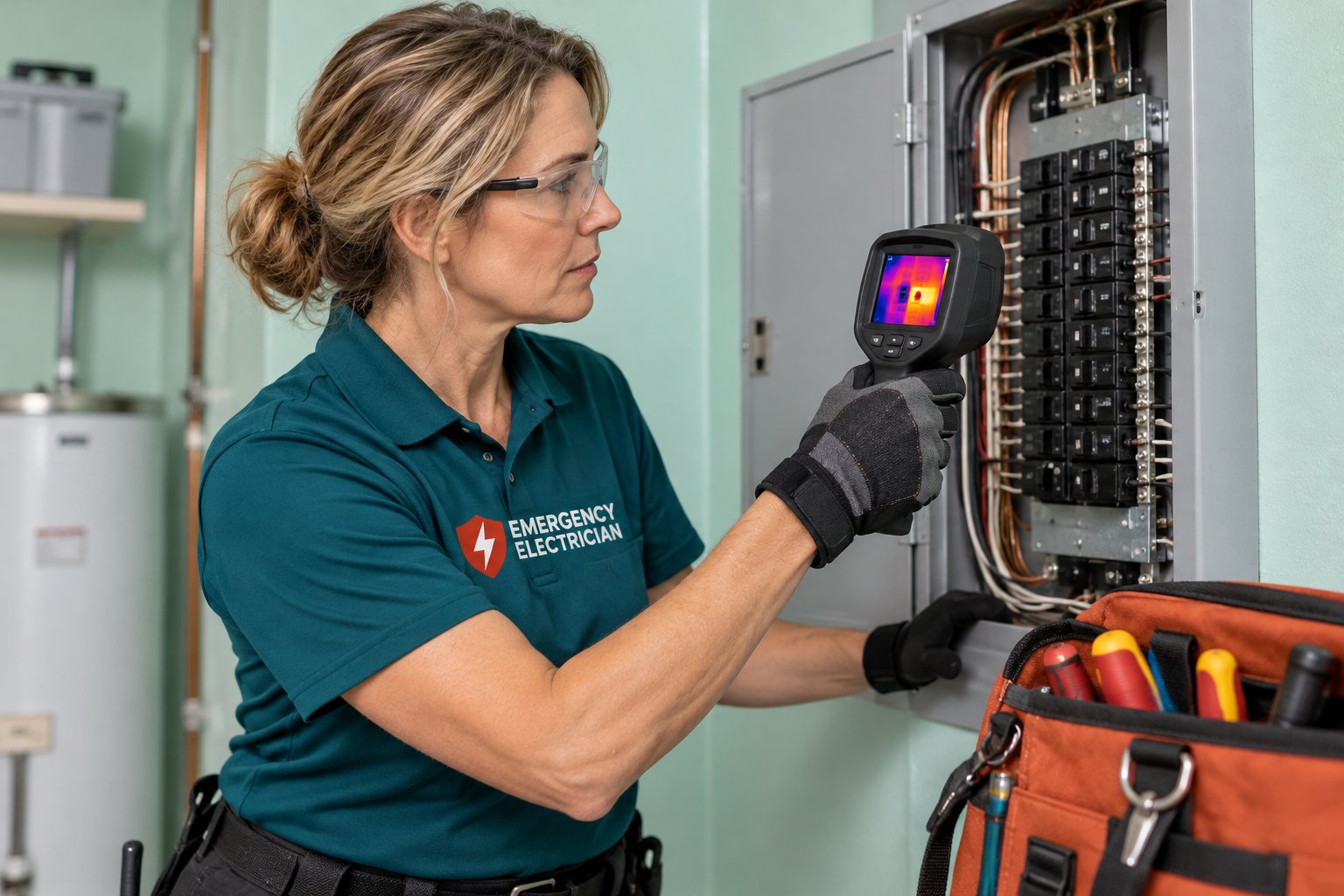
Triage first: the order of calls in Hollywood
If anyone is in danger, call 911 first. That means fire, heavy smoke, a person shocked and hurt, anyone unresponsive, or confusion, chest pain or trouble breathing after contact with electricity. Tell the dispatcher it is an electrical emergency, give the address and the unit or floor, and follow their instructions. Do not wait to see whether a smoking device settles down.
If a power line is down, sparking, sagging or tangled in a tree, stay far back and call 911 and the power company. Never touch a fence, a puddle, a vehicle or a tree in contact with a line. After a storm, a wet yard can carry current, so keep children and pets inside and away from fallen limbs and wires. A line that looks dead can come back to life when the utility restores service.
If nobody is in danger, but something is wrong at your property, such as a hot panel, a burning smell with no visible fire, a breaker that will not reset or half the home dark, call an emergency electrician. The dispatcher will ask safety questions, explain how the visit works and advise you on what to do and not do while you wait.
- Fire, smoke, injury or unresponsive person: 911 first.
- Downed or sparking utility line: stay back, 911 and the power company.
- Hot, buzzing, wet or burned-smelling panel: stay clear, 911 and an emergency electrician.
- Tripped breakers, dead circuits, flickering or a half-powered home: emergency electrician.
Mid-century block homes and what is behind the walls
Large parts of Hollywood were built in the decades after the war, many as concrete block homes with terrazzo floors and compact floor plans. The block construction is durable, but it shapes the wiring. Conductors in block walls often run in conduit or in channels cut into the block, and the junction boxes may be recessed in places that are hard to reach. Repairs can require opening a wall, which is a reason to diagnose carefully before cutting.
The electrical systems in these homes were designed for a very different set of loads. A house built when a few lamps, a radio and a refrigerator were the norm may now run central air, a pool pump, an electric range, a dryer, a water heater and a house full of electronics. Panels may be small, and circuits may be shared in ways that stress older conductors. The results are warm outlets, flickering lights and breakers that trip under load.
Many homes have also been renovated in stages. A new kitchen, a converted garage or a room addition may have been wired to a standard of its time and joined to older circuits. Splices in places that are now inaccessible are common. A technician will look for mixed wiring types, ungrounded outlets and overloaded junctions. Our page on older home electrical red flags lists signs to watch for.
Beachside salt air and corrosion
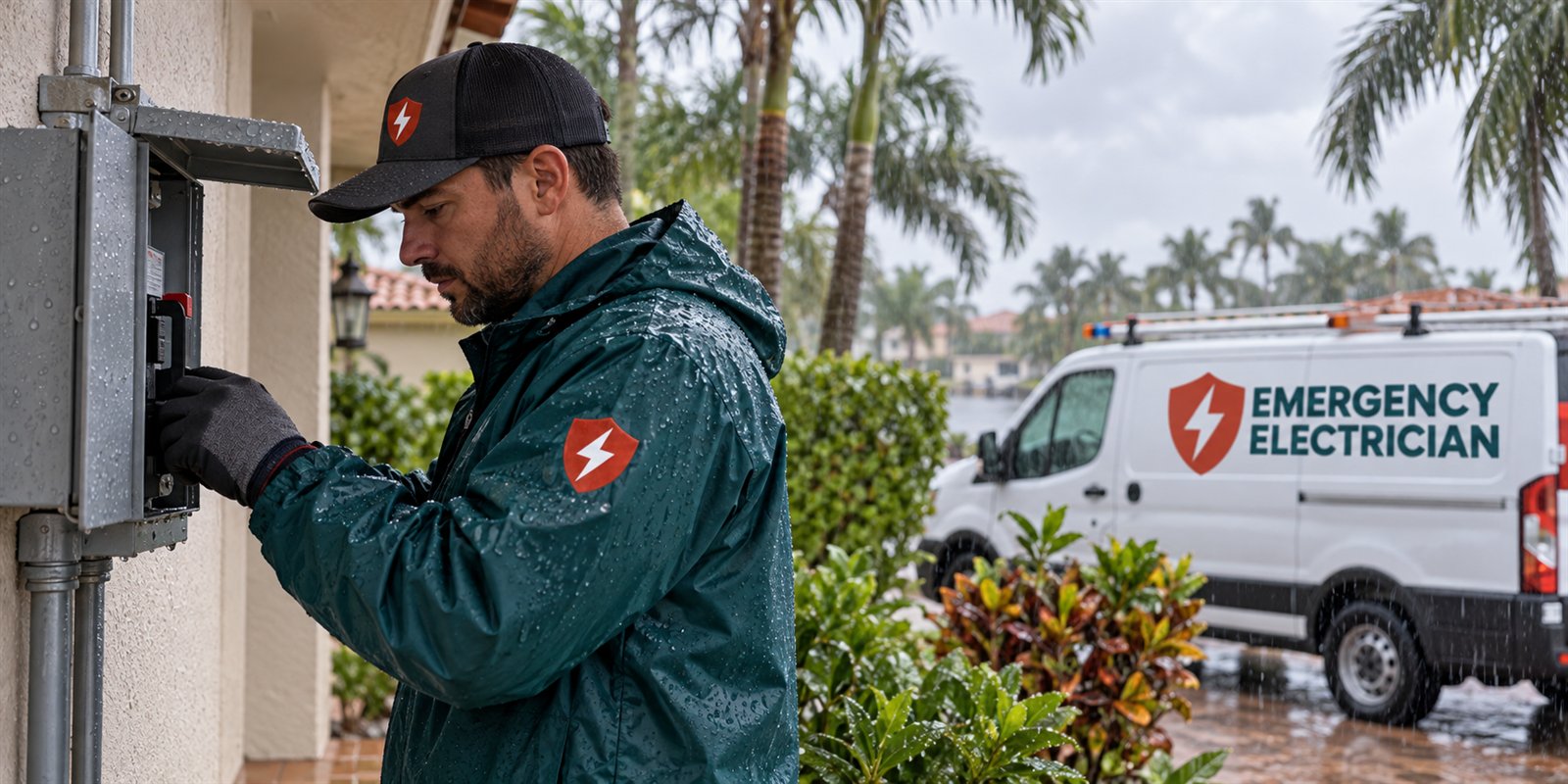
Hollywood's oceanfront is a salty environment, and the effects reach well inland. Salt carried on sea breezes settles on exterior electrical equipment: meter bases, panels, disconnects, outdoor outlets and light fixtures. Combined with humidity, it corrodes terminals, rusts enclosures and degrades seals. Equipment near the beach ages faster than equipment a few miles inland.
Corroded connections are not just cosmetic. A terminal with corrosion has higher resistance, and a high-resistance connection under load generates heat. Over time, heat damages insulation and can lead to arcing. A neutral that has corroded can cause voltage imbalance, so that some fixtures burn very brightly while others dim. A rusted enclosure can let water in, bringing a second problem.
Signs of salt damage include white or green crust on terminals, rust trails below a panel or meter, outlets that fail intermittently and exterior fixtures that corrode away at their mounting points. A technician working near the beach will check the condition of terminals and enclosures and may recommend replacing corroded parts instead of cleaning them. After a storm that brings surge or wind-driven spray, the effect is accelerated. Our page on saltwater surge electrical damage explains more.
| Hollywood setting | Typical electrical problem | First move |
|---|---|---|
| Block home, older panel | Overloaded circuits, warm outlets | Reduce load, call |
| Beachside property | Corroded terminals, rusted meter base | Keep clear, call |
| Condo corridor unit | Unit power loss, shared riser issue | Check panel, call building |
| Storm-hit yard | Downed line, flooded outlets | Stay back, 911 and utility |
| Older apartment | Aluminum or cloth-covered wiring | Do not overload, call |
Condo corridors near the Broadwalk and beyond
Hollywood has many condominium buildings and older apartment complexes, from low-rise garden-style buildings to towers near the water. In these buildings, an electrical emergency usually involves a split of responsibility. The unit's panel and the wiring inside the unit are typically the owner's. The risers, the meter rooms, the corridor lighting, the elevators and the building's main equipment are typically the association's.
When a unit loses power, the first step is to look at your own panel from a dry floor with dry hands. Check the main breaker and any tripped branch breakers. Ask neighbors whether they are out as well. If the whole floor or building is out, the issue is likely in common equipment, and the building's management should be notified at once. Our page on condo unit power loss, who to call explains the split.
Condo corridors and electrical rooms bring their own hazards. A hot smell in a corridor, a buzzing electrical closet or a panel door that is warm to the touch should be reported to the manager and to 911 if there is any sign of fire. Do not open a locked electrical room yourself. Our page on condo electrical room fire risk explains what to look for and who should respond.
Older apartments and rental concerns
Many Hollywood residents rent, and renters face a particular question: who fixes the problem? In general, a landlord or property manager is responsible for the building's electrical system, but the details depend on the lease and the situation. A tenant can and should report a hazard promptly and in writing, and a technician can make an immediate hazard safe, such as isolating a burned circuit.
Older apartments can have wiring that was installed long before today's loads. Some have aluminum branch wiring from a period when it was used, which needs connection hardware designed for it. Some have two-prong outlets and no ground. Some have been divided into smaller units with creative wiring. A tenant who notices warm outlets, sparks or a burning smell should stop using the affected circuit and report it.
Our guide on renters and electrical emergencies explains the steps in detail, including what to say to a landlord and what to keep for your records. If a hazard is immediate, such as fire or a shock, call 911 first and the landlord second. Safety does not wait for authorization.
- Report hazards to the landlord or manager promptly and in writing.
- Stop using any outlet, switch or fixture that is hot, sparking or smelling.
- Keep photographs and dates of what you saw.
- Do not attempt repairs on building wiring yourself.
- In immediate danger, call 911 before anyone else.
Storms, flooding and lightning in Hollywood
Hollywood sits in the hurricane zone, and its low elevation in places makes flooding a real concern. Heavy rain, storm surge and king tide flooding can put water around ground-level outlets, meter bases, air conditioning equipment and panels. Water and electricity do not mix. Do not enter standing water near electrical equipment, and do not switch on equipment that has been wet.
Lightning is a regular summer hazard. A strike near a home can send a surge through the wiring that damages appliances, air handlers and electronics. Sometimes the damage is not obvious until later. After a nearby strike, check for tripped breakers, dead outlets and failed electronics, and call if anything is wrong. Our page on lightning near-miss electronics damage explains what to look for.
After a storm, the restoration period has its own hazards. Surges can occur when power returns. Generators used incorrectly can backfeed lines or produce carbon monoxide. Debris can hide damaged wires. Our guide on after-storm power restoration safety sets out the sequence.
Who is responsible: the utility or an electrician
Understanding where the utility's responsibility ends and yours begins saves time. The power company handles the lines and equipment up to the point of service connection. The building side, including in many arrangements the service mast, the meter base, the panel and all downstream wiring, belongs to the property owner. In multi-unit buildings, the association or owner handles the building's main equipment.
If your whole street is out, call the power company. If only your home is out, check your breakers first, then look at the visible service equipment from a safe distance. A bent mast, a torn weatherhead or a burned meter base calls for an electrician, with the utility disconnecting and reconnecting. Our guide on utility or electrician, who fixes what explains the details.
When it is unclear, call both. The electrician can often tell on the phone which side the problem is likely on, and can coordinate with the utility as needed. In an emergency, do not lose time deciding whose job it is.
What an emergency electrician will check in a block home
On arrival, a technician working a Hollywood call starts with safety. They look for water, heat damage and signs of arcing. They identify and isolate the affected circuit, and verify with a meter that it is dead. In a block home, where wiring may be in conduit or buried in channels, they plan access carefully and consider whether a repair can be made at a junction or outlet box without opening the wall.
They test the panel for loose connections, heat damage, corrosion and the condition of the main breaker. They compare breaker sizes to conductor sizes. They check outlets and switches for signs of heat. They look at the meter base and the service entrance, particularly near the coast where salt corrosion is common. And they ask about the loads in the home, because that tells them how stressed the system may be.
At the end of testing, they explain what they found, in plain terms, and offer options. Our page on what an urgent troubleshooting visit involves walks through the sequence from arrival to sign-off. Ask for the findings in writing if you need them for a landlord, an association or insurance.
Permits, inspections and records
Some emergency repairs require a permit and inspection through the local building department. The need depends on the work. Replacing a device such as an outlet or switch is generally minor. Replacing a panel, a meter base or a service mast, or adding new circuits, generally involves a permit and an inspection. The utility may require an inspection before reconnecting power after major work.
The electrician will tell you whether a permit is needed and how it will be handled. In an emergency, they may make the situation safe first and arrange the permit and inspection afterward. In a condominium, the association may also need to approve work that touches common elements. Tell the dispatcher at the start so the visit is planned correctly.
Keep your records. A permit, an inspection approval, a written findings report and photographs of the damage and the repair are useful for insurance, for a sale and for your own use. Our guides on permits for emergency electrical work and photographing damage before repairs explain what to keep.
Calling from Hollywood: what to have ready
A clear call speeds everything up. Give the address, the unit or floor and the building name if there is one. Describe what happened, what you saw, heard and smelled, and what has been done. Tell the dispatcher whether anyone has felt a shock, whether the area is wet and whether a breaker is tripped. Say whether you own, rent or live in a condominium, and have the manager's contact details ready.
Mention anyone who depends on powered medical equipment, and whether children, older adults or pets are in the home. If the call follows a storm, say so. If you smell burning, stay clear of the area and say where the smell is strongest.
You will be asked safety questions, then told how the visit works, including the service call charge, explained on the phone before anyone is dispatched. Quotes are given by phone. More complicated jobs need an on-site visit first. If anything about your home looks or smells wrong, do not wait for it to get worse. Call.
Questions people ask
Who should I call first for an electrical emergency in Hollywood, Florida?
Call 911 first for fire, heavy smoke, a person shocked and hurt or anyone unresponsive. For a downed or sparking utility line, stay back and call 911 and the power company. For problems at your property without immediate danger, such as a hot panel, a burning smell or a breaker that will not reset, call an emergency electrician.
Why do beachside homes have more electrical corrosion?
Salt carried on sea breezes settles on meter bases, panels, disconnects and outlets, and combines with humidity to corrode terminals and rust enclosures. Corroded connections run hot and can fail or arc. Homes near the beach age faster electrically than inland homes, so inspection of exterior equipment is worthwhile.
My condo unit has no power but my neighbors do. What now?
Check your own panel from a dry floor with dry hands, including the main and any tripped breakers. If the panel looks normal and breakers are on, the problem may be a failed main or a loss of supply to the unit. Call an electrician and tell building management, because the cause may involve common equipment.
Are older block homes in Hollywood more likely to have wiring problems?
They can be. Many were built for lighter loads, with smaller panels and wiring that has been added to over decades. Warm outlets, flickering lights, frequent breaker trips and ungrounded outlets are common signs. A technician can inspect the system and explain whether it needs repair, an upgrade or only monitoring.
I rent in Hollywood and an outlet is sparking. What should I do?
Stop using the outlet and switch off its breaker if you can reach the panel safely. Report the hazard to your landlord or manager in writing and keep photographs. If there is smoke, flame or a shock, call 911 first. A technician can make the hazard safe while the owner arranges the full repair.
How are quotes handled for emergency electrical work in Hollywood?
Quotes are given by phone after you describe the problem, and more involved jobs need an on-site look first. There is a service call charge, explained on the phone before dispatch. The technician explains the findings and options in plain terms before any work begins, so you stay in control of the decision.
About "Emergency Electrical Help in Hollywood, Florida": call and give us the details, and we will explain what is safe to do while you wait and what the visit would cover. Jobs that cannot be quoted blind need a look on site.
Related pages
- Saltwater Damage: Why storm surge saltwater damages electrical equipment differently than rain: salt residue, hidden corrosion in panels and how damage spreads over time.
- Unit vs Building: Your condo unit lost power. Sort a unit panel problem from a building fault, know who to call first, and what to tell the manager and the electrician.
- Renters: What a renter should do in an electrical emergency: safety first, how to alert the landlord, what to document, and when to call an electrician yourself.
- Fort Lauderdale: Emergency electrical triage for Fort Lauderdale: canal-front homes, salt exposure and older wiring in neighborhoods like Victoria Park. Know who to call first.
- Hallandale Beach: Emergency electrical triage for Hallandale Beach: coastal high-rise and mid-rise condos, shared electrical rooms and older homes inland. Who to call first.