
What the meter base is and why damage matters
The meter base, also called the meter socket or meter enclosure, is the weatherproof box mounted on the exterior wall or on a pedestal. It holds the utility's meter and contains the jaws that grip the meter's blades, along with the terminals where the service conductors connect. Wires from the utility come in on one side, and conductors to your main panel leave from the other. Every amp that your home uses passes through it.
That makes it one of the most important enclosures on the property, and one of the most hazardous when damaged. A cracked housing lets in water, insects and debris, and it can expose live parts to touch. A burned base has already seen heat from an arc or a loose connection, and the damage may extend to the conductors behind it. A base that has been pulled loose from the wall puts strain on the conduit and conductors and may leave live wires exposed or ready to shift.
The base is also upstream of your main breaker. Nothing in your panel can switch off the power inside it. That is why the response to any serious damage here goes through the utility, not through your own breakers, and why you should keep your distance from the damage until the supply is disconnected and a qualified person has examined it.
This page is about the aftermath of damage: what you can safely do, what you must not do, and how the process of repair and reconnection generally runs. If you see active sparking or arcing, read sparks or arcing at the meter first and call 911 and the utility.
How meter bases get damaged
Several common events leave a meter base cracked, burned or loose. Storms are the leading cause in South Florida. High winds and falling branches strike the base or pull on the service line, and wind-driven rain enters through cracks and seams. Flooding and storm surge soak the lower parts of the enclosure and the conductors and leave salt behind. Lightning can burn the inside of a base without any outward sign.
Impact damage is another route. A vehicle backing into the wall, a lawn tractor, a falling ladder or a stray swing of a tool can crack plastic or bend metal. Ground settling or a wall repair can shift the base. A tree root or a fence post can push against a pedestal-mounted base.
Heat and age play a part as well. Years of sun make plastic brittle and sealing materials fail. A base with corroded jaws or loose lugs will run hot and burn, even without weather involved. Overloaded older installations, where heavy new equipment has been added to a service that is marginal, can stress these parts.
Finally, the base can be disturbed by interference. A broken meter seal, a meter that has been removed and replaced, or a base with extra wires attached are all signs that someone has been in it who should not have been. Tampering is illegal and dangerous, and it should be reported to the utility rather than handled by you. The page on storm-damaged meters and masts covers weather-related cases.
Signs to look for from a safe distance
You can learn a lot by looking from a few steps back, without touching anything. A crack in the enclosure or the meter glass, a broken or missing cover, a base that is tilted or hanging away from the wall, or a conduit that has pulled out of the base are all clear signs of damage. A base that has moved relative to the wall may show a gap, a bent bracket or stressed wires.
Look for burning: soot, black or brown streaks, melted plastic, bubbled paint, a charred wall behind the base, or a burnt smell. Look for water: rust trails, standing moisture, a damp wall below the base, or mud and debris inside an opened enclosure. Look for exposed parts: bare wires, shiny metal where a cover should be, or a meter hanging by a seal.
Check the lights in the house. Flickering, dimming, partial outages, or half the circuits dead can come from a damaged base. Listen for buzzing, humming or crackling. Notice any warmth radiating from the area.
If you can see exposed conductors or live parts, keep everyone away, and do not allow children or pets to approach. Do not try to cover the base with tape, plastic or boards, because that can trap moisture and heat. Do not wedge, push or lift anything. If the base is pulled away from the wall, do not push it back. Photograph from a distance and call. Where damage is minor and no live parts are exposed, still treat the base as a hazard to be repaired promptly.
What to do right now
The sequence depends on what you see. For flames, heavy smoke, a burning wall or active arcing, call 911 first, move everyone away, and then report to the utility. For visible damage without fire, such as a cracked or loose base, call the utility's emergency number to report a damaged meter base and explain whether live parts are exposed. The utility decides whether to disconnect service for safety.
Do not touch the meter or the base. Do not pull the meter. Do not try to reseat, close, tape or seal anything. Do not use a hose or cleaner near it. Keep ladders, tools and metal objects away. If the service line or mast is also damaged, keep clear of any wires and the area beneath them.
Switching off your main breaker is a reasonable secondary step if it is safe to reach and the panel looks normal. It will reduce the load on damaged equipment but does not remove power from the base, so it must not replace the call to the utility. Unplug sensitive electronics if the house is still powered and you can do it without risk.
Tell the utility and the dispatcher the address, what is damaged and what you saw, whether the home is overhead or underground service, and whether anyone is dependent on powered medical equipment. Note any reference number you are given. If a utility crew arrives and disconnects service, ask them what they require before reconnection, and write it down.
Then call an electrician, and describe the condition of the base and any tag left by the utility. The next section explains how that process commonly goes.
- Fire, heavy smoke or active arcing: 911 first.
- Keep everyone away from the base, the meter and any wires.
- Call the utility to report a damaged meter base.
- Do not touch, tape, reseat or cover anything.
- Switch off the main only if safe, as a secondary step.
- Call an electrician and report any utility tag or reference number.
How disconnection and reconnection generally work
The details differ between utilities and between cities and counties, so treat what follows as the general picture. The utility owns the meter and the supply side. When a base is dangerous, the utility can disconnect service at its equipment, for example by pulling the meter or cutting service at the pole or transformer. Only the utility performs that work, and only the utility restores service.
A damaged base is typically the customer's responsibility to repair, because it is part of the customer's service equipment. After the utility disconnects, a contractor repairs or replaces the base and the affected conductors. Many jurisdictions require a permit for that work, and an inspection once it is complete. After the inspection passes, the building department or the inspector releases the job, and the utility reconnects service.
Timing is not under your control, and no one can responsibly promise when power will return. It depends on the extent of the damage, the availability of parts, the permit and inspection schedule, and the utility's workload. During a widespread storm, all of those can stretch. What you can do is get the repair ready as soon as service is off, and keep documentation organized.
Some utilities also require specific meter base types or have clearances and mounting rules. An electrician familiar with local practice can choose the right equipment and prepare for inspection. For a general view of the sequence, see the power company disconnect and reconnect process, and for the roles of each party, see who fixes what.
Permits, inspections and why they matter here
Replacing a meter base, repairing service conductors or moving a service entrance is work that municipalities and counties usually regulate. A permit lets the local building department know the work is happening and gives an inspector the chance to check it before the utility reconnects. This is not a formality. The service entrance is the point of highest energy in the home, and mistakes there are dangerous.
Rules differ from city to city across Broward County and the cities from Boca Raton to North Miami, and details such as who may pull a permit, what drawings are needed and how an emergency permit is handled vary. The contractor can explain how it works for your address in general terms, and the building department makes the final call. After storms, some jurisdictions have separate arrangements for emergency repairs, and the contractor will know what applies locally.
As an owner, you should not be asked to skip permits or inspections to speed things up. Work that avoids them may leave you with an unreconnectable service, an insurance problem or an unsafe installation. If someone suggests reconnecting without inspection, or bypassing the meter, say no.
For more on how permits relate to urgent work, see permits for emergency electrical work and rebuilding after a storm and electrical permits.
What the technician will check and repair
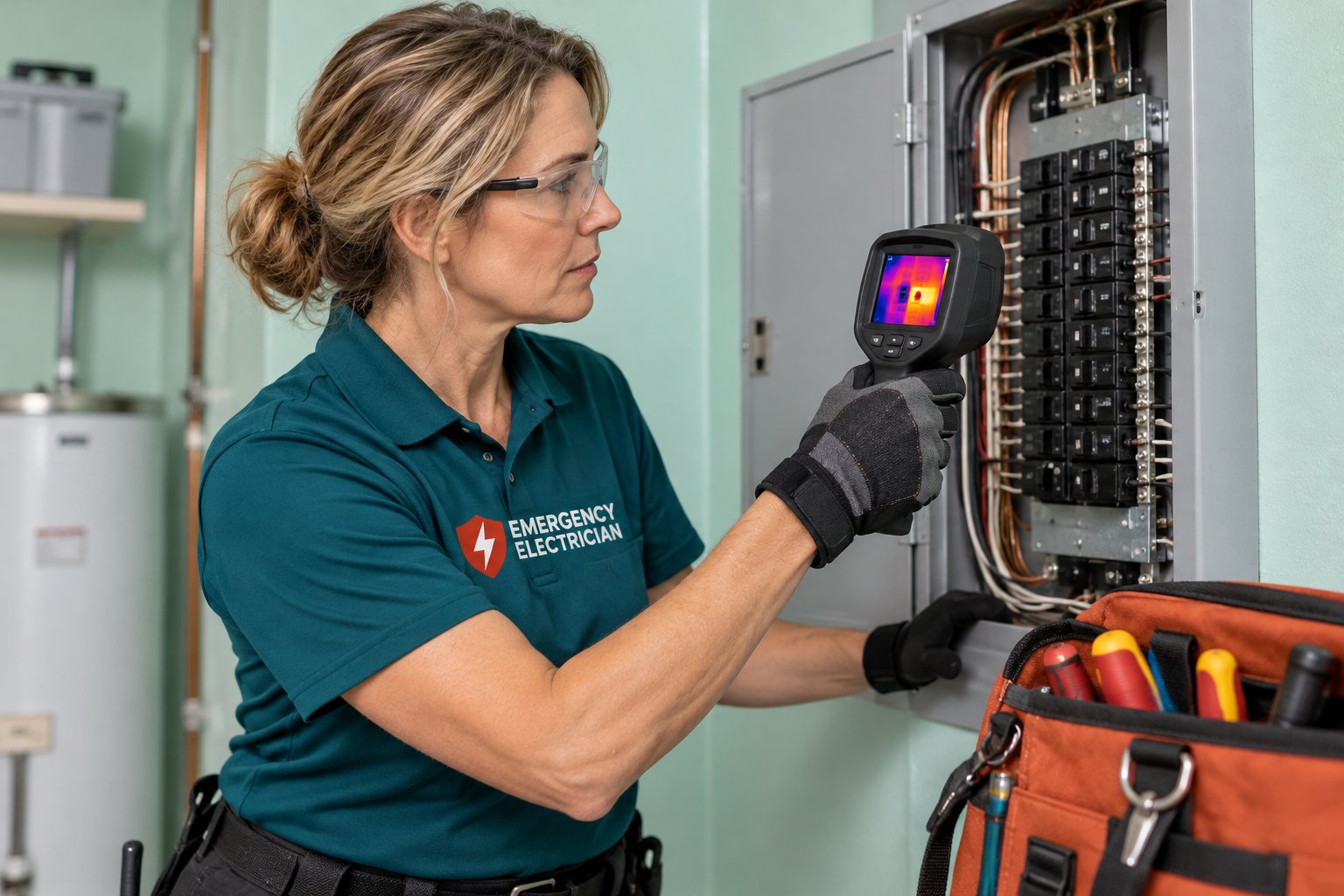
On arrival, once the utility has disconnected service, the technician inspects the whole entrance from the weatherhead down. They examine the base for cracks, heat damage and corrosion, check how it is mounted, inspect the conduit and fittings, and look at the conductors for burns, nicks or stretching. They also check the main breaker and the panel connections, because damage at the base can extend inward.
If the base is cracked, burned or corroded, it is replaced, since repairing a damaged enclosure is not generally appropriate. The conductors are inspected and, if damaged, replaced or properly extended. Fittings, straps and seals are replaced as needed so the new installation sheds water. If the mast or weatherhead is also damaged, those are addressed too, as described in a leaning or bent service mast.
The technician will explain what is needed, what permit applies and what the inspection process will look like. They may prepare the work for the inspector, and they will coordinate with the utility as required. The related service is described in urgent meter base replacement.
Sometimes the old installation reveals an additional issue, such as an undersized service for the loads now in the house. The technician may mention it and, if appropriate, explain the option of an upgrade. That is a separate decision you can make on the phone with a quote, and it should not be rushed.
Preparing and making the call
To make the call efficient, collect a few facts. What is damaged, and what caused it, if known? Has the utility been called, did they disconnect service, and is there a tag, a reference number or a written instruction? Is the service overhead or underground? Do you know what type of building it is, house, townhome or condo, and who owns the meter equipment?
Take photos from a safe distance, showing the base, the wall and the surroundings. Keep the area clear and make sure the technician can reach the base, including unlocking gates. Keep children, pets and bystanders away. Move vehicles out of the way if you can do so without approaching the base.
Write down a short timeline while it is fresh: when you first noticed the damage, what the weather was doing, what you did, whom you called and the time of each call. A clear record helps the utility, the electrician, the building department and, if there is storm damage, your insurance company. Keep it with your photos and any reference numbers.
Plan for the outage. If anyone relies on medical equipment or refrigerated medication, make arrangements and tell the dispatcher. Do not connect a generator to the house with a homemade cord, and do not run extension cords across properties. Keep phone chargers and flashlights handy.
Quotes are given by phone only. Complicated jobs need an on-site visit, and there is a service call charge explained on the phone before dispatch. If your meter base is cracked, burned or pulled loose, keep clear of it, make sure the utility knows, and call when you are ready to talk through the repair.
Questions people ask
Can I repair a cracked meter base myself?
No. The base holds live conductors that your own breakers cannot switch off, and repairs require the utility to disconnect service first. Taping, sealing or covering it can trap moisture and heat. A qualified electrician replaces the base, usually under a permit and inspection, and the utility then reconnects service. Keep clear until it has been repaired.
Who removes the meter so the base can be repaired?
The utility. Only the utility handles its meter and the supply side, and it disconnects and reconnects service. An electrician repairs the customer-side equipment such as the base and conductors. Contact the utility to report the damage, ask what it requires before reconnection, and keep any reference number or tag information.
Do I need a permit to replace a meter base?
In most places, yes. Service entrance work is typically permitted and inspected before the utility reconnects. Rules vary by city and county, so the contractor can explain the general process for your address, and the local building department makes the final decision. Avoid anyone who suggests skipping the permit or reconnecting without inspection.
The meter seal looks broken. What should I do?
Do not touch the meter or try to reseal it. A broken seal can mean someone has been in the meter, which is dangerous and illegal if it involves bypassing. Report what you see to the utility, keep clear and describe it to the electrician. Damage from weather and age is more common than tampering, but the utility should look.
How long will I be without power?
No one can promise a time. It depends on how extensive the damage is, parts availability, permit and inspection schedules, and the utility's workload, which can be heavy after a storm. An electrician can prepare the repair for inspection and explain the sequence. Plan for the outage and keep your phone charged.
How is the repair priced?
Quotes are given only by phone. Complicated jobs need an on-site visit first so the quote reflects what is actually damaged. There is a service call charge, explained on the phone before anyone is dispatched. Permits and utility coordination may be part of the job, and the contractor can describe them in general terms. Call when the scene is safe.
About "Cracked or Burned Meter Base": call and give us the details, and we will explain what is safe to do while you wait and what the visit would cover. Jobs that cannot be quoted blind need a look on site.
Related pages
- Meter Sparking: Sparks or arcing at the electric meter are an emergency. Learn why to call 911 and the utility first, who owns which part and what an electrician does after.
- Bent Mast: A service mast bent or pulled by a tree, wind or a sagging line is a hazard. Learn what to do, how to work with the utility and what repair and permits involve.
- Meter Base Replacement: What to do when a meter base is burned, cracked or pulled loose, who owns which part, and how the disconnect and reconnect sequence works.
- Mast and Meter: Why damaged meter sockets, masts and weatherheads must be repaired by an electrician before the utility reconnects, and how the process usually works.
- Emergency Permits: How urgent electrical repairs still move through permits and inspections in South Florida, what usually needs one, and what to ask before work starts.
- Small Fire: Small flames at an outlet, cord or appliance still mean get out and call 911. Learn why water is wrong, when an extinguisher is an option and what follows.