
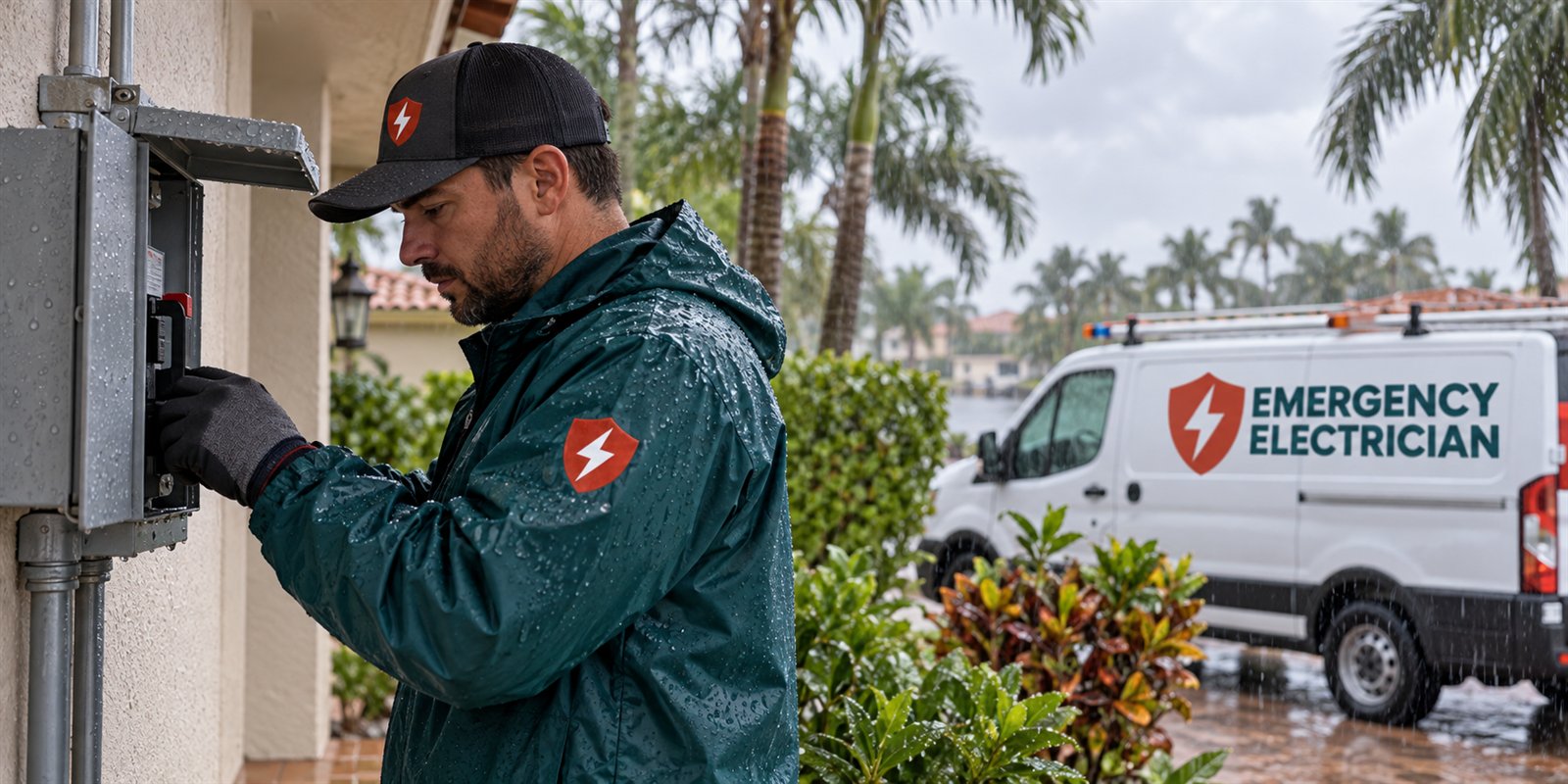
What the weatherhead is and what it protects
The weatherhead, sometimes called the service entrance cap or service head, sits at the top of the mast on a home with overhead service. The wires from the utility reach the house, loop downward in what is called a drip loop, and then rise into the cap, which is shaped like a goose neck so that gravity and design send water away from the opening. Below the cap, the conductors run inside rigid conduit down the mast to the meter base and then on to the main panel.
Its job is simple and critical: keep water out of a pipe that contains energized conductors and leads straight to the heart of the electrical system. The cap works with seals or bushings where the conductors enter, and with the drip loop that makes water drip off before it reaches the opening. If any element fails, rain can enter.
Water that enters at the top does not stay at the top. It runs along the conductors and down the conduit. Gravity carries it to the lowest point, which is typically the meter base or the panel. Along the way it can wet insulation, corrode connectors and collect in the base. Once it reaches the meter socket or the main panel, it can create conductive paths between live parts, corrode terminals and cause arcs.
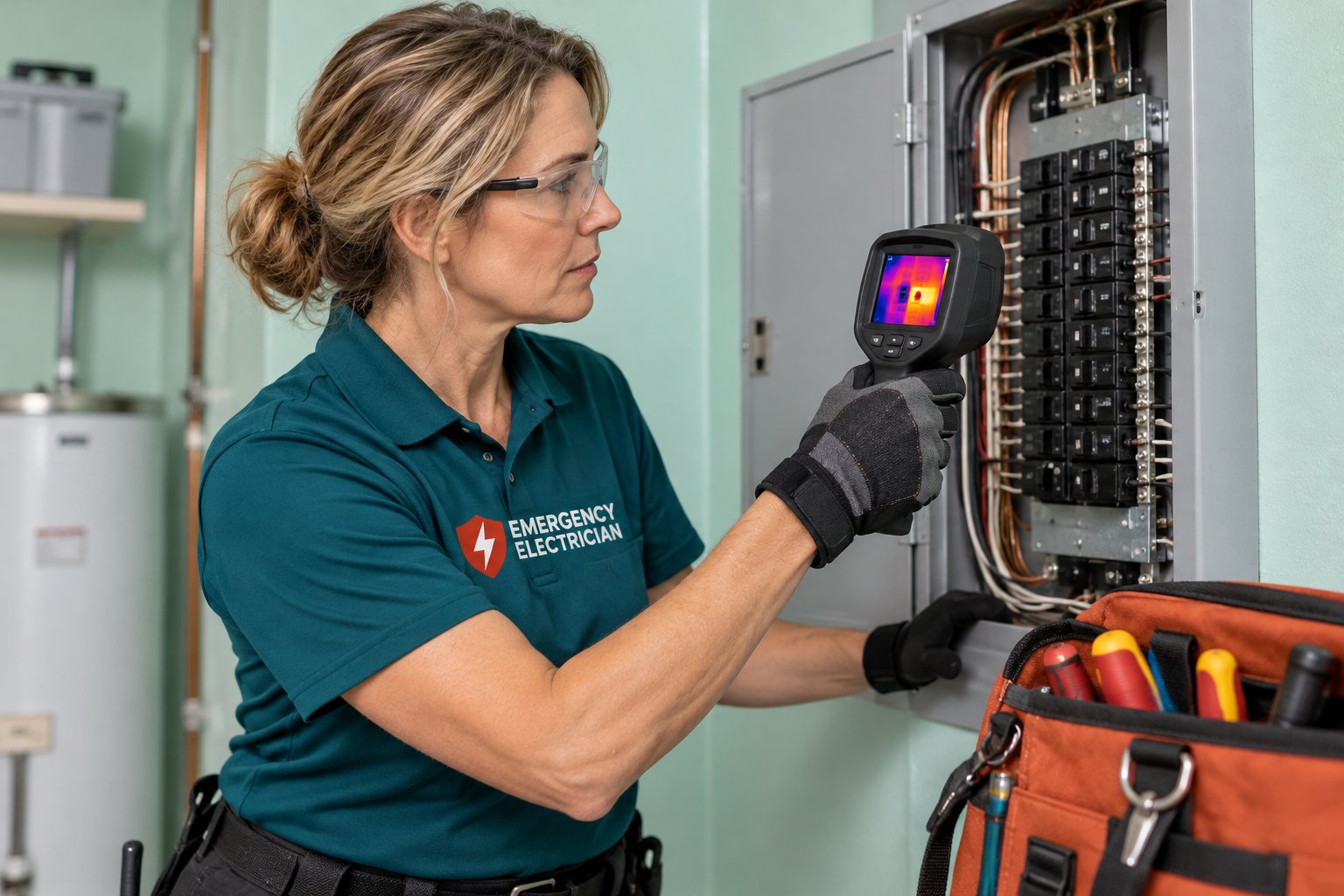
This is why a damaged weatherhead is not merely a roof or exterior problem. It is an electrical entrance defect, with consequences that may show up later, even after the weather has cleared. A cap torn off by a branch in a storm may be the first domino in a chain that ends with a failed meter base or panel.
How weatherheads tear, crack or leak
Wind and storm debris are the leading causes. High winds whip the service line, and the pull on the wires can twist or tear the cap loose. A falling branch or a tree trunk can strike the mast or the line and rip the weatherhead off or rotate it so that its opening faces up. Flying debris during hurricanes can also hit it.
Age and the sun take their toll. Many weatherheads are plastic or thin metal, and decades of heat, ultraviolet light and temperature swings can make them brittle and cracked. Salt air accelerates corrosion on metal caps and fittings in coastal areas. A cap that has been damaged by corrosion may look intact from the ground but leak at the seams.
Poor installation or earlier repairs are common as well. A cap that was not sealed correctly, a missing or hardened sealing compound, a drip loop that was never formed or has been pulled out by a taut line, or conductors that enter without proper bushings can all let water in. Sagging lines that pull on the cap and bring the opening out of its proper orientation are another known cause.
Whatever the reason, the signs are often easy to spot from the ground once you know what to look for. The next section describes them. For a connected failure, see a leaning or bent service mast, which often accompanies a torn cap.
Signs you can see from a safe distance
Stand back in the yard and look at the top of the mast. Is the cap present? Is it cracked, split, torn or hanging? Does the opening face up or sideways rather than down? Are the conductors visible where they should be covered? Is the drip loop missing, pulled tight or hanging against the mast? Do you see bare wire, melted or frayed insulation, or a gap where the cap should be?
Look down the mast and at the wall below. Rust streaks, water stains or green corrosion on the conduit and the meter base can show where water has been traveling. A meter glass with fog, moisture or droplets inside suggests water has entered the base. Staining on the wall below the base is another clue.
Pay attention to electrical symptoms inside the house. Flickering lights, dimming, partial outages, a breaker that trips for no reason, a buzzing at the panel or a tripping GFCI after rain can all be signs of water getting into the system. A smell of something hot or damp near the panel, or visible moisture or rust inside a panel, are more serious.
Remember that you cannot see inside the conduit. A cap that looks only slightly damaged may have been letting water in for some time. If rainwater has been getting into the entrance, damage may exist below even if the house seems to be working normally. Treat a visibly damaged cap as the start of a repair, not as a cosmetic matter.
- Cap missing, cracked, torn, hanging or facing the wrong way.
- Drip loop missing, pulled tight or lying against the mast.
- Bare or frayed conductors visible at the top.
- Rust or green corrosion streaks on the conduit or base.
- Moisture or fog inside the meter glass.
- Flickering, tripping or buzzing that gets worse after rain.
What to do right now
If wires are down, sparking or burning, or if the cap hangs by the wires, keep everyone well away and call 911. Do not touch or approach any hanging wire. For a torn cap with the wires still in place, the first call is to the electric utility's emergency line to report a damaged service entrance. Only the utility can de-energize its side of the service, which is what makes repair safe.
Do not climb a ladder to look or to cover the cap, and do not try to seal or tape it. Do not spray or hose the mast, and do not touch the mast, the meter base or the conduit. Water, a ladder and live conductors together are a deadly combination, and even dry wood and fiberglass ladders conduct under the right conditions near high energy.
If rain is falling and water is clearly entering, switching off your main breaker can reduce the load, provided you can reach it safely with a dry floor and the panel looks normal. Remember that it does not remove power from the entrance and the meter. If the panel is wet, rusted or showing moisture, do not touch it, and call.
Keep children and pets away from the area under the mast and from the wall below the meter. Move vehicles out of the drip zone if you can do so safely. Take photos from a distance, including the top of the mast, the meter and the wall below. Then call an electrician, and tell the dispatcher what you see and whether the utility has been contacted.
- Wires down, sparking or burning: stay away, call 911.
- Call the utility to report a damaged service entrance.
- Do not climb, tape, spray or touch the mast, cap or meter.
- Switch off the main only if the panel is dry and normal.
- Photograph from the yard and keep people away.
- Call an electrician and describe the damage and water signs.
The order of repair coordination
Weatherhead repair involves several parties, and the sequence matters. The utility owns its service drop, the wires that run from the pole to the house, and the meter. The customer generally owns the weatherhead, the mast, the conduit, the meter base and the conductors inside, as described in general terms in who fixes what. Local rules and individual installations vary, and the utility can tell you where its responsibility ends.
In practice, the order is as follows. You report the damage to the utility so that it can de-energize or otherwise make its side safe. The electrician assesses the entrance, including how far water has traveled. A permit is arranged where the local building department requires one. The electrician replaces the weatherhead and drip loop, repairs or replaces affected conductors, meter base, or mast components, and checks the panel. The work is inspected, and the utility then reconnects service.
The electrician typically cannot touch the utility's wires, and the utility typically cannot repair the customer's equipment. The two must work in turn, which is why delays can arise from scheduling rather than from the repair itself. Having the repair ready for inspection quickly helps.
More on the process is in the power company disconnect and reconnect process and urgent service mast repair. Timing of reconnection depends on the utility and the inspection schedule, and no one can promise a specific hour.
Why water inside the entrance is a serious finding
A torn cap alone can be repaired quickly, but the water that came through it may have done lasting work. The question for the technician is how far the water went and what it affected. Inside the conduit, moisture can degrade insulation on the conductors, corrode connectors and run into the meter base. In the meter base, water can corrode the jaws and lugs and create a path between phases or to ground. In the panel, water can wet bus bars and breakers, corrode terminals and cause arcing or tripping.
The effects often appear later. A connection that is slightly corroded after a storm can heat up and fail weeks afterward, perhaps when the air conditioner is running hard. A meter base with water inside can arc, as described in sparks or arcing at the meter. A panel that was wetted may trip, buzz or fail. Water in the panel is covered in water in the electrical panel.
This is why a technician looks beyond the cap. They check the conduit for water, inspect the meter base and the conductors, and open the panel after the service is isolated to look for moisture, rust and corrosion. They may find that only the cap needs replacement, or they may find damage that requires replacing conductors, a base or panel components.
If you have already seen signs such as flickering, tripping or moisture inside the meter glass, mention them. They help locate the damage. If you saw none, the inspection is still worth doing, because hidden water damage is common after an exposed entrance has been open to a storm.
What repair usually includes
Once the utility has de-energized the service, the technician replaces the damaged weatherhead with a proper cap of the right size and type, sets the conductors so that a drip loop forms correctly, and seals the entry. They check the mast and brackets, because a torn cap often accompanies strain on the mast, and straighten or replace components as needed.
They examine the conductors for damage and replace any with compromised insulation. They inspect the conduit and fittings for water, corrosion and loose connections, and dry or replace parts as needed. They examine the meter base and replace it if it shows corrosion or water damage. At the panel, they check for moisture and rust and assess the main breaker, bus bars and breakers. Where water has reached the panel, replacement of affected parts or the panel itself may be advised.
Roof penetration and flashing are also checked, since a leak at the roof can add to the water problem. If the mast passes through the roof, the seal around it matters, and a roofer may need to repair it.
Permits and inspections commonly apply, and the contractor can explain the general process. The result should be a service entrance that sheds water, is properly supported and passes inspection before reconnection. See urgent service upgrade if the technician finds the service is undersized as well, and keep in mind that an upgrade is a separate decision.
Preparing for the call
When you call, give the technician what they need to prepare. What do you see: a missing, torn or hanging cap, exposed wires, a leaning mast? Was there a storm, a falling limb or a gust that you can tie to the damage? Has water entered, and have there been electrical symptoms? Has the utility been called, and do you have a reference number, a tag or instructions?
Describe the type of building and the access. Is there a gate, a locked yard or a meter room? Is the mast reachable by ladder or truck? Are there trees or branches in the way? Photos taken from the ground, showing the top of the mast, the meter and the area below, are very useful. Do not take them from a ladder or the roof.
Plan for time without power. If anyone relies on medical devices or refrigerated medication, arrange alternatives and tell the dispatcher and the utility. Do not use a generator indoors or connect one to the house by improvised cords. Keep flashlights and chargers ready.
Quotes are given by phone only. Complicated jobs need an on-site visit, and there is a service call charge, explained on the phone before dispatch. If your weatherhead is torn or water is getting into the mast, keep clear, make sure the utility knows, and call when you are ready to talk through the repair.
Questions people ask
Can I cover a torn weatherhead with tape or plastic until help comes?
No. Reaching the cap means going near live conductors, and a ladder, a wet surface and energized wires are dangerous together. Covering it can also trap moisture. Keep clear, report the damage to the utility, and have an electrician replace the cap and check how far water has traveled once the service is made safe.
Why does a leaking cap matter if the lights still work?
Water travels down the conduit to the meter base and the panel, where it can corrode connections and create arcing paths over time. Damage may not show until a later storm or a heavy air conditioning load. A working house does not prove the entrance is sound, so a damaged cap should be repaired and the system checked.
Who is responsible for replacing the weatherhead?
In general terms, the customer owns the weatherhead, mast and conduit, while the utility owns its service drop and the meter, though details vary. The utility makes its side safe, and a contractor repairs the customer-side equipment. The utility can tell you where its responsibility ends. Check your insurance if a storm caused the damage.
Is a permit needed to replace a weatherhead?
Often, yes. Service entrance work is commonly permitted and inspected before the utility reconnects, though rules vary by city and county. The contractor can explain the general process for your address, and the building department decides the specifics. Skipping a required permit can complicate reconnection and insurance.
I see water inside my meter glass. Is that serious?
Yes. Moisture in the meter base can corrode the jaws and lugs and cause arcing. Do not touch the meter. Report it to the utility, switch off your main only if the panel is dry and safe, and have an electrician inspect the base, the conduit and the panel. Flickering or tripping after rain adds to the concern.
How is the repair priced?
Quotes are given only by phone. Complicated jobs need an on-site visit first so the quote reflects the actual damage, such as water that has reached the base or panel. There is a service call charge, explained on the phone before anyone is dispatched. Permit and utility coordination may be part of the job. Call to talk it through.
If "Service Entrance Cap Torn or Leaking" matches what is happening, call and describe it plainly: the room, the breaker, any burning smell or tripped circuit. We explain what the repair would involve before a visit is set.
Related pages
- Bent Mast: A service mast bent or pulled by a tree, wind or a sagging line is a hazard. Learn what to do, how to work with the utility and what repair and permits involve.
- Water in Panel: Water reaching an electrical panel is serious. Learn when to shut the main, when to stay out, what causes intrusion, and what an electrician checks first.
- Meter Sparking: Sparks or arcing at the electric meter are an emergency. Learn why to call 911 and the utility first, who owns which part and what an electrician does after.
- Mast Repair: A bent, torn or storm-damaged service mast or weatherhead is a hazard. Learn who disconnects power, who repairs what, and how permits and inspection work.
- Mast and Meter: Why damaged meter sockets, masts and weatherheads must be repaired by an electrician before the utility reconnects, and how the process usually works.
- Surge Device Failed: A whole-house surge device with a red light, alarm or burn marks has done its job or failed. Learn what the indicator means and what to do after a big surge.